

Walls are important parts of homes, offices, gardens, buildings, and construction projects. They can support a building, divide rooms, protect outdoor spaces, improve privacy, or add style to an interior. Different types of walls are made from different materials and serve different purposes.
Common types of walls include brick walls, concrete walls, stone walls, wooden walls, drywall, glass walls, partition walls, load-bearing walls, non-load-bearing walls, retaining walls, curtain walls, boundary walls, cavity walls, shear walls, panel walls, precast walls, stud walls, plaster walls, gabion walls, and green walls. This guide explains wall names, uses, materials, structures, comparisons, choosing tips, and picture ideas.
In This Page
What Is a Wall?
A wall is a vertical structure that separates, supports, protects, or encloses a space. Walls can be built inside a house, around a property, beside a garden, or on the outside of a building.
Some walls carry the weight of a building, while others only divide rooms or add decoration. The right wall type depends on strength, material, location, privacy needs, budget, and design style.
Common Types of Walls
These are the most common types of walls to know in English. They are useful for construction vocabulary, home improvement, interior design, building lessons, and ESL learning.
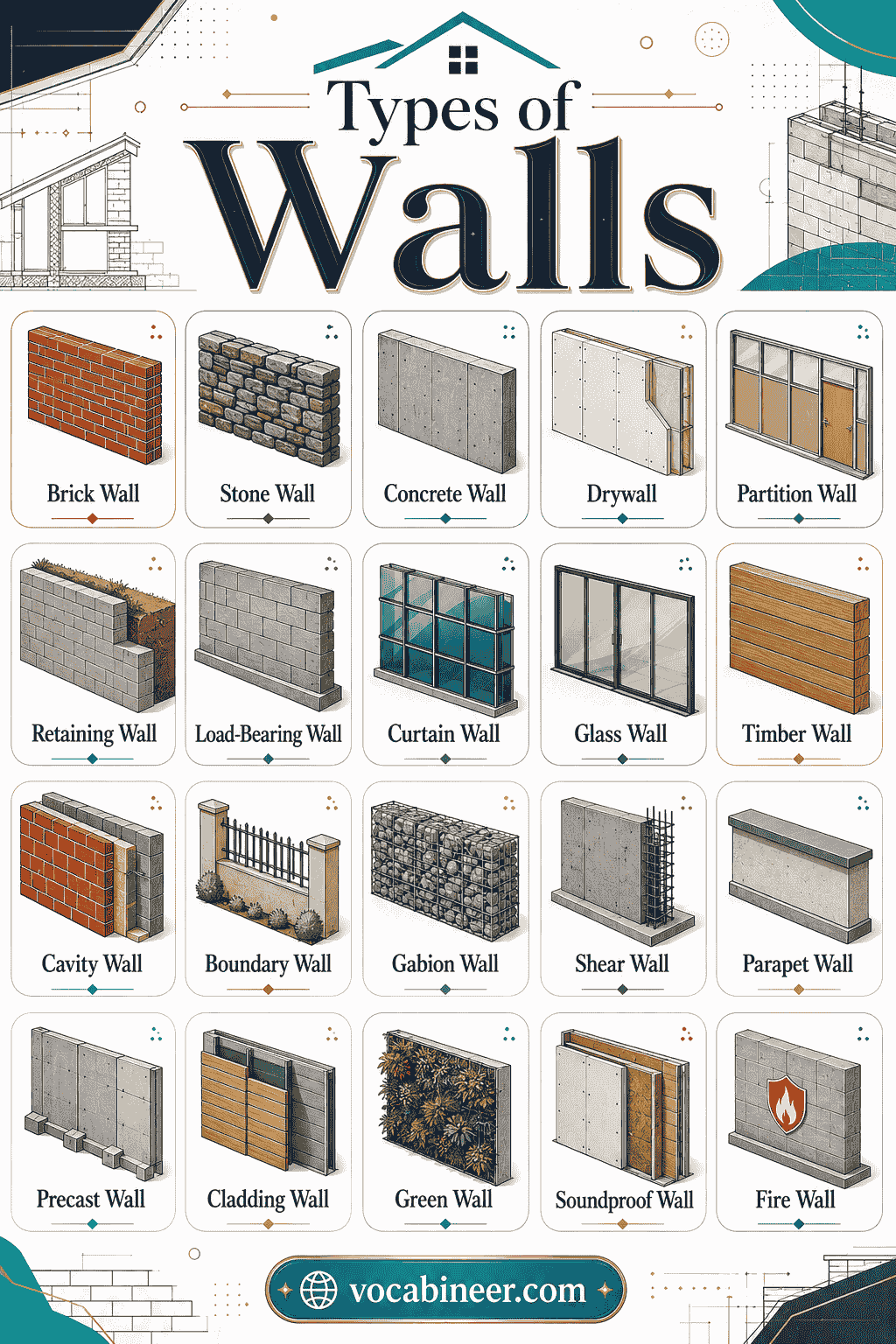
- Brick Wall — a wall made from bricks, often used in homes, buildings, and boundary walls.
- Concrete Wall — a strong wall made from concrete, often used for buildings, basements, and support.
- Stone Wall — a wall made from natural stone, often used in gardens, boundaries, and rustic designs.
- Wooden Wall — a wall made with wood, panels, planks, or timber.
- Drywall — an interior wall system made with gypsum boards, often used for rooms and partitions.
- Glass Wall — a wall made with glass panels to allow light and visibility.
- Partition Wall — a wall used to divide rooms or create separate spaces.
- Load-Bearing Wall — a wall that supports the weight of floors, roofs, beams, or upper levels.
- Non-Load-Bearing Wall — a wall that divides space but does not carry the main building weight.
- Retaining Wall — a wall used to hold back soil, slopes, or raised land.
- Curtain Wall — a non-load-bearing exterior wall system, often made with glass, metal, or panels.
- Boundary Wall — a wall built around land, a house, a garden, or a property.
- Cavity Wall — a wall built with two layers and a gap between them for insulation or moisture control.
- Shear Wall — a structural wall that helps resist side forces such as wind or earthquakes.
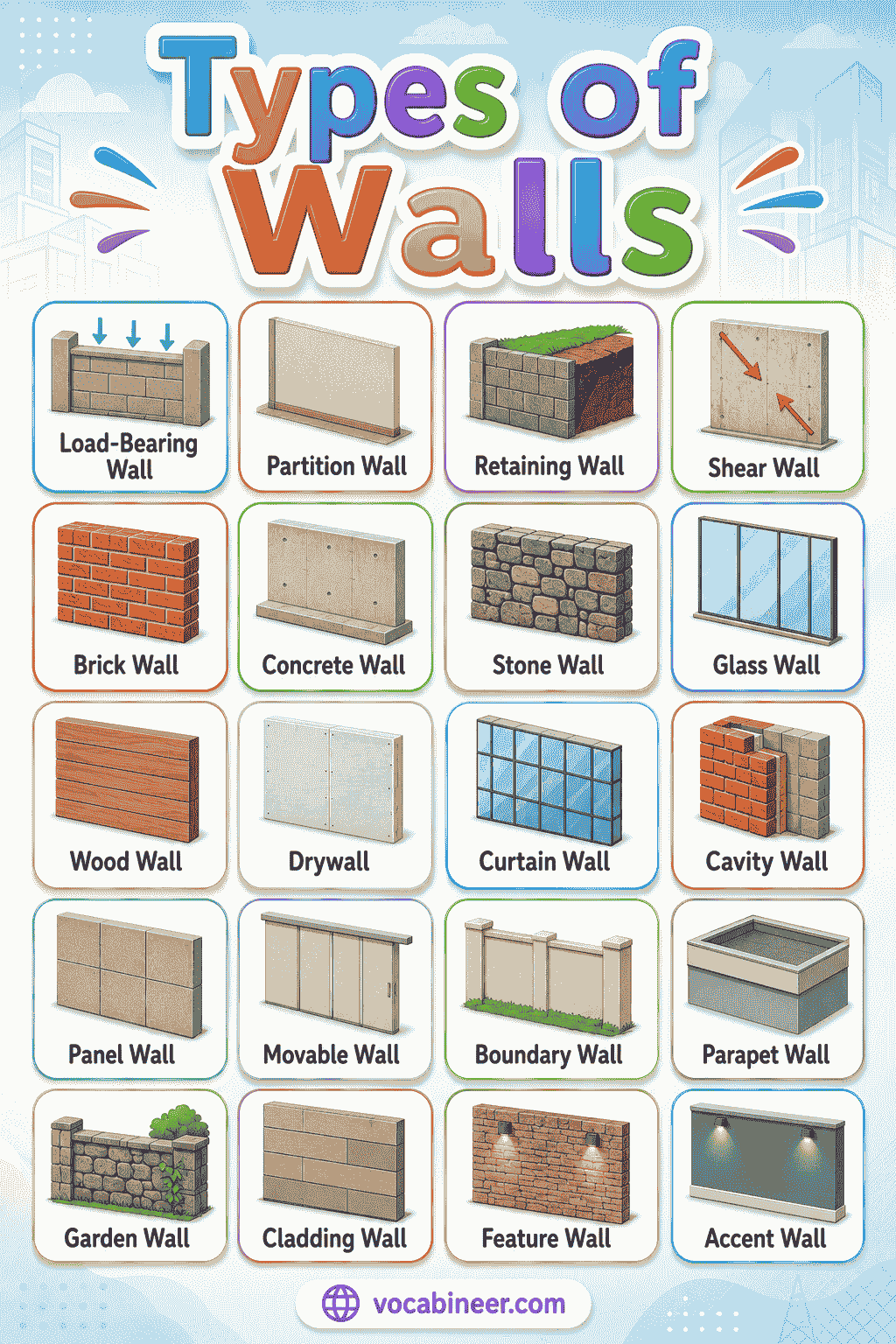
- Panel Wall — a wall made from large panels or boards.
- Precast Wall — a concrete wall made in a factory and installed on-site.
- Stud Wall — a wall built with a frame, often covered with drywall or panels.
- Plaster Wall — a wall finished with plaster for a smooth surface.
- Gabion Wall — a wall made from wire cages filled with stones.
- Green Wall — a decorative wall covered with plants, often used for style and greenery.
Types of Walls by Structure
Walls can be grouped by structure because some walls support weight, while others divide spaces or cover building exteriors.
Load-Bearing Walls
Load-bearing walls support floors, roofs, beams, or upper levels. These walls are important for building strength and should be planned carefully.
- Brick Wall
- Concrete Wall
- Stone Wall
- Load-Bearing Wall
- Shear Wall
Non-Load-Bearing Walls
Non-load-bearing walls divide rooms or create privacy, but they do not usually carry the main building weight.
- Partition Wall
- Stud Wall
- Drywall
- Glass Wall
- Panel Wall
Exterior Walls
Exterior walls form the outside enclosure of a building. They help protect the interior from weather, heat, cold, dust, and noise.
- Brick Wall
- Concrete Wall
- Stone Wall
- Curtain Wall
- Boundary Wall
Interior Walls
Interior walls divide indoor spaces, improve privacy, and support room layout.
- Drywall
- Plaster Wall
- Wooden Wall
- Glass Wall
- Partition Wall
Types of Walls by Material
Wall material affects strength, cost, appearance, insulation, maintenance, and where the wall can be used.
Masonry Walls
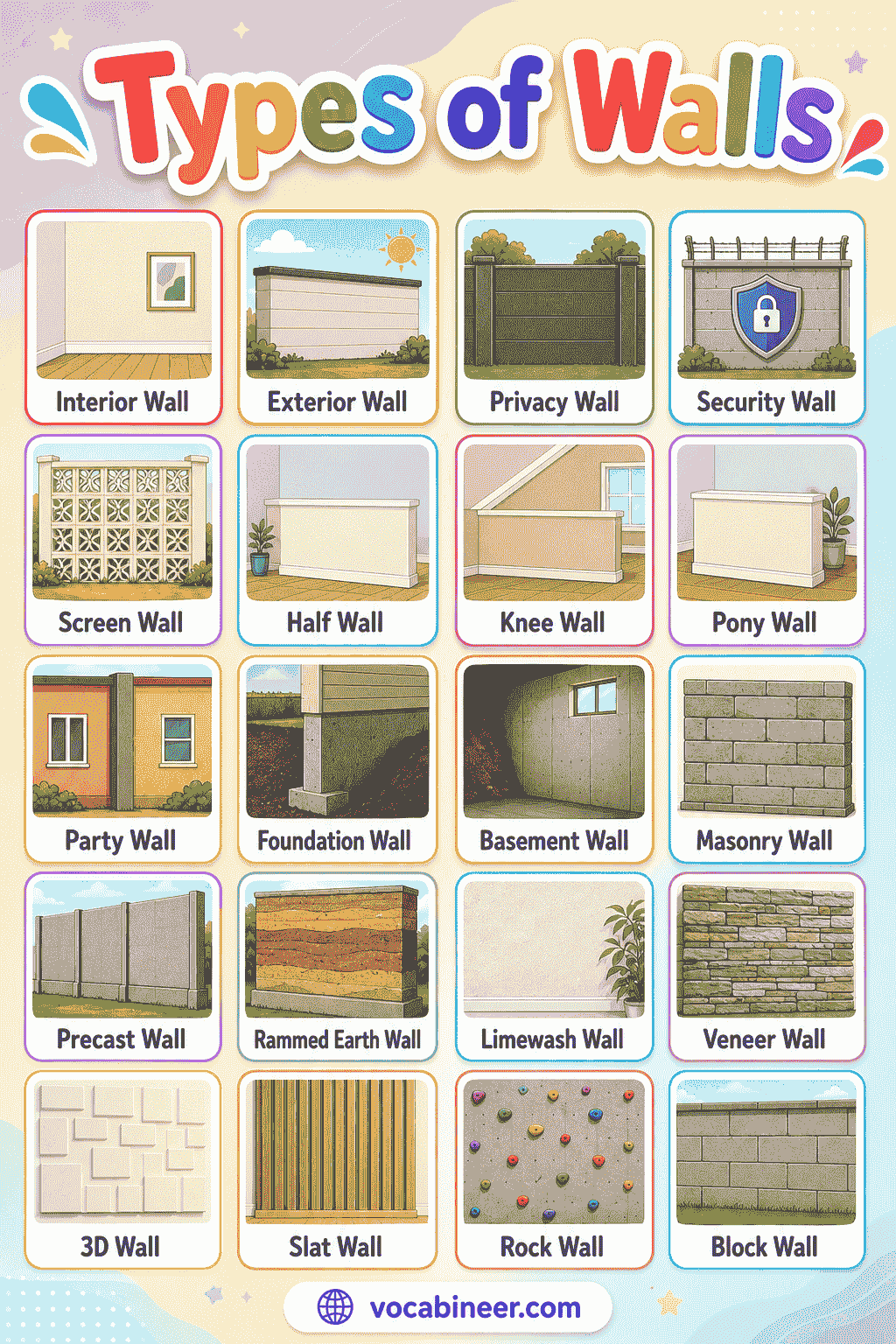
Masonry walls are built from units such as bricks, blocks, or stones. They are often strong, durable, and common in buildings and outdoor spaces.
- Brick Wall
- Stone Wall
- Concrete Block Wall
- Cavity Wall
- Gabion Wall
Concrete Walls
Concrete walls are strong and durable. They are often used for support, basements, retaining walls, commercial buildings, and modern construction.
- Concrete Wall
- Precast Wall
- Reinforced Concrete Wall
- Shear Wall
- Retaining Wall
Wood and Panel Walls
Wood and panel walls can add warmth, texture, and design detail. They may also be used for light framing, cladding, and interior partitions.
- Wooden Wall
- Stud Wall
- Panel Wall
- Plywood Wall
- Cladding Wall
Glass and Decorative Walls
Glass and decorative walls are often used for light, visibility, style, greenery, or feature designs. They are usually chosen for appearance and layout, not for carrying building weight.
- Glass Wall
- Curtain Wall
- Mirror Wall
- Green Wall
- Feature Wall
Types of Walls by Use
Walls can also be grouped by purpose. Some walls support the building, while others protect, divide, or decorate spaces.
Walls for Support
Walls for support should be strong, stable, and able to carry building weight.
- Load-Bearing Wall
- Concrete Wall
- Brick Wall
- Shear Wall
- Stone Wall
Walls for Privacy and Separation
Privacy walls divide rooms, block views, and create separate spaces.
- Partition Wall
- Drywall
- Stud Wall
- Glass Wall
- Panel Wall
Walls for Outdoor Protection
Outdoor walls should handle weather, boundaries, pressure, and security needs.
- Boundary Wall
- Retaining Wall
- Stone Wall
- Concrete Wall
- Gabion Wall
Walls for Decoration
Decorative walls improve style, texture, color, greenery, and visual interest. They are usually used for design, not for carrying building weight.
- Feature Wall
- Green Wall
- Wooden Wall
- Mirror Wall
- Cladding Wall
Types of Walls for Different Places
Different places need different wall types. Homes need privacy and comfort, offices need flexible layouts, and outdoor areas need durability.
Walls for Homes
Home walls should provide support, privacy, comfort, and interior style.
- Brick Wall
- Drywall
- Concrete Wall
- Partition Wall
- Wooden Wall
Walls for Offices
Office walls should support privacy, flexible layout, and professional design.
- Glass Wall
- Partition Wall
- Drywall
- Panel Wall
- Curtain Wall
Walls for Gardens and Outdoor Areas
Garden and outdoor walls should be durable, weather-resistant, and easy to maintain.
- Boundary Wall
- Stone Wall
- Retaining Wall
- Gabion Wall
- Green Wall
Walls for Buildings and Construction
Construction walls should match the building’s strength, safety, and design needs.
- Load-Bearing Wall
- Shear Wall
- Precast Wall
- Concrete Wall
- Curtain Wall
Types of Walls and Their Uses
| Type of Wall | Main Use |
|---|---|
| Brick wall | Homes, buildings, boundaries, and strong masonry construction |
| Concrete wall | Structural support, basements, buildings, and outdoor protection |
| Stone wall | Gardens, boundaries, rustic interiors, and durable outdoor walls |
| Drywall | Interior rooms, partitions, ceilings, and quick wall construction |
| Glass wall | Offices, modern homes, natural light, and open interior design |
| Partition wall | Dividing rooms, creating privacy, and flexible layouts |
| Load-bearing wall | Carrying building weight and supporting floors, roofs, or beams |
| Retaining wall | Holding back soil, slopes, gardens, and outdoor landscapes |
| Curtain wall | Building exteriors, glass facades, and modern commercial design |
| Green wall | Decoration, plants, indoor greenery, and outdoor landscaping |
Difference Between Popular Wall Types
| Wall Type | Main Purpose | Material or Style | Best For |
|---|---|---|---|
| Brick wall | Strength and enclosure | Brick masonry | Homes and boundaries |
| Concrete wall | Support and durability | Concrete | Buildings and basements |
| Drywall | Interior separation | Gypsum board | Rooms and partitions |
| Glass wall | Light and visibility | Glass panels | Offices and modern homes |
| Partition wall | Room division | Drywall, glass, wood, or panels | Flexible interiors |
| Retaining wall | Soil support | Concrete, stone, brick, or gabion | Gardens and slopes |
How to Choose the Right Type of Wall
Choosing the right type of wall depends on location, purpose, strength, privacy, material, budget, and design style. Structural areas usually need strong walls such as brick walls, concrete walls, shear walls, or load-bearing walls. Interior spaces often work well with drywall, partition walls, glass walls, or wooden walls because they divide rooms and improve layout. Outdoor areas may need boundary walls, retaining walls, stone walls, concrete walls, or gabion walls for protection and durability. The best wall should match the building’s function, safety needs, maintenance level, and overall design.
Tips for Choosing Walls
- Check the wall purpose — choose structural walls for support and lighter walls for room division.
- Think about location — outdoor walls need stronger and more weather-resistant materials.
- Consider privacy needs — solid walls give more privacy, while glass walls allow more light.
- Choose the right material — brick, concrete, stone, glass, wood, and drywall all work differently.
- Plan maintenance — green walls, wooden walls, and exterior walls may need regular care.
- Match the design style — brick feels classic, glass feels modern, and stone feels natural.
- Check safety needs — load-bearing, retaining, and shear walls should be planned carefully.
Types of Walls Chart with Pictures
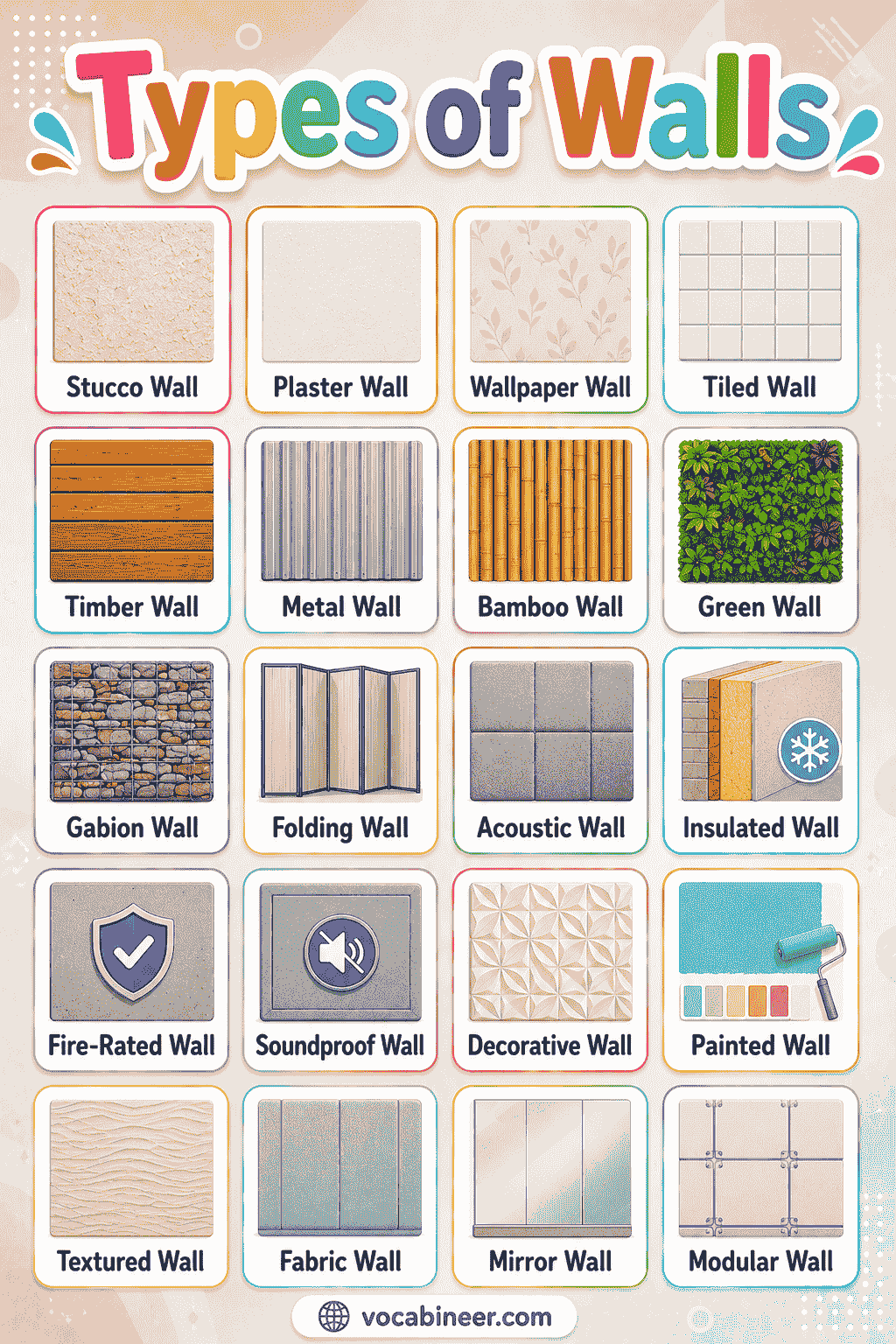
A wall chart helps learners compare wall groups quickly.
| Wall Group | Details |
|---|---|
| Structural walls | Best for: support and building strength Examples: load-bearing wall, shear wall, concrete wall |
| Interior walls | Best for: rooms, privacy, and layout Examples: drywall, partition wall, stud wall |
| Exterior walls | Best for: protection and building enclosure Examples: brick wall, concrete wall, curtain wall |
| Outdoor walls | Best for: gardens, boundaries, and soil support Examples: retaining wall, boundary wall, gabion wall |
| Decorative walls | Best for: style, texture, and visual interest Examples: feature wall, green wall, wooden wall |
| Material walls | Best for: different finishes and construction needs Examples: glass wall, stone wall, panel wall |
FAQ
The most common types of walls include brick walls, concrete walls, stone walls, wooden walls, drywall, glass walls, partition walls, load-bearing walls, retaining walls, and boundary walls.
A load-bearing wall supports the weight of a building, while a partition wall mainly divides rooms and does not usually carry major structural weight.
A curtain wall is a non-load-bearing exterior wall, often made with glass, metal, or panels. It covers the outside of a building but does not carry the main building weight.
Concrete walls, brick walls, stone walls, boundary walls, retaining walls, and gabion walls are common outdoor wall choices because they are durable and weather-resistant.
A retaining wall is used to hold back soil, support slopes, protect landscapes, and create level outdoor areas in gardens, yards, and construction spaces.
Read More
- Types of Flooring
- Bedroom Decor Items
- Popular Types of Tiles
- Types of Drinking Glasses
- Living Room Items Names
- Different Types of Houses
- Types of Rooms in a House
- Parts of a House Names