Wood is one of the most useful natural materials in homes, furniture, construction, flooring, doors, cabinets, and decoration. It can look light, dark, smooth, grainy, rustic, modern, or luxurious depending on the tree species, finish, and use.
Common types of wood include oak wood, pine wood, maple wood, walnut wood, cherry wood, mahogany wood, teak wood, cedar wood, birch wood, ash wood, beech wood, poplar wood, rosewood, ebony wood, acacia wood, plywood, MDF board, particle board, and OSB board. Bamboo is also often used like wood, although it is technically a grass. This guide explains wood names, categories, uses, colors, grain patterns, comparisons, choosing tips, and picture ideas.
In This Page
What Is Wood?
Wood is a hard natural material that comes from the trunk, branches, or stems of trees and woody plants. People use wood for furniture, houses, flooring, doors, cabinets, tools, crafts, and many building projects.
Some wood types are strong and heavy, while others are light, soft, and easy to cut. Natural wood comes from trees, while engineered wood products are made by joining wood fibers, layers, veneers, or particles with adhesives.
Common Types of Wood
These are the most common types of wood and wood products to know in English. They are useful for home improvement vocabulary, furniture vocabulary, construction learning, interior design, and woodworking.
- Oak Wood — a strong hardwood with a classic grain, often used for furniture, flooring, cabinets, and doors.
- Pine Wood — a light softwood used for construction, shelves, panels, simple furniture, and budget projects.
- Maple Wood — a hard, light-colored wood used for cabinets, flooring, furniture, cutting boards, and musical instruments.
- Walnut Wood — a dark, rich hardwood used for luxury furniture, cabinets, veneers, and decorative woodwork.
- Cherry Wood — a warm-toned hardwood used for fine furniture, cabinets, trim, and decorative pieces.
- Mahogany Wood — a premium hardwood used for high-quality furniture, doors, cabinets, and luxury interiors.
- Teak Wood — a durable hardwood known for outdoor furniture, decks, boats, and moisture-prone areas.
- Cedar Wood — a fragrant softwood used for closets, fences, outdoor projects, and insect-resistant storage.
- Birch Wood — a pale hardwood used for furniture, plywood, cabinets, and interior panels.
- Ash Wood — a strong wood with visible grain, often used for flooring, furniture, sports equipment, and tool handles.
- Beech Wood — a light-colored hardwood used for furniture, chairs, flooring, and kitchen tools.
- Poplar Wood — a lightweight wood often used for painted furniture, trim, boxes, and interior projects.
- Rosewood — a dark and decorative hardwood used for luxury furniture, veneers, instruments, and carved items.
- Ebony Wood — a very dark, dense wood used for decorative pieces, instruments, handles, and luxury details.
- Acacia Wood — a durable hardwood used for furniture, tabletops, outdoor items, and decorative interiors.
- Bamboo — a wood-like material used for flooring, furniture, panels, and home products.
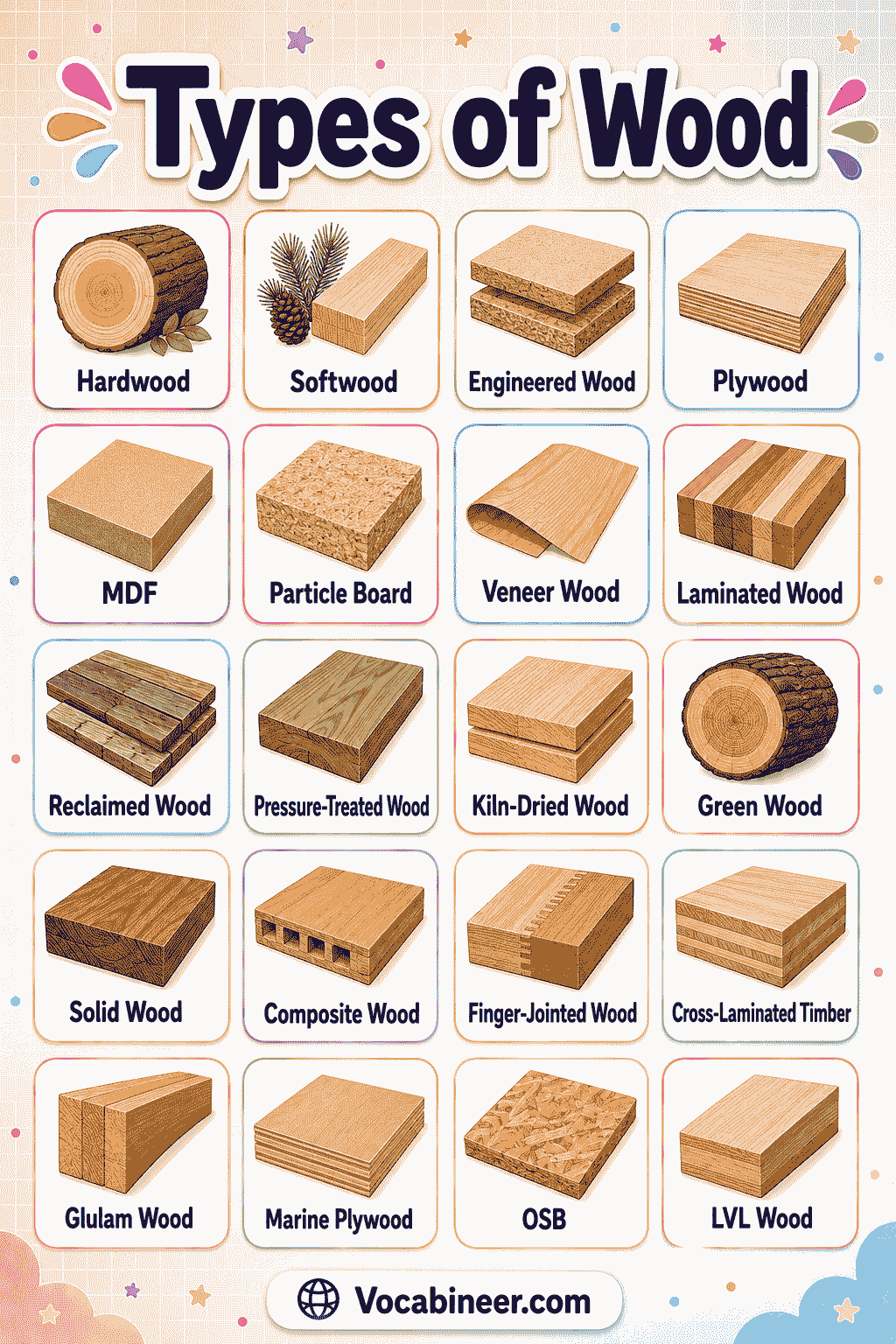
- Plywood — an engineered wood product made from thin layers of wood veneer.
- MDF Board — an engineered board made from wood fibers, often used for painted furniture, shelves, doors, and cabinets.
- Particle Board — an engineered board made from wood particles, used for budget furniture, panels, and cabinets.
- OSB Board — an engineered wood panel made from wood strands, commonly used in construction.
Types of Wood by Category
Wood can be grouped into hardwood, softwood, and engineered wood. These categories help learners understand strength, source, texture, cost, and common uses.
Hardwood
Hardwood usually comes from broad-leaved trees. Many hardwoods are dense, strong, attractive, and popular for furniture, flooring, cabinets, and high-quality interiors.
- Oak Wood
- Maple Wood
- Walnut Wood
- Cherry Wood
- Mahogany Wood
- Teak Wood
- Birch Wood
- Ash Wood
- Beech Wood
- Rosewood
Softwood
Softwood usually comes from cone-bearing trees. Many softwoods are lighter, easier to cut, and commonly used for construction, shelves, framing, and budget projects.
- Pine Wood
- Cedar Wood
- Fir Wood
- Spruce Wood
- Redwood
- Hemlock Wood
Engineered Wood
Engineered wood is made by joining wood fibers, veneers, particles, strands, or layers with adhesives. It is commonly used for panels, cabinets, furniture, walls, floors, and construction work.
- Plywood
- MDF Board
- Particle Board
- OSB Board
- Laminated Veneer Lumber
- Wood Veneer
Wood-Like Materials
Some materials are used like wood even though they are not true wood.
- Bamboo — bamboo is not true wood because it comes from a grass plant, but it is often used like wood for flooring, furniture, panels, and home products.
Types of Wood by Use
Different projects need different wood types. Furniture needs attractive and strong wood, while construction needs practical, available, and stable wood products.
Wood for Furniture
Furniture wood should be strong, attractive, smooth, and easy to finish.
- Oak Wood
- Walnut Wood
- Maple Wood
- Cherry Wood
- Mahogany Wood
- Teak Wood
Wood for Flooring
Flooring wood should be durable, stable, and able to handle regular foot traffic.
- Oak Wood
- Maple Wood
- Walnut Wood
- Ash Wood
- Bamboo
- Engineered Wood Flooring
Wood for Doors and Cabinets
Doors and cabinets need wood that looks neat, holds its shape well, and works with paint, polish, or stain.
- Oak Wood
- Maple Wood
- Birch Wood
- Pine Wood
- MDF Board
- Plywood
Wood for Outdoor Use
Outdoor wood should handle moisture, weather, insects, and sunlight better than delicate indoor woods.
- Teak Wood
- Cedar Wood
- Redwood
- Acacia Wood
- Pressure-Treated Wood
Wood for Construction
Construction wood should be strong, available, affordable, and suitable for framing, panels, or building work.
- Pine Wood
- Fir Wood
- Spruce Wood
- Plywood
- OSB Board
- Laminated Veneer Lumber
Types of Wood by Color and Grain
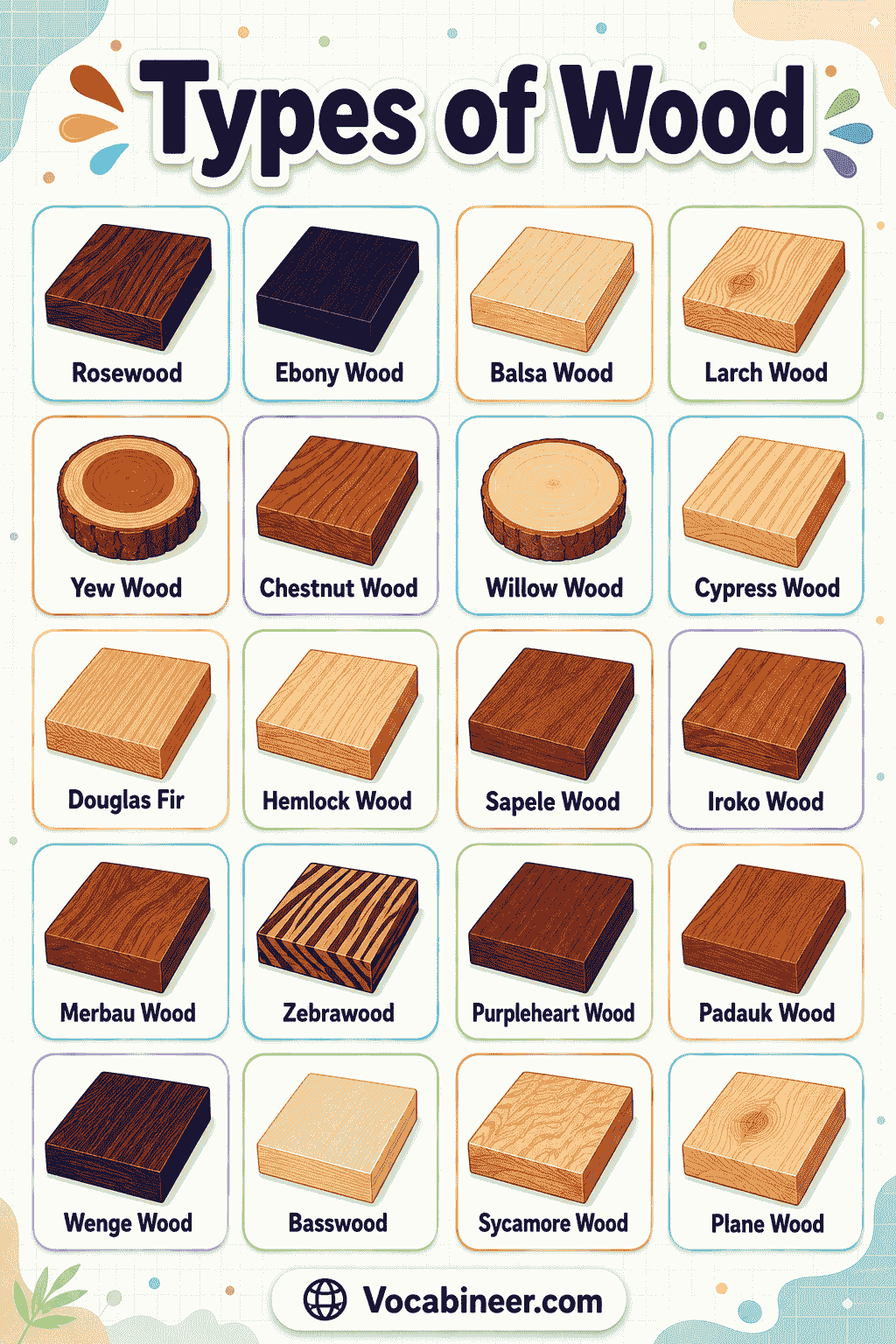
Wood color and grain affect the final look of furniture, flooring, cabinets, doors, and interiors. Some woods look pale and modern, while others look dark, rich, and luxurious.
Light-Colored Wood
Light-colored wood is often used in bright rooms, modern interiors, Scandinavian-style designs, and clean furniture looks.
- Pine Wood
- Maple Wood
- Birch Wood
- Ash Wood
- Beech Wood
Dark-Colored Wood
Dark-colored wood gives furniture and interiors a rich, premium, and elegant look.
- Walnut Wood
- Mahogany Wood
- Rosewood
- Ebony Wood
- Teak Wood
Wood with Strong Grain Patterns
Wood with strong grain patterns adds texture, movement, and natural detail to furniture, flooring, and decorative surfaces.
- Oak Wood
- Ash Wood
- Walnut Wood
- Zebrawood
- Rosewood
Types of Wood and Their Uses
| Type of Wood | Main Use |
|---|---|
| Oak wood | Furniture, flooring, cabinets, doors, and interior woodwork |
| Pine wood | Construction, furniture, shelves, wall panels, and budget projects |
| Maple wood | Furniture, flooring, cabinets, cutting boards, and musical instruments |
| Walnut wood | Luxury furniture, cabinets, veneers, and decorative woodwork |
| Cherry wood | Fine furniture, cabinets, interior trim, and decorative pieces |
| Mahogany wood | High-quality furniture, doors, cabinets, and luxury interiors |
| Teak wood | Outdoor furniture, decks, boats, and moisture-prone areas |
| Cedar wood | Outdoor projects, closets, fences, and insect-resistant storage |
| Plywood | Cabinets, furniture, walls, flooring base, and construction panels |
| MDF board | Painted furniture, cabinets, shelves, doors, and interior panels |
Difference Between Popular Wood Types
| Wood Type | Category | Look and Feel | Best For |
|---|---|---|---|
| Oak wood | Hardwood | Strong, grainy, and classic | Furniture and flooring |
| Pine wood | Softwood | Light, soft, and affordable | Construction and budget furniture |
| Maple wood | Hardwood | Light, smooth, and hard | Cabinets, flooring, and cutting boards |
| Walnut wood | Hardwood | Dark, rich, and premium | Luxury furniture and cabinets |
| Teak wood | Hardwood | Golden-brown and weather-resistant | Outdoor furniture and decks |
| Plywood | Engineered wood | Layered, stable, and practical | Cabinets, panels, and construction |
How to Choose the Right Type of Wood
Choosing the right type of wood depends on strength, budget, color, grain, durability, location, and project use. Furniture often works best with oak, walnut, maple, cherry, mahogany, or teak because these woods look attractive and last well. Construction projects usually use pine, fir, spruce, plywood, OSB board, or laminated veneer lumber because they are practical and widely available. Outdoor projects need weather-resistant choices such as teak, cedar, redwood, acacia, or pressure-treated wood. The best wood should match the project’s function, finish, budget, and durability needs.
Tips for Choosing Wood
- Check the project use — choose strong wood for furniture, flooring, doors, and construction work.
- Compare hardwood and softwood — hardwoods are often denser, while softwoods are usually lighter and easier to work with.
- Think about moisture — outdoor and wet areas need wood that resists moisture better.
- Look at color and grain — wood color and grain affect the final style of furniture or interiors.
- Consider finishing needs — some woods stain, paint, polish, or seal better than others.
- Choose by budget — pine, plywood, MDF board, and particle board are often more affordable than premium hardwoods.
- Check maintenance needs — outdoor wood may need sealing, oiling, or regular care.
Types of Wood Chart with Pictures
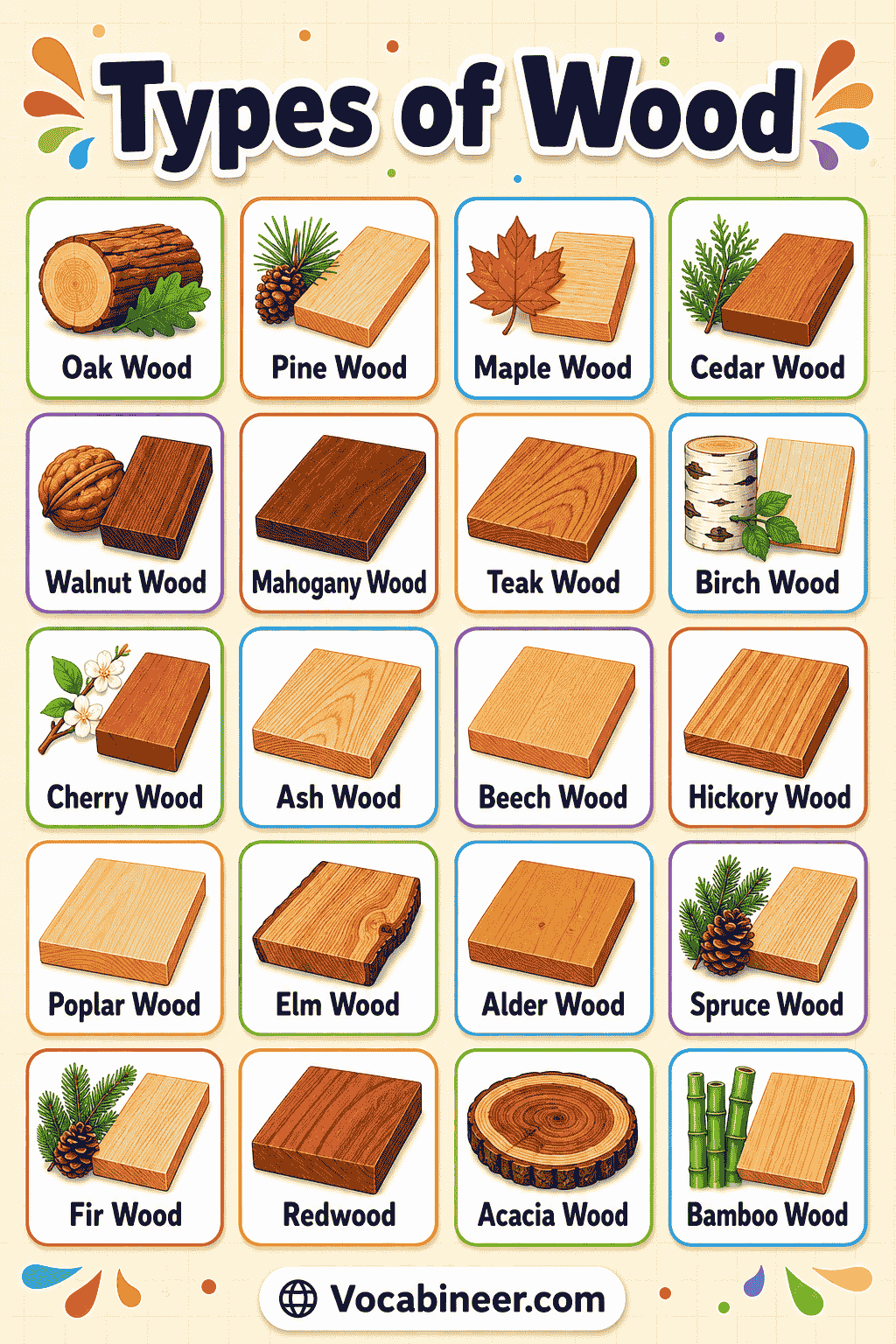
A wood chart helps learners compare wood groups quickly.
| Wood Group | Details |
|---|---|
| Hardwood | Best for: furniture, flooring, and cabinetsExamples: oak wood, maple wood, walnut wood |
| Softwood | Best for: construction, shelves, and budget projectsExamples: pine wood, cedar wood, spruce wood |
| Engineered wood | Best for: panels, cabinets, and affordable interiorsExamples: plywood, MDF board, particle board |
| Outdoor wood | Best for: decks, patios, and garden furnitureExamples: teak wood, cedar wood, redwood |
| Light wood | Best for: bright rooms and modern interiorsExamples: pine wood, maple wood, birch wood |
| Dark wood | Best for: luxury furniture and rich interiorsExamples: walnut wood, mahogany wood, ebony wood |
FAQ
The most common types of wood include oak, pine, maple, walnut, cherry, mahogany, teak, cedar, birch, ash, plywood, MDF board, particle board, and OSB board.
Hardwood usually comes from broad-leaved trees and is often denser, while softwood usually comes from cone-bearing trees and is often lighter and easier to cut.
Oak, walnut, maple, cherry, mahogany, and teak are popular for furniture because they are strong, attractive, and long-lasting.
Bamboo is not true wood because it comes from a grass plant. However, it is often used like wood for flooring, furniture, panels, and home products.
Engineered wood is made by joining wood fibers, veneers, particles, strands, or layers with adhesives. Plywood, MDF board, particle board, OSB board, and laminated veneer lumber are common examples.
Read More
- Types of Flooring
- Bedroom Decor Items
- Popular Types of Tiles
- Types of Drinking Glasses
- Living Room Items Names
- Different Types of Houses
- Types of Rooms in a House
- Parts of a House Names