

Rooms are important parts of a house, apartment, school, hotel, office, or building. Each room has a different purpose. Some rooms are used for sleeping, some for cooking, some for relaxing, and others for working, cleaning, or storage.
Common types of rooms in a house include the living room, bedroom, kitchen, bathroom, dining room, guest room, home office, laundry room, study room, kids’ room, nursery room, playroom, storage room, pantry, basement, attic, garage, family room, utility room, and closet. This guide explains room names in English with uses, simple meanings, examples, charts, and picture ideas.
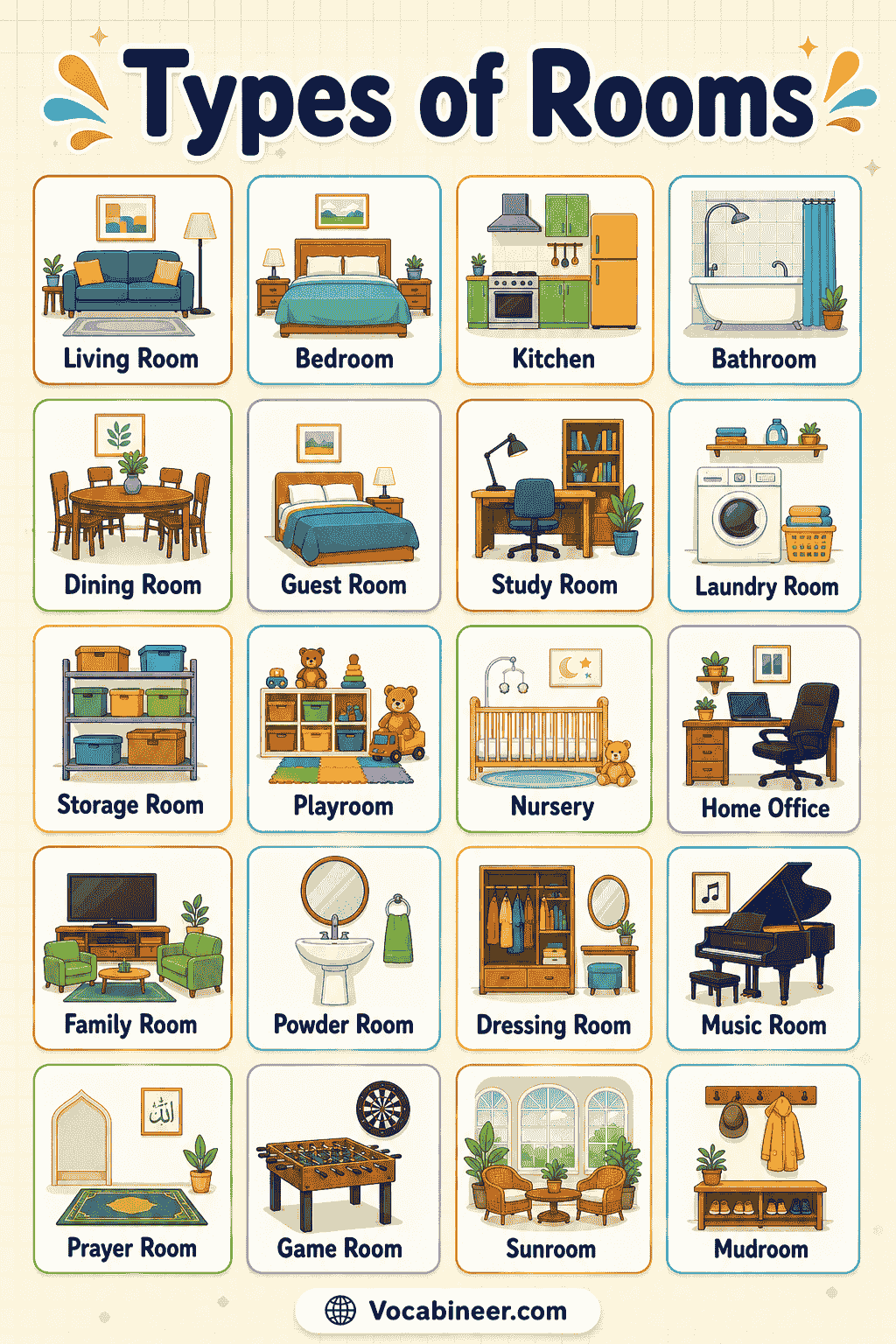
In This Page
What Is a Room?
A room is a separate space inside a house, apartment, or building. Rooms usually have walls, a floor, a ceiling, and a specific purpose.
For example, a bedroom is used for sleeping, a kitchen is used for cooking, and a bathroom is used for washing. Learning room names helps English learners describe homes, apartments, daily routines, cleaning tasks, furniture, and family life.
Common Types of Rooms in a House
A house can include different rooms for sleeping, cooking, eating, relaxing, working, and storing household items. Learning common room names helps children and English learners build home vocabulary and recognize how each space is used.
Living Room
A living room is a shared space for relaxing, talking, watching television, and spending time with family or guests.
Bedroom
A bedroom is a private room used mainly for sleeping and resting. It usually contains a bed, wardrobe, and other personal furniture.
Kitchen
A kitchen is the room where people prepare and cook food. It often includes a stove, sink, refrigerator, cabinets, and work surfaces.
Dining Room
A dining room is a space where people sit together to eat meals. A dining table and chairs usually form the main furniture.
Bathroom
A bathroom contains facilities for washing and personal hygiene. It may include a toilet, sink, shower, or bathtub.
Guest Room
A guest room provides a temporary sleeping space for visitors. It usually includes a bed and basic storage furniture.
Study Room
A study room provides a quiet place for reading, homework, writing, or other learning activities.
Home Office
A home office is a room or dedicated space for working from home. It often contains a desk, chair, computer, and storage.
Laundry Room
A laundry room provides space for washing, drying, and organizing clothes. It commonly contains a washing machine and laundry supplies.
Family Room
A family room is a casual shared space for relaxing, playing games, or spending time together.
Playroom
A playroom gives children a dedicated area for toys, games, crafts, and indoor activities.
Storage Room
A storage room keeps household items, boxes, tools, seasonal decorations, and other belongings organized.
Pantry
A pantry stores dry foods, canned goods, spices, drinks, and other kitchen supplies.
Dressing Room
A dressing room provides space for changing clothes and storing garments, shoes, and accessories.
Nursery
A nursery is a room prepared for a baby or very young child. It often contains a crib, changing area, and storage for baby items.
Basement
A basement is a lower level built partly or fully below ground. People may use it for storage, utilities, recreation, or additional living space.
Attic
An attic is a space directly below the roof. It often provides storage and can sometimes serve as an extra room.
Mudroom
A mudroom is an entrance area where people can remove wet or dirty shoes, coats, and outdoor clothing before entering the main house.
Sunroom
A sunroom has large windows that allow plenty of natural light inside. People often use it for relaxing, reading, or enjoying garden views.
Utility Room
A utility room contains household equipment such as heating systems, cleaning supplies, water heaters, or other practical appliances.
Types of Rooms by Purpose
Rooms can be grouped by purpose. This helps English learners remember room names by what people do in each space.
Living and Family Rooms
Living and family rooms are used for relaxing, talking, watching TV, and spending time with others.
- Living Room
- Family Room
- TV Room
- Lounge Room
- Drawing Room
Sleeping Rooms
Sleeping rooms are private spaces used for rest, sleep, personal items, and family needs.
- Bedroom
- Guest Room
- Kids’ Room
- Nursery Room
- Master Bedroom
Work and Study Rooms
Work and study rooms are used for reading, learning, writing, computer work, hobbies, or online tasks.
- Home Office
- Study Room
- Library Room
- Computer Room
- Craft Room
Utility and Storage Rooms
Utility and storage rooms are used for cleaning, laundry, supplies, food storage, and household organization.
- Laundry Room
- Storage Room
- Pantry
- Mudroom
- Utility Room
- Closet
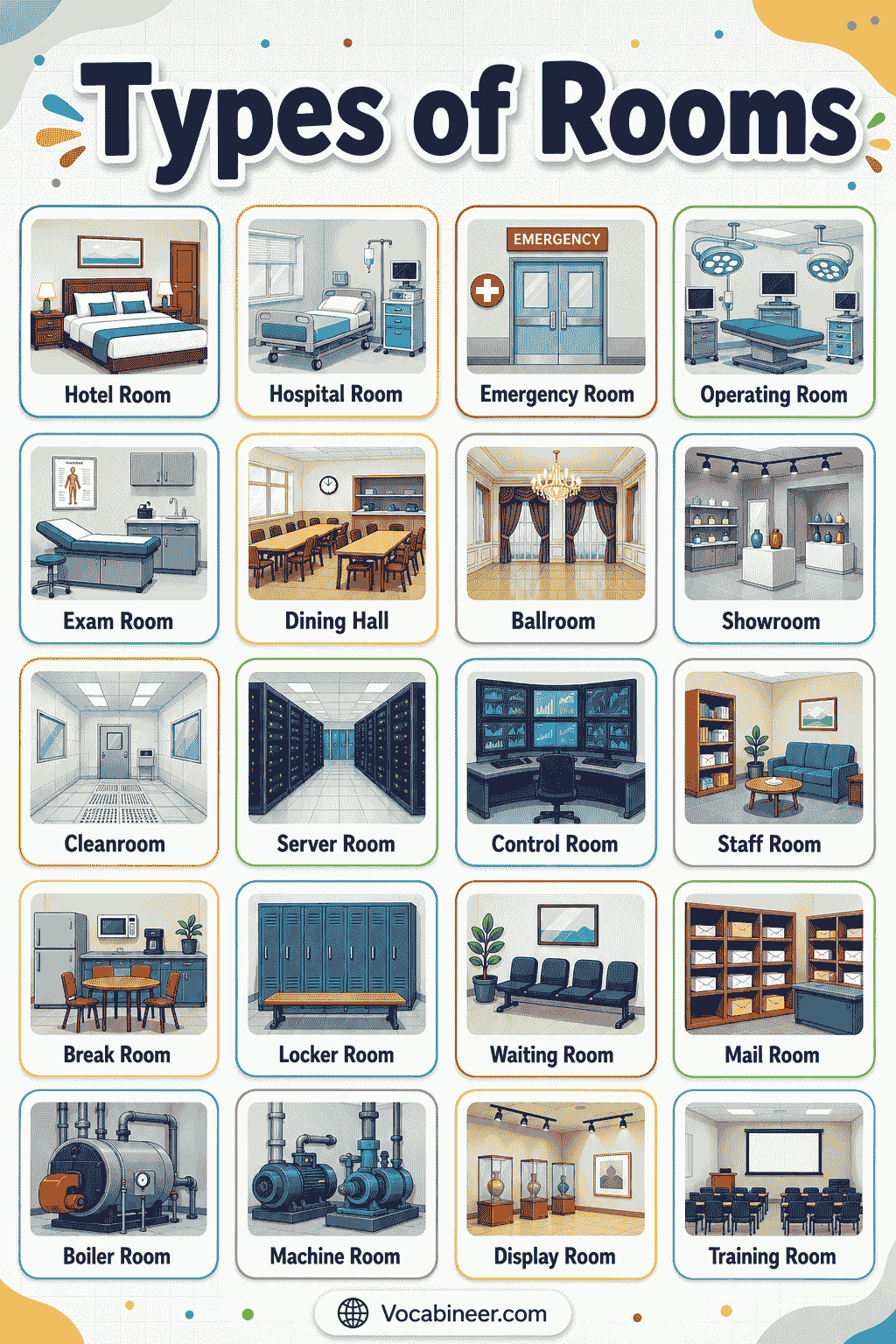
Types of Rooms by Area of the House
Rooms and spaces can also be grouped by where they are usually found in a house.
Main Living Areas
Main living areas are shared spaces where people cook, eat, sit, relax, and welcome guests.
- Living Room
- Dining Room
- Kitchen
- Family Room
- Entryway
Private Rooms
Private rooms are used for personal care, rest, sleep, and family privacy.
- Bedroom
- Bathroom
- Guest Room
- Kids’ Room
- Nursery Room
Service Rooms
Service rooms support daily household work such as cleaning, washing, storing, and organizing.
- Laundry Room
- Pantry
- Storage Room
- Utility Room
- Mudroom
Extra Spaces
Extra spaces may be used for parking, storage, movement, outdoor access, or extra living space.
- Basement
- Attic
- Garage
- Balcony
- Hallway
Rooms in a House and Their Uses
| Room | Main Use |
|---|---|
| Living room | Relaxing, talking with family, watching TV, and welcoming guests |
| Bedroom | Sleeping, resting, dressing, and keeping personal items |
| Kitchen | Cooking, preparing food, washing dishes, and storing kitchen items |
| Bathroom | Bathing, washing, brushing teeth, and personal hygiene |
| Dining room | Eating meals with family or guests |
| Guest room | Giving visitors a place to sleep and keep their things |
| Home office | Working, studying, writing, using a computer, and online meetings |
| Laundry room | Washing, drying, folding, and storing laundry items |
| Pantry | Storing food, snacks, dry goods, and kitchen supplies |
| Garage | Parking vehicles, storing tools, and keeping outdoor equipment |
Room Names in English with Simple Meanings
This section gives simple room meanings for English learners and beginners.
- Living room — a room for relaxing, sitting, and spending time with family or guests.
- Bedroom — a room used for sleeping and resting.
- Kitchen — a room where people cook and prepare food.
- Bathroom — a room used for washing, bathing, and using the toilet.
- Dining room — a room where people eat meals.
- Guest room — a room prepared for visitors.
- Home office — a room used for work, study, or online tasks.
- Laundry room — a room used for washing and drying clothes.
- Pantry — a small room or space used to store food.
- Garage — a space used to park cars or store tools.
Difference Between Common Room Types
| Room Type | Main Purpose | Common Items | Best Description |
|---|---|---|---|
| Living room | Relaxing and receiving guests | Sofa, TV, coffee table | Main family sitting area |
| Family room | Casual family time | Sofa, games, TV | Informal shared room |
| Bedroom | Sleeping and resting | Bed, wardrobe, dresser | Private sleeping room |
| Guest room | Visitors’ stay | Bed, side table, closet | Room for guests |
| Study room | Learning and reading | Desk, chair, books | Quiet learning space |
| Home office | Work and online tasks | Desk, computer, files | Work-from-home room |
Types of Rooms for Different Homes
Different homes have different room layouts. A small house may only have basic rooms, while a large house may include extra rooms for guests, hobbies, work, and storage.
Rooms in a Small House
Small houses usually have basic rooms for daily living.
- Living Room
- Bedroom
- Kitchen
- Bathroom
- Dining Area
Rooms in a Large House
Large houses may include extra rooms for comfort, hobbies, guests, and storage.
- Guest Room
- Home Office
- Playroom
- Library Room
- Laundry Room
- Basement
- Garage
Rooms in an Apartment
Apartments usually have fewer rooms and more shared spaces.
- Living Room
- Bedroom
- Kitchen
- Bathroom
- Balcony
- Entryway
Rooms in a Modern House
Modern homes often include flexible rooms for work, storage, entertainment, and family life.
- Home Office
- Open Kitchen
- Media Room
- Mudroom
- Walk-in Closet
- Utility Room
Important House Areas and Spaces
Not every house area is a room, but these words are important for describing homes in English.
- Entryway — the area near the main door where people enter the house.
- Hallway — a passage that connects rooms.
- Balcony — an outdoor raised space attached to a room or apartment.
- Basement — a room or area below the main floor of a house.
- Attic — a space under the roof, often used for storage.
- Garage — a covered space for parking vehicles or storing tools.
- Mudroom — a small entry area for shoes, coats, bags, and outdoor items.
- Walk-in Closet — a closet space large enough to walk into.
How to Learn Room Names in English
Learning room names is easier when you connect each room with its purpose. A kitchen is for cooking, a bedroom is for sleeping, and a bathroom is for washing. Pictures, example sentences, and common objects also help you remember each word. Daily practice is useful because room vocabulary appears often in conversations about homes, apartments, renting, moving, cleaning, and family life.
Example Sentences with Room Names
Example sentences help learners understand how room names are used in daily English.
- I watch TV in the living room.
- She sleeps in the bedroom.
- We cook dinner in the kitchen.
- He brushes his teeth in the bathroom.
- They eat lunch in the dining room.
- My uncle is staying in the guest room.
- I do my homework in the study room.
- She works from the home office.
- The washing machine is in the laundry room.
- We keep extra food in the pantry.
Tips for Learning House and Room Vocabulary
- Use pictures — pictures help you connect each room name with its real meaning.
- Learn by purpose — remember rooms by what people do there, such as cooking, sleeping, or washing.
- Add common objects — connect each room with items like bed, sofa, sink, desk, or wardrobe.
- Practice short sentences — write simple lines such as “The bed is in the bedroom.”
- Group similar rooms — learn sleeping rooms, living rooms, and utility rooms together.
- Review daily — use room names when describing your home, apartment, or dream house.
Types of Rooms Chart with Pictures
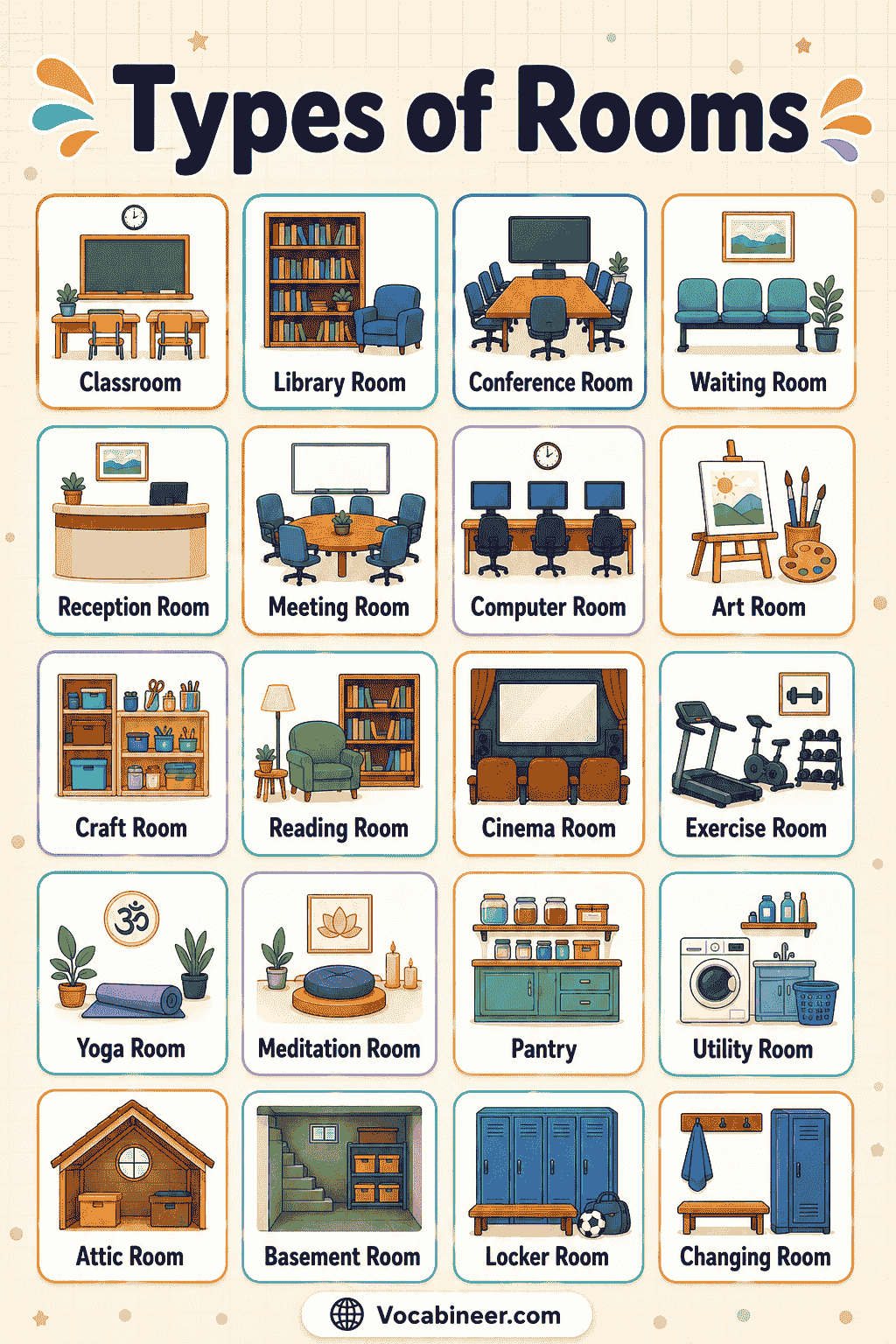
A room chart helps learners compare room groups quickly.
| Room Group | Details |
|---|---|
| Living rooms | Best for: relaxing and family time Examples: living room, family room, TV room |
| Sleeping rooms | Best for: rest and personal space Examples: bedroom, guest room, nursery room |
| Work rooms | Best for: study, reading, and online work Examples: home office, study room, library room |
| Utility rooms | Best for: cleaning, storage, and household tasks Examples: laundry room, pantry, storage room |
| Extra spaces | Best for: parking, storage, and outdoor access Examples: garage, attic, basement, balcony |
| House areas | Best for: movement and entry Examples: hallway, entryway, mudroom |
FAQ
The most common types of rooms in a house include the living room, bedroom, kitchen, bathroom, dining room, guest room, home office, laundry room, pantry, garage, family room, and utility room.
A living room is often used for guests and general sitting, while a family room is usually a more casual space for family time, TV, games, and relaxing.
A small house usually has a living room, bedroom, kitchen, bathroom, and sometimes a dining area, laundry area, or small storage space.
A utility room is used for household tasks such as laundry, cleaning, storing supplies, and keeping tools or equipment.
English learners should first know basic room names such as living room, bedroom, kitchen, bathroom, dining room, guest room, laundry room, hallway, and garage.
Read More
- Different Types of Houses
- Parts of a House Names
- Types of Flooring
- Bedroom Decor Items
- Types of Drinking Glasses
- Living Room Items Names