

Bathtubs come in many shapes, sizes, materials, and installation styles. Some tubs fit between bathroom walls, some stand alone as design features, and some include deep soaking space, water jets, air bubbles, or easy-entry doors.
Learning bathtub names helps homeowners, students, designers, builders, and English learners understand bathroom vocabulary more clearly. This guide explains common types of bathtubs, their uses, parts, features, materials, sizes, safety tips, confusing terms, and simple examples.
In This Page
What Is a Bathtub?
A bathtub is a bathroom fixture used for bathing, soaking, washing, and relaxing. It usually holds water and has a drain at the bottom. Some bathtubs are built into the bathroom wall area, while others stand freely on the floor.
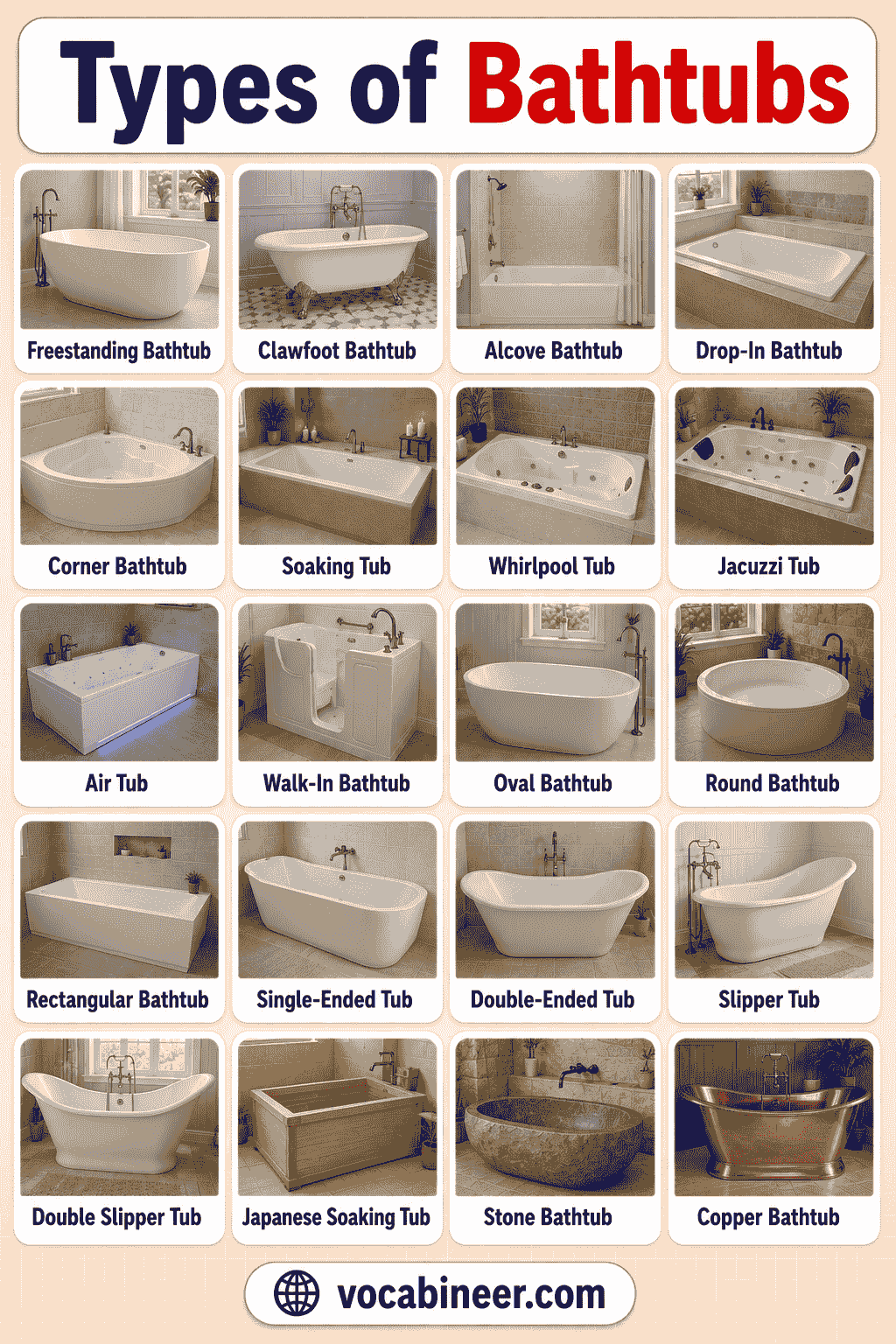
Common bathtub types include alcove bathtubs, freestanding bathtubs, drop-in bathtubs, undermount bathtubs, corner bathtubs, walk-in bathtubs, soaking tubs, whirlpool tubs, air tubs, clawfoot tubs, and shower-tub combinations.
Bathtub vs Bath vs Shower: What Is the Difference?
The words bathtub, bath, and shower are related, but they do not mean exactly the same thing.
| Term | Simple Meaning | Example |
|---|---|---|
| Bathtub | A bathroom fixture that holds water for bathing or soaking | Alcove bathtub, freestanding tub |
| Bath | The act of washing or soaking in water | Take a bath, warm bath |
| Shower | A fixture or action where water falls from above while you stand | Shower stall, shower head |
Common Bathtub Names and Uses
These are common bathtub names in bathroom vocabulary.
- Alcove bathtub — A bathtub installed between three walls, often used in standard bathrooms.
- Freestanding bathtub — A bathtub that stands alone and has finished sides.
- Drop-in bathtub — A bathtub placed inside a built frame or deck.
- Undermount bathtub — A bathtub installed under a finished deck surface.
- Corner bathtub — A bathtub designed to fit into a bathroom corner.
- Walk-in bathtub — A bathtub with a door for easier entry.
- Soaking bathtub — A deeper bathtub made for relaxing in water.
- Whirlpool bathtub — A bathtub with water jets for a massage effect.
- Air bathtub — A bathtub with air jets that create gentle bubbles.
- Clawfoot bathtub — A freestanding bathtub with decorative feet.
- Shower-tub combination — A bathtub and shower built into the same space.
- Japanese soaking tub — A deep compact bathtub made for upright soaking.
- Slipper bathtub — A bathtub with one raised end for back support.
- Double-ended bathtub — A bathtub with sloped ends on both sides.
- Pedestal bathtub — A freestanding bathtub with a solid base.
- Garden tub — A large deep bathtub often used for soaking.
- Sunken bathtub — A bathtub built into the floor or platform.
- Recessed bathtub — A bathtub built into a recessed bathroom space.
- Jetted bathtub — A bathtub with jets, often water or air jets.
- Accessible bathtub — A broader term for tubs designed with safety, support, or mobility needs in mind.
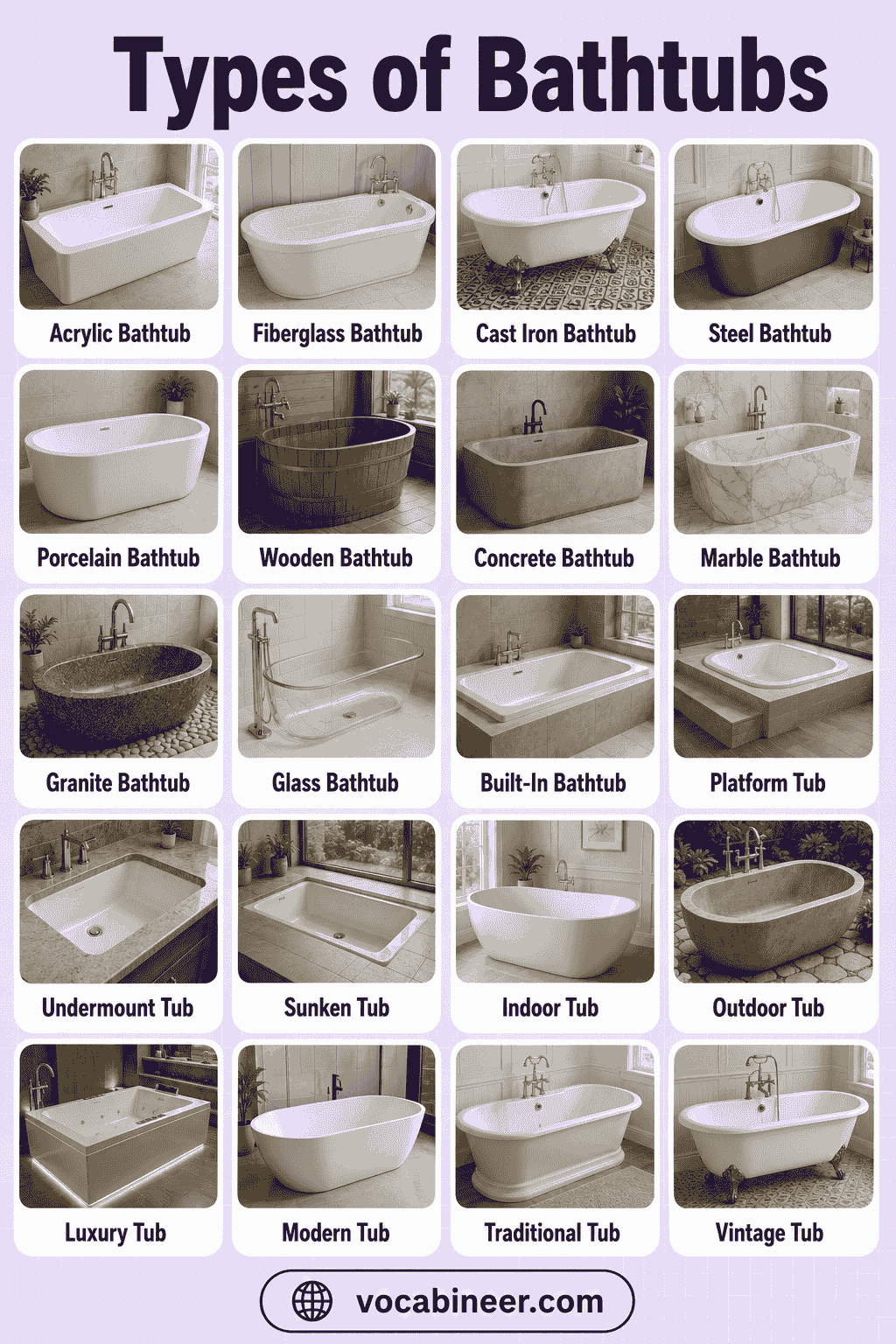
Bathtub Parts and Features
Bathtub parts and features affect comfort, safety, installation, and cleaning.
- Rim — The top edge of the bathtub.
- Apron — The front finished panel on some built-in tubs.
- Deck — The flat surface around a drop-in or undermount bathtub.
- Drain — The opening where water leaves the tub.
- Overflow — A small opening that helps prevent water from spilling over.
- Faucet — The fixture that fills the bathtub with water.
- Spout — The part where water flows into the tub.
- Tub surround — The wall covering around a bathtub.
- Grab bars — Safety bars used for support.
- Slip-resistant floor — A textured surface that helps reduce slipping.
- Jets — Openings that push water or air into the bathtub.
- Soaking depth — The water depth available for soaking.
- Water capacity — The amount of water a bathtub can hold.
- Left-hand drain — A drain placed on the left side of the tub.
- Right-hand drain — A drain placed on the right side of the tub.
- Center drain — A drain placed near the middle of the tub.
- Built-in seat — A seat inside some walk-in or accessible tubs.
- Low threshold — A lower entry edge that makes stepping in easier.
Bathtub Types by Installation Style
Bathtub installation style explains how the tub fits into the bathroom. Some tubs need walls, some need a deck, and others stand alone.
- Alcove bathtub — Fits between three walls and often works with a shower.
- Freestanding bathtub — Stands alone and does not need a wall enclosure.
- Drop-in bathtub — Drops into a framed platform or deck.
- Undermount bathtub — Sits under a finished deck for a smooth edge.
- Corner bathtub — Fits into a corner and can save wall space.
- Recessed bathtub — Fits into a recessed area or built-in space.
- Sunken bathtub — Sits lower into a platform or floor area.
Alcove, Drop-In, and Undermount Bathtubs
Alcove, drop-in, and undermount bathtubs are common built-in bathtub styles. They work well in bathrooms where the tub needs to fit into a planned space.
- Alcove bathtub — Best for standard bathrooms, smaller spaces, and shower-tub combinations.
- Drop-in bathtub — Best for custom bathroom decks and built-in designs.
- Undermount bathtub — Best for a clean, smooth deck finish.
- Recessed bathtub — Best for bathrooms with a built-in wall or niche area.
- Sunken bathtub — Best for luxury bathrooms with a platform or floor-level design.
Freestanding, Clawfoot, and Pedestal Bathtubs
Freestanding bathtubs stand alone and often become a main design feature in the bathroom. They usually need more open floor space than alcove tubs.
- Freestanding bathtub — Best for open bathrooms and modern bathroom designs.
- Clawfoot bathtub — Best for vintage, classic, or traditional bathroom styles.
- Pedestal bathtub — Best for a freestanding look with a solid base.
- Slipper bathtub — Best for comfortable soaking with one raised end.
- Double-ended bathtub — Best for reclining from either side.
- Copper freestanding tub — Best for luxury bathrooms and warm visual style.
- Stone resin freestanding tub — Best for modern bathrooms and strong design impact.
Corner and Recessed Bathtubs
Corner and recessed bathtubs help use bathroom space in a different way. They can work in bathrooms where a regular rectangular tub does not fit well.
- Corner bathtub — Best for bathrooms with unused corner space.
- Triangular corner tub — Best for a wider bathing area in a corner.
- Recessed bathtub — Best for a built-in wall area.
- Sunken bathtub — Best for bathrooms with a platform or floor-level design.
- Built-in corner soaking tub — Best for larger bathrooms that need a deep bathing area.
Bathtub Types by Feature
Some bathtub types are named by special features rather than shape or installation.
- Soaking bathtub — Made for deep, relaxing baths.
- Whirlpool bathtub — Uses water jets for a stronger massage effect.
- Air bathtub — Uses air jets for softer bubbles.
- Jetted bathtub — A general term for tubs with water or air jets.
- Walk-in bathtub — A bathtub with a door and lower entry.
- Accessible bathtub — Designed with safety and mobility in mind.
- Shower-tub combination — Combines bathing and showering in one space.
- Heated bathtub — Uses heating features to help keep water warm.
- Chromatherapy bathtub — Uses colored lights for a spa-like effect.
- Slip-resistant bathtub — Has a textured floor for safer footing.
Soaking, Whirlpool, and Air Bathtubs
Soaking, whirlpool, and air bathtubs focus on comfort and relaxation. They are often used in master bathrooms, spa-style bathrooms, and larger bathing spaces.
- Soaking bathtub — Best for deep water soaking and quiet relaxation.
- Japanese soaking tub — Best for upright soaking in a deep compact tub.
- Garden tub — Best for a larger, deeper bath.
- Whirlpool bathtub — Best for a water-jet massage feeling.
- Air bathtub — Best for gentle bubbles and a softer spa effect.
- Jetted bathtub — Best for users who want massage-style bathtub features.
Walk-In Bathtubs and Accessible Tubs
Walk-in bathtubs and accessible tubs are designed for easier entry, safer bathing, and better support. They are often useful for seniors, people with limited mobility, or anyone who wants a lower step-in design.
- Walk-in bathtub — Has a door and a lower entry point.
- Accessible bathtub — Includes features that support safer bathing.
- Bathtub with built-in seat — Lets the user sit while bathing.
- Bathtub with grab bars — Adds support for balance and movement.
- Low-threshold bathtub — Reduces the height needed to step into the tub.
- Slide-in bathtub — Designed for easier side entry in some accessible bathrooms.
Shower-Tub Combinations
A shower-tub combination includes a bathtub and shower in the same area. This type is common in family bathrooms, guest bathrooms, apartments, and smaller homes.
- Alcove shower-tub combo — Best for standard bathrooms and everyday use.
- Tub-shower combo with curtain — Best for simple and budget-friendly bathrooms.
- Tub-shower combo with glass door — Best for a cleaner, more modern look.
- Deep shower-tub combo — Best for people who want both soaking and showering.
- Kids’ bathroom tub-shower combo — Best for families with children.
Bathtub Types by Style
Bathtub style affects the look and feel of the bathroom. Some styles look modern, while others look classic, rustic, or spa-like.
- Modern bathtub — Clean lines, simple shape, and smooth surfaces.
- Traditional bathtub — Classic shape and timeless bathroom look.
- Clawfoot bathtub — Decorative feet and vintage style.
- Slipper bathtub — Raised backrest for a graceful shape.
- Double-ended bathtub — Balanced shape with sloped ends on both sides.
- Pedestal bathtub — Freestanding tub with a solid base.
- Japanese soaking tub — Deep, compact, and upright.
- Garden tub — Large, deep, and often luxurious.
- Stone bathtub — Heavy, natural-looking, and high-end.
- Copper bathtub — Warm metal look with a luxury feel.
Japanese Soaking, Slipper, and Garden Tubs
Japanese soaking tubs, slipper tubs, and garden tubs are popular style-based bathtub names. Each one gives the bathroom a different look and bathing experience.
- Japanese soaking tub — Best for deep upright soaking in a smaller footprint.
- Slipper bathtub — Best for reclining against a raised end.
- Double slipper bathtub — Best for two raised ends and a balanced look.
- Garden tub — Best for deep soaking in a larger bathroom.
- Double-ended tub — Best for comfortable reclining on either side.
- Pedestal tub — Best for a freestanding style with a finished base.
Small Bathtubs for Compact Bathrooms
Small bathtubs are useful for apartments, guest bathrooms, narrow bathrooms, and homes with limited floor space. A compact tub can still provide bathing space without taking over the room.
- Alcove bathtub — Best for many small and standard bathrooms.
- Short soaking tub — Best for deep soaking in a compact space.
- Japanese soaking tub — Best for upright soaking with less floor length.
- Corner bathtub — Best when a corner layout fits the bathroom better.
- Shower-tub combination — Best when the bathroom needs both functions.
- Narrow bathtub — Best for slim bathroom layouts.
- Recessed bathtub — Best when the tub can fit into a built-in space.
Luxury Bathtub Types
Luxury bathtubs focus on comfort, material, size, and design. They often work best in larger bathrooms with enough floor space and strong bathroom planning.
- Freestanding bathtub — Creates a bold design feature.
- Stone resin bathtub — Gives a smooth modern look.
- Copper bathtub — Adds warmth and luxury style.
- Cast iron bathtub — Feels solid and holds heat well.
- Whirlpool bathtub — Adds water-jet massage.
- Air bathtub — Adds gentle bubble comfort.
- Japanese soaking tub — Gives a spa-style soaking experience.
- Garden tub — Offers a larger deep bathing space.
- Sunken bathtub — Creates a custom luxury bathroom look.
Bathtub Shapes and Sizes
Bathtub shape and size affect comfort, bathroom layout, and installation. A long tub gives more reclining space, while a deeper tub gives better soaking depth.
- Rectangular bathtub — Common shape for alcove, drop-in, and shower-tub combinations.
- Oval bathtub — Common in freestanding and soaking tubs.
- Round bathtub — Used in some luxury or spa-style bathrooms.
- Corner bathtub — Designed to fit into a corner.
- Deep bathtub — Best for soaking.
- Short bathtub — Best for compact bathrooms.
- Long bathtub — Best for more reclining space.
- Wide bathtub — Best for extra comfort.
- Narrow bathtub — Best for slim bathrooms.
- Double-ended bathtub — Has sloped ends on both sides.
Common Bathtub Materials
Bathtub material affects weight, cost, durability, cleaning, and heat retention.
- Acrylic bathtub — Lightweight, common, and easy to shape into many styles.
- Fiberglass bathtub — Lightweight and usually budget-friendly.
- Porcelain-enameled steel bathtub — Strong surface over steel, often used in standard bathrooms.
- Cast iron bathtub — Heavy, durable, and good at holding heat.
- Enameled cast iron bathtub — Cast iron with a smooth enamel surface.
- Stone resin bathtub — Solid, smooth, and common in modern freestanding tubs.
- Solid surface bathtub — Smooth, durable, and often used in modern bathrooms.
- Copper bathtub — Decorative, warm-looking, and high-end.
- Ceramic or tiled bathtub — A tub or built-in bathing area finished with ceramic tile.
- Marble bathtub — Luxury material with a natural stone look.
- Wood bathtub — A rare spa-style bathtub that needs special sealing and careful maintenance.
Best Bathtubs for Different Bathrooms
Choosing a bathtub becomes easier when you match it to the bathroom type.
- Small bathroom — Alcove tub, short soaking tub, or shower-tub combination.
- Family bathroom — Alcove bathtub or shower-tub combination.
- Guest bathroom — Compact alcove tub or simple shower-tub combo.
- Master bathroom — Freestanding tub, soaking tub, or luxury tub.
- Modern bathroom — Freestanding acrylic, stone resin, or solid surface tub.
- Traditional bathroom — Clawfoot tub, pedestal tub, or cast iron tub.
- Accessible bathroom — Walk-in tub, low-threshold tub, or tub with grab bars.
- Spa-style bathroom — Soaking tub, Japanese soaking tub, whirlpool tub, or air tub.
- Apartment bathroom — Alcove tub, compact tub, or tub-shower combo.
- Large bathroom — Freestanding tub, garden tub, corner tub, or sunken tub.
Bathtub Safety and Cleaning Tips
Bathtub safety and cleaning matter because tubs hold water, soap, and smooth surfaces.
- Use a slip-resistant mat or textured tub floor.
- Add grab bars when extra support is needed.
- Keep soap, shampoo, and bottles away from the tub floor.
- Check water temperature before bathing.
- Clean soap scum regularly.
- Dry wet floor areas around the bathtub.
- Use cleaners that match the bathtub material.
- Avoid harsh scrubbing on delicate surfaces.
- Check caulk and seals around built-in tubs.
- Keep the drain clear of hair and debris.
- Use bath mats carefully so they do not slide.
- Follow the care instructions for jetted, acrylic, copper, stone, wood, or cast iron tubs.
Types of Bathtubs Chart
| Bathtub Type | Best Used For |
|---|---|
| Alcove bathtub | Standard bathrooms and shower-tub combinations |
| Freestanding bathtub | Open bathrooms and design-focused spaces |
| Drop-in bathtub | Custom decks and built-in bathroom designs |
| Undermount bathtub | Smooth deck finishes and modern built-in looks |
| Corner bathtub | Corner layouts and wider bathing spaces |
| Walk-in bathtub | Easier entry, safer bathing, and accessibility |
| Soaking bathtub | Deep relaxation and longer baths |
| Whirlpool bathtub | Water-jet massage and spa-style bathing |
| Air bathtub | Gentle bubbles and soft relaxation |
| Clawfoot bathtub | Vintage and classic bathroom designs |
| Shower-tub combination | Bathrooms that need both shower and tub |
| Japanese soaking tub | Deep upright soaking in compact spaces |
Confusing Bathtub Terms Explained
Some bathtub terms sound similar. This table explains the differences simply.
| Terms | Simple Difference |
|---|---|
| Bathtub vs Shower | A bathtub holds water for bathing. A shower sprays water while you stand. |
| Bathtub vs Bath | A bathtub is the fixture. A bath is the act of washing or soaking. |
| Alcove vs Freestanding Bathtub | An alcove tub fits between walls. A freestanding tub stands alone. |
| Drop-In vs Undermount Bathtub | A drop-in tub has a visible rim. An undermount tub sits under the deck edge. |
| Soaking vs Whirlpool Bathtub | A soaking tub focuses on depth. A whirlpool tub uses water jets. |
| Whirlpool vs Air Bathtub | A whirlpool tub uses water jets. An air tub uses air bubbles. |
| Clawfoot vs Freestanding Bathtub | A clawfoot tub is a type of freestanding tub with feet. |
| Walk-In vs Standard Bathtub | A walk-in tub has a door or lower entry. A standard tub usually requires stepping over the side. |
| Acrylic vs Fiberglass Bathtub | Acrylic is usually stronger and smoother. Fiberglass is often lighter and cheaper. |
| Cast Iron vs Acrylic Bathtub | Cast iron is heavier and holds heat well. Acrylic is lighter and easier to install. |
How to Choose the Right Bathtub
Choose the right bathtub by matching it to your bathroom size, bathing style, installation space, and comfort needs. An alcove bathtub or shower-tub combination works well in standard and compact bathrooms, while a freestanding tub works better in open bathrooms with more floor space. Choose a soaking tub for deep relaxation, a walk-in tub for easier entry, and a whirlpool or air tub if you want spa-style features.
Material, safety, and cleaning also matter. Acrylic and fiberglass tubs are lighter and common for many homes, while cast iron, stone resin, copper, and solid surface tubs feel heavier and more premium. Check the tub size, drain position, water capacity, floor support, slip resistance, and cleaning needs before choosing. For daily use, pick a bathtub that fits the room, feels comfortable, cleans easily, and matches the people who will use it most.
FAQs
The main types of bathtubs include alcove bathtubs, freestanding bathtubs, drop-in bathtubs, undermount bathtubs, corner bathtubs, walk-in bathtubs, soaking tubs, whirlpool tubs, air tubs, clawfoot tubs, and shower-tub combinations.
An alcove bathtub or shower-tub combination is often best for a small bathroom because it fits against walls and uses space efficiently. A short soaking tub or Japanese soaking tub can also work in compact bathrooms.
An alcove tub fits between three walls and often works with a shower. A freestanding tub stands alone and usually needs more open floor space.
A soaking bathtub is best for soaking because it is deeper than many standard tubs. Japanese soaking tubs, garden tubs, and some freestanding tubs also work well for deep bathing.
Acrylic bathtubs are often easy to clean for everyday use. Fiberglass tubs are also lightweight and budget-friendly, but they need gentle cleaning to avoid scratches or dull spots. Smooth solid surface and enameled tubs can also clean well when you use the right cleaner for the material.
Read More
- Different Types of Baskets
- Types of Keys with Names
- Popular Types of Tiles
- Parts of a House Names
- Different Types of Tables
- Different Types of Drawers