

Food serving dishes are bowls, platters, trays, and containers used to hold and serve food at the table. A serving bowl may hold salad, rice, or pasta, while a platter may hold meat, snacks, bread, or desserts. These dishes make food easier to share, carry, display, and serve.
Learning food serving dish names is useful for home kitchens, restaurants, table settings, shopping, and English vocabulary. This guide explains common serving dishes, their uses, materials, shapes, food matching, and simple choosing tips.
In This Page
What Are Food Serving Dishes?
Food serving dishes are items used to present, hold, carry, or share food. They are usually placed in the center of the table, on a buffet, or on a serving counter so people can take food from them.
Common food serving dishes include:
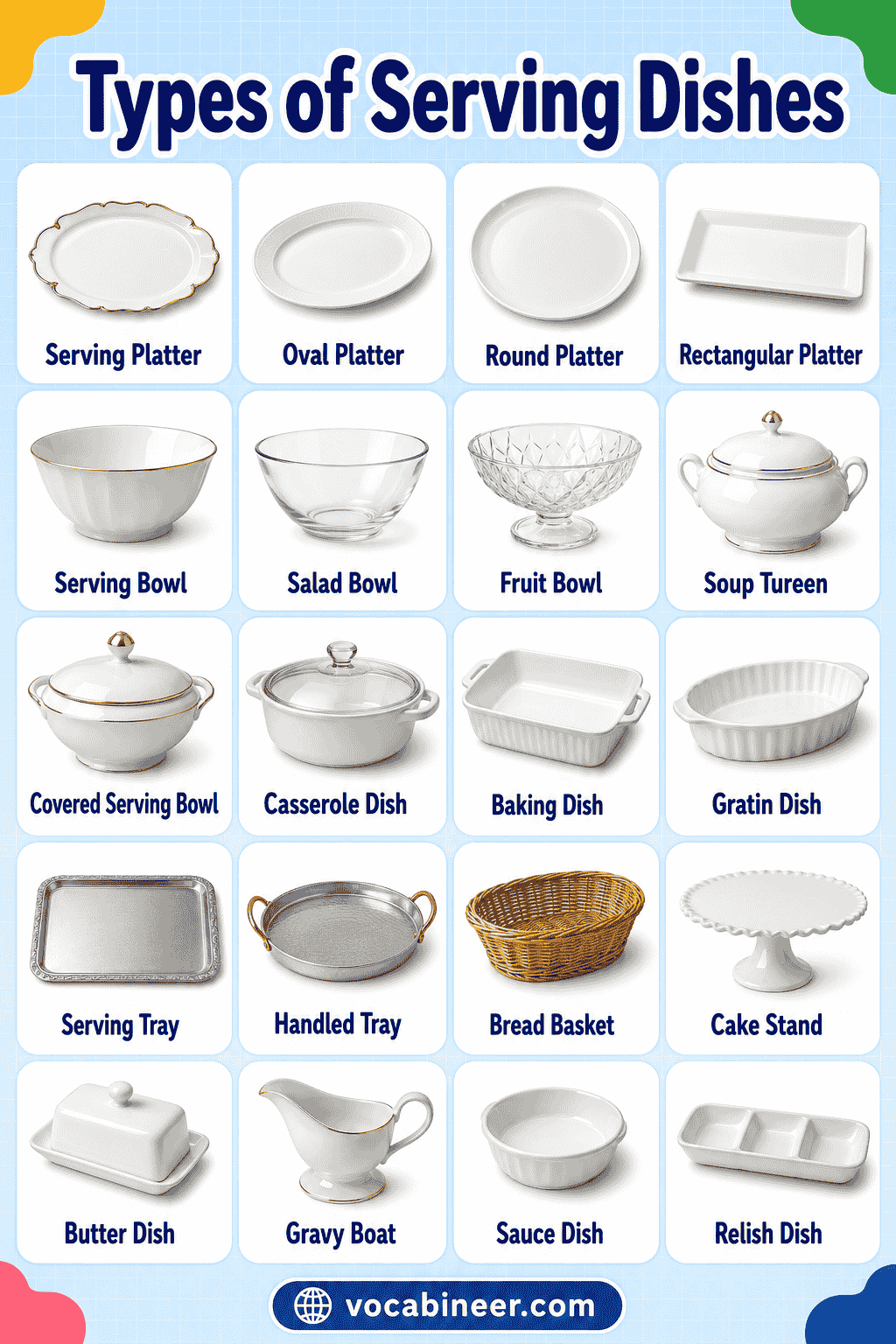
- Serving bowl — A bowl used to serve salad, rice, pasta, vegetables, fruit, or snacks.
- Serving platter — A large flat dish used to serve meat, fish, sandwiches, appetizers, or desserts.
- Serving tray — A flat tray used to carry or serve cups, snacks, tea, breakfast, or small plates.
- Soup tureen — A deep covered dish used to serve soup, stew, broth, or chowder.
- Casserole dish — A deep dish used for baked foods, saucy meals, and oven-to-table serving.
- Sauce boat — A small dish with a spout used for gravy, sauce, dressing, or cream sauce.
- Bread basket — A basket used to serve bread, rolls, buns, naan, or flatbread.
- Cake stand — A raised serving dish used to display and serve cake, cupcakes, or pastries.
Food Serving Dishes vs Food Dishes: What Is the Difference?
The word dish can mean a prepared food item or the container used to serve food. This article focuses on the container meaning.
| Term | Simple Meaning | Examples |
|---|---|---|
| Food serving dish | A container used to hold, present, or serve food | Serving bowl, platter, tray, tureen |
| Food dish | Prepared food people eat | Soup, curry, pasta, salad, rice |
Serving Dishes vs Serveware, Dinnerware, and Tableware
These table-related words are connected, but they do not mean exactly the same thing.
| Term | Simple Meaning | Examples |
|---|---|---|
| Serving dishes | Dishes used to serve shared food | Platters, serving bowls, tureens |
| Serveware | Items used for serving food | Serving dishes, trays, boards, ladles |
| Dinnerware | Plates and bowls used by each person for eating | Dinner plates, soup bowls, side plates |
| Tableware | A broad group of items used on the table | Dinnerware, serveware, glasses, utensils |
Essential Food Serving Dishes Every Kitchen Needs
A kitchen does not need every serving dish, but a few basic pieces help with daily meals and guest serving.
- Large serving bowl — Useful for salad, rice, pasta, vegetables, snacks, and side dishes.
- Medium serving bowl — Good for smaller sides, fruit, chips, cooked vegetables, and light snacks.
- Serving platter — Helpful for meat, fish, sandwiches, appetizers, bread, and desserts.
- Serving tray — Used to carry cups, snacks, tea, breakfast, or several small dishes.
- Deep serving dish — Best for curry, stew, saucy foods, casseroles, and mixed dishes.
- Sauce bowl or sauce boat — Used for gravy, dips, chutney, dressing, or sauces.
- Bread basket — Useful for bread, rolls, buns, naan, and flatbread.
- Dessert bowl — Used for pudding, fruit, ice cream, custard, or small sweets.
- Covered dish — Helps keep food warm, fresh, or protected.
- Divided serving dish — Useful for snacks, dips, pickles, olives, nuts, and appetizers.
Common Food Serving Dish Names and Uses
Food serving dishes come in many styles. Some are used every day, while others are made for specific foods or special table settings.
- Serving Bowl — A bowl used to serve shared food such as salad, rice, pasta, fruit, or vegetables.
- Salad Bowl — A large bowl used for green salad, fruit salad, pasta salad, or mixed salad.
- Soup Tureen — A deep covered dish used for soup, stew, broth, or chowder.
- Serving Platter — A large flat dish used for meat, fish, sandwiches, snacks, appetizers, or desserts.
- Serving Tray — A flat tray used to carry or serve cups, plates, snacks, or breakfast.
- Casserole Dish — A deep dish used for baked foods and oven-to-table meals.
- Sauce Boat — A small dish with a spout used for sauce, dressing, or gravy.
- Gravy Boat — A sauce boat used especially for gravy.
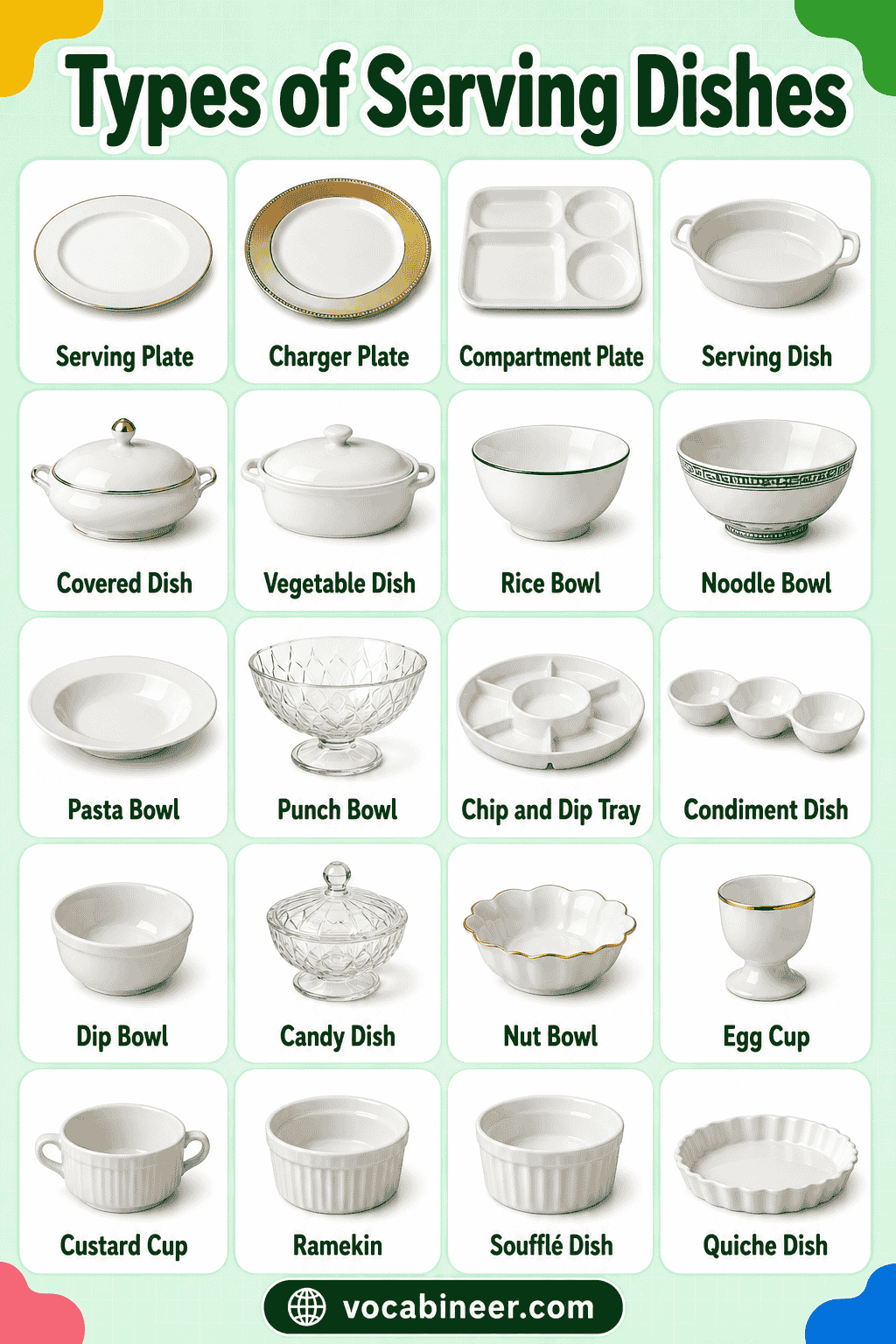
- Dip Bowl — A small bowl used for dips, chutneys, salsa, hummus, or sauces.
- Condiment Bowl — A small bowl used for pickles, olives, ketchup, mustard, chutney, or toppings.
- Butter Dish — A small covered dish used to serve or store butter.
- Bread Basket — A basket used for bread, rolls, buns, naan, or flatbread.
- Fruit Bowl — A bowl used to hold and serve fresh fruit.
- Dessert Bowl — A small bowl used for ice cream, pudding, fruit, custard, or sweets.
- Cake Stand — A raised serving dish used to display cakes, cupcakes, pastries, or desserts.
- Tiered Stand — A multi-level stand used for cupcakes, sandwiches, fruit, cookies, or tea snacks.
- Cheese Board — A flat board used for cheese, crackers, fruit, nuts, and spreads.
- Charcuterie Board — A large board used for sliced meats, cheese, crackers, fruit, nuts, and party snacks.
- Relish Tray — A tray used for pickles, olives, raw vegetables, and small side foods.
- Chip and Dip Dish — A serving dish with space for chips and a separate area for dip.
- Divided Serving Dish — A dish with separate sections for different foods.
- Ramekin — A small dish used for sauces, dips, desserts, or individual baked portions.
- Oval Platter — An oval serving dish used for fish, meat, roasted foods, sandwiches, or kebabs.
- Rectangular Platter — A long platter used for snacks, appetizers, desserts, pastries, or sliced foods.
Types of Serving Bowls
Serving bowls are among the most common food serving dishes. They may be deep, wide, small, large, lidded, footed, or decorative.
- Large serving bowl — Used for shared dishes such as salad, rice, pasta, vegetables, or snacks.
- Salad bowl — A wide bowl used for tossing and serving salads.
- Rice serving bowl — A bowl used to serve rice, fried rice, biryani, pulao, or grain dishes.
- Pasta bowl — A wide bowl used for pasta, noodles, saucy dishes, or mixed meals.
- Soup tureen — A deep covered bowl used for soup, stew, broth, or chowder.
- Fruit bowl — A bowl used for whole fruit or cut fruit.
- Dessert bowl — A small bowl used for pudding, custard, ice cream, fruit desserts, or sweets.
- Snack bowl — A small or medium bowl used for chips, popcorn, nuts, crackers, or candies.
- Dip bowl — A small bowl used for dips, sauces, chutneys, salsa, or hummus.
- Condiment bowl — A small bowl used for pickles, olives, dressings, toppings, or chutney.
- Noodle serving bowl — A deep bowl used for noodles, ramen, noodle soup, or stir-fried noodles.
- Footed bowl — A raised bowl used for fruit, salad, desserts, or decorative serving.
- Covered bowl — A bowl with a lid used for warm foods, outdoor meals, or food storage.
- Mixing-to-serving bowl — A bowl used for mixing food and then serving it directly.
Types of Serving Platters and Trays
Platters and trays work well for foods that need a flat surface. They make food easy to arrange, display, carry, and share.
- Serving platter — A large flat dish used for shared food.
- Oval platter — Good for fish, roasted meat, kebabs, chicken, and long food items.
- Round platter — Useful for fruit, snacks, desserts, sandwiches, and appetizers.
- Rectangular platter — Good for sandwiches, rolls, pastries, sliced foods, and party snacks.
- Meat platter — Used for sliced meat, roasted chicken, kebabs, steak, or grilled foods.
- Fish platter — A long platter used for whole fish or seafood.
- Appetizer tray — Used for starters, finger foods, mini rolls, and bite-sized snacks.
- Snack tray — Used for chips, crackers, nuts, popcorn, and small foods.
- Dessert tray — Used for cookies, pastries, cupcakes, sweets, and brownies.
- Tea tray — Used to carry tea cups, snacks, sugar, milk, and small plates.
- Breakfast tray — Used to serve toast, eggs, fruit, drinks, or breakfast items.
- Divided tray — A tray with sections for different snacks, dips, toppings, or condiments.
- Cheese board — Used for cheese, fruit, crackers, nuts, and spreads.
- Charcuterie board — Used for meats, cheese, crackers, fruit, nuts, and party snacks.
- Tiered tray — A multi-level tray used for desserts, tea snacks, cupcakes, or appetizers.
Specialty Food Serving Dishes and Their Uses
Specialty serving dishes are made for specific foods, table styles, or serving needs. They are common in dinner parties, restaurants, buffets, and formal meals.
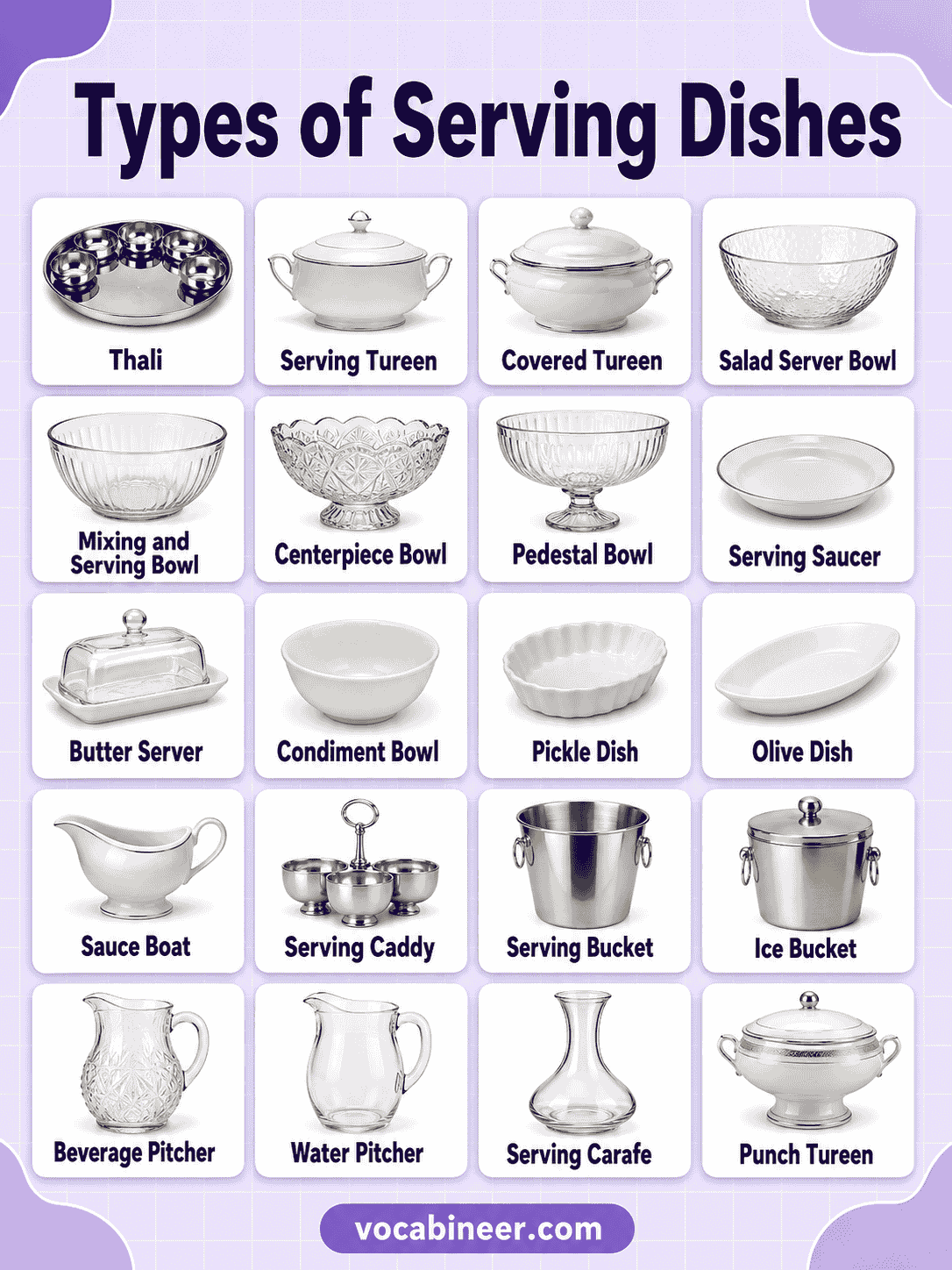
- Soup tureen — Best for soup, stew, broth, chowder, and warm liquid dishes.
- Sauce boat — Best for sauce, dressing, cream sauce, and pouring liquids neatly.
- Gravy boat — Best for gravy at dinner tables.
- Butter dish — Best for serving butter while keeping it covered.
- Cake stand — Best for cakes, cupcakes, pastries, and dessert display.
- Tiered stand — Best for tea sandwiches, cookies, cupcakes, fruit, and party snacks.
- Chip and dip dish — Best for chips, crackers, vegetables, salsa, hummus, or chutney.
- Relish tray — Best for pickles, olives, carrots, cucumbers, and small sides.
- Deviled egg tray — Best for deviled eggs and small oval snacks.
- Ramekin — Best for dips, sauces, custards, soufflés, and individual baked portions.
- Bread basket — Best for bread, rolls, buns, naan, and flatbread.
- Condiment set — Best for sauces, chutneys, pickles, toppings, and small sides.
- Lazy Susan — Best for rotating several shared dishes at the table.
- Covered serving dish — Best for keeping food warm, fresh, or protected.
- Warming dish — Best for buffet foods and meals that need to stay warm.
Best Serving Dishes for Different Foods
Different foods need different serving dishes. Liquids and saucy foods need depth, while dry foods look better on platters, trays, and boards.
- For soup and stew — Use a soup tureen, deep serving bowl, lidded bowl, or warming dish.
- For rice and grains — Use a deep serving bowl, rice bowl, casserole dish, or covered bowl.
- For curry and saucy foods — Use a deep bowl, lidded serving dish, casserole dish, or oven-to-table dish.
- For salad — Use a large salad bowl, wide bowl, wooden bowl, or glass bowl.
- For pasta and noodles — Use a wide serving bowl, pasta bowl, deep platter, or casserole dish.
- For meat and fish — Use an oval platter, rectangular platter, meat platter, or fish platter.
- For bread — Use a bread basket, bread tray, wooden board, or small platter.
- For snacks and appetizers — Use a snack tray, divided dish, chip-and-dip dish, or appetizer platter.
- For desserts — Use dessert bowls, cake stands, tiered stands, dessert trays, or ramekins.
- For sauces and dips — Use sauce boats, gravy boats, dip bowls, ramekins, or condiment bowls.
- For fruit — Use a fruit bowl, glass bowl, tiered stand, or large platter.
- For cheese and crackers — Use a cheese board, charcuterie board, flat tray, or wooden board.
Lidded Serving Dishes and Covered Bowls
Lidded serving dishes are useful when food needs protection, warmth, or freshness. They work well for hot dishes, outdoor meals, family-style serving, and buffet tables.
- Covered casserole dish — Used for baked pasta, rice dishes, casseroles, and warm family meals.
- Soup tureen with lid — Used for soup, stew, broth, and chowder.
- Covered serving bowl — Used for rice, curry, vegetables, side dishes, or saucy foods.
- Butter dish with lid — Used to keep butter covered and neat.
- Covered condiment dish — Used for chutneys, pickles, sauces, and toppings.
- Hot pot serving dish — Used for warm, saucy, or slow-cooked foods.
- Glass lidded dish — Used for storing and serving food clearly.
- Ceramic covered bowl — Used for warm dishes, rice, vegetables, curries, and side foods.
Oven-to-Table Serving Dishes
Oven-to-table serving dishes can be used for baking and serving. They are helpful for casseroles, baked pasta, roasted vegetables, gratins, and warm desserts.
- Casserole dish — Used for baked pasta, rice dishes, casseroles, and layered meals.
- Baking dish — Used for lasagna, roasted vegetables, baked sides, and desserts.
- Stoneware dish — Good for warm foods and heat retention.
- Ceramic baking dish — Useful for baked meals and table serving.
- Glass baking dish — Useful for casseroles, desserts, baked vegetables, and layered dishes.
- Ramekin — Used for small baked desserts, sauces, dips, and individual portions.
- Cast iron serving dish — Used for hot foods that need strong heat retention.
- Gratin dish — A shallow oven-safe dish used for baked dishes with browned tops.
Serving Dishes for Hot Foods, Cold Foods, and Saucy Foods
Temperature and texture matter when choosing serving dishes. Hot foods need heat-safe dishes, cold foods need fresh presentation, and saucy foods need enough depth.
- Hot foods — Use ceramic bowls, stoneware dishes, casserole dishes, tureens, stainless steel dishes, or lidded dishes.
- Cold foods — Use glass bowls, salad bowls, platters, dessert bowls, trays, or fruit bowls.
- Saucy foods — Use deep bowls, casserole dishes, covered bowls, sauce boats, or ramekins.
- Dry foods — Use platters, trays, boards, baskets, or shallow serving dishes.
- Crispy foods — Use flat platters or trays so the food stays crisp.
- Fresh foods — Use glass bowls, wooden bowls, salad bowls, or divided trays.
- Desserts — Use cake stands, dessert bowls, ramekins, tiered trays, or dessert platters.
Serving Dish Materials: Ceramic, Glass, Wood, Metal, and More
Serving dish material affects weight, heat safety, cleaning, durability, and table appearance. Some materials are better for formal tables, while others work better for daily meals or outdoor use.
- Ceramic serving dishes — Good for warm foods, family meals, and attractive table settings.
- Porcelain serving dishes — Smooth, elegant, and common for formal or classic table settings.
- Stoneware serving dishes — Thick, strong, and useful for oven-to-table meals.
- Glass serving dishes — Good for salads, desserts, fruit, and layered foods because the food is visible.
- Tempered glass dishes — Stronger than regular glass and often useful for baking and serving.
- Stainless steel serving dishes — Durable, lightweight, and useful for buffets, restaurants, and outdoor dining.
- Wooden serving boards — Good for bread, cheese, fruit, snacks, and charcuterie.
- Bamboo trays — Lightweight and useful for snacks, tea, breakfast, and casual serving.
- Melamine serving dishes — Lightweight and durable for outdoor meals, kids’ meals, and casual use.
- Plastic serving trays — Useful for picnics, parties, and lightweight serving.
- Cast iron serving dishes — Strong and heat-retaining for hot foods.
- Enamel serving dishes — Durable and useful for casual, outdoor, or vintage-style serving.
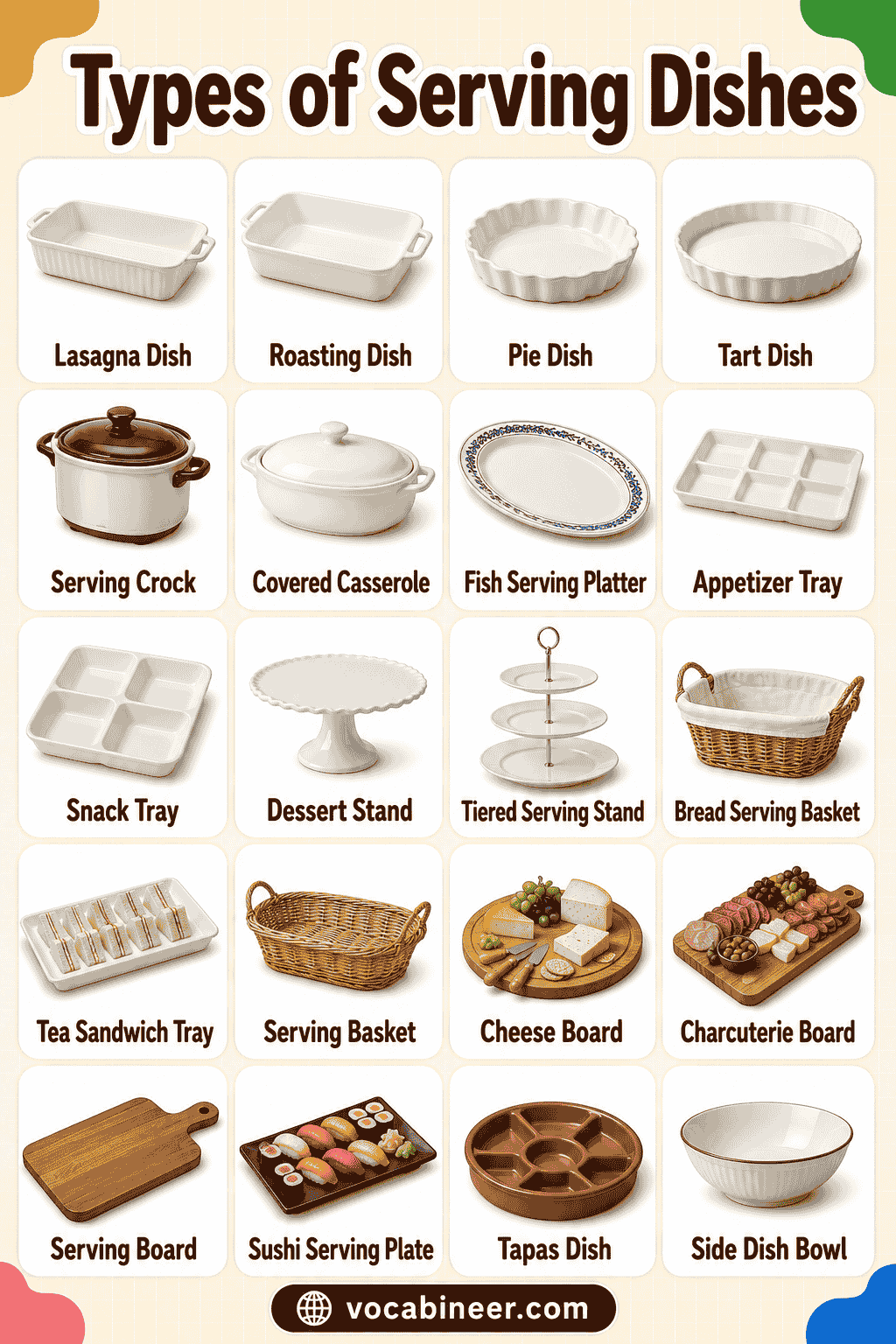
Serving Dish Shapes and Sizes
Shape and size decide how well a serving dish works for each food. Deep dishes hold liquids and sauces, while flat dishes display dry foods neatly.
- Deep serving dishes — Best for soup, curry, stew, rice, saucy pasta, and vegetables.
- Shallow serving dishes — Best for snacks, appetizers, roasted foods, and desserts.
- Wide serving bowls — Best for salad, pasta, noodles, and mixed dishes.
- Small serving bowls — Best for dips, sauces, chutneys, olives, nuts, and toppings.
- Large serving bowls — Best for family-style rice, salad, pasta, and side dishes.
- Oval platters — Best for fish, chicken, kebabs, roasts, and long foods.
- Round platters — Best for fruit, snacks, desserts, and shared appetizers.
- Rectangular platters — Best for sandwiches, pastries, rolls, and sliced foods.
- Divided dishes — Best for snacks, dips, pickles, sauces, and appetizer selections.
- Lidded dishes — Best for keeping food warm, fresh, or covered.
- Handled trays — Best for carrying drinks, cups, breakfast, or several small dishes.
- Tiered stands — Best for desserts, cupcakes, tea snacks, and party displays.
Serving Dishes for Everyday Meals and Special Occasions
Serving dishes can be simple for daily meals or decorative for special events. The best choice depends on the food, number of people, table style, and setting.
- Everyday family meals — Serving bowls, rice bowls, salad bowls, trays, and simple platters.
- Holiday meals — Large platters, casserole dishes, gravy boats, bread baskets, and dessert stands.
- Outdoor dining — Lightweight trays, melamine bowls, covered dishes, and durable serving platters.
- Picnics — Covered containers, trays, baskets, plastic bowls, and snack dishes.
- Kids’ meals — Lightweight bowls, divided trays, small plates, and easy-to-clean dishes.
- Restaurant-style serving — Platters, sauce cups, ramekins, boards, and neat presentation dishes.
- Tea-time serving — Tea trays, tiered stands, dessert plates, and snack bowls.
- Festive meals — Decorative bowls, elegant platters, covered dishes, and dessert stands.
Serving Dishes for Parties, Snacks, and Appetizers
Parties need serving dishes that are easy to share, carry, refill, and display. Snack and appetizer dishes should make food easy to see and pick up.
- Snack tray — Used for chips, crackers, nuts, popcorn, and small bites.
- Appetizer platter — Used for finger foods, rolls, kebabs, and mini sandwiches.
- Chip and dip dish — Used for chips with salsa, cheese dip, hummus, chutney, or dressing.
- Divided serving dish — Used for different snacks, pickles, olives, sauces, or toppings.
- Tiered stand — Used for cupcakes, cookies, fruit, tea snacks, or pastries.
- Dessert tray — Used for sweets, brownies, cookies, and small cakes.
- Charcuterie board — Used for meats, cheese, crackers, fruit, and nuts.
- Cheese board — Used for cheese, crackers, grapes, nuts, and spreads.
- Relish tray — Used for pickles, olives, cucumbers, carrots, and small sides.
- Mini bowls — Used for dips, sauces, nuts, candies, or toppings.
Serving Dishes for Buffet Tables and Formal Settings
Buffet tables and formal settings need serving dishes that look organized, hold enough food, and allow easy serving.
- Buffet trays — Used for large portions, snacks, or prepared foods.
- Chafing dishes — Used to keep food warm on buffet tables.
- Large serving bowls — Used for salads, rice, pasta, and vegetables.
- Covered serving dishes — Used to protect food and help keep it warm.
- Formal platters — Used for meat, fish, appetizers, and main dishes.
- Soup tureens — Used for soup, stew, broth, or chowder.
- Gravy boats — Used for gravy, sauce, dressing, or cream sauce.
- Bread baskets — Used for rolls, bread, naan, buns, or flatbread.
- Dessert stands — Used for cakes, pastries, sweets, and cupcakes.
- Serving boards — Used for cheese, crackers, fruit, and appetizers.
Serving Utensils Used with Serving Dishes
Serving utensils help move food from the serving dish to a plate or bowl. They should match the food type and serving dish size.
- Serving spoon — Used for rice, vegetables, pasta, casseroles, and side dishes.
- Serving fork — Used for meat, salad, pasta, and sliced foods.
- Ladle — Used for soup, stew, sauce, curry, and gravy.
- Tongs — Used for salad, bread, grilled food, snacks, and finger foods.
- Cake server — Used for cake slices, pie, pastries, and desserts.
- Pie server — Used for pie, tart, quiche, and soft desserts.
- Salad servers — A pair of utensils used to toss and serve salad.
- Sauce ladle — Used for sauces, gravy, dressings, and cream sauces.
- Butter knife — Used to serve and spread butter.
- Cheese knife — Used to cut and serve cheese.
Food Serving Dishes Chart with Names and Uses
| Food Serving Dish | Best Used For |
|---|---|
| Serving bowl | Salad, rice, pasta, vegetables, and side dishes |
| Salad bowl | Green salad, fruit salad, pasta salad, and mixed salad |
| Serving platter | Meat, fish, sandwiches, appetizers, and desserts |
| Serving tray | Cups, snacks, breakfast, tea, and small dishes |
| Soup tureen | Soup, stew, broth, and chowder |
| Casserole dish | Baked meals, pasta, rice dishes, and oven-to-table foods |
| Sauce boat | Sauce, gravy, dressing, and cream sauces |
| Dip bowl | Dips, chutneys, salsa, hummus, and condiments |
| Bread basket | Bread, rolls, naan, buns, and flatbread |
| Cake stand | Cakes, cupcakes, pastries, and desserts |
| Divided serving dish | Snacks, pickles, olives, sauces, and appetizers |
| Cheese board | Cheese, crackers, fruit, nuts, and spreads |
How to Choose the Right Food Serving Dish
Choose the right food serving dish by matching it to the food type, temperature, and portion size. Deep bowls, casserole dishes, tureens, and covered dishes work best for soup, curry, stew, rice, and saucy foods because they help prevent spills. Flat platters, trays, and boards are better for bread, grilled meat, sandwiches, snacks, fruit, cheese, and desserts because they give food more space and make serving easier.
Material and use also matter. Ceramic, porcelain, glass, and stoneware look good for home meals and formal tables, while stainless steel works well for buffets, restaurants, and outdoor dining. Wooden boards are best for dry foods, and melamine or plastic dishes are useful for picnics and kids’ meals. For daily use, choose serving dishes that are easy to clean, easy to carry, and simple to store.
Common Serving Dish Mistakes to Avoid
Some serving dishes look attractive but do not work well for the food. Choosing the wrong dish can cause spills, messy serving, faster cooling, or difficult cleaning.
- Using a flat platter for soup, curry, stew, or saucy foods.
- Using a shallow bowl for large salads or pasta.
- Choosing a serving dish that is too small for the amount of food.
- Ignoring oven-safe or microwave-safe labels.
- Serving very hot food in a dish that cannot handle heat.
- Using heavy dishes when guests need to pass food around.
- Choosing decorative dishes that are hard to clean.
- Using wooden boards for very wet or oily foods without proper care.
- Forgetting lids for outdoor meals or buffet foods.
- Using too many mismatched dishes on a formal table.
Confusing Serving Dish Terms Explained
Some serving dish terms sound similar. This table explains the differences in simple language.
| Terms | Simple Difference |
|---|---|
| Serving dish vs Food dish | A serving dish is a container. A food dish is prepared food. |
| Serveware vs Dinnerware | Serveware is used to serve shared food. Dinnerware is used by each person to eat. |
| Tableware vs Serveware | Tableware is the broad category. Serveware is the part used for serving food. |
| Platter vs Tray | A platter presents food. A tray often carries food, drinks, or dishes. |
| Bowl vs Tureen | A bowl is a general serving dish. A tureen is a deep covered dish for soup or stew. |
| Sauce boat vs Gravy boat | A sauce boat can serve different sauces. A gravy boat is usually for gravy. |
| Cake stand vs Dessert tray | A cake stand is raised for display. A dessert tray is flat and used for many sweets. |
| Casserole dish vs Serving bowl | A casserole dish is often oven-safe and deep. A serving bowl is a general bowl for serving food. |
| Cheese board vs Charcuterie board | A cheese board focuses on cheese. A charcuterie board often includes meats, cheese, crackers, fruit, and snacks. |
| Divided dish vs Relish tray | A divided dish has sections for different foods. A relish tray usually holds pickles, olives, and small sides. |
Easy Serving Dish Names for Beginners
These serving dish names are useful for beginners, kids, and English learners.
- Bowl — A round deep dish used for food.
- Serving plate — A flat dish used to serve snacks, desserts, bread, or small foods.
- Tray — A flat item used to carry or serve food.
- Platter — A large flat serving dish.
- Serving bowl — A bowl used to serve food to everyone.
- Salad bowl — A bowl used for salad.
- Soup tureen — A deep covered dish used to serve soup.
- Deep serving bowl — A bowl used to serve soup, stew, curry, or saucy food.
- Sauce bowl — A small bowl used for sauce.
- Dip bowl — A small bowl used for dip.
- Bread basket — A basket used for bread.
- Cake stand — A raised dish used for cake.
- Fruit bowl — A bowl used for fruit.
- Dessert bowl — A small bowl used for dessert.
- Serving tray — A tray used to carry food or drinks.
- Casserole dish — A deep dish used for baked food.
Simple sentences:
- Put the salad in the serving bowl.
- Serve the cake on the cake stand.
- Place the bread in the basket.
- Use a tray to carry the cups.
- Pour the gravy into the sauce boat.
- Put the soup in the tureen.
- Serve snacks on a platter.
FAQs
Food serving dishes are bowls, trays, platters, tureens, casserole dishes, sauce boats, and other containers used to hold, present, and serve food at the table.
Serving dishes hold shared food for everyone at the table. Dinnerware includes plates and bowls used by each person to eat their own food.
A soup tureen is the best serving dish for soup at the table. A deep serving bowl can also work well for soup, stew, broth, or chowder.
Rice and curry are best served in deep bowls, casserole dishes, or lidded serving dishes. Salad is best served in a wide salad bowl or large serving bowl.
Common serving dish materials include ceramic, porcelain, stoneware, glass, stainless steel, wood, bamboo, melamine, plastic, and cast iron.
Read More
- Types of Drinking Glasses
- Types of Cups with Names
- Different Types of Bowls
- Different Types of Baskets
- Types of Keys with Names