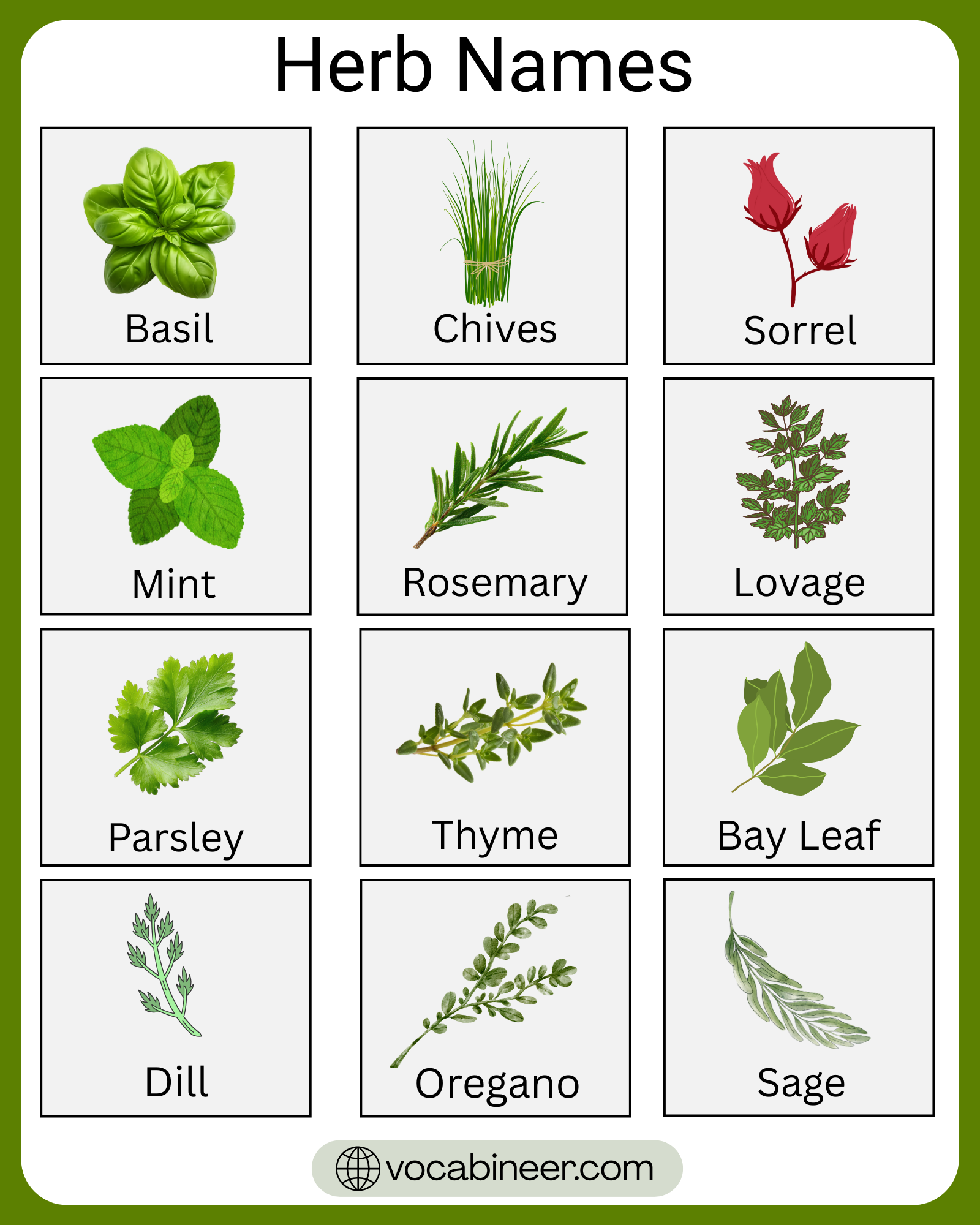
Herbs are aromatic plants commonly used to add flavor, fragrance, or freshness to food and drinks. Learning common herbs names in English with pictures helps students, beginners, home cooks, and vocabulary learners recognize familiar herbs more easily in kitchens, markets, gardens, and recipes.
This article focuses mainly on everyday culinary and aromatic herbs such as basil, mint, parsley, rosemary, thyme, oregano, dill, and chives. It also explains a few important naming differences, including herbs vs spices, cilantro vs coriander, and mint vs peppermint.
In This Page
What Are Herbs?
Herbs are plants whose leaves, tender stems, flowers, or other soft parts are commonly used for flavor, aroma, tea, or similar everyday purposes.
Many herbs can be used fresh or dried. Common examples include:
- Basil
- Mint
- Parsley
- Rosemary
- Thyme
- Oregano
- Sage
- Dill
- Chives
- Cilantro
Herbs differ from spices because spices more often come from seeds, bark, roots, fruits, or other dried plant parts.
Common Herb Names with Pictures
Herbs are plants valued for their leaves, stems, seeds, flowers, or roots, and people use them in cooking, drinks, traditional remedies, and gardening. Learning common herb names helps children and English learners build plant and food vocabulary and recognize familiar herbs more easily.
Basil
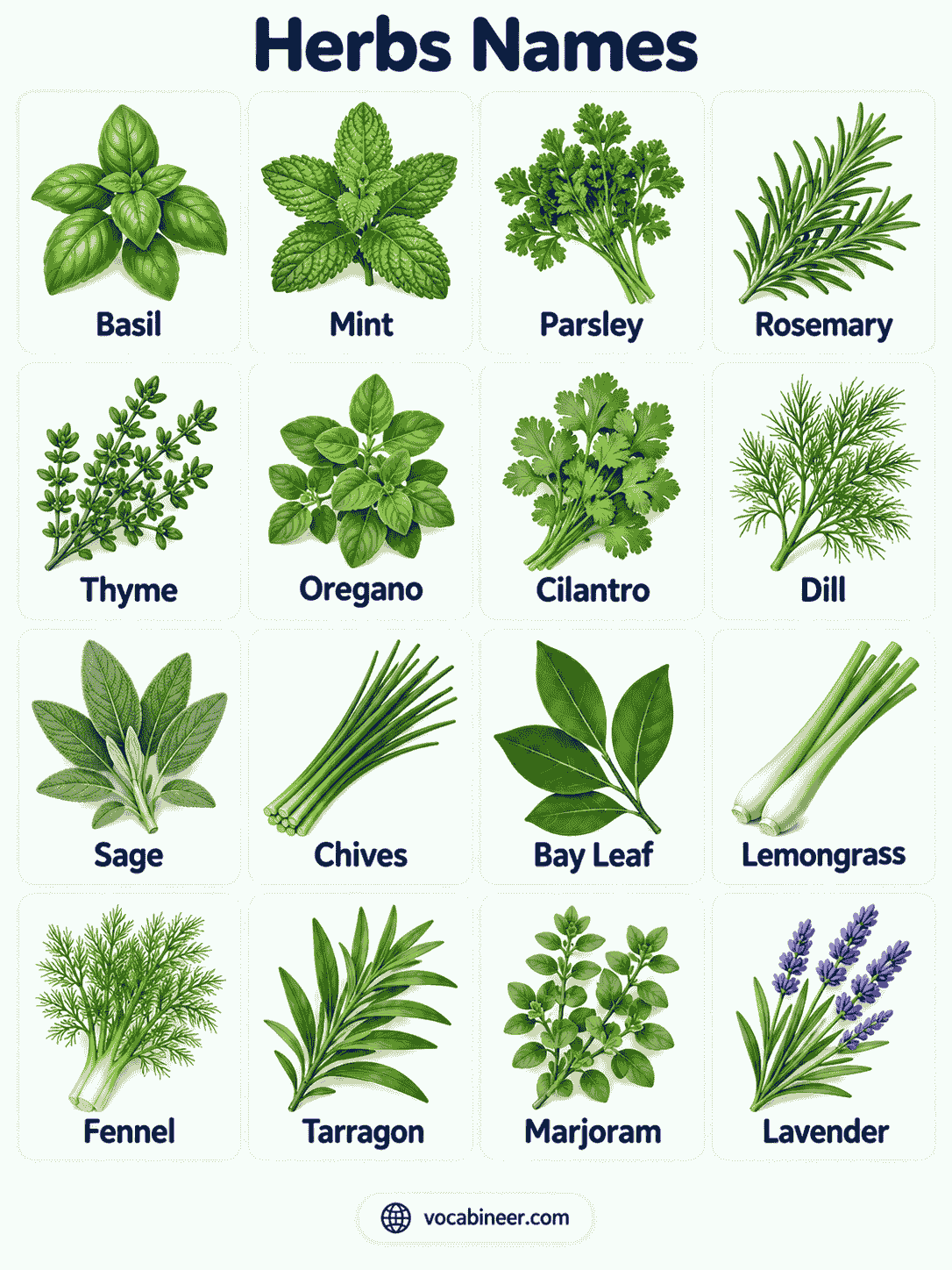
Basil has soft green leaves and a strong, slightly sweet aroma. People commonly use it in pasta, sauces, salads, soups, and many Mediterranean dishes.
Mint
Mint has fresh green leaves and a cool, refreshing flavor. It works well in drinks, sauces, salads, desserts, and herbal teas.
Parsley
Parsley has bright green leaves and a mild, fresh taste. Cooks often use it as a garnish or add it to soups, salads, sauces, and savory dishes.
Cilantro
Cilantro has delicate green leaves and a distinctive citrus-like flavor. People commonly add it to salsas, curries, salads, soups, and rice dishes.
Rosemary
Rosemary has narrow, needle-like leaves and a strong woody aroma. It pairs well with roasted vegetables, breads, meats, and savory dishes.
Thyme
Thyme has tiny leaves and a warm, earthy flavor. Cooks use it in soups, stews, sauces, roasted foods, and seasoning blends.
Oregano
Oregano has small green leaves and a bold, slightly peppery flavor. It commonly appears in pizza, pasta sauces, grilled foods, and Mediterranean cooking.
Sage
Sage has soft gray-green leaves and a strong, earthy aroma. People often use it with stuffing, sauces, roasted vegetables, and savory dishes.
Dill
Dill has fine, feathery leaves and a fresh, slightly tangy flavor. It works well with pickles, fish, potatoes, salads, and yogurt-based sauces.
Chives
Chives have long, thin green leaves and a mild onion-like taste. People sprinkle them over soups, eggs, potatoes, salads, and dips.
Coriander
Coriander usually refers to the seeds of the cilantro plant. These seeds have a warm, citrusy flavor and appear in curries, spice blends, and baked foods.
Tarragon
Tarragon has slender green leaves and a mild licorice-like flavor. Cooks often pair it with chicken, fish, eggs, sauces, and salad dressings.
Lemongrass
Lemongrass has long, stiff stalks and a strong lemon-like aroma. It commonly flavors soups, curries, teas, and Southeast Asian dishes.
Bay Leaf
Bay leaves come from the bay laurel tree and add a subtle herbal aroma to slow-cooked foods. Cooks often use them in soups, stews, sauces, and rice dishes.
Fennel
Fennel has feathery leaves, aromatic seeds, and a mild licorice-like flavor. People use different parts of the plant in salads, soups, breads, and savory recipes.
Marjoram
Marjoram has small green leaves and a mild, sweet herbal flavor. It works well in soups, sauces, vegetables, meat dishes, and seasoning blends.
Lavender
Lavender produces fragrant purple flowers and narrow leaves. Culinary varieties can flavor teas, desserts, syrups, and baked goods in small amounts.
Chamomile
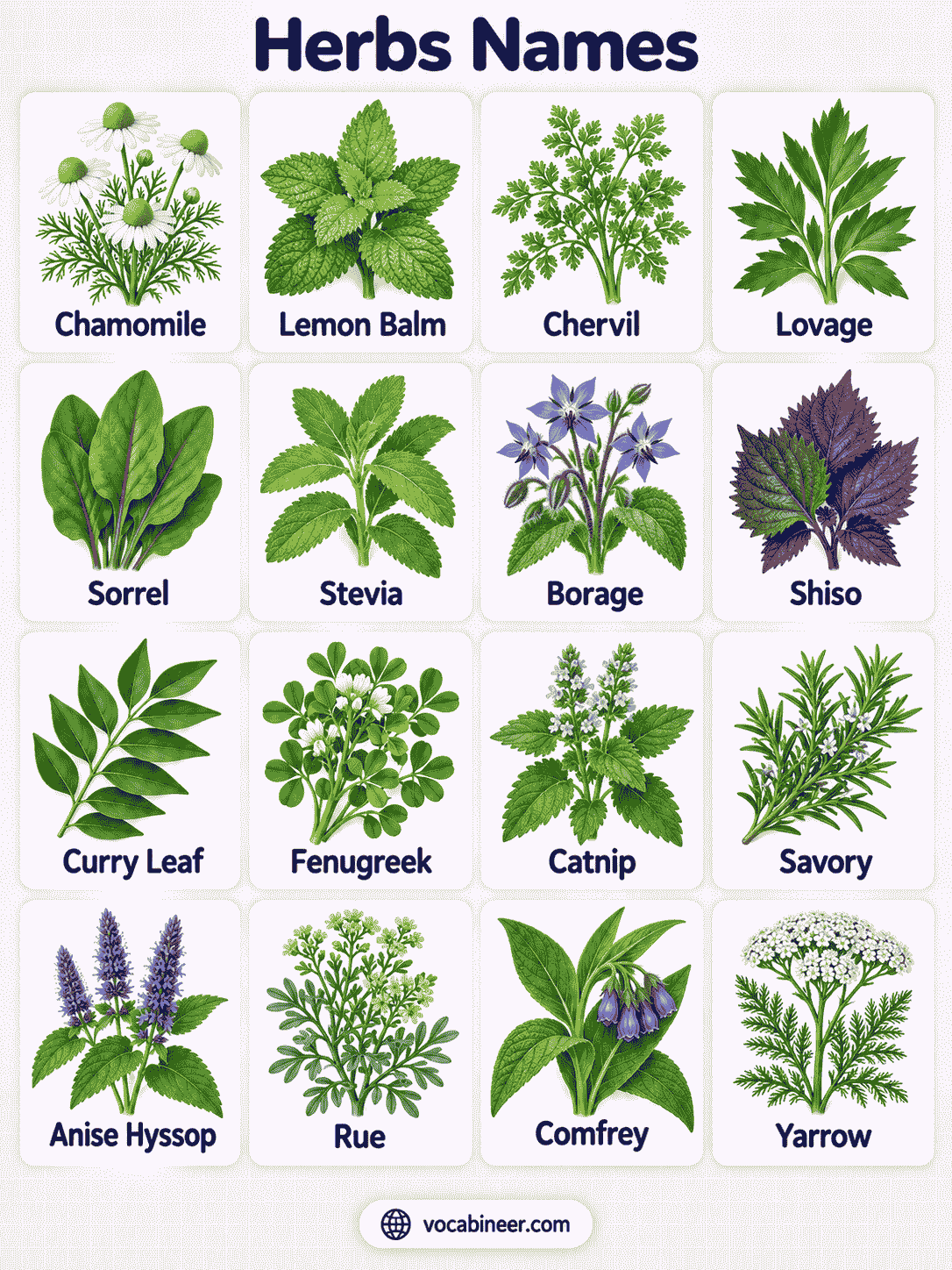
Chamomile produces small daisy-like flowers with a gentle floral aroma. People commonly dry the flowers and steep them in herbal tea.
Fenugreek
Fenugreek provides both edible leaves and aromatic seeds with a slightly bitter, nutty flavor. It commonly appears in curries, spice blends, breads, and vegetable dishes.
Curry Leaves
Curry leaves have glossy green leaves and a strong citrusy, savory aroma. Cooks commonly add them to curries, lentils, rice dishes, and tempering mixtures.
Popular Kitchen Herbs
Some herbs appear especially often in everyday cooking because they pair easily with vegetables, meat, fish, grains, sauces, and salads.
Common kitchen herbs include:
- Basil
- Parsley
- Cilantro
- Thyme
- Rosemary
- Oregano
- Sage
- Chives
- Dill
- Tarragon
- Marjoram
- Bay Leaf
- Savory
- Chervil
- Curry Leaf
Basil and oregano are common in Mediterranean-style dishes, while cilantro appears frequently in South Asian, Mexican, Middle Eastern, and other cuisines. Rosemary, thyme, and sage work well in roasted and slow-cooked foods, whereas parsley and chives often provide a fresher finishing flavor.
Fresh Herbs Commonly Used in Cooking
Some herbs are especially familiar in their fresh form.
Basil
Fresh basil adds a sweet aromatic flavor to salads, sauces, pasta, and pesto.
Mint
Fresh mint works well in drinks, chutneys, salads, yogurt dishes, and desserts.
Parsley
Fresh parsley is widely used as a garnish or mild seasoning.
Cilantro
Fresh cilantro leaves are common in curries, salsa, rice dishes, soups, and salads.
Dill
Fresh dill adds a distinctive flavor to potatoes, seafood, sauces, and salads.
Chives
Fresh chives provide a mild onion-like taste.
Tarragon
Fresh tarragon has a delicate anise-like flavor.
Sorrel
Fresh sorrel adds a sharp citrus-like taste to salads and sauces.
Aromatic Herbs
Aromatic herbs release noticeable natural scents from their leaves, stems, or flowers.
Common examples include:
- Rosemary
- Mint
- Lavender
- Lemon Balm
- Lemongrass
- Thyme
- Sage
- Lemon Verbena
- Hyssop
- Basil
Their aromas can range from woody and earthy to citrusy, floral, or refreshing.
Herbs Commonly Used for Tea
Several familiar herbs are commonly steeped in hot water for herbal drinks.
Examples include:
- Mint
- Peppermint
- Spearmint
- Chamomile
- Lemon Balm
- Lemongrass
- Lavender
- Holy Basil
- Lemon Verbena
These herbs are included here for identification and common-use vocabulary rather than medical claims.
Common Garden Herb Names
Many popular herbs grow well in home gardens, containers, or kitchen herb beds.
Common garden herbs include:
- Basil
- Mint
- Rosemary
- Thyme
- Parsley
- Oregano
- Sage
- Chives
- Dill
- Tarragon
- Lemon Balm
- Marjoram
Their compact growth and regular culinary use make them familiar choices for home herb gardens.
Herbs vs Spices
Herbs and spices both add flavor and aroma to food, but they usually come from different plant parts.
| Herbs | Spices |
|---|---|
| commonly use leaves, soft stems, or flowers | commonly use seeds, bark, roots, fruits, or dried plant parts |
| Basil | Cumin |
| Mint | Cinnamon |
| Parsley | Cardamom |
| Rosemary | Cloves |
| Cilantro leaves | Coriander seeds |
For example, Cilantro is used as a leafy herb, while Coriander Seeds function as a spice.
Cilantro vs Coriander
The words cilantro and coriander can refer to the same plant, but usage varies by region.
In American English, cilantro usually means the fresh leaves and stems, while coriander often refers to the seeds.
In British English, coriander commonly refers to both the plant and its fresh leaves.
Therefore, Cilantro and Coriander Leaves should not automatically be counted as two different herbs.
Mint, Peppermint, and Spearmint
These three names are related but not identical.
Mint
A broad name for plants in the mint group.
Peppermint
A strongly aromatic mint with a sharper cooling flavor.
Spearmint
A milder mint with a sweeter, softer aroma.
Peppermint and Spearmint are specific types of mint rather than unrelated herbs.
Bay Leaf and Bay Laurel
Bay Leaf is the familiar culinary name for the aromatic leaves used in soups, sauces, stews, and slow-cooked dishes.
The term Bay Laurel, by contrast, usually refers to the plant that produces those leaves.
For this reason, a basic herb vocabulary list should not count Bay Leaf and Bay Laurel as separate herbs unless it specifically explains the distinction.
Fennel as an Herb, Spice, and Vegetable
Fennel is unusual because different parts of the same plant fit different food categories.
- Fennel fronds can function as an herb.
- Fennel seeds are commonly used as a spice.
- Fennel bulb is eaten as a vegetable.
In a herbs list, the feathery leaves or fronds are the most relevant part.
Curry Leaf vs Curry Powder
These names sound similar but refer to very different things.
Curry Leaf
An aromatic leaf from the curry tree used in cooking.
Curry Powder
A prepared spice blend containing several ground spices.
Therefore, Curry Leaf belongs naturally in a herbs article, while Curry Powder does not.
Easy Herb Names for Kids and Beginners
Beginners can start with herbs that are common, visually distinctive, and easy to recognize.
- Basil
- Mint
- Parsley
- Cilantro
- Rosemary
- Thyme
- Oregano
- Sage
- Chives
- Dill
These names provide a useful foundation for kitchen, garden, and food vocabulary.
Common Herb Classification Mistakes
Mixing herbs with spices
Cinnamon, Cumin, Cloves, Cardamom, Black Pepper, and Nutmeg are more accurately classified as spices.
Counting Cilantro and Coriander as unrelated herbs
The names often refer to the same plant, with regional differences in how the leaves and seeds are named.
Treating Mint, Peppermint, and Spearmint as unrelated plants
Peppermint and Spearmint are specific types within the broader mint group.
Counting Bay Leaf and Bay Laurel separately
Bay Leaf names the commonly used leaf, while Bay Laurel names the source plant.
Treating Curry Powder as an herb
Curry Powder is a spice mixture, whereas Curry Leaf is an aromatic herb.
Ignoring which part of Fennel is being used
Fennel fronds, seeds, and bulbs can function as an herb, spice, and vegetable respectively.
Adding every medicinal botanical to a kitchen-herb list
A plant used in traditional herbal preparations does not automatically belong in a basic culinary herb vocabulary article.
FAQs
Common herbs names include basil, mint, parsley, cilantro, dill, chives, oregano, thyme, rosemary, sage, lavender, and tarragon.
No, they are not the same. Herbs usually come from the leafy part of a plant, while spices usually come from seeds, bark, roots, or dried parts.
Soft leaf herbs are herbs with tender, fresh-looking leaves. Common examples include basil, mint, parsley, cilantro, dill, and chives.
Woody herbs are herbs with firmer stems and a more structured form. Common examples include rosemary, thyme, sage, oregano, and lavender.
The most popular herbs names often include basil, mint, parsley, cilantro, oregano, thyme, rosemary, and sage.
Read More