

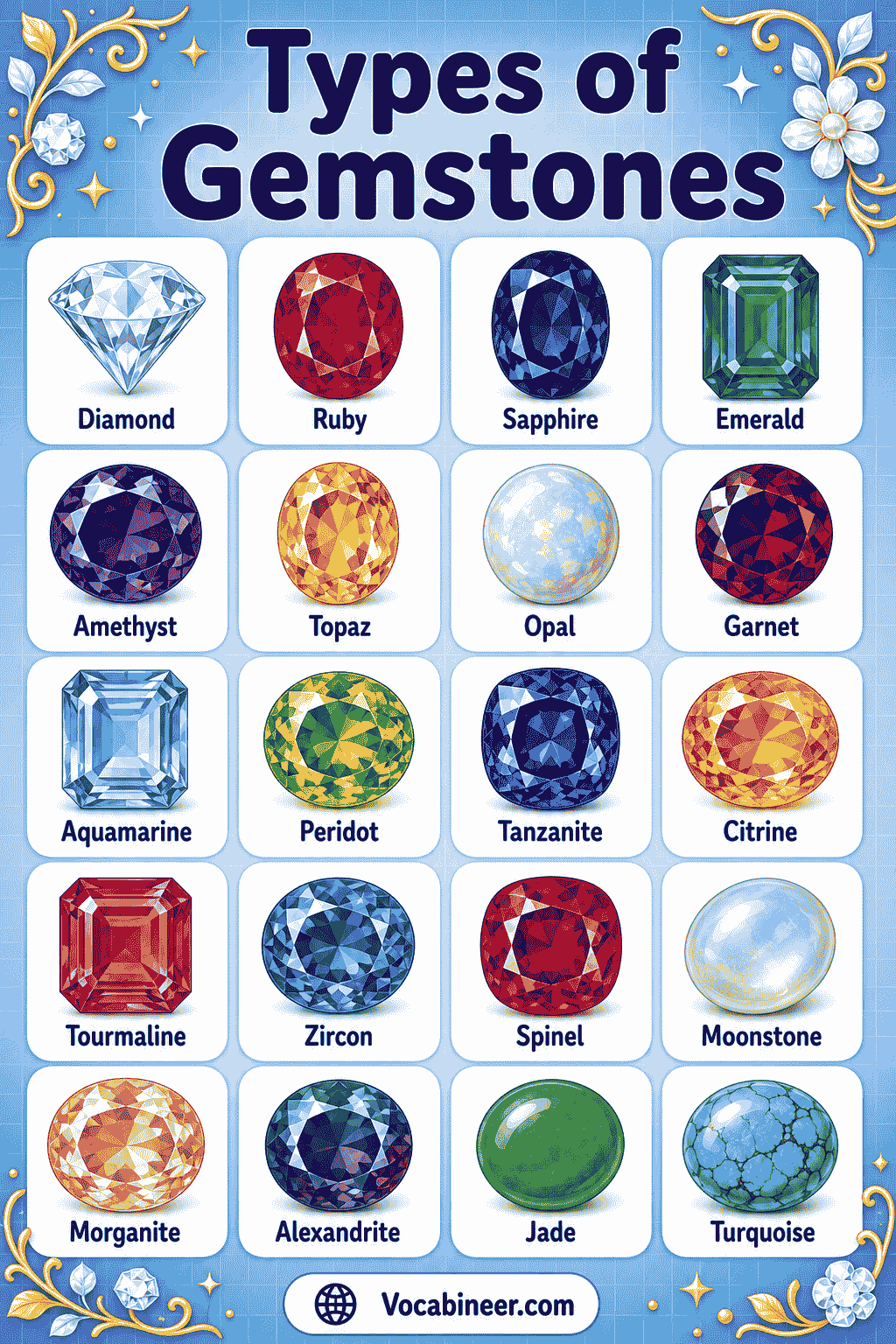
Gemstones are beautiful stones used in jewelry, decoration, collections, gifts, and learning guides. They come in many colors, shapes, cuts, and natural patterns, so pictures are very helpful for identifying them.
Some gemstones are precious, some are semi precious, and some come from organic sources like pearl and amber. This guide explains gemstone names with pictures, types of gemstones, meanings, colors, birthstones, jewelry stones, rare gemstones, shapes, care tips, and image metadata.
In This Page
Common Gemstone Names
Common gemstones are the stones most people see in jewelry shops, gemstone charts, collections, and beginner guides. These names are useful for learning gemstone vocabulary and identifying stones by color, shine, or appearance.
- Diamond — a clear or colored precious gemstone known for brilliance and hardness.
- Ruby — a red precious gemstone often linked with passion and courage.
- Sapphire — a precious gemstone best known for blue color, though it appears in other colors too.
- Emerald — a green precious gemstone often linked with growth and renewal.
- Amethyst — a purple gemstone and quartz variety often used in jewelry.
- Aquamarine — a blue to blue-green gemstone from the beryl family.
- Garnet — a gemstone often seen in deep red shades, though it has other colors too.
- Topaz — a gemstone found in colors such as blue, yellow, pink, and clear.
- Opal — a gemstone known for colorful flashes and shifting patterns.
- Turquoise — a blue-green gemstone often used in traditional jewelry.
- Pearl — an organic gemstone formed inside mollusks.
- Moonstone — a gemstone with a soft glow and milky appearance.
- Peridot — a green gemstone with a bright olive tone.
- Citrine — a yellow to golden quartz gemstone often used in jewelry.
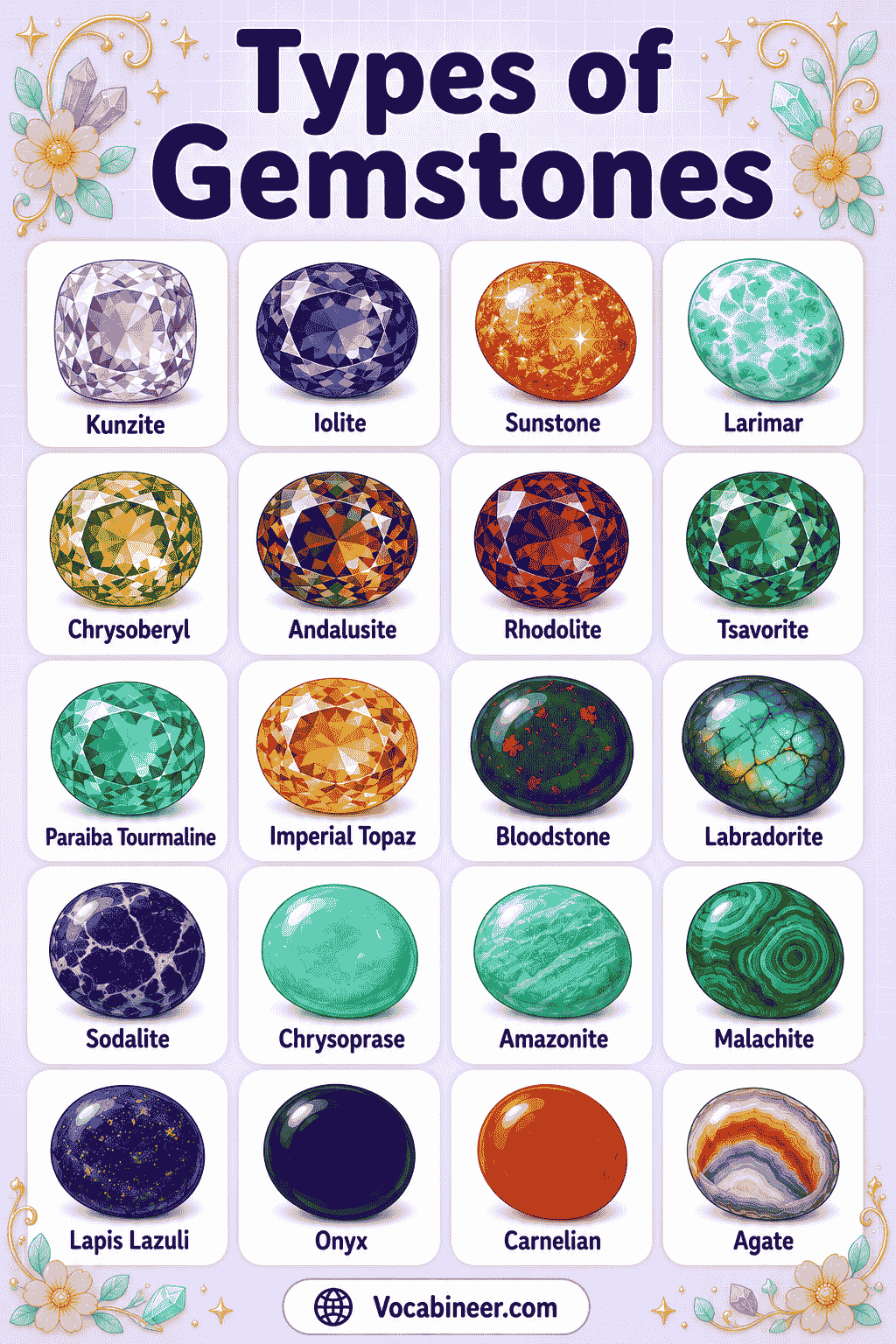
- Lapis Lazuli — a deep blue stone with golden-looking flecks.
Types of Gemstones
Gemstones can be grouped in different ways based on value, origin, material, and treatment. These broad groups help beginners understand how gemstone names are organized.
- Precious Gemstones — traditionally valued gemstones such as diamond, ruby, sapphire, and emerald.
- Semi Precious Gemstones — popular colored stones such as amethyst, garnet, peridot, citrine, and turquoise.
- Organic Gemstones — gemstones formed from living or once-living sources, such as pearl and amber.
- Mineral Gemstones — gemstones that come from minerals, such as diamond, sapphire, emerald, quartz, and garnet.
- Natural Gemstones — stones formed naturally in the earth without being created in a lab.
- Synthetic Gemstones — lab-created gemstones made to match or imitate natural gemstones.
Precious Gemstone Names
Precious gemstones are traditionally the four most famous and highly valued gemstone types. This section should stay short because the classic precious gemstone group contains only these four names.
- Diamond — a precious gemstone known for sparkle, hardness, and clear brilliance.
- Ruby — a red precious gemstone often used in rings, pendants, and fine jewelry.
- Sapphire — a precious gemstone usually known for deep blue color.
- Emerald — a green precious gemstone from the beryl family.
Semi Precious Gemstone Names
Semi precious gemstones include many popular colored stones used in jewelry, beads, decoration, and collections. The term is common in jewelry and learning guides, even though many semi precious stones can still be valuable.
- Amethyst — a purple quartz gemstone.
- Aquamarine — a light blue gemstone with a watery color.
- Garnet — a gemstone often seen in red, orange, green, and brown shades.
- Topaz — a gemstone found in many colors, especially blue and yellow.
- Opal — a gemstone known for colorful flashes.
- Turquoise — a blue-green gemstone often used in bracelets and rings.
- Moonstone — a glowing gemstone with a soft white or blue sheen.
- Peridot — a bright green gemstone.
- Citrine — a yellow to golden gemstone from the quartz family.
- Jade — a green gemstone used in carvings and jewelry.
- Onyx — a dark gemstone often used in beads and rings.
- Labradorite — a gemstone known for colorful flashes across its surface.
Organic Gemstone Names
Organic gemstones come from living or once-living sources instead of forming only as minerals in the earth. They are often used in jewelry, beads, and decorative pieces.
- Pearl — an organic gemstone formed inside oysters or mollusks.
- Amber — fossilized tree resin often seen in golden, orange, or brown shades.
- Coral — an organic material from marine coral used in jewelry and decoration.
- Jet — a black organic gemstone formed from fossilized wood.
- Mother of Pearl — an iridescent material from the inner shell layer of mollusks.
- Ammolite — an organic gemstone made from fossilized ammonite shell.
- Ivory — an organic material historically used in carvings, though modern trade is restricted or banned in many places.
- Tortoiseshell — an organic shell material historically used for decoration, though it is restricted or banned in many places.
Gemstone Names by Color
Color is one of the easiest ways to identify gemstones. Many readers search for gemstone names by color before they know the exact stone name.
- Red Gemstones — ruby, garnet, spinel, red jasper.
- Blue Gemstones — sapphire, aquamarine, lapis lazuli, tanzanite, blue topaz.
- Green Gemstones — emerald, peridot, jade, malachite, green tourmaline.
- Yellow Gemstones — citrine, yellow sapphire, topaz, amber.
- Purple Gemstones — amethyst, purple sapphire, charoite.
- Pink Gemstones — morganite, pink sapphire, rose quartz, rhodonite.
- Black Gemstones — onyx, black diamond, obsidian, black spinel.
- White Gemstones — pearl, moonstone, white opal, white sapphire.
- Clear Gemstones — diamond, clear quartz, white topaz.
- Orange Gemstones — carnelian, fire opal, orange sapphire, sunstone.
- Brown Gemstones — smoky quartz, tiger’s eye, brown diamond, brown zircon.
- Multicolor Gemstones — opal, labradorite, tourmaline, alexandrite.
Gemstone Names and Meanings
Gemstone meanings are often symbolic, traditional, or cultural. They are not medical facts and should not be treated as guaranteed effects.
- Diamond — symbolically linked with strength, clarity, and commitment.
- Ruby — often connected with passion, courage, and energy.
- Sapphire — traditionally linked with wisdom, loyalty, and truth.
- Emerald — often associated with growth, renewal, and harmony.
- Amethyst — commonly linked with peace, calm, and reflection.
- Aquamarine — often connected with calmness, clarity, and gentle communication.
- Garnet — traditionally linked with energy, devotion, and warmth.
- Topaz — often associated with joy, confidence, and brightness.
- Opal — commonly linked with creativity, imagination, and change.
- Turquoise — traditionally connected with protection and good fortune.
- Pearl — often linked with purity, elegance, and wisdom.
- Moonstone — commonly associated with calm, softness, and cycles.
Gemstone Names for Jewelry
Gemstones are widely used in rings, necklaces, bracelets, earrings, beads, and pendants. Some are faceted for sparkle, while others are polished into smooth cabochons.
- Diamond — popular for engagement rings, earrings, and fine jewelry.
- Ruby — used in rings, pendants, bracelets, and luxury jewelry.
- Sapphire — common in rings, necklaces, and classic jewelry designs.
- Emerald — used in elegant rings, pendants, and earrings.
- Amethyst — popular for purple rings, earrings, and beads.
- Aquamarine — used in soft blue rings and necklaces.
- Garnet — often used in red gemstone rings and pendants.
- Topaz — common in blue, yellow, and clear gemstone jewelry.
- Opal — used in cabochon rings, pendants, and earrings.
- Turquoise — popular in bracelets, rings, and traditional jewelry.
- Pearl — used in necklaces, earrings, bracelets, and bridal jewelry.
- Moonstone — used in glowing rings, pendants, and boho jewelry.
Birthstone Gemstone Names
Birthstones are gemstones linked with months of the year. They are often used in birthday gifts, rings, necklaces, bracelets, and personal jewelry.
| Month | Birthstone Gemstones |
|---|---|
| January | Garnet |
| February | Amethyst |
| March | Aquamarine |
| April | Diamond |
| May | Emerald |
| June | Pearl, Moonstone, Alexandrite |
| July | Ruby |
| August | Peridot, Spinel |
| September | Sapphire |
| October | Opal, Tourmaline |
| November | Topaz, Citrine |
| December | Turquoise, Tanzanite, Zircon |
Rare Gemstone Names
Rare gemstones are less common and often harder to find, but rarity can vary by quality, source, color, and availability. This section is for learning names only, not for pricing or investment advice.
- Alexandrite — a rare gemstone known for color change.
- Tanzanite — a blue to violet gemstone found mainly in Tanzania.
- Paraiba Tourmaline — a bright blue-green tourmaline variety.
- Benitoite — a rare blue gemstone known from limited sources.
- Painite — a rare gemstone once considered one of the rarest minerals.
- Musgravite — a very rare gemstone from the taaffeite family.
- Grandidierite — a blue-green rare gemstone.
- Red Beryl — a rare red gemstone from the beryl family.
- Demantoid Garnet — a green garnet variety known for brilliance.
- Black Opal — a rare opal type with dark body color and bright flashes.
Gemstone Shapes and Cuts
Gemstone shapes and cuts describe how stones are shaped for jewelry, display, or decoration. These terms help readers understand gemstone pictures and jewelry listings.
- Round Cut — a circular cut often used for diamonds and faceted stones.
- Oval Cut — an elongated rounded shape used in rings and pendants.
- Emerald Cut — a rectangular cut with step-like facets.
- Pear Cut — a teardrop-shaped gemstone cut.
- Marquise Cut — a long pointed oval shape.
- Cushion Cut — a square or rectangular cut with rounded corners.
- Princess Cut — a square cut often used in rings.
- Heart Cut — a heart-shaped gemstone cut.
- Cabochon — a smooth rounded polished stone without facets.
- Faceted Stone — a gemstone cut with many flat faces for sparkle.
- Beads — small drilled gemstones used in bracelets and necklaces.
- Gemstone Chips — small irregular gemstone pieces used in crafts and jewelry.
Natural and Treated Gemstone Terms
Some gemstone terms explain how a stone formed or how it was changed. This table helps beginners understand natural, synthetic, dyed, treated, and simulated gemstones.
| Term | Simple Meaning |
|---|---|
| Natural Gemstone | A gemstone formed naturally in the earth. |
| Treated Gemstone | A natural gemstone changed to improve color, clarity, or appearance. |
| Synthetic Gemstone | A lab-created gemstone made to match or imitate a natural gemstone. |
| Lab Created Gemstone | A gemstone grown in a lab instead of mined from the earth. |
| Dyed Gemstone | A stone colored with dye to change or improve appearance. |
| Simulated Gemstone | A material made to look like a gemstone but with different properties. |
| Glass Imitation | Glass made to copy the look of a gemstone. |
| Heat Treated Gemstone | A gemstone changed by heat to improve color or clarity. |
Confusing Gemstone Terms Explained
Some gemstone words sound similar but have different meanings. These simple comparisons help beginners understand gemstone vocabulary more clearly.
| Gemstone Terms | Difference |
|---|---|
| Gemstone vs Crystal | A gemstone is valued for beauty or jewelry use, while a crystal describes a structured natural or lab-grown solid. |
| Precious vs Semi Precious Gemstones | Precious gemstones usually mean diamond, ruby, sapphire, and emerald, while semi precious gemstones include many other colored stones. |
| Natural vs Synthetic Gemstone | Natural gemstones form in the earth, while synthetic gemstones are created in a lab. |
| Treated vs Untreated Gemstone | Treated gemstones are changed to improve appearance, while untreated gemstones have not received that type of enhancement. |
| Ruby vs Garnet | Ruby is a red corundum gemstone, while garnet is a different gemstone group that can also appear red. |
| Sapphire vs Blue Topaz | Sapphire is corundum, while blue topaz is a different gemstone often treated to create blue color. |
| Emerald vs Jade | Emerald is a green beryl gemstone, while jade refers to jadeite or nephrite. |
| Opal vs Moonstone | Opal is known for colorful flashes, while moonstone has a soft glowing sheen. |
| Diamond vs White Sapphire | Diamond and white sapphire can both look clear, but they are different gemstones with different properties. |
| Cabochon vs Faceted Gemstone | A cabochon is smooth and rounded, while a faceted gemstone has flat cut faces for sparkle. |
Gemstone Chart with Pictures
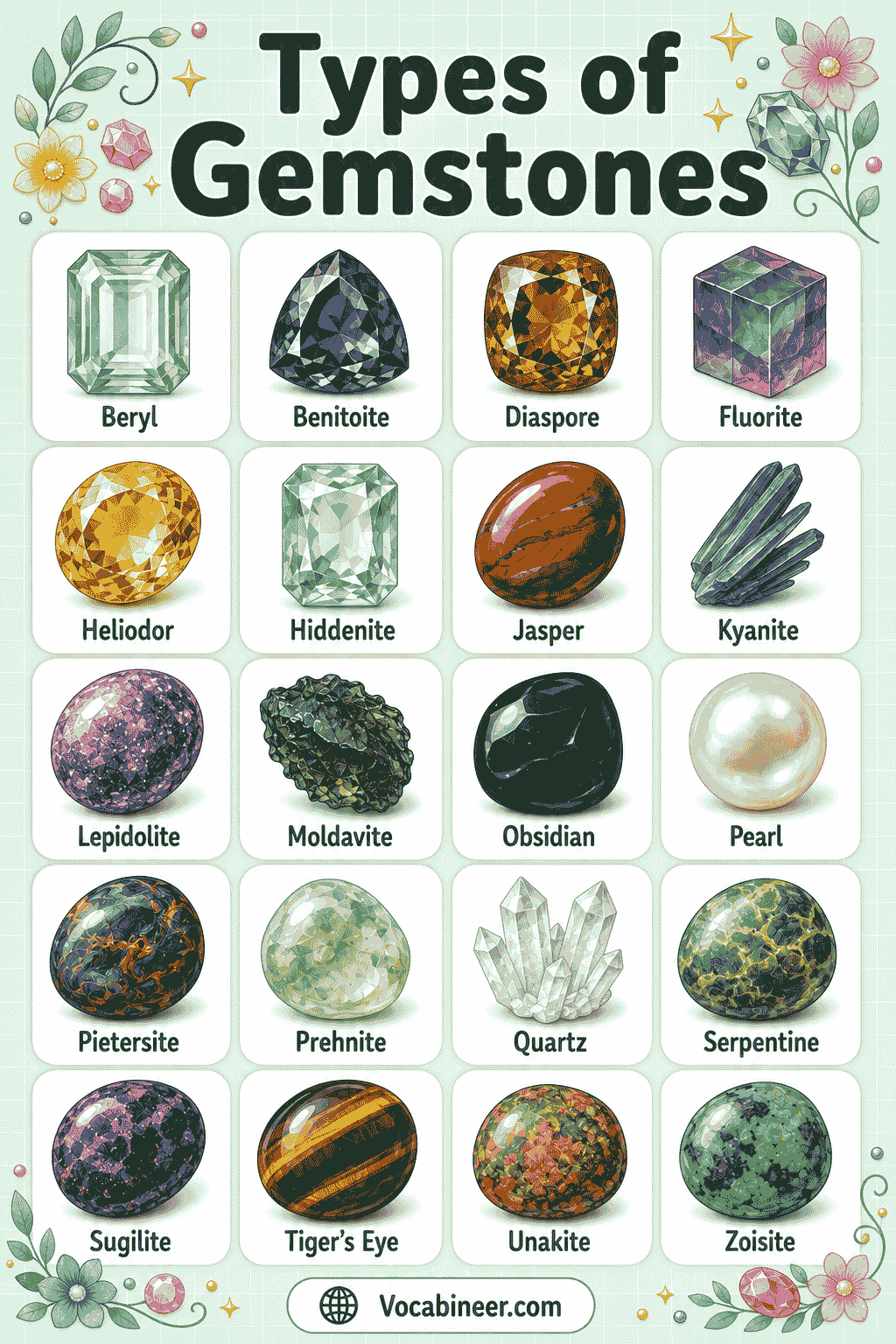
A gemstone chart helps learners compare gemstone groups quickly.
| Gemstone Group | Details |
|---|---|
| Precious Gemstones | Best for: classic fine jewelryExamples: diamond, ruby, sapphire, emerald |
| Semi Precious Gemstones | Best for: colorful jewelry and collectionsExamples: amethyst, garnet, turquoise |
| Organic Gemstones | Best for: natural organic jewelry materialsExamples: pearl, amber, coral |
| Gemstones by Color | Best for: visual identificationExamples: ruby, emerald, sapphire |
| Birthstone Gemstones | Best for: birthday gifts and personal jewelryExamples: garnet, amethyst, aquamarine |
| Jewelry Gemstones | Best for: rings, earrings, pendants, and braceletsExamples: diamond, opal, moonstone |
| Rare Gemstones | Best for: learning unusual gemstone namesExamples: alexandrite, tanzanite, red beryl |
Basic Gemstone Care Tips
Gemstones can scratch, fade, chip, or react badly to harsh chemicals depending on the stone. Simple care helps keep gemstone jewelry and collections clean and safe.
- Store Separately — keep gemstones in soft pouches or separate boxes to avoid scratches.
- Avoid Harsh Chemicals — perfumes, cleaners, and chemicals can damage some stones.
- Clean Gently — use a soft cloth and mild cleaning methods suitable for the stone.
- Protect Soft Stones — opal, pearl, turquoise, and moonstone need extra care.
- Avoid Strong Sunlight — some gemstones can fade with long sunlight exposure.
- Remove Jewelry During Rough Work — rings and bracelets can chip or scratch during heavy tasks.
- Check Settings — gemstone rings and earrings should be checked so stones do not loosen.
- Learn Stone-Specific Care — each gemstone can have different cleaning and storage needs.
FAQs
Common gemstone names include diamond, ruby, sapphire, emerald, amethyst, aquamarine, garnet, topaz, opal, turquoise, pearl, moonstone, peridot, citrine, and lapis lazuli.
The four traditional precious gemstones are diamond, ruby, sapphire, and emerald. These stones are often used in fine jewelry and classic gemstone guides.
Precious gemstones usually refer to diamond, ruby, sapphire, and emerald. Semi precious gemstones include many other stones such as amethyst, garnet, topaz, opal, turquoise, moonstone, peridot, and citrine.
Start by matching the stone’s color with common gemstone groups. Red stones may include ruby or garnet, blue stones may include sapphire or aquamarine, and green stones may include emerald, jade, or peridot.
Birthstone gemstones are stones linked with months of the year. Examples include garnet for January, amethyst for February, aquamarine for March, diamond for April, emerald for May, and ruby for July.
Read More
- Different Types of Minerals
- Nature Vocabulary Words
- Types of Rocks Names
- Different Types of Soil
- List of Crystal Names