Protein foods are foods that help the body build, repair, and maintain muscles, tissues, skin, and organs. They come from many food groups, including animal foods, seafood, dairy foods, plant foods, legumes, nuts, and seeds.
People often learn protein food names for school lessons, food vocabulary, fitness planning, meal ideas, and picture-based learning. This guide explains common protein food names with simple meanings, useful protein food groups, breakfast options, snack ideas, confusing protein terms, and image metadata for a clear visual food article.
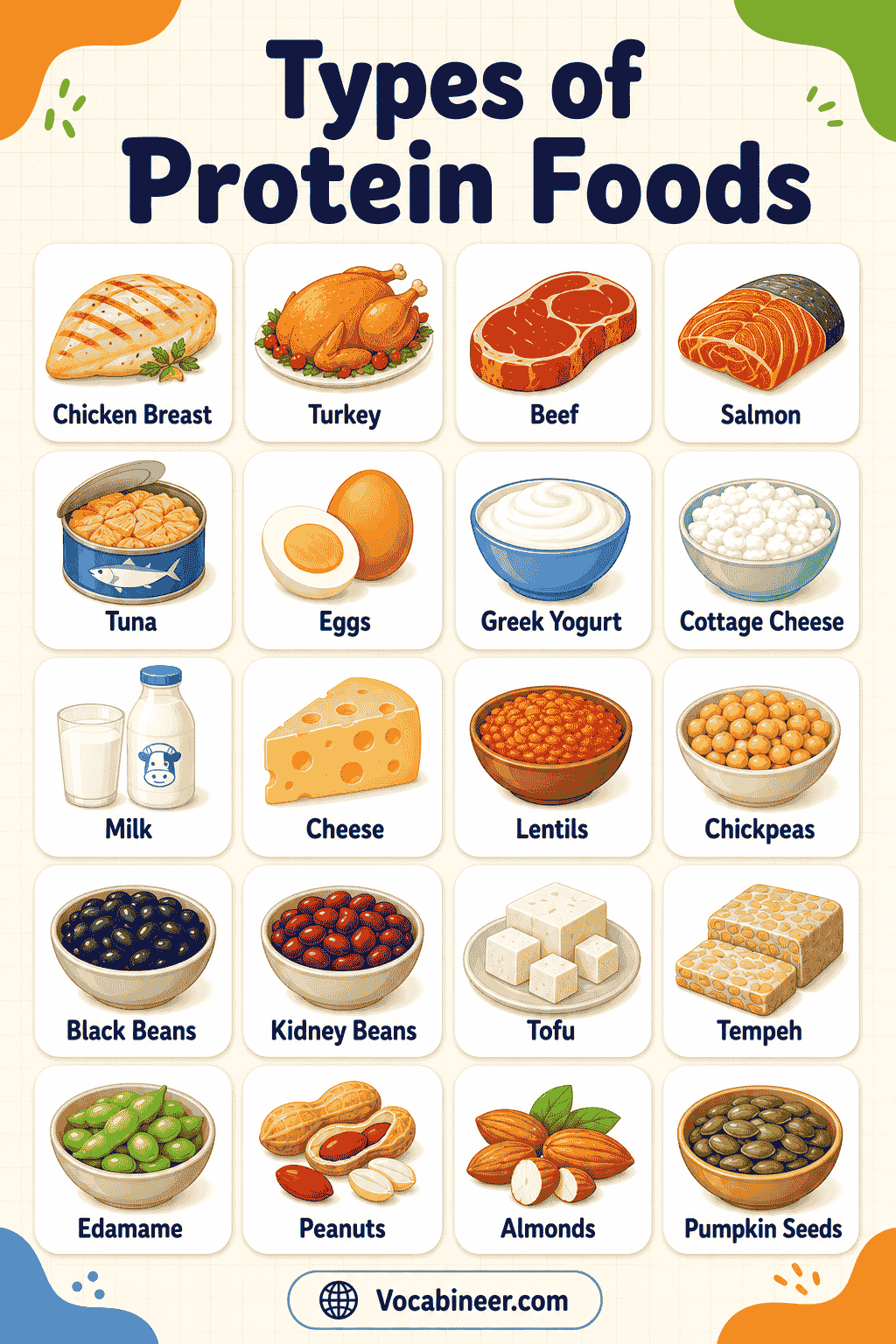
In This Page
Common Protein Food Names
Protein foods are found in everyday meals, snacks, breakfast plates, lunch boxes, and traditional dishes. These common protein food names help learners recognize popular sources of protein from both animal and plant foods.
- Eggs — a common protein food eaten boiled, scrambled, fried, or in omelets.
- Chicken — a poultry protein used in cooked meals, salads, soups, and rice dishes.
- Fish — a seafood protein often grilled, baked, fried, or cooked in curry.
- Milk — a dairy drink that provides protein and is often used at breakfast.
- Yogurt — a dairy food eaten plain, with fruit, or in smoothies.
- Greek Yogurt — a thicker yogurt with more protein than regular yogurt.
- Cheese — a dairy food used in sandwiches, salads, snacks, and cooked dishes.
- Paneer — a fresh dairy cheese used in curries, wraps, and traditional meals.
- Cottage Cheese — a soft dairy protein often eaten with fruit, toast, or salads.
- Lentils — small legumes used in soups, dals, stews, and curries.
- Beans — plant protein foods used in rice dishes, salads, soups, and stews.
- Chickpeas — legumes used in hummus, curries, salads, and roasted snacks.
- Tofu — a soy-based plant protein often used in stir-fries and soups.
- Tempeh — a fermented soy food with a firm texture.
- Peanuts — protein-rich legumes commonly eaten as snacks or peanut butter.
- Almonds — nuts used as snacks or toppings for breakfast bowls.
- Walnuts — nuts often added to salads, oatmeal, and baked foods.
- Chia Seeds — tiny seeds used in puddings, smoothies, and breakfast bowls.
- Pumpkin Seeds — edible seeds eaten as snacks or added to meals.
- Quinoa — a grain-like seed often used in bowls, salads, and cooked meals.
Animal Protein Food Names
Animal protein foods come from meat, poultry, and eggs. Many of these foods are used in main meals because they are filling and easy to combine with vegetables, grains, or salads.
- Chicken Breast — a lean poultry protein often grilled, baked, or boiled.
- Chicken Thigh — a darker chicken meat used in cooked meals and curries.
- Turkey — a lean poultry meat used in sandwiches, soups, and cooked dishes.
- Beef — red meat used in steaks, stews, burgers, and minced dishes.
- Lean Beef — beef with less visible fat.
- Lamb — tender meat from young sheep used in roasted or cooked dishes.
- Mutton — meat from older sheep used in curries, stews, and traditional meals.
- Eggs — animal protein used in breakfast, baking, and cooked meals.
- Egg Whites — the white part of an egg often used as a low-fat protein source.
- Duck Eggs — larger eggs with a rich taste and protein content.
Seafood Protein Food Names
Seafood protein foods come from fish and shellfish. These foods are common in coastal diets, restaurant meals, salads, rice dishes, and grilled plates.
- Fish — a general seafood protein used in many cooked dishes.
- Salmon — an oily fish often grilled, baked, or used in salads.
- Tuna — a lean fish used in sandwiches, salads, and cooked meals.
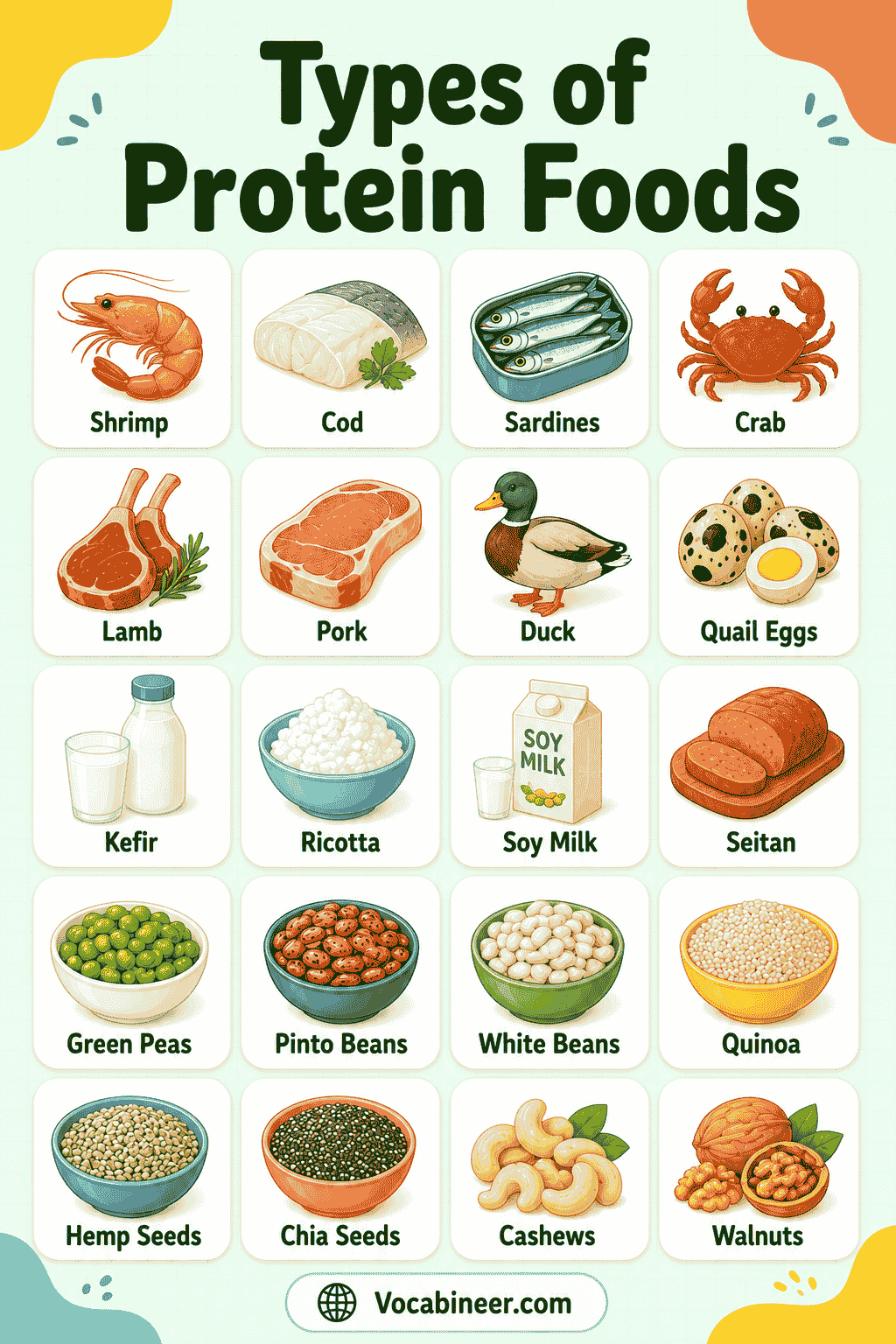
- Sardines — small fish often eaten canned, grilled, or with bread.
- Mackerel — an oily fish used in grilled or cooked dishes.
- Cod — a white fish with a mild taste.
- Shrimp — small shellfish used in pasta, rice, soups, and stir-fries.
- Prawns — larger shrimp-like seafood used in curries and grilled meals.
- Crab — shellfish used in seafood dishes, salads, and soups.
- Lobster — shellfish often served in special seafood meals.
- Shellfish — a general term for seafood such as shrimp, crab, mussels, and clams.
- White Fish — mild fish such as cod or haddock used in light meals.
Dairy Protein Food Names
Dairy protein foods come from milk and milk-based products. They are often eaten at breakfast, used in snacks, added to smoothies, or cooked in traditional dishes.
- Milk — a liquid dairy food used in drinks, cereals, and smoothies.
- Yogurt — a fermented dairy food eaten plain or with fruit.
- Greek Yogurt — thick yogurt often used for breakfast or snacks.
- Plain Yogurt — yogurt without added flavors or sweeteners.
- Cheese — a dairy food used in sandwiches, meals, and snacks.
- Cottage Cheese — soft cheese often eaten with fruit, bread, or salads.
- Paneer — fresh cheese used in cooked dishes and traditional meals.
- Curd — a traditional fermented dairy food used in many households.
- Kefir — a fermented dairy drink with a tangy taste.
- Buttermilk — a light fermented dairy drink.
- Milk Powder — dried milk used in drinks, cooking, and food preparation.
- Whey Protein — a milk-based protein often used in shakes.
- Casein Protein — a milk-based protein that digests more slowly than whey.
Plant Protein Food Names
Plant protein foods come from legumes, soy foods, grains, and some vegetables. These foods are useful for vegetarian meals, vegan meals, balanced diets, and everyday home cooking.
- Lentils — small legumes used in soups, dals, stews, and salads.
- Beans — protein-rich legumes used in many meals.
- Black Beans — dark beans used in bowls, wraps, soups, and rice dishes.
- Kidney Beans — red beans often used in chili, stews, and curries.
- Chickpeas — legumes used in hummus, curries, salads, and roasted snacks.
- Soybeans — beans used whole or processed into soy foods.
- Tofu — a soft or firm soy-based protein used in stir-fries and soups.
- Tempeh — fermented soy protein with a firm texture.
- Edamame — young green soybeans often steamed and eaten as a snack.
- Peas — small green legumes used in soups, rice dishes, and vegetables.
- Green Peas — sweet peas often cooked as a side dish or added to meals.
- Split Peas — dried peas used in soups and stews.
- Mung Beans — small beans used in dals, sprouts, and traditional dishes.
- Fava Beans — broad beans used in salads, stews, and cooked meals.
- Seitan — a wheat-based protein used in vegetarian and vegan dishes.
- Quinoa — a grain-like seed used in bowls, salads, and cooked meals.
Nuts Seeds and Legume Protein Foods
Nuts, seeds, and legumes add protein, texture, and healthy fats to meals and snacks. They work well in breakfast bowls, trail mixes, salads, spreads, and cooked dishes.
- Peanuts — protein-rich legumes eaten roasted or as peanut butter.
- Almonds — crunchy nuts used as snacks or toppings.
- Walnuts — nuts often added to oatmeal, salads, and baked foods.
- Cashews — mild nuts used in snacks and creamy sauces.
- Pistachios — small green nuts eaten as snacks.
- Chia Seeds — tiny seeds used in pudding, smoothies, and oats.
- Flaxseeds — small seeds often added to cereals and smoothies.
- Pumpkin Seeds — edible seeds eaten roasted or added to salads.
- Sunflower Seeds — small seeds used as snacks or toppings.
- Sesame Seeds — tiny seeds used on bread, sauces, and cooked dishes.
- Lentils — legumes used in soups, stews, and dals.
- Beans — legumes used in rice dishes, soups, and salads.
- Chickpeas — legumes used in hummus, curries, and roasted snacks.
- Soybeans — high-protein beans used in soy foods.
Protein Foods for Breakfast
Protein foods for breakfast can make a morning meal more filling. They are often paired with fruits, grains, toast, smoothies, or vegetables.
- Boiled Eggs — cooked eggs eaten alone or with toast.
- Scrambled Eggs — eggs cooked softly in a pan.
- Omelet — beaten eggs cooked with vegetables, cheese, or herbs.
- Greek Yogurt — thick yogurt served with fruit, oats, or granola.
- Cottage Cheese — soft cheese served with fruit, toast, or nuts.
- Milk — a breakfast drink used with cereal, oats, or smoothies.
- Paneer — a dairy protein used in breakfast wraps or cooked dishes.
- Tofu Scramble — a plant-based breakfast made with crumbled tofu.
- Peanut Butter — a protein-rich spread used on toast or fruit.
- Oatmeal with Milk — oats cooked with milk for added protein.
- Chia Pudding — chia seeds soaked in milk or yogurt.
- Smoothie with Yogurt — a blended drink made with yogurt, fruit, and milk.
High Protein Snacks
High protein snacks are often eaten between meals or after activity. Good snack choices are simple, easy to carry, and made from dairy, legumes, nuts, seeds, or eggs.
- Boiled Eggs — portable egg snacks eaten cold or warm.
- Greek Yogurt — a thick dairy snack served plain or with fruit.
- Cottage Cheese — a soft snack often eaten with fruit or crackers.
- Roasted Chickpeas — crunchy roasted legumes used as a snack.
- Nuts — mixed nuts such as almonds, peanuts, walnuts, and cashews.
- Peanut Butter — a spread used with toast, apples, or bananas.
- Hummus — a chickpea dip eaten with bread or vegetable sticks.
- Edamame — steamed green soybeans eaten as a snack.
- Cheese Cubes — small pieces of cheese used as quick snacks.
- Milk — a simple protein drink.
- Protein Smoothie — a blended drink made with yogurt, milk, fruit, or protein powder.
- Trail Mix — a mix of nuts, seeds, and dried fruit.
- Pumpkin Seeds — crunchy seeds eaten alone or added to snack bowls.
Protein Food Groups and Types
Protein foods can be grouped by source and use. This helps learners understand the difference between animal protein, plant protein, dairy protein, seafood protein, legume protein, nut protein, and seed protein.
Some protein foods are called complete proteins because they contain all essential amino acids. Others are called incomplete proteins because they may not contain every essential amino acid in high amounts. A balanced diet can include different protein foods from more than one group.
Confusing Protein Food Terms Explained
| Protein Food Terms | Difference |
|---|---|
| Animal Protein vs Plant Protein | Animal protein comes from meat, eggs, seafood, and dairy, while plant protein comes from beans, legumes, nuts, seeds, soy, and grains. |
| Complete Protein vs Incomplete Protein | Complete protein contains all essential amino acids, while incomplete protein may be lower in one or more essential amino acids. |
| Lean Protein vs High Fat Protein | Lean protein has less fat, while high fat protein contains more fat along with protein. |
| Dairy Protein vs Plant Protein | Dairy protein comes from milk-based foods, while plant protein comes from foods such as beans, lentils, soy, nuts, and seeds. |
| Greek Yogurt vs Regular Yogurt | Greek yogurt is thicker and usually higher in protein than regular yogurt. |
| Tofu vs Paneer | Tofu is made from soybeans, while paneer is made from milk. |
| Beans vs Lentils | Beans are usually larger legumes, while lentils are smaller and often cook faster. |
| Nuts vs Seeds | Nuts usually come from tree fruits or shells, while seeds are plant parts that can grow into new plants. |
| Whey Protein vs Casein Protein | Whey and casein both come from milk, but whey digests faster and casein digests more slowly. |
| Protein Food vs Protein Powder | Protein food is a natural or whole food source, while protein powder is a processed supplement. |
Protein Foods Chart with Pictures
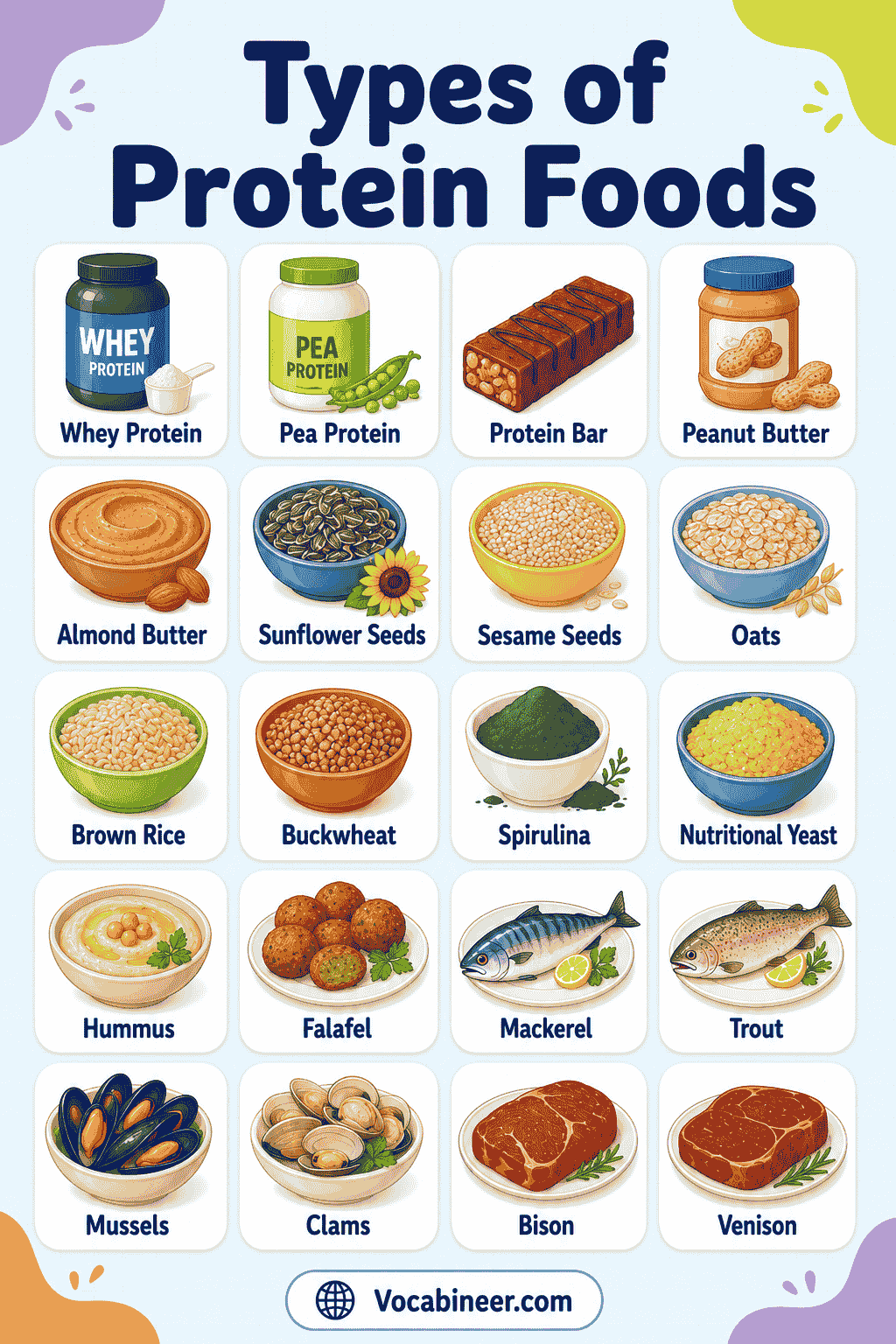
A protein foods chart helps learners compare protein food groups quickly.
| Protein Food Group | Details |
|---|---|
| Animal Protein Foods | Best for: meat and egg protein examplesExamples: chicken, turkey, eggs |
| Seafood Protein Foods | Best for: fish and shellfish proteinExamples: salmon, tuna, shrimp |
| Dairy Protein Foods | Best for: milk-based protein foodsExamples: milk, Greek yogurt, paneer |
| Plant Protein Foods | Best for: vegetarian and vegan mealsExamples: lentils, tofu, chickpeas |
| Nuts Seeds and Legumes | Best for: snacks and plant proteinExamples: almonds, pumpkin seeds, beans |
| Breakfast Protein Foods | Best for: morning mealsExamples: eggs, yogurt, chia pudding |
| High Protein Snacks | Best for: quick protein between mealsExamples: roasted chickpeas, nuts, hummus |
Simple Protein Food Tips
Choose protein foods from different groups to make meals more balanced. For example, eggs, yogurt, lentils, fish, tofu, nuts, seeds, and beans all add protein in different ways.
Beginners do not need to focus only on one food. Instead, they can include protein foods in breakfast, lunch, dinner, and snacks. People with health conditions, allergies, or special diet needs should ask a qualified professional before making major diet changes.
FAQs
Common protein food names include eggs, chicken, fish, milk, yogurt, Greek yogurt, cheese, paneer, cottage cheese, lentils, beans, chickpeas, tofu, tempeh, peanuts, almonds, chia seeds, pumpkin seeds, and quinoa.
Animal protein foods include chicken, turkey, beef, lean beef, lamb, mutton, eggs, egg whites, duck eggs, fish, salmon, tuna, sardines, shrimp, milk, yogurt, cheese, and paneer.
Plant protein foods include lentils, beans, black beans, kidney beans, chickpeas, soybeans, tofu, tempeh, edamame, peas, mung beans, fava beans, seitan, quinoa, nuts, and seeds.
Good protein foods for breakfast include boiled eggs, scrambled eggs, omelets, Greek yogurt, cottage cheese, milk, paneer, tofu scramble, peanut butter, oatmeal with milk, chia pudding, and smoothies with yogurt.
Animal protein comes from meat, eggs, seafood, and dairy foods. Plant protein comes from beans, lentils, chickpeas, soy foods, nuts, seeds, and grains such as quinoa.
Read More
- Healthy Foods Types
- Parts of Body Names
- Weather Vocabulary Words
- Types of Food in English
- Breakfast Food Names
- Lunch Food Names