Ceilings are important parts of homes, offices, schools, shops, halls, and commercial buildings. A ceiling covers the upper part of a room and can affect height, lighting, sound, style, comfort, and maintenance. Some ceilings are simple and flat, while others are decorative, high, open, suspended, or made for sound control.
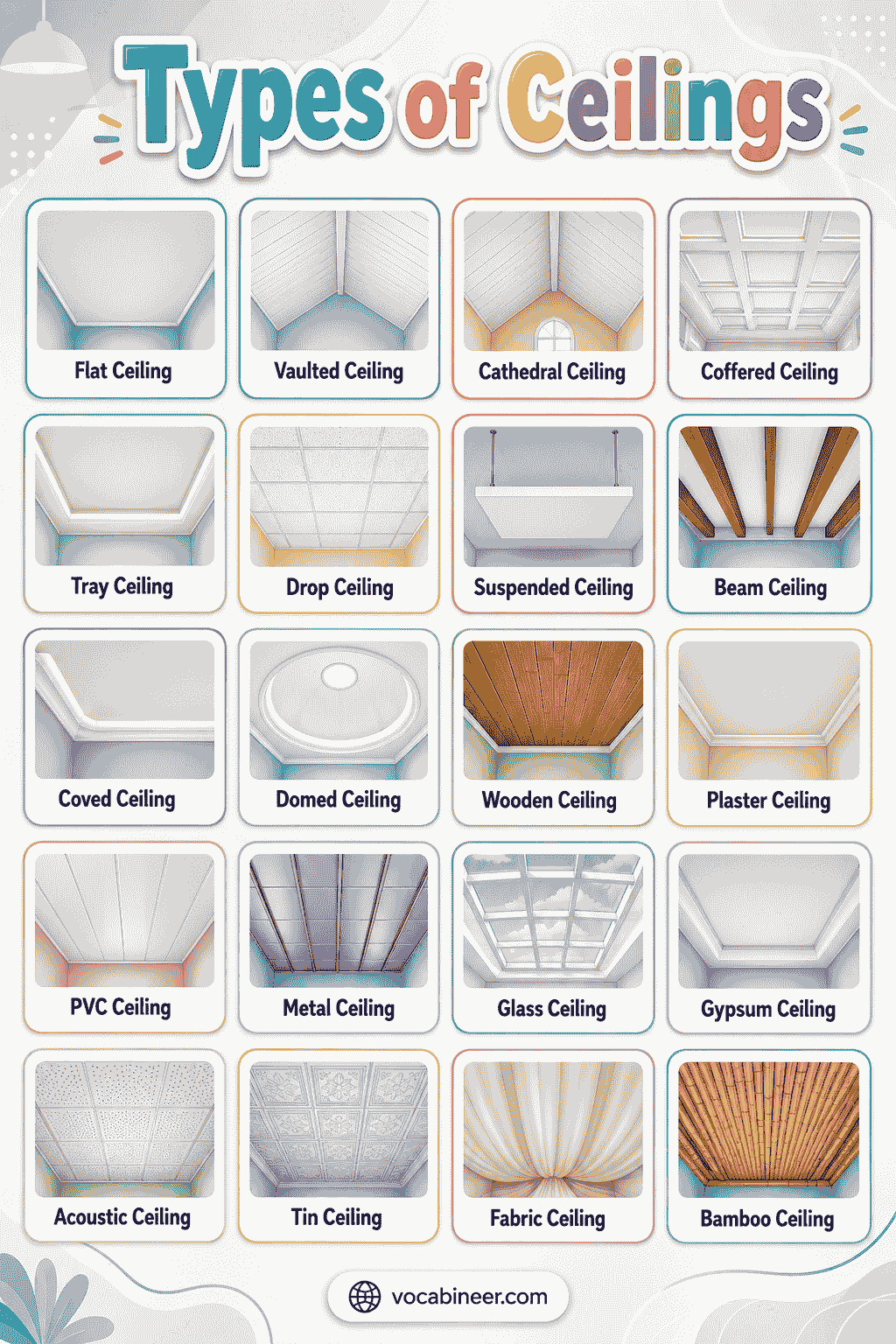
Common types of ceilings include flat ceilings, false ceilings, tray ceilings, coffered ceilings, vaulted ceilings, cathedral ceilings, suspended ceilings, drop ceilings, popcorn ceilings, beam ceilings, wooden ceilings, plaster ceilings, gypsum ceilings, PVC ceilings, metal ceilings, glass ceilings, stretch ceilings, acoustic ceilings, exposed ceilings, and barrel vault ceilings. This guide explains ceiling names, uses, materials, designs, room ideas, comparisons, choosing tips, and picture ideas.
In This Page
What Is a Ceiling?
A ceiling is the overhead surface inside a room. It covers the top part of the space and separates the room from the roof, floor above, or building structure.
Ceilings can be plain, decorative, high, curved, suspended, or made from special materials. The right ceiling type depends on room height, lighting needs, moisture level, sound control, budget, and design style.
Common Types of Ceilings
These are the most common ceiling names in English. They are useful for home improvement vocabulary, construction learning, interior design, renovation planning, and ESL lessons.
- Flat Ceiling — a plain, level ceiling used in many simple homes and rooms.
- False Ceiling — a secondary ceiling built below the main ceiling, often used for lighting, decoration, wiring cover, and modern interiors.
- Tray Ceiling — a ceiling with a raised edge and recessed center that adds depth and elegance.
- Coffered Ceiling — a decorative ceiling with sunken square or rectangular panels.
- Vaulted Ceiling — a high ceiling with sloped sides that makes a room feel open and spacious.
- Cathedral Ceiling — a high sloped ceiling that usually follows the shape of the roof.
- Suspended Ceiling — a ceiling system hung below the main ceiling, often with a metal grid and removable panels.
- Drop Ceiling — another name for a suspended ceiling, commonly used in offices, basements, classrooms, and commercial spaces.
- Popcorn Ceiling — a textured ceiling with a rough, bumpy surface.
- Beam Ceiling — a ceiling with visible beams used for rustic, traditional, or decorative style.
- Wooden Ceiling — a ceiling made with wood planks, panels, or beams.
- Plaster Ceiling — a ceiling finished with plaster for a smooth or decorative surface.
- Gypsum Ceiling — a ceiling made with gypsum board, often used in modern interiors and false ceilings.
- PVC Ceiling — a lightweight ceiling made with PVC panels, often used in kitchens and bathrooms.
- Metal Ceiling — a ceiling made with metal panels such as aluminum, tin, or steel.
- Glass Ceiling — in construction, a ceiling or overhead section made with glass, often used for natural light or a skylight effect.
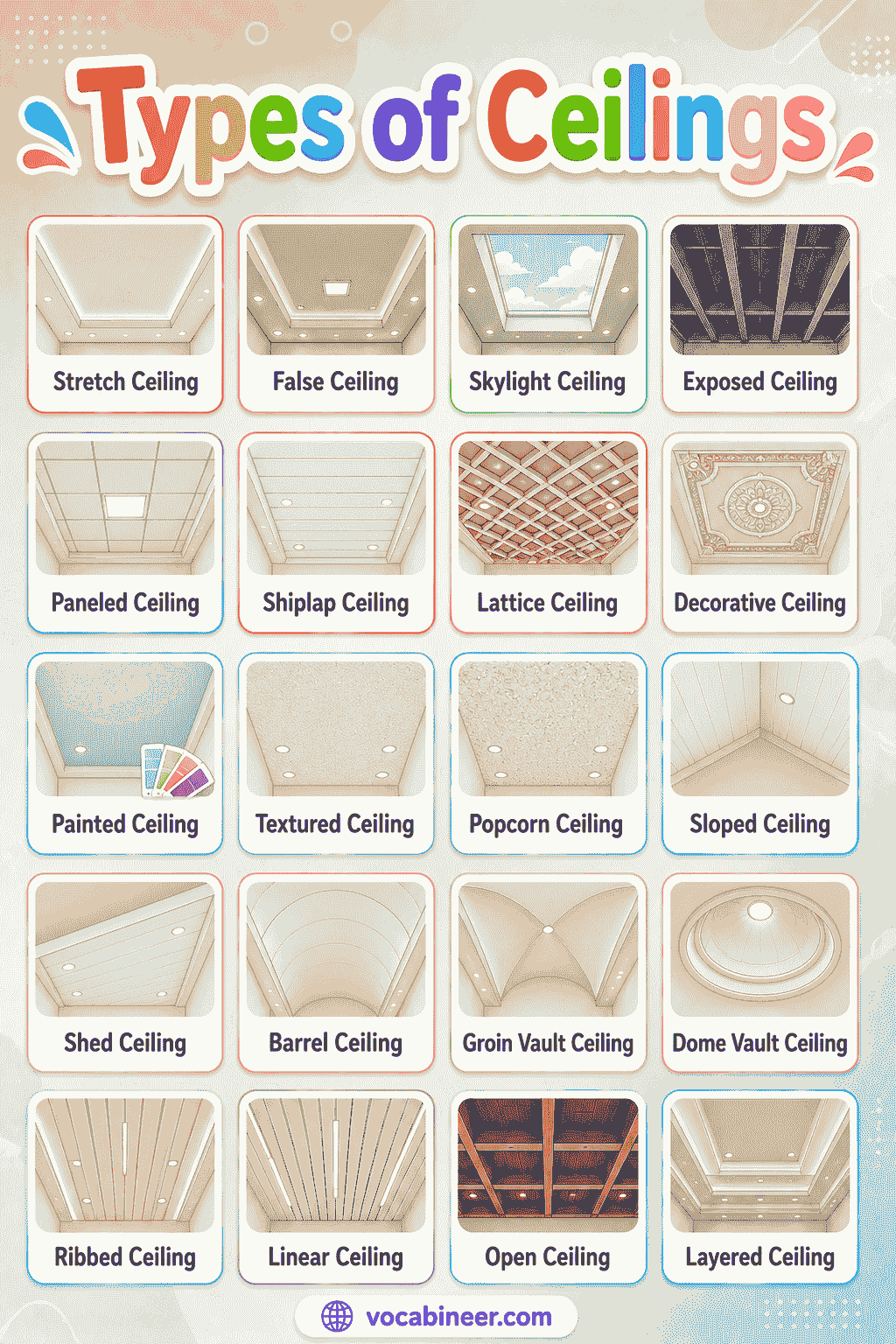
- Stretch Ceiling — a ceiling made with a stretched flexible membrane for a smooth modern finish.
- Acoustic Ceiling — a ceiling designed to reduce noise and improve sound control.
- Exposed Ceiling — a ceiling style where pipes, beams, ducts, or structural parts remain visible.
- Barrel Vault Ceiling — a curved ceiling shaped like half of a barrel.
Important Ceiling Terms to Know
Some ceiling terms can confuse beginners because they sound similar or have more than one meaning. A false ceiling is a secondary ceiling below the main ceiling. A suspended ceiling or drop ceiling usually uses a grid system with removable panels, often in offices, basements, and commercial spaces. In construction, a glass ceiling means an overhead glass section, not the idiom about workplace limits. A skylight ceiling is better understood as a ceiling feature because it includes a window or opening for natural light.
Types of Ceilings by Design
Ceilings can be grouped by design because the shape and layout affect how a room looks and feels.
Simple Ceiling Designs
Simple ceiling designs look clean, neat, and easy to maintain. They are common in bedrooms, kitchens, apartments, offices, and basic home interiors.
- Flat Ceiling
- Plaster Ceiling
- Gypsum Ceiling
- PVC Ceiling
- False Ceiling
Decorative Ceiling Designs
Decorative ceiling designs add depth, texture, warmth, and visual interest to a room.
- Tray Ceiling
- Coffered Ceiling
- Beam Ceiling
- Wooden Ceiling
- Stretch Ceiling
High and Open Ceiling Designs
High and open ceiling designs make rooms feel larger, brighter, and more dramatic.
- Vaulted Ceiling
- Cathedral Ceiling
- Barrel Vault Ceiling
- Exposed Ceiling
- Glass Ceiling
Types of Ceilings by Material
Ceiling material affects appearance, moisture resistance, sound control, maintenance, weight, and cost.
Plaster and Gypsum Ceilings
Plaster and gypsum ceilings are common in homes because they can look smooth, modern, and easy to paint.
- Plaster Ceiling
- Gypsum Ceiling
- False Ceiling
- Drop Ceiling
- Suspended Ceiling
Wood and Panel Ceilings
Wood and panel ceilings add warmth, texture, and a natural look to rooms.
- Wooden Ceiling
- Beam Ceiling
- Panel Ceiling
- Plywood Ceiling
- Shiplap Ceiling
Metal and PVC Ceilings
Metal and PVC ceilings are useful in spaces that need easy cleaning, moisture resistance, or durable panels.
- Metal Ceiling
- PVC Ceiling
- Aluminum Ceiling
- Tin Ceiling
- Grid Ceiling
Glass and Fabric Ceiling Features
Glass and fabric ceiling features are used for light, decoration, and modern interior effects.
- Glass Ceiling
- Stretch Ceiling
- Fabric Ceiling
- Skylight Ceiling
Types of Ceilings by Use
Ceilings can also be grouped by purpose. Some ceilings are used for decoration, while others help with lighting, wiring, sound, or room height.
Ceilings for Homes
Home ceilings should look neat, match the room style, and support lighting or decoration.
- Flat Ceiling
- False Ceiling
- Tray Ceiling
- Wooden Ceiling
- Gypsum Ceiling
Ceilings for Offices
Office ceilings should support lighting, wiring, acoustics, and easy maintenance.
- Suspended Ceiling
- Drop Ceiling
- Acoustic Ceiling
- Grid Ceiling
- Gypsum Ceiling
Ceilings for Large Rooms
Large rooms often need ceilings that add height, style, and visual impact.
- Vaulted Ceiling
- Cathedral Ceiling
- Coffered Ceiling
- Beam Ceiling
- Exposed Ceiling
Ceilings for Sound Control
Sound-control ceilings help reduce noise in offices, halls, classrooms, studios, and commercial spaces.
- Acoustic Ceiling
- Suspended Ceiling
- Drop Ceiling
- Panel Ceiling
- Gypsum Ceiling
Types of Ceilings for Different Rooms
Different rooms need different ceiling materials and designs. Living rooms may need style, bedrooms need comfort, and bathrooms need moisture-friendly materials.
Ceilings for Living Rooms
Living room ceilings should look stylish, bright, and balanced with the furniture and lighting.
- Tray Ceiling
- Coffered Ceiling
- False Ceiling
- Wooden Ceiling
- Beam Ceiling
Ceilings for Bedrooms
Bedroom ceilings should feel calm, comfortable, and simple.
- Flat Ceiling
- Gypsum Ceiling
- False Ceiling
- Tray Ceiling
- Wooden Ceiling
Ceilings for Kitchens
Kitchen ceilings should be easy to clean and suitable for lighting and ventilation.
- Flat Ceiling
- PVC Ceiling
- Gypsum Ceiling
- Suspended Ceiling
- Metal Ceiling
Ceilings for Bathrooms
Bathroom ceilings should handle moisture, steam, and regular cleaning.
- PVC Ceiling
- Metal Ceiling
- Gypsum Ceiling
- Flat Ceiling
- False Ceiling
Ceilings for Offices and Commercial Spaces
Office and commercial ceilings should support lighting, cables, air systems, and sound control.
- Suspended Ceiling
- Drop Ceiling
- Acoustic Ceiling
- Grid Ceiling
- Exposed Ceiling
Types of Ceilings and Their Uses
| Type of Ceiling | Main Use |
|---|---|
| Flat ceiling | Simple homes, bedrooms, kitchens, and basic room designs |
| False ceiling | Lighting, decoration, wiring cover, and modern interiors |
| Tray ceiling | Living rooms, bedrooms, and elegant decorative designs |
| Coffered ceiling | Luxury rooms, formal spaces, and classic ceiling style |
| Vaulted ceiling | Large rooms, open spaces, and dramatic height |
| Suspended ceiling | Offices, commercial spaces, wiring access, and sound control |
| Drop ceiling | Basements, offices, classrooms, and easy maintenance |
| Popcorn ceiling | Textured ceiling surfaces, older homes, and budget ceiling finishes |
| Acoustic ceiling | Noise control in offices, studios, schools, and halls |
| PVC ceiling | Bathrooms, kitchens, and moisture-prone areas |
Difference Between Popular Ceiling Types
| Ceiling Type | Look or Structure | Best For | Main Benefit |
|---|---|---|---|
| Flat ceiling | Plain and level surface | Basic rooms and simple interiors | Clean and affordable |
| False ceiling | Extra ceiling layer below main ceiling | Modern homes and lighting designs | Hides wiring and adds style |
| Tray ceiling | Recessed center with raised edges | Bedrooms and living rooms | Adds depth and elegance |
| Coffered ceiling | Grid-like sunken panels | Luxury and formal rooms | Creates a classic premium look |
| Suspended ceiling | Ceiling tiles hung below structure | Offices and commercial spaces | Easy access to wires and ducts |
| Vaulted ceiling | High sloped ceiling | Large rooms and open spaces | Makes rooms feel bigger |
How to Choose the Right Type of Ceiling
Choosing the right type of ceiling depends on room size, height, budget, lighting needs, moisture level, sound control, and design style. Bedrooms and simple rooms often work well with flat, gypsum, tray, or false ceilings because they feel neat and comfortable. Living rooms can use tray ceilings, coffered ceilings, wooden ceilings, or beam ceilings for a more decorative look. Offices and commercial spaces usually need suspended, drop, grid, or acoustic ceilings for wiring, lighting, and sound control. Bathrooms and kitchens need moisture-friendly materials such as PVC, metal, or suitable gypsum ceiling options.
Tips for Choosing Ceilings
- Check room height — false, tray, and suspended ceilings need enough height to look balanced.
- Think about lighting — false ceilings and tray ceilings work well with recessed lights and LED strips.
- Consider moisture — bathrooms and kitchens need ceiling materials that handle steam and humidity.
- Plan for wiring — suspended and drop ceilings make it easier to access wires, pipes, and air ducts.
- Match the room style — wooden ceilings feel warm, coffered ceilings look formal, and flat ceilings look simple.
- Consider sound control — acoustic ceilings help reduce noise in offices, halls, classrooms, and studios.
- Check maintenance needs — some ceiling materials need more cleaning, painting, or repair than others.
Types of Ceilings Chart with Pictures
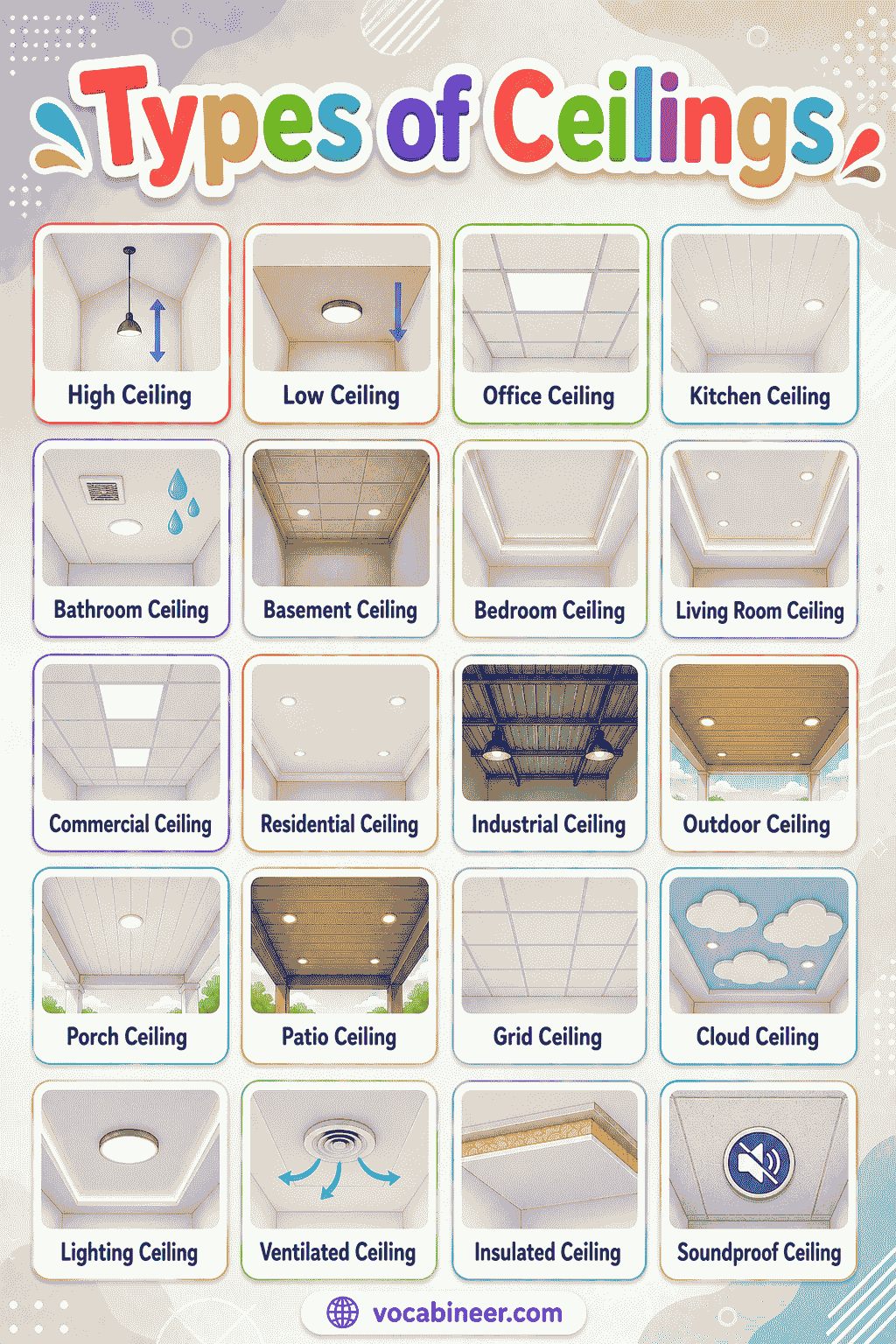
A ceiling chart helps learners compare ceiling groups quickly.
| Ceiling Group | Details |
|---|---|
| Simple ceilings | Best for: basic rooms and clean interiors Examples: flat ceiling, plaster ceiling, gypsum ceiling |
| Decorative ceilings | Best for: style, depth, and luxury looks Examples: tray ceiling, coffered ceiling, beam ceiling |
| High ceilings | Best for: open rooms and dramatic height Examples: vaulted ceiling, cathedral ceiling, barrel vault ceiling |
| Office ceilings | Best for: wiring, lighting, and easy access Examples: suspended ceiling, drop ceiling, grid ceiling |
| Sound-control ceilings | Best for: quieter rooms and commercial spaces Examples: acoustic ceiling, panel ceiling, gypsum ceiling |
| Moisture-friendly ceilings | Best for: bathrooms, kitchens, and humid spaces Examples: PVC ceiling, metal ceiling, suitable gypsum ceiling |
FAQ
The most common types of ceilings include flat ceilings, false ceilings, tray ceilings, coffered ceilings, vaulted ceilings, suspended ceilings, drop ceilings, beam ceilings, gypsum ceilings, and PVC ceilings.
A false ceiling is a secondary ceiling built below the main ceiling. It is often used to hide wiring, support lighting, improve design, or help with sound and temperature control.
A false ceiling is any extra ceiling layer below the main ceiling, while a drop ceiling is usually a suspended grid system with removable panels. Drop ceilings are common in offices, basements, classrooms, and commercial spaces.
PVC ceilings, metal ceilings, and moisture-resistant gypsum ceilings are common bathroom choices because they can handle humidity and steam better than many basic ceiling materials.
An acoustic ceiling is used to reduce noise and improve sound control in offices, classrooms, halls, studios, and commercial spaces.
Read More
- Types of Flooring
- Bedroom Decor Items
- Popular Types of Tiles
- Types of Drinking Glasses
- Living Room Items Names
- Different Types of Houses
- Types of Rooms in a House
- Parts of a House Names