

Indoor plants are plants that grow well inside homes, offices, classrooms, shops, and other indoor spaces. Many are popular because they add greenery, improve room decoration, and make indoor areas feel fresh and natural.
Some indoor plants are easy to grow, while others need brighter light, more humidity, or careful watering. This guide explains common indoor plant names with simple meanings, plant groups, identification clues, beginner-friendly choices, and picture metadata for a clear visual houseplant guide.
In This Page
Common Indoor Plant Names
Indoor plants come in many shapes, sizes, colors, and growth styles. These common indoor plant names help beginners recognize popular houseplants used in homes, offices, bedrooms, desks, shelves, and indoor gardens.
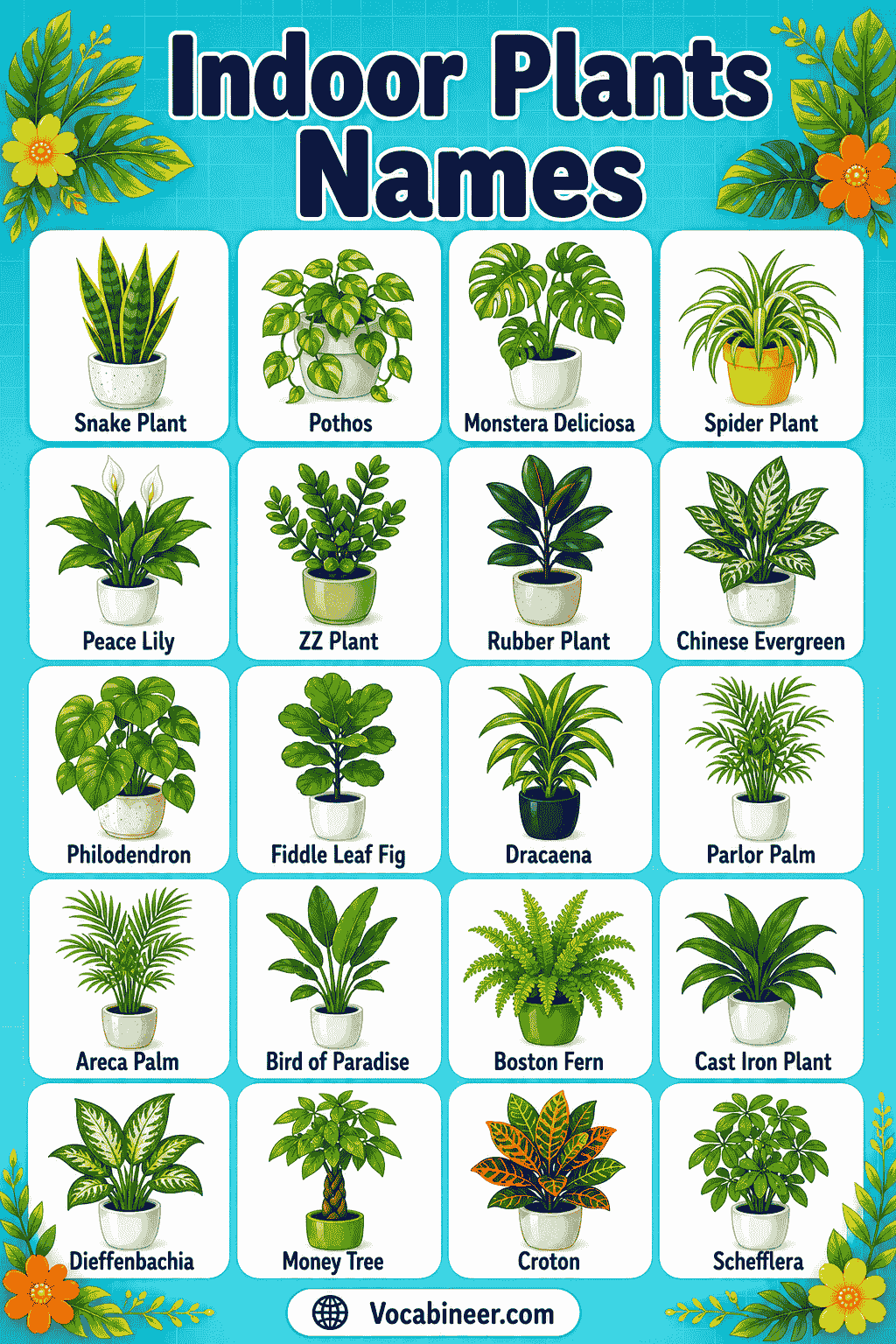
- Snake Plant — an upright indoor plant with long sword-like leaves.
- Pothos — a trailing plant with heart-shaped green or variegated leaves.
- Spider Plant — a plant with long arching leaves and small baby plantlets.
- Peace Lily — an indoor plant with glossy leaves and white flowers.
- ZZ Plant — a tough plant with shiny oval leaves and upright stems.
- Monstera — a large indoor plant known for split leaves.
- Philodendron — a popular houseplant with heart-shaped or large green leaves.
- Rubber Plant — a sturdy indoor plant with thick glossy leaves.
- Aloe Vera — a succulent indoor plant with thick fleshy leaves.
- Jade Plant — a small tree-like succulent with thick oval leaves.
- Fiddle Leaf Fig — a tall plant with large violin-shaped leaves.
- Chinese Evergreen — a leafy indoor plant with patterned green leaves.
- Dracaena — an upright plant with long narrow leaves.
- Prayer Plant — a patterned plant with leaves that fold upward at night.
- Parlor Palm — a small palm with soft green fronds.
- Areca Palm — a larger indoor palm with feathery fronds.
- Boston Fern — a fern with soft arching fronds.
- English Ivy — a trailing plant often grown in hanging pots.
- Money Tree — an indoor plant with braided stems and green leaves.
- Air Plant — a small plant that can grow without soil.
Easy Indoor Plants for Beginners
Easy indoor plants are good for people who are new to plant care. These plants are usually forgiving, low maintenance, and more likely to handle normal indoor conditions.
- Snake Plant — a tough plant that handles low light and dry soil better than many houseplants.
- Pothos — an easy trailing plant that grows well in pots or hanging baskets.
- ZZ Plant — a low-maintenance plant with shiny leaves and slow growth.
- Spider Plant — a beginner-friendly plant that produces small baby plants.
- Philodendron — a simple indoor plant that grows well in bright indirect light.
- Chinese Evergreen — an easy-care plant with attractive patterned leaves.
- Jade Plant — a slow-growing succulent that does well with careful watering.
- Aloe Vera — a fleshy succulent that likes bright light and dry soil between waterings.
- Rubber Plant — a strong indoor plant with thick leaves.
- Dracaena — an upright plant that works well in many indoor spaces.
- Peace Lily — a popular plant with white flowers and glossy leaves.
- Parlor Palm — a small palm that grows well indoors.
Low Light Indoor Plants
Low light indoor plants can grow in rooms without strong direct sun. They still need some light, but they can handle shaded corners, offices, bedrooms, and indoor spaces with indirect light.
- Snake Plant — one of the most common low light indoor plants.
- ZZ Plant — a strong plant that can handle lower light conditions.
- Pothos — a trailing plant that grows in bright or moderate indirect light.
- Chinese Evergreen — a patterned plant often used in low light rooms.
- Peace Lily — a leafy plant that can grow in low to medium light.
- Cast Iron Plant — a hardy plant known for tolerating shade.
- Parlor Palm — a soft palm that works well in indoor corners.
- Dracaena — an upright plant that can adapt to indoor light.
- Philodendron — a leafy plant that grows well away from harsh direct sun.
- Prayer Plant — a patterned plant that prefers indirect light.
Indoor Flowering Plants
Indoor flowering plants add color to rooms while still working as houseplants. Some bloom seasonally, while others produce flowers when they receive enough light and proper care.
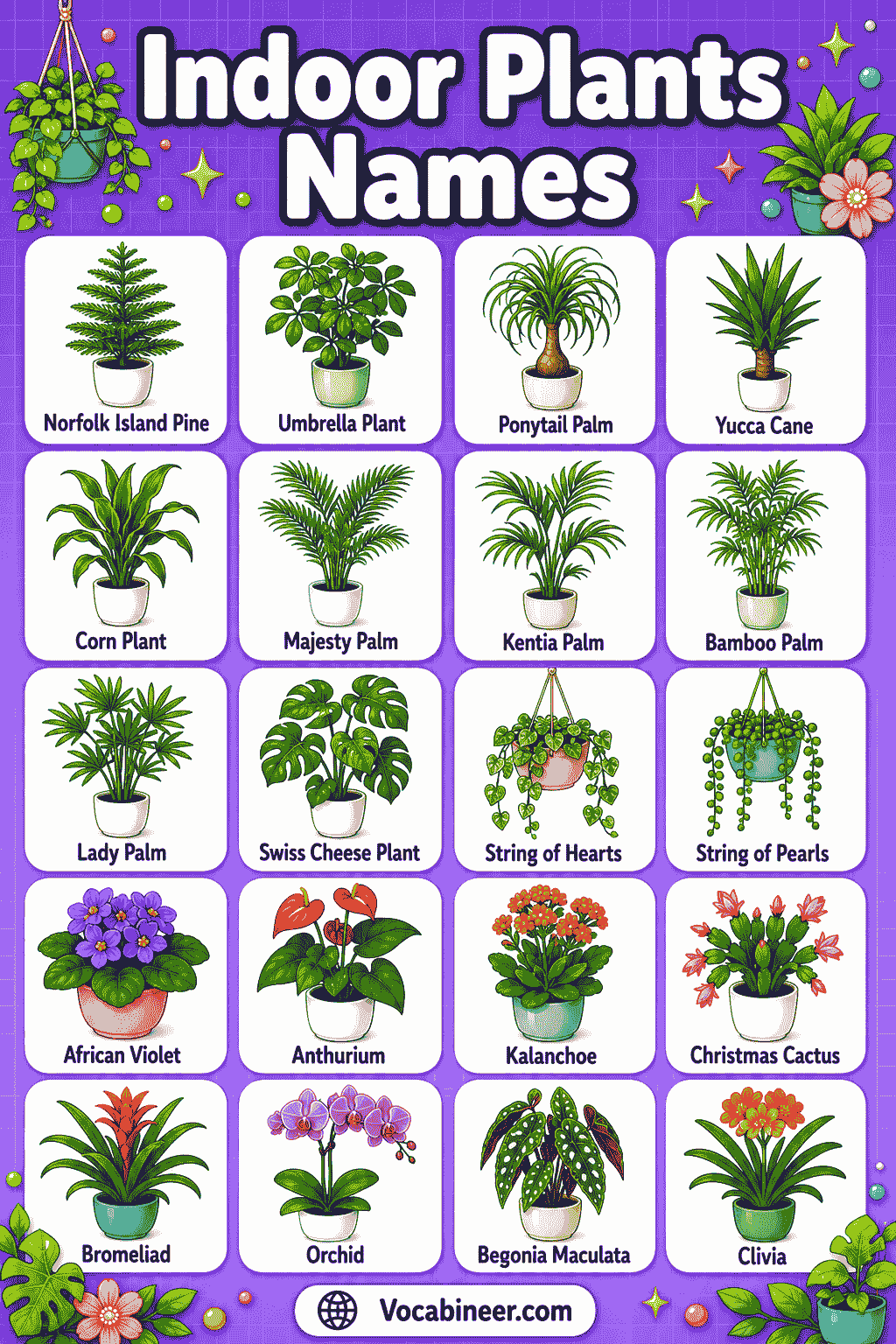
- Orchid — an elegant indoor plant known for long-lasting flowers.
- Peace Lily — a glossy-leaved plant with white flower-like blooms.
- Anthurium — a tropical plant with shiny leaves and bright spathes.
- African Violet — a small flowering plant with soft leaves and colorful blooms.
- Begonia — an indoor plant grown for flowers or colorful leaves.
- Christmas Cactus — a flowering cactus often grown indoors.
- Kalanchoe — a succulent plant with clusters of small colorful flowers.
- Bromeliad — a tropical plant with colorful central blooms.
- Cyclamen — a small plant with bright flowers and patterned leaves.
- Jasmine — a fragrant flowering plant that can grow indoors with good light.
- Geranium — a flowering plant often kept near sunny windows.
- Hoya — a trailing plant that can produce waxy star-shaped flowers.
Hanging and Trailing Indoor Plants
Hanging and trailing indoor plants grow with vines or stems that spill over pots and baskets. They are useful for shelves, hanging planters, windows, and decorative indoor displays.
- Pothos — a trailing plant with heart-shaped leaves.
- English Ivy — a vining plant often grown in hanging baskets.
- String of Pearls — a succulent with round bead-like trailing leaves.
- String of Hearts — a trailing plant with small heart-shaped leaves.
- Philodendron — some types grow as trailing or climbing vines.
- Hoya — a trailing plant with thick waxy leaves.
- Spider Plant — a hanging plant with arching leaves and baby plantlets.
- Burro’s Tail — a trailing succulent with thick hanging stems.
- Tradescantia — a colorful trailing plant with striped leaves.
- Peperomia — some types trail gently from pots or shelves.
- Dischidia — a trailing plant with small thick leaves.
- Rhipsalis — a trailing cactus-like indoor plant.
Large Indoor Plants
Large indoor plants are often used as floor plants or statement plants. They can fill empty corners, brighten living rooms, and create a bold natural look indoors.
- Fiddle Leaf Fig — a tall plant with large violin-shaped leaves.
- Monstera — a large plant known for dramatic split leaves.
- Rubber Plant — a strong plant with thick glossy leaves.
- Bird of Paradise — a tall plant with large upright leaves.
- Areca Palm — a graceful palm with soft feathery fronds.
- Kentia Palm — a tall indoor palm with elegant arching fronds.
- Dracaena — an upright plant that comes in many tall varieties.
- Yucca Plant — a bold plant with stiff pointed leaves.
- Majesty Palm — a large palm often used as a floor plant.
- Money Tree — a popular plant with a trunk-like stem and leafy top.
- Schefflera — a plant with umbrella-like leaf clusters.
- Corn Plant — a Dracaena type with broad green leaves.
Small Indoor Plants for Desks and Shelves
Small indoor plants are useful for desks, shelves, windowsills, side tables, and compact rooms. Many stay manageable in small pots and are easy to place in tight spaces.
- Haworthia — a small succulent with compact leaves.
- Aloe Vera — a small fleshy plant for bright desks or windowsills.
- Jade Plant — a compact succulent with thick oval leaves.
- Air Plant — a tiny plant that can grow without soil.
- Peperomia — a small houseplant with thick rounded leaves.
- Fittonia — a colorful plant with patterned leaves.
- Nerve Plant — another name often used for Fittonia.
- Baby Tears — a tiny-leaved plant often grown in small pots.
- Pilea — a small plant with round coin-like leaves.
- African Violet — a compact flowering plant for bright indoor spots.
- String of Pearls — a small trailing succulent for shelves or hanging pots.
- Mini Cactus — a small cactus grown in tiny pots.
Indoor Plants for Bedrooms and Offices
Bedroom and office plants are usually chosen for easy care, neat growth, and simple placement. These plants work well on desks, shelves, windowsills, corners, or bedside tables.
- Snake Plant — a neat upright plant for bedrooms and offices.
- ZZ Plant — a low-maintenance plant for desks or office corners.
- Pothos — a trailing plant for shelves, cabinets, or hanging pots.
- Peace Lily — a leafy plant with white flowers for indoor rooms.
- Parlor Palm — a soft-looking palm for bedrooms or office spaces.
- Spider Plant — a hanging or tabletop plant with arching leaves.
- Rubber Plant — a glossy-leaved plant for larger rooms.
- Aloe Vera — a compact succulent for sunny desks or windowsills.
- Dracaena — an upright plant for offices and living spaces.
- Chinese Evergreen — a patterned plant that fits many indoor rooms.
Indoor Succulent and Cactus Plants
Indoor succulents and cactus plants store water in thick leaves, stems, or pads. They usually prefer bright light, careful watering, and soil that drains well.
- Aloe Vera — a fleshy succulent with long pointed leaves.
- Jade Plant — a small tree-like succulent with thick oval leaves.
- Haworthia — a compact succulent for desks and shelves.
- Zebra Plant — a striped succulent with white markings.
- Snake Plant — a succulent houseplant with sword-like leaves.
- Christmas Cactus — a flowering cactus that grows well indoors.
- String of Pearls — a trailing succulent with bead-like leaves.
- Burro’s Tail — a hanging succulent with thick trailing stems.
- Echeveria — a rosette succulent often grown in bright indoor spots.
- Kalanchoe — a succulent with thick leaves and colorful flowers.
- Mini Cactus — a small cactus commonly grown in tiny pots.
- Fishbone Cactus — a cactus with zigzag-shaped stems.
Colorful Foliage Indoor Plants
Colorful foliage indoor plants are grown mainly for their leaves. Their patterns may include stripes, spots, variegation, pink tones, purple shades, red edges, or bright green markings.
- Calathea — a patterned plant with colorful leaves.
- Croton — a bold plant with red, yellow, orange, and green leaves.
- Coleus — a colorful foliage plant often grown near bright light.
- Fittonia — a small plant with bright leaf veins.
- Nerve Plant — another name for Fittonia.
- Begonia — some types have colorful patterned leaves.
- Aglaonema — a Chinese Evergreen group with colorful leaf patterns.
- Chinese Evergreen — a leafy plant with green, silver, or pink markings.
- Tradescantia — a trailing plant with purple or striped leaves.
- Polka Dot Plant — a small plant with spotted leaves.
- Purple Heart — a purple trailing plant with bold color.
- Prayer Plant — a plant with patterned leaves that fold upward at night.
Popular Indoor Plants for Fresh Looking Spaces
Some indoor plants are popularly grown for fresh-looking rooms, attractive leaves, and home décor. Plant effects can vary by room size, light, airflow, and care, so this section focuses on common choices rather than guaranteed air-cleaning claims.
- Snake Plant — a popular upright plant for bedrooms and offices.
- Peace Lily — a leafy plant with white flowers and glossy leaves.
- Spider Plant — a common plant with arching leaves and baby plantlets.
- Pothos — a trailing plant often grown indoors for greenery.
- Areca Palm — a palm that adds a fresh tropical look indoors.
- Rubber Plant — a glossy-leaved plant used as a decorative houseplant.
- Boston Fern — a soft fern often grown for lush indoor greenery.
- Dracaena — an upright plant with long leaves and many varieties.
- English Ivy — a trailing plant used in pots and hanging baskets.
- Aloe Vera — a fleshy plant often kept in bright indoor spots.
Indoor Plant Shapes and Identification
Indoor plant identification often starts with leaf shape, growth habit, flower type, and plant size. Looking at these visual clues can help beginners recognize a plant before learning its exact name.
| Visual Clue | Common Example |
|---|---|
| Upright Sword-Like Leaves | Snake Plant |
| Trailing Vines | Pothos, English Ivy |
| Split Leaves | Monstera |
| Round Leaves | Pilea, Peperomia |
| Palm Fronds | Areca Palm, Parlor Palm |
| Striped Leaves | Zebra Plant, some Dracaena types |
| Colorful Leaves | Calathea, Croton, Fittonia |
| White Flowers | Peace Lily |
| Thick Succulent Leaves | Aloe Vera, Jade Plant |
| Large Glossy Leaves | Rubber Plant, Fiddle Leaf Fig |
Confusing Indoor Plant Names Explained
| Indoor Plant Terms | Difference |
|---|---|
| Pothos vs Philodendron | Pothos usually has thicker heart-shaped leaves, while Philodendron often has softer leaves and vining stems. |
| Snake Plant vs ZZ Plant | Snake Plant has upright sword-like leaves, while ZZ Plant has shiny oval leaves on stems. |
| Peace Lily vs Anthurium | Peace Lily usually has white blooms, while Anthurium often has bright red, pink, or white spathes. |
| Monstera vs Philodendron | Monstera is known for split leaves, while Philodendron includes many leaf shapes and climbing types. |
| Dracaena vs Yucca | Dracaena often has softer narrow leaves, while Yucca usually has stiffer pointed leaves. |
| Areca Palm vs Parlor Palm | Areca Palm is usually larger and fuller, while Parlor Palm stays smaller and softer-looking. |
| Boston Fern vs Maidenhair Fern | Boston Fern has fuller arching fronds, while Maidenhair Fern has delicate small leaflets. |
| Chinese Evergreen vs Dieffenbachia | Chinese Evergreen often has patterned leaves, while Dieffenbachia usually has larger cane-like stems and broad leaves. |
| Prayer Plant vs Calathea | Prayer Plant leaves fold upward at night, while Calathea is a wider group of patterned foliage plants. |
| Aloe Vera vs Jade Plant | Aloe Vera has long fleshy leaves, while Jade Plant has thick oval leaves and woody stems. |
Indoor Plants Chart with Pictures
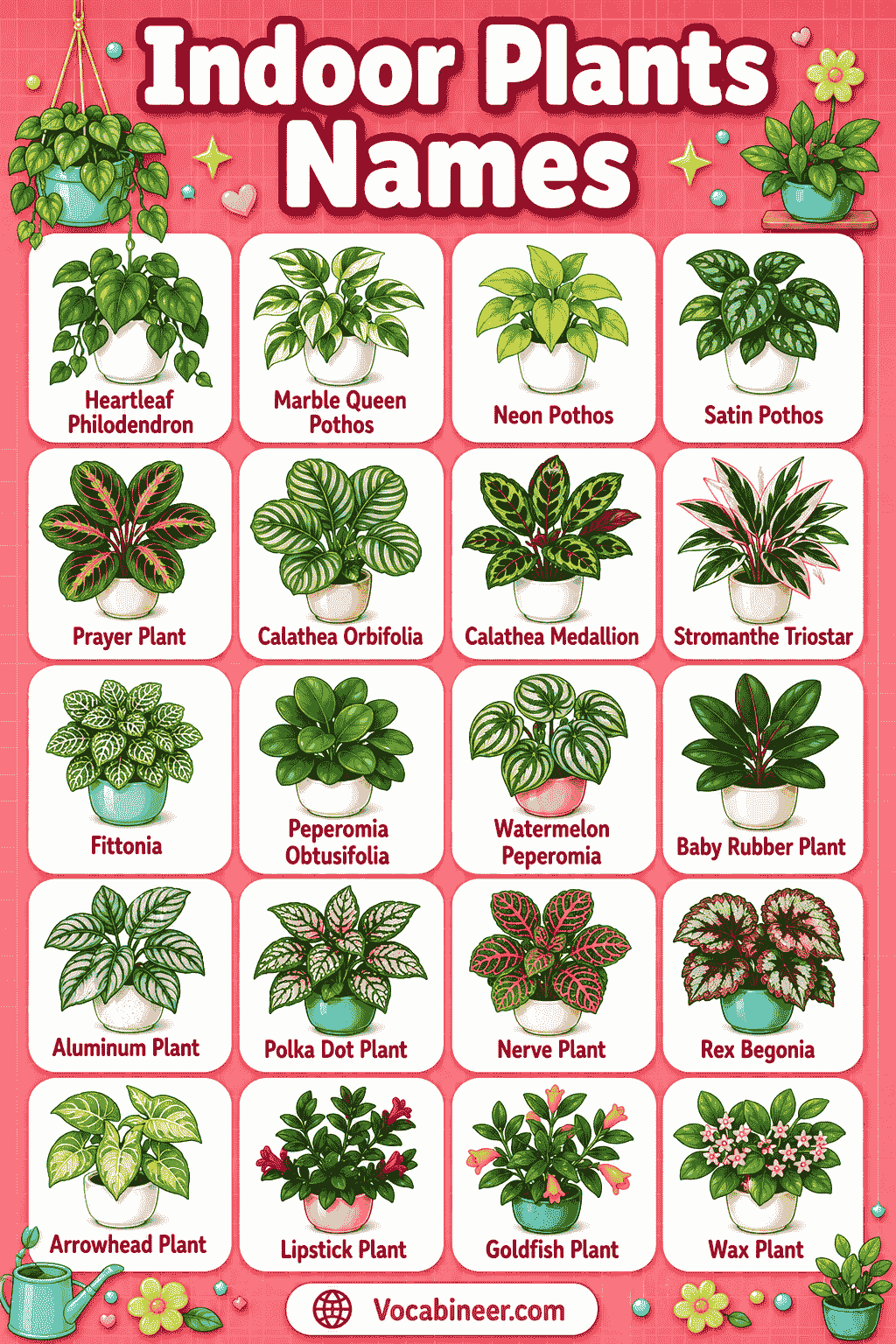
An indoor plants chart helps learners compare plant groups quickly.
| Indoor Plant Group | Details |
|---|---|
| Common Indoor Plants | Best for: basic houseplant vocabularyExamples: Snake Plant, Pothos, Peace Lily |
| Easy Indoor Plants | Best for: beginners and low maintenance careExamples: ZZ Plant, Spider Plant, Philodendron |
| Low Light Plants | Best for: shaded rooms and officesExamples: Snake Plant, ZZ Plant, Chinese Evergreen |
| Flowering Indoor Plants | Best for: indoor color and bloomsExamples: Orchid, Anthurium, African Violet |
| Hanging Indoor Plants | Best for: baskets and shelvesExamples: Pothos, English Ivy, String of Pearls |
| Large and Small Indoor Plants | Best for: floors, desks, and shelvesExamples: Monstera, Fiddle Leaf Fig, Peperomia |
| Colorful and Succulent Indoor Plants | Best for: leaf patterns and bright spotsExamples: Calathea, Aloe Vera, Jade Plant |
Basic Indoor Plant Care Tips
Indoor plants usually grow better when their light, water, soil, and pot conditions match their needs. Keep this care section simple because different plants may need different routines.
- Bright Indirect Light — many indoor plants prefer bright light without harsh direct sun.
- Low Light — some plants can handle shade but still need some natural or room light.
- Careful Watering — water when the soil begins to dry, depending on the plant.
- Drainage Holes — pots with holes help extra water escape.
- Well-Draining Potting Mix — good soil helps prevent soggy roots.
- Humidity — tropical plants may like more moisture in the air.
- Dusting Leaves — clean leaves can look better and receive light more easily.
- Avoid Overwatering — too much water is one of the most common indoor plant problems.
- Check Yellow Leaves — yellow leaves can signal watering, light, or soil problems.
- Rotate Plants — turning pots helps plants grow more evenly toward light.
FAQs
Common indoor plant names include Snake Plant, Pothos, Spider Plant, Peace Lily, ZZ Plant, Monstera, Philodendron, Rubber Plant, Aloe Vera, Jade Plant, Fiddle Leaf Fig, Chinese Evergreen, Dracaena, and Prayer Plant.
Easy indoor plants include Snake Plant, Pothos, ZZ Plant, Spider Plant, Philodendron, Chinese Evergreen, Jade Plant, Aloe Vera, Rubber Plant, Dracaena, Peace Lily, and Parlor Palm.
Low light indoor plants include Snake Plant, ZZ Plant, Pothos, Chinese Evergreen, Peace Lily, Cast Iron Plant, Parlor Palm, Dracaena, Philodendron, and Prayer Plant.
Indoor flowering plants include Orchid, Peace Lily, Anthurium, African Violet, Begonia, Christmas Cactus, Kalanchoe, Bromeliad, Cyclamen, Jasmine, Geranium, and Hoya.
You can identify an indoor plant by looking at leaf shape, leaf color, growth style, stems, flowers, size, and texture. Split leaves, trailing vines, sword-like leaves, palm fronds, thick succulent leaves, and white flowers are useful clues.
Read More
- Common Succulent Types
- Outdoor Plants Names
- Types of Cactus Plants
- Winter Vegetables Name
- Spices Names in English
