Doors are important parts of homes, offices, shops, schools, hotels, garages, and other buildings. They help people enter and leave a space, close rooms, protect privacy, improve safety, and block wind, dust, insects, sound, or weather.
There are many types of doors, and each door name usually describes how the door opens, where it is used, how it looks, or what material it is made from. Common door types include hinged doors, sliding doors, pocket doors, folding doors, panel doors, flush doors, French doors, Dutch doors, glass doors, wooden doors, steel doors, security doors, garage doors, and screen doors. This guide explains door names with simple meanings, examples, comparison tables, and picture ideas.
In This Page
What Is a Door?
A door is a movable panel used to open or close an entrance, room, cupboard, garage, or building space. Most doors are attached to a frame, but they can open in different ways.
Some doors swing on hinges, while others slide, fold, rotate, or roll upward. Doors can also be made from wood, glass, steel, aluminum, fiberglass, uPVC, or composite materials. The best door type depends on location, privacy, security, space, weather exposure, and design style.
Common Door Names with Pictures
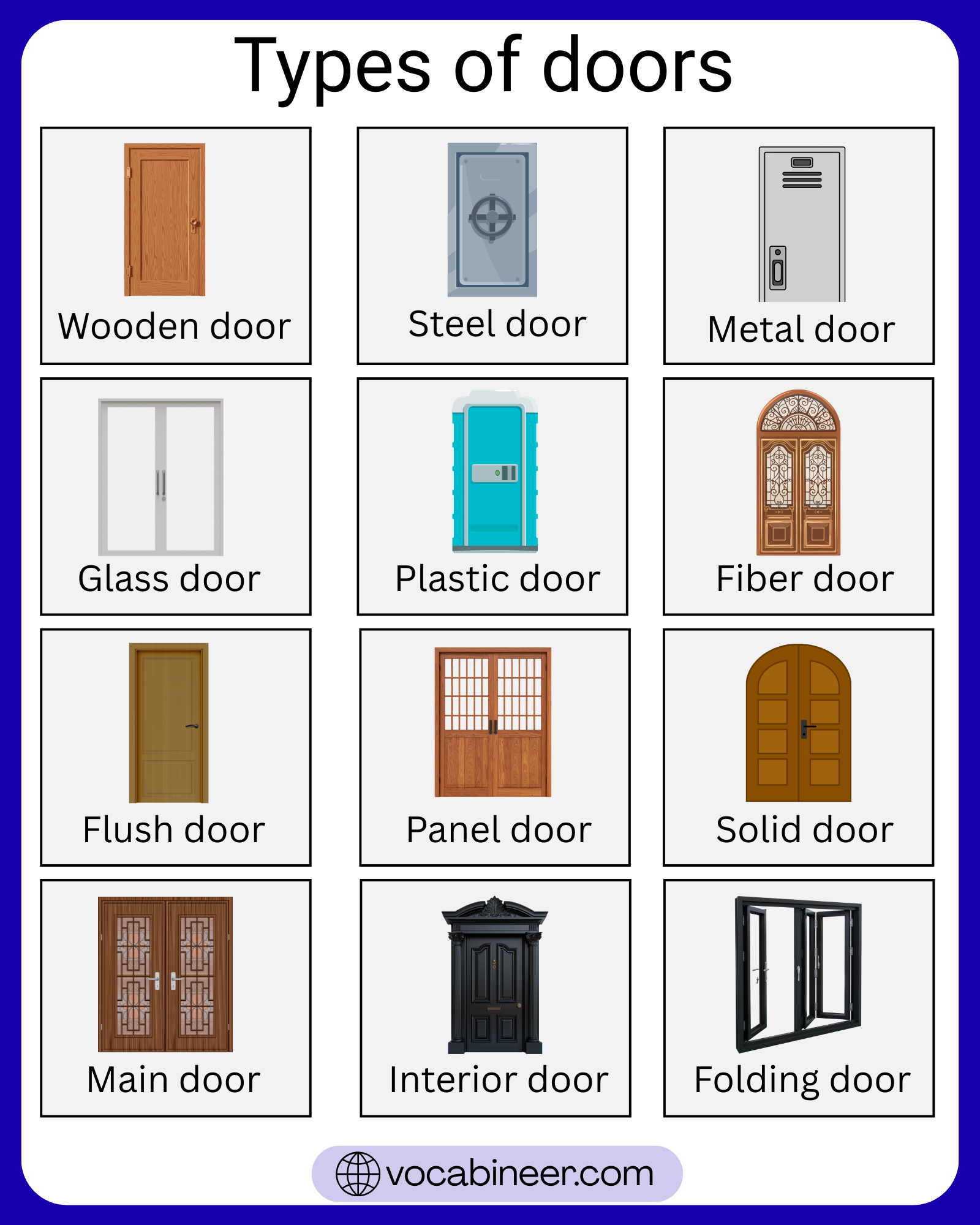
Doors come in many styles for homes, offices, shops, buildings, and outdoor spaces. Learning common door names helps children and English learners build practical vocabulary and recognize different door types more easily.
Panel Door
A panel door has a frame divided into raised or recessed sections. Homes commonly use this classic design for interior and exterior rooms.
Flush Door
A flush door has a smooth, flat surface without raised panels. Its simple design suits modern homes, offices, and interior spaces.
Sliding Door
A sliding door moves sideways along a track instead of swinging open. People often use it for patios, wardrobes, and room dividers.
French Door
A French door usually has large glass panels divided by narrow frames. People often install pairs of these doors between rooms or leading to gardens and patios.
Glass Door
A glass door uses transparent or frosted glass as a major part of its structure. Offices, shops, balconies, and modern homes commonly use this type.
Folding Door
A folding door uses several connected panels that fold together when opened. It works well where space is limited.
Bifold Door
A bifold door has two or more hinged sections that fold against each other. People often use it for closets, patios, and wide openings.
Swing Door
A swing door opens inward or outward on hinges. It is one of the most common door designs in homes and buildings.
Double Door
A double door has two separate door leaves that meet in the center. Wide entrances and formal rooms often use this style.
Pocket Door
A pocket door slides into a hidden compartment inside the wall. Its design saves floor space and keeps the opening clear.
Barn Door
A barn door slides along an exposed track mounted above the doorway. Its rustic appearance makes it popular in both farm buildings and modern interiors.
Dutch Door
A Dutch door divides horizontally into upper and lower sections. Each half can open separately or together.
Screen Door
A screen door uses mesh material to allow fresh air inside while helping keep insects out.
Security Door
A security door uses strong materials, reinforced frames, and secure locking features to provide extra protection at an entrance.
Fire Door
A fire door helps slow the spread of fire and smoke between parts of a building. Builders install it in locations that require additional fire protection.
Revolving Door
A revolving door has several panels that rotate around a central shaft. Large hotels, offices, and public buildings often use it at busy entrances.
Garage Door
A garage door creates a wide opening for vehicles to enter or leave a garage. Common styles roll, tilt, or move upward along tracks.
Storm Door
A storm door sits outside the main entrance door and provides extra protection from wind, rain, and cold weather.
Louvered Door
A louvered door has angled horizontal slats that allow air to pass through while providing partial privacy.
Automatic Door
An automatic door opens and closes with sensors or electronic controls. Shops, hospitals, airports, and other public buildings commonly use this type.
Door Types by Opening Style
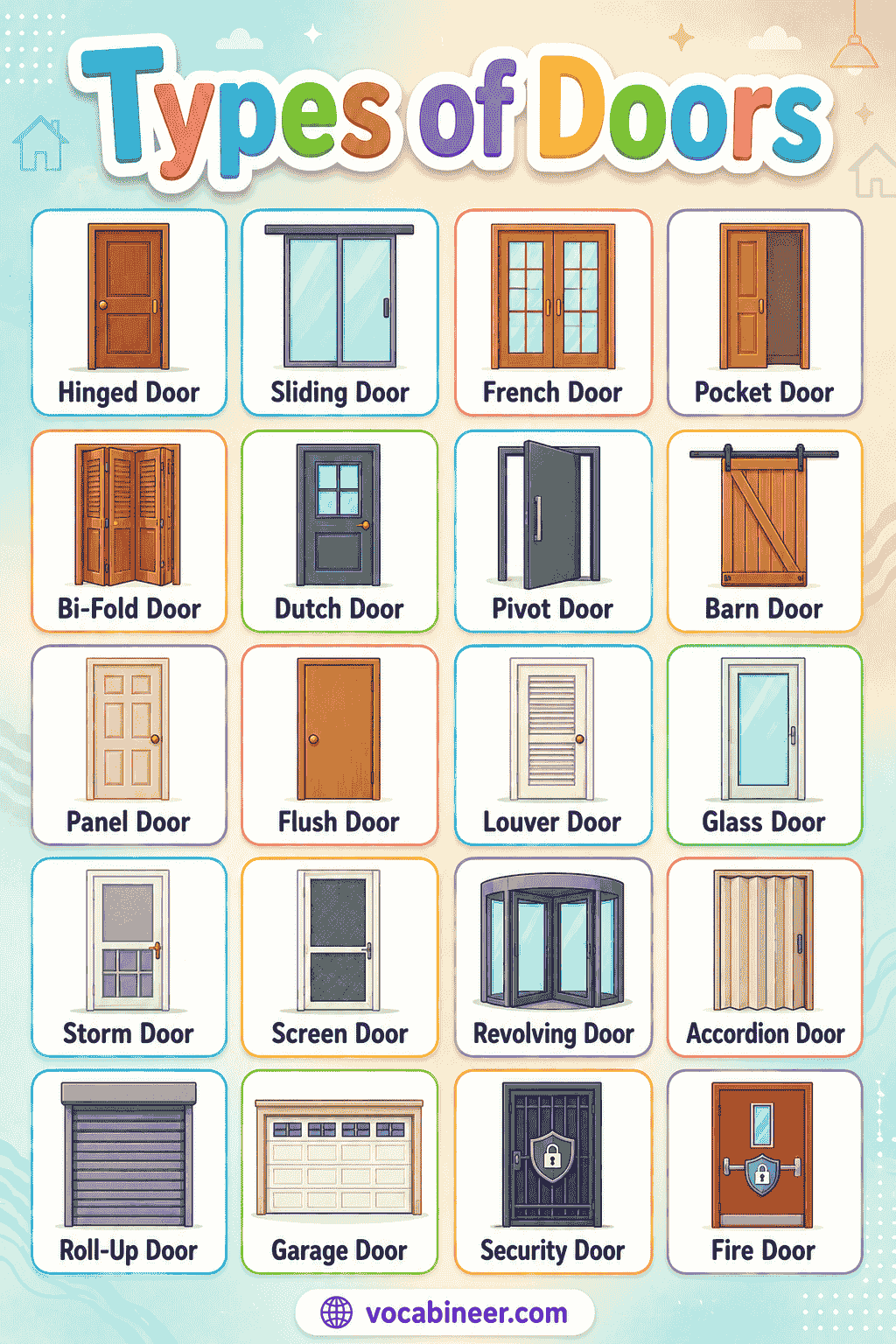
Door opening style explains how a door moves. This is one of the easiest ways to understand door types because each opening method fits a different space.
Swing Doors
Swing doors open inward or outward on hinges. They are the most common doors in homes, bedrooms, bathrooms, offices, and front entrances.
- Single Hinged Door — a basic door that swings open from one side.
- Double Hinged Door — two hinged doors that meet in the middle.
- Inswing Door — a door that opens inward.
- Outswing Door — a door that opens outward.
- Dutch Door — a swing door split into top and bottom sections.
Sliding Doors
Sliding doors move sideways along a track. They are useful for patios, closets, balconies, and small rooms because they save floor space.
- Sliding Door — a door that moves side to side on a track.
- Sliding Glass Door — a sliding door with large glass panels.
- Bypass Sliding Door — sliding panels that pass in front of each other.
- Barn Door — a sliding door mounted on an exposed track.
- Patio Sliding Door — a wide sliding door used for patios or balconies.
Folding Doors
Folding doors open by folding into panels. They work well for closets, laundry areas, room dividers, and compact spaces.
- Bi-Fold Door — a folding door with two or more panels.
- Accordion Door — a door that folds into many narrow sections.
- Folding Partition Door — a folding door used to divide larger spaces.
Pocket Doors
Pocket doors slide into a hidden wall space. They are very useful in small rooms, bathrooms, hallways, and tight layouts.
- Single Pocket Door — one door panel that slides into a wall pocket.
- Double Pocket Door — two pocket doors that slide into opposite walls.
Special Opening Doors
Some doors open in special ways and are often used in modern homes, commercial spaces, garages, shops, or public buildings.
- Pivot Door — rotates from a pivot point instead of regular hinges.
- Revolving Door — rotates inside a circular frame.
- Roll-Up Door — rolls upward into a compact space.
- Garage Door — opens upward, sideways, or in sections.
- Automatic Door — opens automatically using sensors.
Doors Used Around the Home
Home doors are easier to understand when grouped by where they are used. A bedroom door needs privacy, while a front door needs more strength and security.
Interior Doors
Interior doors are used inside homes and buildings. They divide rooms, support privacy, and help reduce noise between spaces.
- Bedroom Door
- Bathroom Door
- Closet Door
- Pocket Interior Door
- Panel Interior Door
- Flush Interior Door
Exterior Doors
Exterior doors are used at outside entrances. They need to be stronger than interior doors because they face weather, security needs, and daily use.
- Front Entry Door
- Back Door
- Storm Door
- Screen Door
- Security Door
- Exterior Steel Door
Bedroom and Bathroom Doors
Bedroom and bathroom doors should provide privacy, comfort, and smooth daily use. Bathroom doors also need to handle moisture better than many other indoor doors.
- Bedroom Panel Door
- Bedroom Flush Door
- Solid-Core Bedroom Door
- Bathroom Door with Lock
- Moisture-Resistant Bathroom Door
- Frosted Glass Bathroom Door
Patio and Balcony Doors
Patio and balcony doors connect indoor rooms with outdoor spaces. They often include glass because natural light and outdoor views are important.
- Sliding Patio Door
- French Patio Door
- Glass Patio Door
- Screen Patio Door
- Bi-Fold Patio Door
Garage and Shop Doors
Garage and shop doors are used for large openings. They are usually stronger and wider than regular room doors.
- Sectional Garage Door
- Roll-Up Garage Door
- Side-Hinged Garage Door
- Roller Shutter Door
- Industrial Rolling Door
Door Styles and Designs
Door style describes the front look, surface pattern, and overall feel of a door. Some designs feel simple and modern, while classic options add panels, glass, slats, or decorative details.
Panel and Flush Styles
Panel styles have raised or recessed sections on the surface. Flush styles use a flat, smooth surface for a cleaner and more modern look.
- Panel Door
- Two-Panel Door
- Four-Panel Door
- Six-Panel Door
- Flush Door
- Solid-Core Flush Door
- Hollow-Core Flush Door
French and Dutch Styles
French styles usually include glass panels and bring more light into a room. Dutch styles split the door into top and bottom sections, so one part can open while the other stays closed.
- French Door
- Single French Door
- Double French Door
- French Patio Door
- Dutch Door
- Interior Dutch Door
- Exterior Dutch Door
Glass and Louvered Styles
Glass styles help rooms feel brighter and more open. Louvered styles use angled slats to improve airflow, which makes them useful for closets, laundry areas, and utility spaces.
- Full Glass Door
- Glass-Insert Door
- Frosted Glass Door
- Sliding Glass Door
- Louvered Door
- Full-Louvered Door
- Half-Louvered Door
Barn, Screen, and Storm Styles
Barn styles add a rustic sliding feature. Screen styles let fresh air in while helping keep insects out. Storm styles add another protective layer against weather.
- Barn Door
- Single Barn Door
- Double Barn Door
- Screen Door
- Storm Door
Door Materials
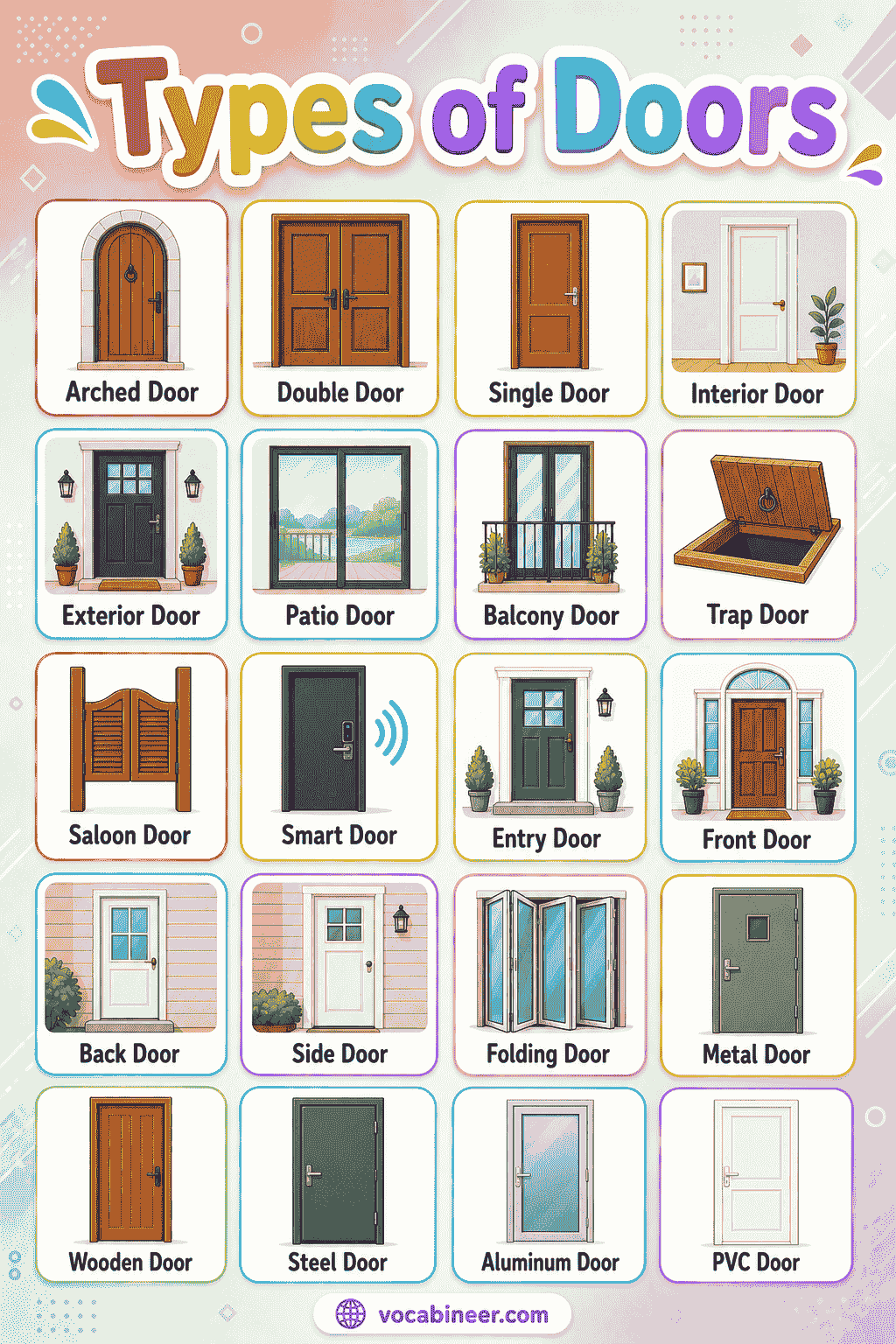
Door material affects strength, weight, price, maintenance, insulation, and weather resistance. Some materials are better for indoor rooms, while others are better for entrances, patios, bathrooms, shops, or garages.
Wooden Doors
Wooden doors look warm, classic, and natural. They are common in bedrooms, living rooms, front entrances, and traditional interiors.
- Solid Wood Door
- Engineered Wood Door
- Wooden Panel Door
- Wooden Flush Door
- Wooden Front Door
Metal Doors
Metal doors are strong and useful for exterior entrances, security areas, garages, and commercial spaces.
- Steel Door
- Iron Door
- Aluminum Door
- Metal Security Door
- Metal Garage Door
Glass Doors
Glass doors make spaces feel open and bright. They are common for patios, balconies, offices, shops, and modern interiors.
- Full Glass Door
- Sliding Glass Door
- Frosted Glass Door
- Glass Patio Door
- Aluminum Glass Door
uPVC and Composite Doors
uPVC and composite doors are popular because they can be low-maintenance, moisture-friendly, and durable.
- uPVC Door
- uPVC Bathroom Door
- uPVC Sliding Door
- Composite Door
- Composite Front Door
- Composite Door with Glass
Fiberglass Doors
Fiberglass doors are often used for exterior entrances because they can resist dents, moisture, and weather changes.
- Fiberglass Door
- Fiberglass Entry Door
- Fiberglass Door with Glass Insert
Door Names with Simple Meanings
| Door Name | Meaning |
|---|---|
| Hinged door | A door that swings open on hinges |
| Sliding door | A door that moves sideways on a track |
| Pocket door | A sliding door that goes into the wall |
| Folding door | A door that folds into panels |
| Panel door | A door with raised or recessed sections |
| Flush door | A smooth door with a flat surface |
| French door | A glass-panel door, often used in pairs |
| Dutch door | A door split into top and bottom parts |
| Louvered door | A door with slats for airflow |
| Barn door | A sliding door on an exposed track |
| Screen door | A mesh door that lets air in and keeps insects out |
| Storm door | An outer door for weather protection |
| Security door | A strong door used for safety |
| Fire door | A door that helps slow fire and smoke |
| Garage door | A large door used for a garage |
Confusing Door Terms Explained
Some door names sound similar, but they are not exactly the same.
| Door Terms | Difference |
|---|---|
| Interior door vs exterior door | An interior door is used inside a building, while an exterior door is used at outside entrances. |
| Sliding door vs pocket door | A sliding door moves along a visible track, while a pocket door slides into a hidden wall space. |
| Panel door vs flush door | A panel door has raised or recessed sections, while a flush door has a flat, smooth surface. |
| French door vs sliding glass door | A French door usually swings open, while a sliding glass door moves sideways on a track. |
| Storm door vs screen door | A storm door adds weather protection, while a screen door lets air in and keeps insects out. |
| Security door vs fire door | A security door protects an entrance, while a fire door helps slow fire and smoke. |
| uPVC door vs composite door | A uPVC door is made from rigid plastic, while a composite door combines several materials for strength and insulation. |
Example Sentences with Door Names
Example sentences help learners understand how door names are used in daily English.
- Please close the front door.
- The bedroom door is open.
- We installed a sliding door for the patio.
- A pocket door saves space in a small bathroom.
- The house has a beautiful wooden door.
- The office uses a glass door.
- A screen door keeps insects out.
- The shop has a roller shutter door.
- A fire door helps slow fire and smoke.
- The garage has a new garage door.
Types of Doors Chart with Pictures
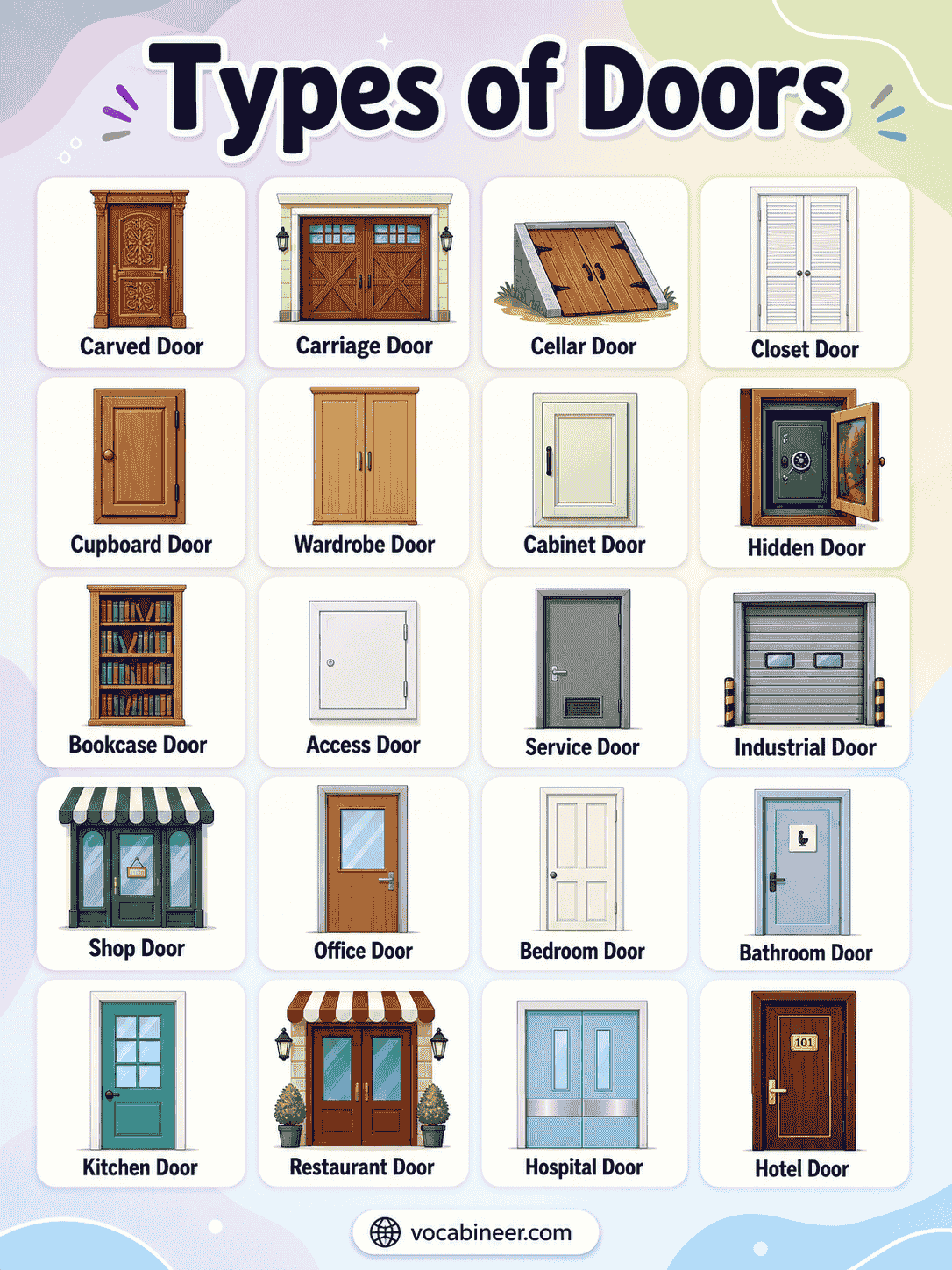
A door chart helps learners compare door groups quickly.
| Door Group | Details |
|---|---|
| Opening-style doors | Best for: learning how doors move Examples: hinged door, sliding door, folding door |
| Home doors | Best for: rooms and daily household use Examples: bedroom door, bathroom door, closet door |
| Exterior doors | Best for: security and weather protection Examples: front entry door, storm door, security door |
| Glass doors | Best for: light, views, and modern spaces Examples: French door, sliding glass door, frosted glass door |
| Material doors | Best for: comparing strength and maintenance Examples: wooden door, steel door, uPVC door |
| Large-opening doors | Best for: garages, shops, and commercial spaces Examples: garage door, shutter door, rolling door |
Conclusion
Types of doors become easier to understand when you group them by location, opening style, design, and material. Because each door type fits a different need, the right choice can improve space use, privacy, security, and comfort.
At the same time, learning door names helps with home vocabulary and better decision-making, especially when you compare styles like hinged, sliding, and pocket doors.
FAQs
The most common types of doors include hinged doors, sliding doors, pocket doors, folding doors, panel doors, flush doors, French doors, glass doors, wooden doors, steel doors, security doors, and garage doors.
Pocket doors, sliding doors, bi-fold doors, and accordion doors are good for small rooms because they save floor space and do not need a wide swing area.
A panel door has raised or recessed sections on its surface, while a flush door has a flat and smooth surface. Panel doors often look more classic, while flush doors look simple and modern.
Yes, uPVC doors are good for bathrooms because they handle moisture better than many basic wooden doors. They are also lightweight and easy to maintain.
Sliding patio doors and French patio doors are common choices for patios because they create wider openings and allow more natural light into the room.
Read More
- Types of Flooring
- Bedroom Decor Items
- Popular Types of Tiles
- Different Types of Houses
- Types of Rooms in a House
- Parts of a House Names
- Different Types of Tape