

Fences are outdoor structures used around homes, gardens, farms, schools, parks, pools, and commercial properties. People use fences to mark boundaries, add privacy, improve security, protect gardens, keep animals safe, and make outdoor spaces look better.
There are many types of fences, and each name usually describes the fence material, style, purpose, or location. This guide explains common fence names with simple meanings, practical uses, comparisons, and picture-friendly fence ideas.
In This Page
Common Types of Fences
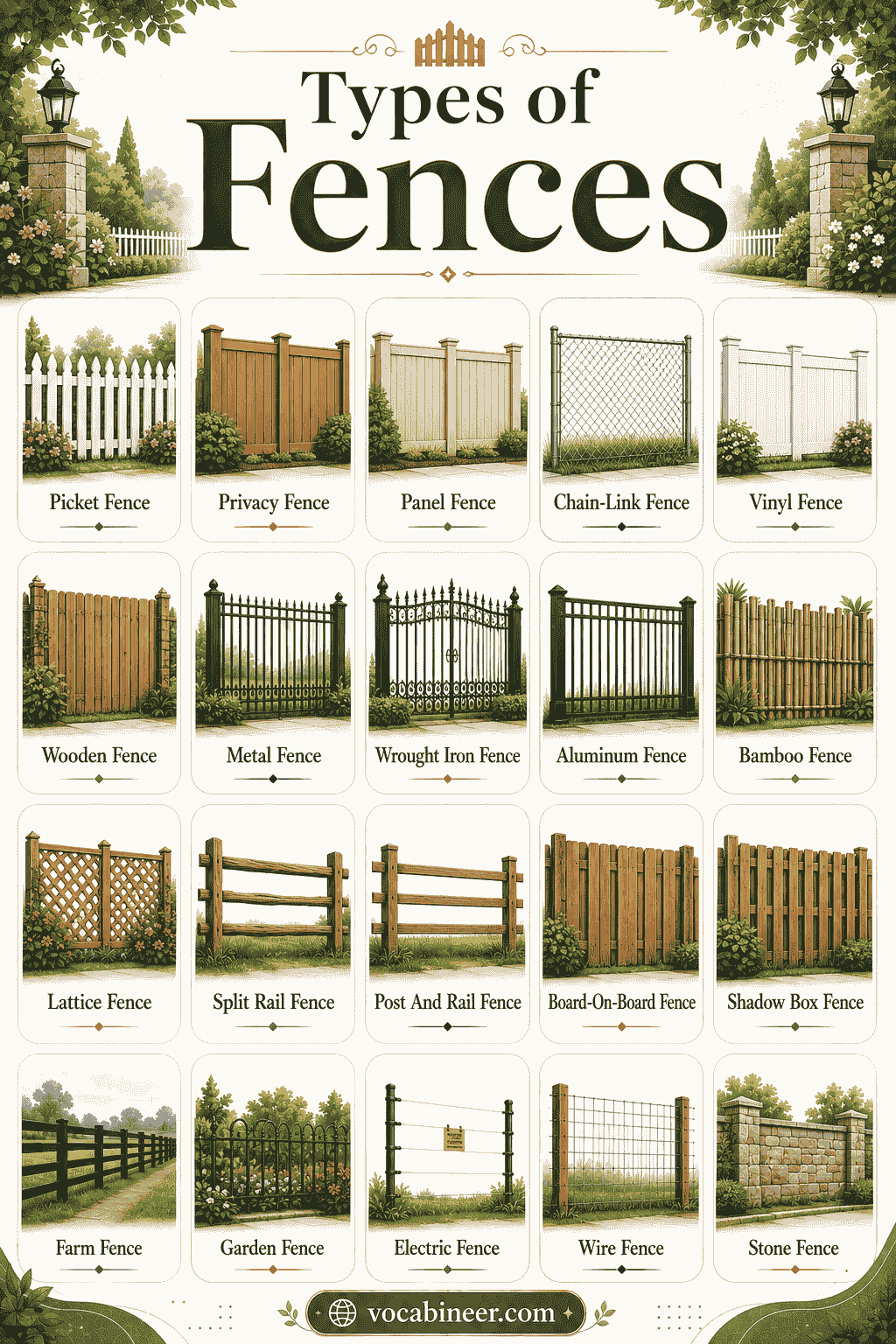
These are the fence names people often see in home improvement, garden, farm, and outdoor design guides. Each type has a clear use, so the simple meanings make fence styles easier to understand.
- Wood Fence — a classic fence made from wooden boards, posts, or rails.
- Vinyl Fence — a low-maintenance fence made from PVC-style material.
- Chain Link Fence — a metal wire fence with a diamond-shaped pattern.
- Picket Fence — a decorative fence with evenly spaced vertical boards.
- Privacy Fence — a tall, solid fence that blocks outside views.
- Lattice Fence — a decorative fence with crisscross patterns.
- Split Rail Fence — a simple fence made with horizontal wooden rails.
- Metal Fence — a strong fence made from aluminum, steel, iron, or similar materials.
- Wrought Iron Fence — a decorative metal fence with a strong, classic look.
- Aluminum Fence — a lightweight metal fence often used for yards and pools.
- Bamboo Fence — a natural-looking fence made from bamboo poles or panels.
- Composite Fence — a fence made from mixed wood fibers and plastic.
- Wire Fence — a simple fence made from wire mesh or wire strands.
- Electric Fence — a fence that uses electric current to control animals or improve security.
- Stone Fence — a strong boundary fence made from stones or rocks.
- Brick Fence — a solid fence or wall-like boundary made from bricks.
Fence Types by Yard and Property Use
Fence choice often depends on where the fence will go and what problem it needs to solve. For example, a front yard may need style, while a backyard may need privacy or pet safety.
- Backyard Fence — adds privacy, safety, and outdoor comfort behind a home.
- Front Yard Fence — marks the front boundary and improves curb appeal.
- Garden Fence — protects plants, flowers, and vegetables from animals or foot traffic.
- Pool Fence — creates a safety barrier around a swimming pool.
- Pet Fence — helps keep dogs and other pets inside a safe area.
- Driveway Fence — marks or protects an entrance area near a driveway.
- Perimeter Fence — surrounds a full property, field, or large outdoor space.
- Temporary Fence — used for construction sites, events, repairs, or short-term safety.
- Patio Fence — adds privacy and style around a patio or seating area.
- School Fence — helps control access and improve safety around school grounds.
Privacy Fence Options
Privacy fences help block outside views and make outdoor spaces feel more comfortable. They work well around backyards, patios, side yards, pools, and property lines.
- Wood Privacy Fence — uses tall wooden boards to create a solid screen.
- Vinyl Privacy Fence — creates a clean, solid barrier with low maintenance.
- Board-on-Board Fence — overlaps vertical boards to reduce gaps and improve privacy.
- Stockade Fence — uses closely placed wooden boards with pointed or flat tops.
- Shadowbox Fence — has alternating boards on both sides for partial privacy and airflow.
- Horizontal Fence — uses horizontal boards for a modern privacy look.
- Composite Privacy Fence — gives a wood-like look with better resistance to weather.
- Bamboo Privacy Fence — creates a natural screen for gardens, patios, or tropical-style yards.
- Hedge Fence — uses plants or shrubs as a living privacy barrier.
- Solid Panel Fence — uses full panels to block views and create a clean boundary.
Decorative Fence Styles
Decorative fences improve the look of gardens, front yards, walkways, patios, and outdoor spaces. They usually focus more on style and boundary marking than full privacy.
- Picket Fence — has short vertical boards and a classic home look.
- Lattice Fence — uses crisscross panels and often supports climbing plants.
- Wrought Iron Fence — adds a strong, elegant, and traditional appearance.
- Aluminum Decorative Fence — gives a metal look with lighter weight and lower maintenance.
- Garden Border Fence — creates a small decorative edge around plants or flower beds.
- Rail Fence — uses horizontal rails for a simple countryside look.
- Post and Rail Fence — has posts connected by horizontal rails.
- Bamboo Fence — adds a natural, warm, and relaxed outdoor style.
- Palisade Fence — has vertical stakes or panels and can look decorative or protective.
- Ornamental Metal Fence — uses decorative metal patterns for yards, gardens, or entrances.
Security and Boundary Fences
Security and boundary fences help protect property, control access, and show clear property lines. These fences are common around homes, businesses, schools, farms, storage areas, and commercial sites.
- Chain Link Fence — gives a strong and affordable boundary while keeping visibility.
- Metal Security Fence — uses strong metal panels, bars, or posts for protection.
- Steel Fence — provides high strength for security and long-term use.
- Palisade Security Fence — uses vertical steel posts or pointed tops to discourage climbing.
- Anti-Climb Fence — has a tight or difficult-to-grip design for extra security.
- Barbed Wire Fence — uses sharp wire strands for strong boundary control.
- Razor Wire Fence — uses sharp metal coils for high-security areas.
- Privacy Security Fence — combines height, solid panels, and limited visibility.
- Gate Fence — includes a gate for controlled entry and exit.
- Boundary Fence — marks the edge of a property, yard, field, or site.
Garden, Farm, and Animal Fences
Garden, farm, and animal fences protect plants, guide livestock, and keep animals in or out of certain areas. These fences often focus on function, spacing, height, and durability.
- Garden Fence — protects flowers, vegetables, and plants from animals or damage.
- Deer Fence — uses extra height to help keep deer out of gardens or fields.
- Chicken Wire Fence — uses light wire mesh for chickens, small animals, or garden beds.
- Livestock Fence — controls cattle, sheep, goats, horses, or other farm animals.
- Electric Fence — uses a mild electric shock to manage animals or protect property.
- Barbed Wire Fence — helps control livestock and mark farm boundaries.
- Split Rail Fence — creates a simple farm-style boundary with wooden rails.
- Post and Rail Fence — works well for fields, paddocks, and rural properties.
- Wire Mesh Fence — uses mesh panels or rolls for gardens, pets, or animal areas.
- Horse Fence — uses rails, wire, or smooth materials to create a safer boundary for horses.
Fence Materials Compared
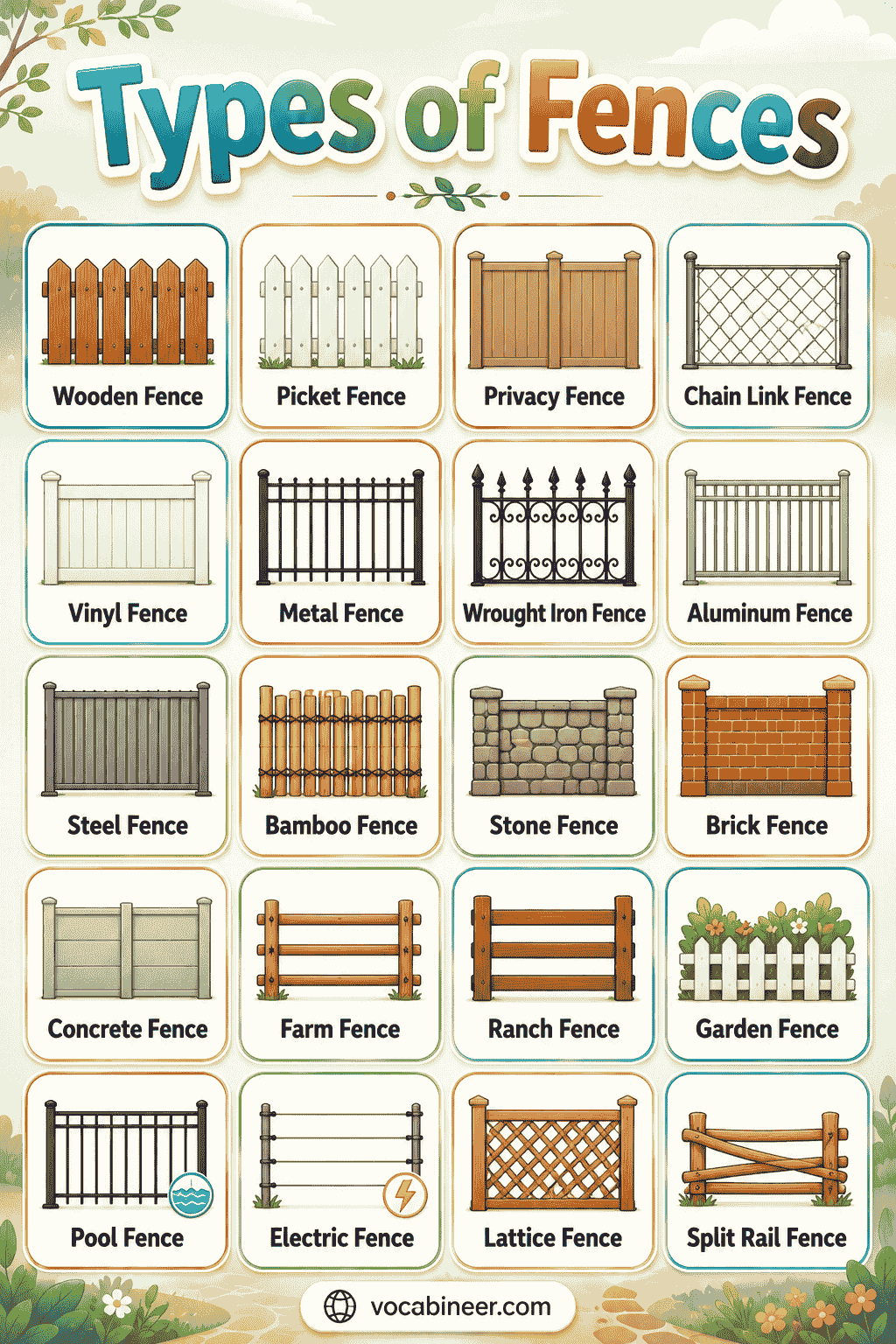
Fence material affects privacy, strength, price, maintenance, weather resistance, and appearance. This table compares common fence materials so readers can understand the main differences quickly.
| Fence Material | Best For | Main Benefit |
|---|---|---|
| Wood | privacy fences, picket fences, garden fences | Natural look and flexible design |
| Vinyl | low-maintenance privacy and yard fences | Easy to clean and weather-resistant |
| Chain Link | boundaries, pets, schools, and utility areas | Affordable and durable |
| Aluminum | decorative yards, pools, and front areas | Lightweight and rust-resistant |
| Wrought Iron | decorative security and classic homes | Strong and elegant |
| Steel | security fences and commercial properties | Very strong and long-lasting |
| Bamboo | garden screens, patios, and natural designs | Warm, natural, and decorative |
| Composite | modern privacy fences and low-maintenance yards | Wood-like look with better durability |
| Wire | farms, gardens, and animal areas | Practical and affordable |
| Stone or Brick | strong boundaries and permanent designs | Solid, durable, and high-end looking |
Parts of a Fence
Fence part names help readers understand installation, repair, product descriptions, and outdoor vocabulary. Also, these terms make it easier to explain what part of a fence needs fixing or replacing.
- Fence Post — the vertical support that holds the fence in place.
- Fence Panel — a ready-made section placed between posts.
- Rail — a horizontal support that connects posts or holds boards.
- Picket — a narrow vertical board used in picket fences.
- Board — a flat wooden piece used in many privacy fences.
- Gate — the movable entry section of a fence.
- Latch — the part that keeps a gate closed.
- Hinge — the metal part that lets a gate swing open and closed.
- Post Cap — a cover placed on top of a fence post.
- Footing — the base or concrete support around a post.
- Mesh — the woven or grid-like material used in wire fences.
- Top Rail — the upper horizontal rail on some metal or chain link fences.
Fence Names with Simple Meanings
Use this quick table to review the most important fence names without reading the full explanations again.
| Fence Name | Simple Meaning |
|---|---|
| Wood Fence | A fence made from wooden boards, posts, or rails. |
| Vinyl Fence | A low-maintenance fence made from PVC-style material. |
| Chain Link Fence | A metal wire fence with a diamond pattern. |
| Picket Fence | A decorative fence with spaced vertical boards. |
| Privacy Fence | A tall fence that blocks outside views. |
| Lattice Fence | A fence with crisscross decorative panels. |
| Split Rail Fence | A simple fence with horizontal wooden rails. |
| Wrought Iron Fence | A strong decorative metal fence. |
| Aluminum Fence | A lightweight metal fence used for yards or pools. |
| Bamboo Fence | A natural fence made from bamboo material. |
| Electric Fence | A fence that uses electric current for animals or security. |
| Garden Fence | A fence used to protect plants or mark garden areas. |
| Pool Fence | A safety fence around a swimming pool. |
| Security Fence | A fence designed to protect property or control access. |
Common Fence Terms Compared
Some fence terms sound similar, but they do not always mean the same thing. This table explains the most common differences in a simple way.
| Fence Terms | Difference |
|---|---|
| Fence vs Wall | A fence is usually made from posts, panels, rails, or wire. A wall is usually solid and made from brick, stone, concrete, or blocks. |
| Privacy Fence vs Picket Fence | A privacy fence is tall and solid, while a picket fence is shorter and has spaces between boards. |
| Chain Link Fence vs Wire Fence | A chain link fence has a diamond-shaped metal pattern, while a wire fence can include many simple wire or mesh styles. |
| Vinyl Fence vs PVC Fence | Vinyl fence and PVC fence often refer to similar plastic-based fencing materials. |
| Split Rail Fence vs Post and Rail Fence | A split rail fence uses rough wooden rails, while a post and rail fence can use smoother rails and a cleaner shape. |
| Lattice Fence vs Trellis | A lattice fence is a fence panel with a crisscross pattern, while a trellis mainly supports climbing plants. |
| Aluminum Fence vs Wrought Iron Fence | Aluminum is lighter and resists rust well, while wrought iron is heavier, stronger-looking, and more traditional. |
Types of Fences Chart with Pictures
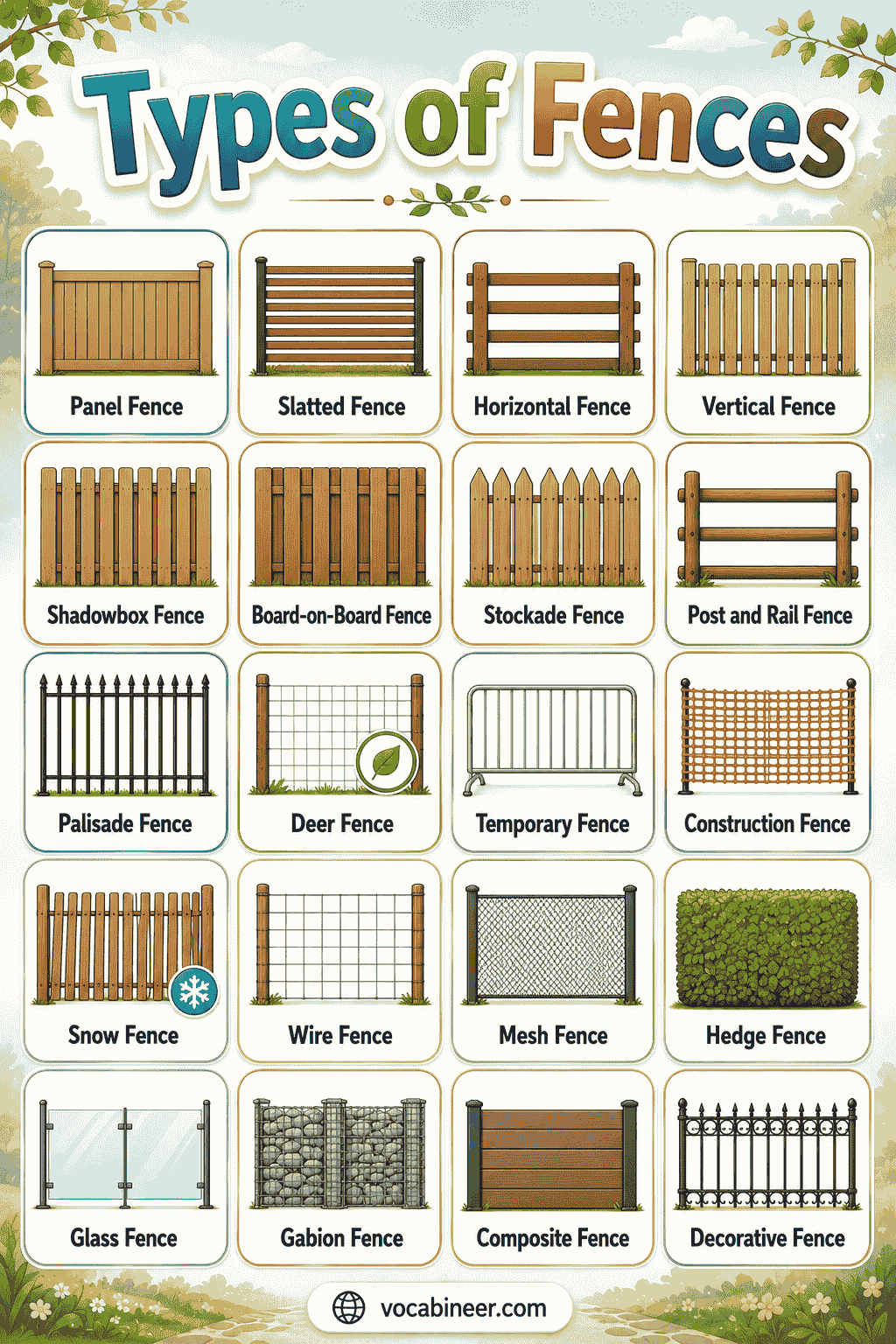
A fence chart helps learners compare fence groups quickly.
| Fence Group | Details |
|---|---|
| Privacy Fences | Best for: blocking views and creating private outdoor areas Examples: wood privacy fence, vinyl privacy fence, board-on-board fence |
| Decorative Fences | Best for: gardens, front yards, and curb appeal Examples: picket fence, lattice fence, ornamental metal fence |
| Security Fences | Best for: property protection and access control Examples: chain link fence, steel fence, anti-climb fence |
| Garden Fences | Best for: plants, flowers, and vegetables Examples: garden fence, wire mesh fence, bamboo fence |
| Farm Fences | Best for: fields, livestock, and rural boundaries Examples: split rail fence, barbed wire fence, electric fence |
| Pool Fences | Best for: swimming pool safety and boundary control Examples: aluminum fence, vinyl fence, mesh pool fence |
| Natural Fences | Best for: soft outdoor privacy and landscape design Examples: hedge fence, bamboo fence, living fence |
FAQ
The most common types of fences include wood fences, vinyl fences, chain link fences, picket fences, privacy fences, lattice fences, split rail fences, metal fences, wrought iron fences, aluminum fences, bamboo fences, and composite fences.
Wood privacy fences, vinyl privacy fences, board-on-board fences, stockade fences, and solid panel fences are good for privacy. These fences block outside views better than open styles like picket, chain link, or split rail fences.
A privacy fence is usually tall and solid, so it blocks views and creates a private outdoor space. A picket fence is usually shorter and has spaces between the boards, so it is more decorative than private.
Metal, vinyl, composite, stone, and brick fences can last a long time with proper installation and care. Wood can also last well, but it usually needs more maintenance, such as sealing, staining, or painting.
A garden may use wire mesh, bamboo, picket, or decorative fencing. A backyard may need a wood privacy fence, vinyl fence, chain link fence, or pet fence, depending on privacy, safety, budget, and style needs.
Read More
- Types of Flooring
- Types of Cabinets
- Types of Windows
- Popular Types of Tiles
- Different Types of Houses
- Different Types of Doors