American vs British English Words refer to naming differences between the United States and the United Kingdom. These differences appear in daily objects, food names, school items, transport terms, and public places. While grammar remains similar, vocabulary choices often change depending on region.
In this post, you will learn American vs British English Words through organized tables and examples. Understanding these word differences helps you recognize names used in the US and the UK in school, travel, shopping, and everyday situations.
In This Page
American vs British English Words List
Many objects around you have different names in American and British English. Sometimes the change is small, yet it sounds completely different. These vocabulary differences appear in daily speech, books, signs, and conversations.
Below is a comprehensive table of everyday American vs British English Words.
Everyday Objects
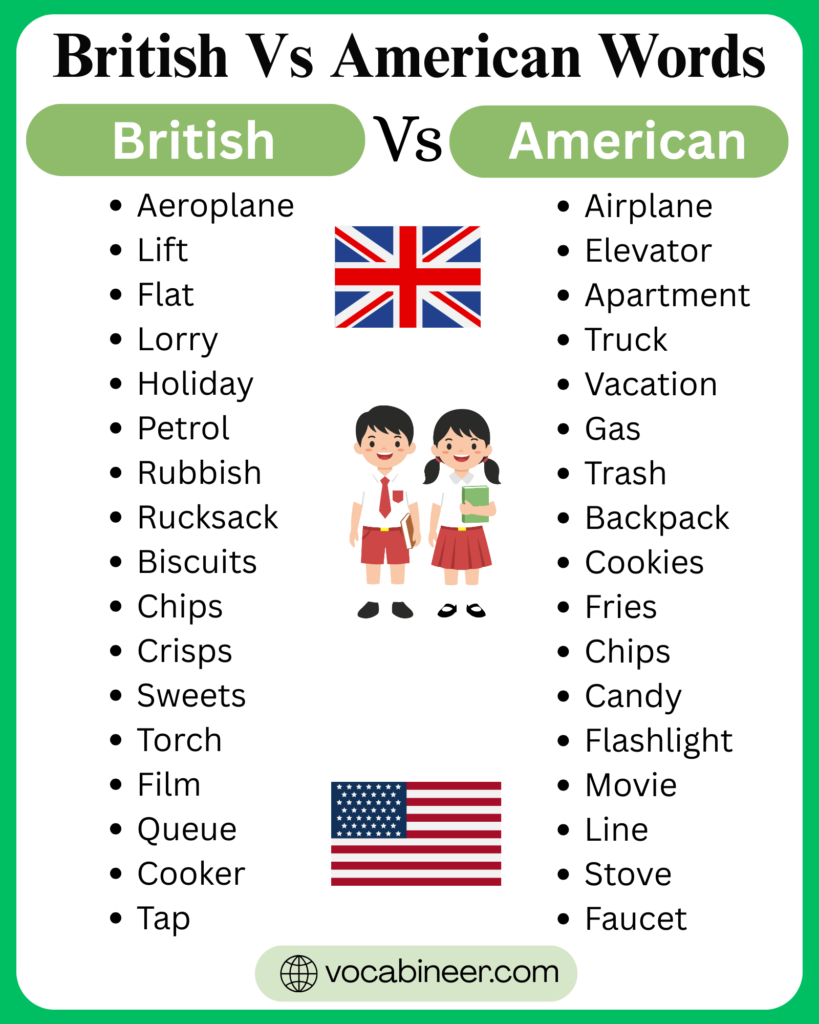
You probably use these items every day. Notice how the names change between American English and British English.
| American English | British English |
|---|---|
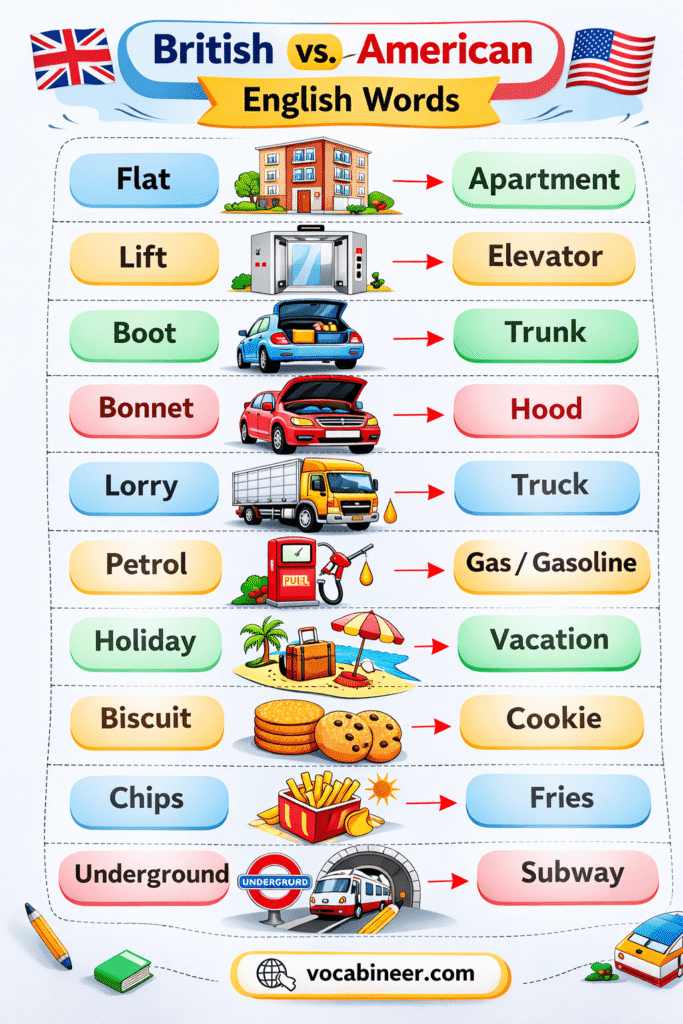
| Apartment | Flat |
| Elevator | Lift |
| Truck | Lorry |
| Sidewalk | Pavement |
| Trash | Rubbish |
| Garbage Can | Dustbin |
| Cookie | Biscuit |
| Candy | Sweets |
| Movie | Film |
| Soccer | Football |
| Flashlight | Torch |
| Cell Phone | Mobile Phone |
| Vacation | Holiday |
| Gas | Petrol |
| Line | Queue |
| Post | |
| Zipper | Zip |
| Sweater | Jumper |
| Closet | Wardrobe |
| Faucet | Tap |
| Diaper | Nappy |
| Pants | Trousers |
| Sneakers | Trainers |
| Store | Shop |
| Highway | Motorway |
| Subway | Underground |
| Railroad | Railway |
| Parking Lot | Car Park |
| Crosswalk | Zebra Crossing |
| Hood | Bonnet |
| Trunk | Boot |
| Windshield | Windscreen |
| Check | Cheque |
| Math | Maths |
| Grade | Year |
| Fall | Autumn |
| Yard | Garden |
| Candy Bar | Chocolate Bar |
| Vacation Rental | Holiday Let |
| Restroom | Toilet |
| Candy Store | Sweet Shop |
| Garbage Truck | Dustcart |
| Band Aid | Plaster |
| Pharmacist | Chemist |
| Soccer Field | Football Pitch |
| Apartment Building | Block of Flats |
Let’s see how these American vs British English Words work in sentences.
- She pressed the elevator button, but he called it a lift.
- He walked on the sidewalk, and she walked on the pavement.
- The kids played soccer, while the others played football.
- I parked in the parking lot, and they parked in the car park.
- He opened the car hood, but she opened the bonnet.
- The baby needs a diaper, and they say nappy.
- She stood in a long line, and he waited in a queue.
- We watched a movie, but they watched a film.
- He filled the tank with gas, while she asked for petrol.
- She wore a warm sweater, and he wore a jumper.
- He threw it in the trash, and she put it in the rubbish.
- I checked my mail, and she collected her post.
- The car is in the parking lot, not the car park.
- He studies math, but she studies maths.
- School starts in fall, but they say autumn.
Food and Drink
Food names often change between the United States and the United Kingdom. Sometimes the dish is identical, but the word sounds different. When reading menus or shopping for groceries, these American vs British English Words appear very quickly.
Below is a comprehensive table of food and drink differences.
| American English | British English |
|---|---|
| Cookie | Biscuit |
| Candy | Sweets |
| French Fries | Chips |
| Chips | Crisps |
| Eggplant | Aubergine |
| Zucchini | Courgette |
| Cilantro | Coriander |
| Ground Beef | Minced Beef |
| Cotton Candy | Candyfloss |
| Popsicle | Ice Lolly |
| Jello | Jelly |
| Jelly | Jam |
| Soda | Fizzy Drink |
| Takeout | Takeaway |
| Appetizer | Starter |
| Entree | Main Course |
| Broiler | Grill |
| Stove | Cooker |
| Canned Food | Tinned Food |
| Donut | Doughnut |
| Shrimp | Prawn |
| Arugula | Rocket |
| Candy Bar | Chocolate Bar |
| Muffin | Fairy Cake |
| Cupcake | Fairy Cake |
| Ketchup | Tomato Sauce |
| Milkshake | Thick Shake |
| Corn on the Cob | Sweetcorn |
| Candy Store | Sweet Shop |
| Food Truck | Street Food Van |
Now read these American vs British English Words in sentences.
- I ordered French fries, but she asked for chips.
- He bought a bag of chips, and she bought crisps.
- She cooked eggplant, while he prepared aubergine.
- I had an appetizer, and she called it a starter.
- They packed the meal as takeout, but we call it takeaway.
- He spread jelly, and she spread jam.
- The kids drank soda, but they say fizzy drink.
- She baked a donut, and he spelled it doughnut.
- He grilled the meat in a broiler, and she used a grill.
- I love cotton candy, while she prefers candyfloss.
- He added fresh cilantro, and she added coriander.
- She bought ground beef, and he asked for minced beef.
Clothing
Clothing names often change between American and British usage. The item looks the same, yet the word used in the United States may differ from the word used in the United Kingdom. When shopping or reading fashion descriptions, these American vs British English Words appear frequently.
Below is a detailed table of clothing differences.
| American English | British English |
|---|---|
| Pants | Trousers |
| Underwear | Pants |
| Sweater | Jumper |
| Vest | Waistcoat |
| Sneakers | Trainers |
| Flip Flops | Sandals |
| Bathrobe | Dressing Gown |
| Jacket | Coat |
| Raincoat | Mac |
| Overalls | Dungarees |
| Turtleneck | Polo Neck |
| Windbreaker | Anorak |
| Belt Bag | Bum Bag |
| Suspenders | Braces |
| Diaper | Nappy |
| Bathing Suit | Swimming Costume |
| Swimsuit | Swimming Suit |
| Sneakers | Plimsolls |
| Hiking Boots | Walking Boots |
| Tank Top | Vest |
Now read these American vs British English Words in example sentences.
- He wore pants, but she called them trousers.
- She bought new sneakers, and he bought trainers.
- I need a warm sweater, while she prefers a jumper.
- He carried his phone in a belt bag, but she used a bum bag.
- The baby needs a diaper, yet they say nappy.
- She wore a light jacket, but he wore a coat.
- He packed his swimsuit, and she packed a swimming costume.
- I tied my suspenders, and he adjusted his braces.
- She wore a soft bathrobe, while he wore a dressing gown.
Home Items
Home items often carry different names in American and British usage. You may walk into the same room, see the same object, yet hear a different word. These American vs British English Words appear in daily household conversations, furniture labels, and home improvement stores.
Below is a detailed table of common home item differences.
| American English | British English |
|---|---|
| Couch | Sofa |
| Stove | Cooker |
| Faucet | Tap |
| Trash Can | Bin |
| Garbage Disposal | Waste Disposal Unit |
| Yard | Garden |
| Closet | Cupboard |
| Dresser | Chest of Drawers |
| Living Room | Sitting Room |
| Vacation Home | Holiday Home |
| Rug | Carpet |
| Screen Door | Flyscreen Door |
| Window Screen | Flyscreen |
| Outlet | Socket |
| Light Switch | Switch |
| Air Conditioner | Air Conditioning Unit |
| Furnace | Boiler |
| Mailbox | Postbox |
| Doorbell | Bell |
| Doorknob | Door Handle |
| Garbage Bag | Bin Liner |
| Aluminum Foil | Tin Foil |
| Plastic Wrap | Cling Film |
| Measuring Cup | Measuring Jug |
| Cookie Sheet | Baking Tray |
Now read these American vs British English Words in example sentences.
- She relaxed on the couch, but he sat on the sofa.
- He turned on the stove, and she used the cooker.
- I washed my hands at the faucet, while she used the tap.
- The trash goes in the trash can, but they say bin.
- He checked the mailbox, and she checked the postbox.
- She plugged the charger into the outlet, and he used the socket.
- He walked across the yard, but she crossed the garden.
- I covered the dish with plastic wrap, and she used cling film.
- She placed cookies on the cookie sheet, while he used a baking tray.
School and Education
School systems in the United States and the United Kingdom use different names for classes, grades, and roles. Even though the structure feels similar, the vocabulary changes depending on region. These American vs British English Words appear in report cards, school forms, and classroom conversations.
Below is a detailed table of education-related differences.
| American English | British English |
|---|---|
| Grade | Year |
| Freshman | First Year |
| Sophomore | Second Year |
| Junior | Third Year |
| Senior | Fourth Year |
| Principal | Headteacher |
| Math | Maths |
| Public School | State School |
| Private School | Independent School |
| College | University |
| Major | Course |
| Semester | Term |
| Report Card | Report |
| Homeroom | Form |
| Eraser | Rubber |
| Faculty | Staff |
| Study Hall | Free Period |
| School Bus | Coach |
| Cafeteria | Canteen |
| Backpack | School Bag |
| Bulletin Board | Noticeboard |
| Vacation | Holiday |
| Field Trip | School Trip |
| Substitute Teacher | Supply Teacher |
| Graduation | Passing Out |
Now read these American vs British English Words in example sentences.
- She is in fifth grade, but he is in Year Five.
- The principal called a meeting, while the headteacher spoke to parents.
- He studies math, and she studies maths.
- I attend a public school, but she goes to a state school.
- The class meets during the fall semester, but they say autumn term.
- She forgot her eraser, and he asked for a rubber.
- The cafeteria serves lunch, while the canteen does the same.
- He packed his backpack, and she carried a school bag.
- A substitute teacher arrived, and they called her a supply teacher.
Travel and Transport
Travel vocabulary often changes between American and British usage. Road signs, train stations, and airport announcements use different terms depending on the country. These American vs British English Words appear in tickets, maps, and travel conversations.
Below is a detailed table of transport-related differences.
| American English | British English |
|---|---|
| Subway | Underground |
| Railroad | Railway |
| Truck | Lorry |
| Highway | Motorway |
| Freeway | Dual Carriageway |
| Gas Station | Petrol Station |
| Parking Lot | Car Park |
| Crosswalk | Zebra Crossing |
| Roundabout | Roundabout |
| Overpass | Flyover |
| Sidewalk | Pavement |
| Hood | Bonnet |
| Trunk | Boot |
| Windshield | Windscreen |
| Turn Signal | Indicator |
| License Plate | Number Plate |
| Rental Car | Hire Car |
| One Way | No Entry |
| Ticket Booth | Ticket Office |
| Rest Area | Service Station |
| Taxi | Taxi |
| Schedule | Timetable |
| Check | Cheque |
| Coach | Coach |
Now read these American vs British English Words in example sentences.
- He took the subway, but she used the underground.
- They drove on the highway, while others used the motorway.
- She filled the tank at the gas station, and he stopped at a petrol station.
- I parked in the parking lot, but they say car park.
- He opened the car trunk, and she opened the boot.
- The windshield cracked, and the windscreen needed repair.
- He waited at the ticket booth, while she stood at the ticket office.
- The bus followed a printed schedule, and they checked the timetable.
- She drove a rental car, and he hired a hire car.
Most Common American vs British English Words
Some American vs British English Words appear very often in daily speech. These common pairs are used in homes, schools, shops, and travel settings. Learning them first makes it easier to recognize regional vocabulary differences.
Below is an expanded comparison table of high frequency American vs British English Words.
| American English | British English |
|---|---|
| Apartment | Flat |
| Apartment Building | Block of Flats |
| Elevator | Lift |
| Truck | Lorry |
| Sidewalk | Pavement |
| Trash | Rubbish |
| Garbage | Rubbish |
| Garbage Can | Dustbin |
| Trash Bag | Bin Liner |
| Cookie | Biscuit |
| Candy | Sweets |
| Candy Bar | Chocolate Bar |
| French Fries | Chips |
| Chips | Crisps |
| Soccer | Football |
| Gas | Petrol |
| Gas Station | Petrol Station |
| Vacation | Holiday |
| Line | Queue |
| Movie | Film |
| Movie Theater | Cinema |
| Store | Shop |
| Shopping Mall | Shopping Centre |
| Subway | Underground |
| Railroad | Railway |
| Parking Lot | Car Park |
| Restroom | Toilet |
| Bathroom | Toilet |
| Sweater | Jumper |
| Pants | Trousers |
| Underwear | Pants |
| Sneakers | Trainers |
| Diaper | Nappy |
| Stroller | Pushchair |
| Hood | Bonnet |
| Trunk | Boot |
| Windshield | Windscreen |
| Turn Signal | Indicator |
| Highway | Motorway |
| Post | |
| Check | Cheque |
| Math | Maths |
| Grade | Year |
| Fall | Autumn |
| Yard | Garden |
| Zipper | Zip |
| Flashlight | Torch |
| Faucet | Tap |
| Drugstore | Chemist |
Now read these common American vs British English Words in sentences.
- She lives in an apartment, but he lives in a flat.
- He pressed the elevator, and she used the lift.
- The baby needs a diaper, yet they call it a nappy.
- I waited in a long line, and she stood in a queue.
- He opened the car hood, and she opened the bonnet.
- She threw it in the trash, while he put it in the rubbish.
- I filled the tank with gas, and she asked for petrol.
- They watched a movie, but she went to the cinema.
- He studies math, and she studies maths.
- The car is in the parking lot, not the car park.
A–Z American vs British English Words List
An alphabetical list helps you scan American vs British English Words quickly. This format makes it easier to compare terms and recognize patterns. Some letters include many differences, while others have only a few.
Below is an A–Z comparison table.
| American English | British English |
|---|---|
| Apartment | Flat |
| Appetizer | Starter |
| Arugula | Rocket |
| Backpack | School Bag |
| Band Aid | Plaster |
| Bathroom | Toilet |
| Bellhop | Porter |
| Bill | Note |
| Broiler | Grill |
| Candy | Sweets |
| Candy Bar | Chocolate Bar |
| Cart | Trolley |
| Cell Phone | Mobile Phone |
| Check | Cheque |
| Closet | Cupboard |
| Cookie | Biscuit |
| Corn | Maize |
| Cotton Candy | Candyfloss |
| Crosswalk | Zebra Crossing |
| Diaper | Nappy |
| Downtown | City Centre |
| Drugstore | Chemist |
| Elevator | Lift |
| Eraser | Rubber |
| Fall | Autumn |
| Faucet | Tap |
| French Fries | Chips |
| Gas | Petrol |
| Gas Station | Petrol Station |
| Garbage | Rubbish |
| Grade | Year |
| Ground Beef | Minced Beef |
| Highway | Motorway |
| Hood | Bonnet |
| Jacket | Coat |
| Jello | Jelly |
| Ketchup | Tomato Sauce |
| Kindergarten | Nursery |
| Line | Queue |
| Post | |
| Mall | Shopping Centre |
| Math | Maths |
| Movie | Film |
| Parking Lot | Car Park |
| Pants | Trousers |
| Railroad | Railway |
| Restroom | Toilet |
| Round Trip | Return Ticket |
| Schedule | Timetable |
| Sidewalk | Pavement |
| Sneakers | Trainers |
| Soccer | Football |
| Stove | Cooker |
| Subway | Underground |
| Sweater | Jumper |
| Trash | Rubbish |
| Truck | Lorry |
| Vacation | Holiday |
| Windshield | Windscreen |
| Yard | Garden |
| Zipper | Zip |
FAQs About American vs British English Words
The difference is mainly in vocabulary. American vs British English Words often describe the same object using different names. For example, apartment in American English is flat in British English. The meaning stays the same, but the word changes by region.
American and British English developed separately after the 18th century. Over time, everyday vocabulary changed in each country. Cultural influence, education systems, and media shaped these American vs British English Words differently.
Yes, both versions are accepted in many international exams. However, you should stay consistent. If you write color, do not switch to colour in the same test. Vocabulary differences like truck and lorry are usually accepted.
Common differences include elevator and lift, sidewalk and pavement, cookie and biscuit, gas and petrol, and movie and film. These appear frequently in daily conversation and reading materials.
Choose the version based on your goals. If you plan to study or work in the United States, focus on American English. If you are connected to the United Kingdom, focus on British English. Understanding both helps you recognize word differences easily.
Conclusion:
American vs British English Words describe the same objects and ideas with different regional names. The grammar usually stays the same, but vocabulary choices change depending on whether the context is American English or British English.
When you recognize these word differences, reading signs, school materials, menus, and travel information becomes easier. Understanding American vs British English Words allows you to identify regional vocabulary quickly without confusion.
Read More
- Normal vs Advanced English Words
- Basic vs Advanced English Words
- 1000 Daily Use English Words
- Rhyming Words in English