

Antonyms for anger helps readers understand how English expresses calmness, patience, and emotional control instead of irritation or rage. When anger fades, language changes to show understanding, restraint, or peace of mind. These opposite words appear often in stories, school texts, conversations, and descriptive writing, shaping how emotions, reactions, and relationships are clearly communicated.
In This Page
Meaning of Anger in English
Anger is a strong emotional response to frustration, unfairness, hurt, or threat. It can range from mild irritation to intense rage, depending on the situation. Anger often shows itself through tone, facial expression, words, or actions, and it can affect how people think and behave.
Anger is a common emotion in everyday life and appears frequently in storytelling and descriptive writing. Because it is such a powerful feeling, English also has many words that describe its opposite. These antonyms help show moments when anger softens, fades, or is replaced by calmness and understanding.
Common Antonyms for Anger With Meanings
Some words clearly express the opposite of anger by showing emotional calm, patience, or self-control. These antonyms are commonly used in reading passages, exams, conversations, and descriptive writing, especially when a tense situation becomes peaceful.
- Calmness: A peaceful emotional state without irritation or agitation.
- Patience: The ability to tolerate delay, difficulty, or annoyance without anger.
- Peacefulness: A feeling of inner quiet and emotional harmony.
- Composure: Emotional control shown even under pressure.
- Tolerance: Willingness to accept differences or problems without anger.
- Gentleness: Soft, kind behavior that avoids harsh reaction.
- Understanding: Sympathy and awareness instead of anger or blame.
- Restraint: The ability to hold back angry impulses.
- Serenity: Deep and steady emotional calm.
- Forgiveness: Letting go of anger toward someone who caused harm.
- Tranquility: A calm emotional condition free from disturbance.
- Kindness: Friendly and caring behavior rather than hostility.
- Acceptance: Recognizing a situation without emotional resistance.
- Poise: Graceful emotional balance under stress.
- Harmony: Peaceful emotional or social balance.
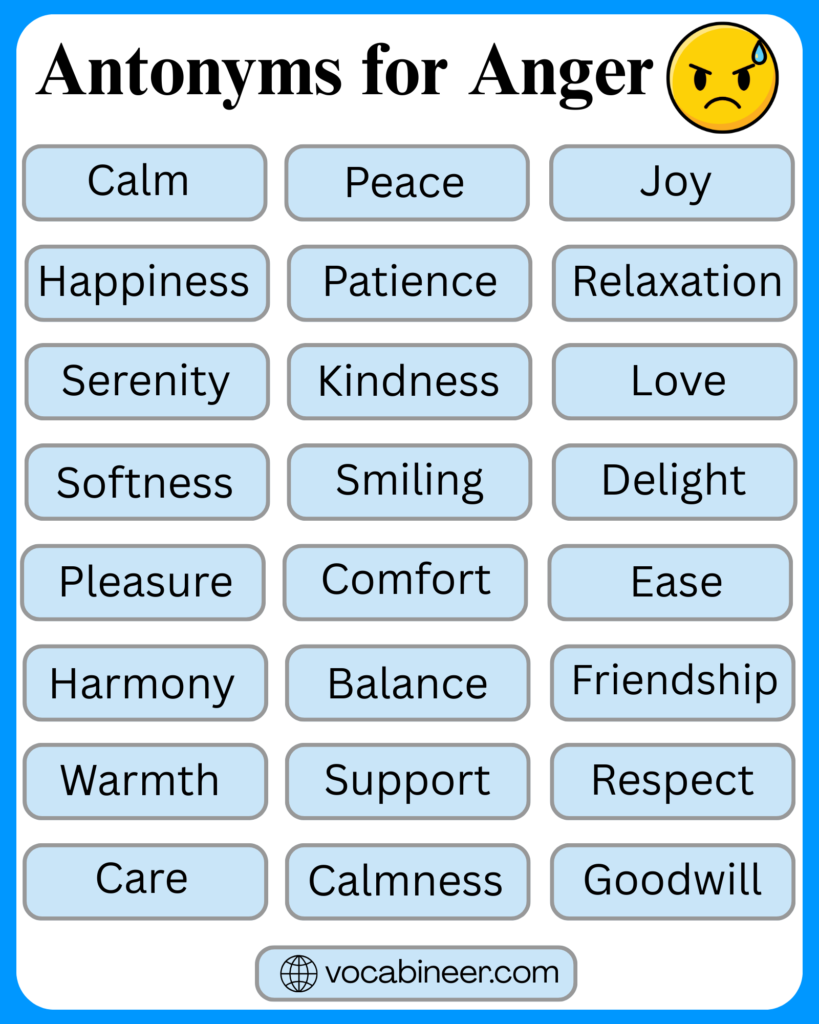
Emotional Antonyms of Anger
Some antonyms of anger focus mainly on feelings. These words describe emotions that replace irritation, hostility, or rage with calmness or warmth.
- Calm: Feeling relaxed and emotionally steady.
- Peaceful: Free from conflict or emotional disturbance.
- Content: Calmly satisfied and not upset.
- Gentle: Showing softness and kindness instead of anger.
- Kind: Acting with care and goodwill toward others.
- Relieved: Feeling calm after anger fades or a problem is resolved.
- Comforted: Emotionally soothed after distress.
- Warm: Emotionally friendly and welcoming.
Mental Antonyms of Anger
Some antonyms of anger describe mindset rather than emotion alone. These words focus on thinking patterns and emotional control that prevent angry reactions.
- Patient: Mentally able to wait or endure without irritation.
- Rational: Thinking clearly instead of reacting emotionally.
- Composed: Mentally steady and controlled.
- Understanding: Thinking with empathy rather than blame.
- Balanced: Maintaining emotional stability.
- Reflective: Thinking calmly before reacting.
- Open-minded: Willing to consider other viewpoints calmly.
Words Related to Calmness and Emotional Control
Some words do not directly replace anger but support the same idea. They are often used alongside antonyms of anger to describe emotional balance and peaceful interaction.
- Harmony: Peaceful agreement or emotional balance.
- Control: Ability to manage reactions and behavior.
- Stability: Emotional steadiness over time.
- Peace: Absence of conflict or hostility.
- Tolerance: Acceptance without irritation.
- Compassion: Care for others instead of anger.
Anger vs Similar Words
Anger is a strong emotional reaction to frustration, hurt, or injustice. It often leads to harsh words, tension, or conflict if not controlled.
Anger vs Annoyance
Annoyance is mild irritation that is usually short-lived. Anger is stronger and more emotionally charged, often building over time.
Anger vs Rage
Rage is extreme anger that feels explosive and overwhelming. Anger may still allow self-control, while rage often removes it.
Anger vs Frustration
Frustration comes from being blocked or delayed. Anger may grow from frustration, but it feels more aggressive and emotional.
Anger vs Hatred
Hatred is long-lasting and intense dislike. Anger can be temporary, while hatred often remains for a long time.
Understanding these differences improves clarity in writing and speech.
Antonyms for Anger in Sentences
Seeing antonyms used in sentences helps learners understand how these words fit naturally into English.
- She responded with calmness instead of anger.
- He showed great patience during the long delay.
- Her voice remained gentle, not harsh.
- They solved the disagreement with understanding.
- He spoke in a composed and respectful way.
- Forgiveness replaced anger over time.
- The discussion ended in peacefulness rather than conflict.
How to Choose the Right Antonym for Anger
Choosing the correct antonym depends on the situation. If the focus is emotional calm, words like calm, peaceful, or serene are best. If the focus is behavior or response, words like patience, restraint, or composure are more accurate.
When the situation involves healing or relationship repair, words like forgiveness, kindness, or understanding work well. Thinking about whether the change is emotional, mental, or behavioral helps select the most natural antonym for anger.
Why Learning Antonyms for Anger Matters
Understanding antonyms for anger helps readers recognize emotional change in stories, conversations, and written texts. These words show how tension turns into calm and how conflict moves toward resolution. They also help writers and speakers describe emotions more precisely instead of repeating the word anger.
Knowing these opposites improves emotional vocabulary and encourages thoughtful expression.
Conclusion
Understanding antonyms for anger helps readers recognize how English expresses calmness, patience, and emotional balance instead of irritation or rage. These words appear across stories, school texts, and conversations, shaping how emotions and reactions are described. Learning them through clear explanations and sentence use builds stronger emotional vocabulary, better communication, and more thoughtful expression.
Read More
