

Antonyms for brave helps readers understand how English expresses fear, hesitation, and lack of courage instead of strength or bold action. When bravery fades, language shifts to show avoidance, anxiety, or emotional weakness, making changes in behavior and attitude easier to notice. These opposite words appear often in stories, school texts, conversations, and descriptive writing, shaping how characters, actions, and emotional responses are clearly communicated and understood.
In This Page
Meaning of Brave in English
Brave describes the ability to face fear, danger, or difficulty without backing away. A brave person acts despite feeling afraid, showing courage, strength, or determination. Bravery can appear in physical situations, emotional challenges, or moral decisions.
The word brave is common in stories, personal descriptions, and educational texts. When bravery is missing, English uses many other words to express fearfulness, hesitation, or lack of courage.
Common Antonyms for Brave
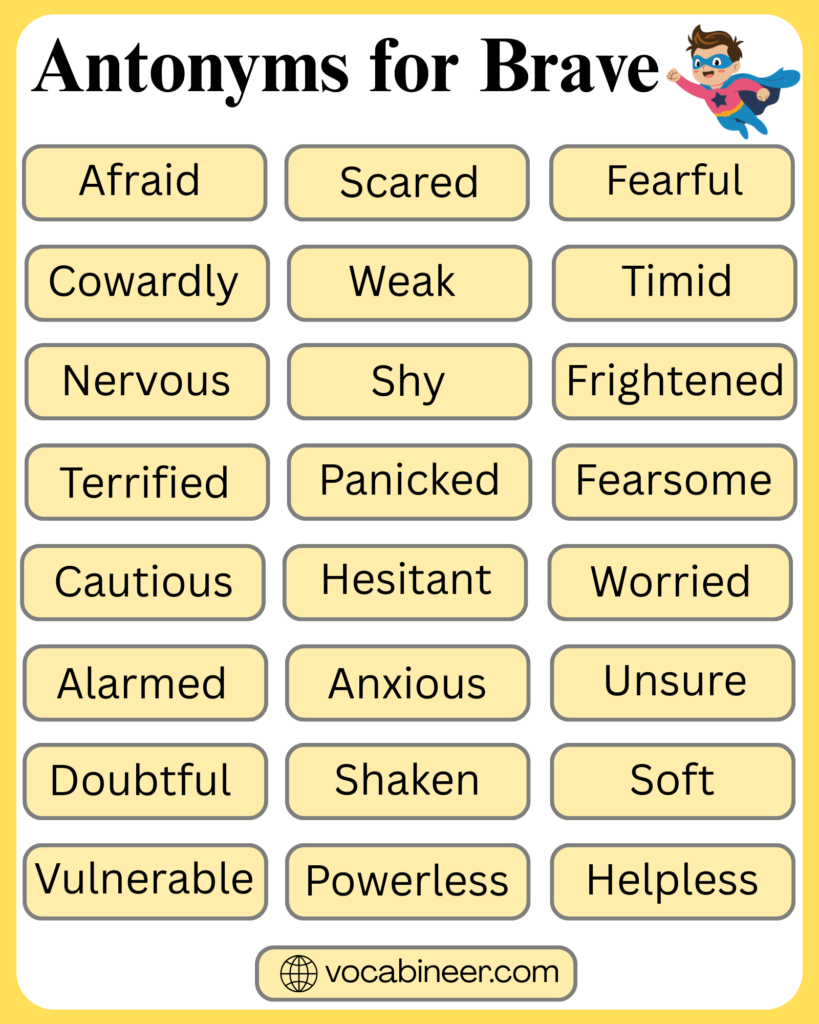
Some words clearly express the opposite of brave by showing fear, hesitation, or lack of courage. These antonyms appear often in school texts, reading passages, conversations, and descriptive writing, especially when characters avoid danger or struggle to act.
- Cowardly: Lacking courage and avoiding risk or danger.
- Fearful: Experiencing strong fear instead of confidence.
- Timid: Shy and easily frightened.
- Afraid: Feeling fear or anxiety about possible harm.
- Hesitant: Pausing or holding back due to fear or doubt.
- Faint-hearted: Lacking determination or courage.
- Nervous: Uneasy and fearful in stressful situations.
- Craven: Extremely cowardly in the face of danger.
- Spineless: Showing no courage or strength of character.
- Weak-kneed: Unable to act because of fear.
- Panicked: Overwhelmed by sudden fear.
- Anxious: Worried and uneasy instead of bold.
- Reluctant: Unwilling to act due to fear or uncertainty.
- Cautious: Overly careful because of fear.
- Insecure: Lacking confidence to face risk.
Emotional Antonyms of Brave
Some antonyms of brave focus mainly on feelings. These words describe emotional reactions where fear replaces courage.
- Fearful: Emotionally controlled by fear.
- Anxious: Worried about possible danger or outcome.
- Panicked: Overcome by sudden fear.
- Terrified: Experiencing extreme fear.
- Uneasy: Feeling uncomfortable or unsure.
Mental Antonyms of Brave
Some antonyms of brave describe mindset rather than emotion alone. These words focus on thinking patterns where courage is lacking.
- Doubtful: Mentally unsure and hesitant.
- Unconfident: Lacking belief in one’s ability to face danger.
- Cautious: Overly careful due to fear.
- Reluctant: Unwilling to act because of fear.
- Insecure: Mentally unsure and fearful.
Words Related to Fear and Avoidance
Some words do not directly replace brave but help describe situations where bravery is missing.
- Avoidance: Staying away from danger or challenge.
- Retreat: Pulling back instead of facing risk.
- Submission: Yielding due to fear.
- Withdrawal: Pulling away emotionally or physically.
- Escape: Leaving a situation to avoid fear.
Brave vs Similar Words
Brave describes the ability to face fear, danger, or difficulty without backing away. It does not mean the absence of fear, but rather the choice to act despite feeling afraid.
Brave vs Courageous
Courageous is very close in meaning to brave but often sounds more formal or literary. Brave is commonly used in everyday speech, while courageous appears more in formal writing.
Brave vs Fearless
Fearless suggests having no fear at all. Brave allows fear to exist but shows strength in acting even when fear is present.
Brave vs Bold
Bold emphasizes confidence and willingness to take risks. Brave focuses more on facing danger or fear rather than confidence alone.
Brave vs Confident
Confident means believing in one’s ability. Brave involves taking action even when confidence is weak or uncertain.
Brave vs Heroic
Heroic suggests brave actions that are admired or praised by others. Brave can describe everyday acts of courage that may not be dramatic or celebrated.
Antonyms for Brave in Sentences
Seeing antonyms used in sentences helps learners understand how these words fit naturally into English.
- He felt afraid during the storm.
- Her hesitation showed her fear.
- The child was too timid to speak.
- His cowardly behavior disappointed others.
- She grew nervous before the challenge.
- Fear made him reluctant to act.
How to Choose the Right Antonym for Brave
Choosing the correct antonym depends on the situation. If the focus is emotional fear, words like afraid, terrified, or anxious fit best. If the focus is behavior, words like cowardly, hesitant, or reluctant are more accurate.
Thinking about whether fear affects feeling, thinking, or action helps select the most natural antonym for brave.
Conclusion
Understanding antonyms for brave helps readers recognize how English expresses fear, hesitation, and lack of courage instead of strength and determination. These words appear across stories, school texts, and conversations, shaping how actions and emotions are described. Learning them through explanation and sentence use builds clearer expression and deeper understanding of courage and fear.
Read More
