

Learning antonyms for bright helps you talk about things that lack light, color, energy, clarity, or positivity. When something isn’t bright, we naturally turn to words that suggest darkness, dullness, weakness, sadness, or low intensity. These opposites are used when describing light conditions, moods, personalities, colors, ideas, and even intelligence. They appear frequently in everyday speech, stories, classrooms, and writing, helping us explain situations that feel muted, unclear, or lacking vibrancy.
In This Page
What Does Bright Mean in English?
The word bright is used in English to describe things that are full of light, color, or energy. It can refer to strong sunlight, vivid colors, cheerful moods, or quick intelligence. A bright room is well-lit, bright colors stand out vividly, a bright personality is cheerful, and a bright student understands things quickly. Because the meaning of bright changes depending on the situation, its opposite words also change based on whether you’re talking about light, mood, color, or intelligence.
Common Antonyms for Bright With Meanings
Learning antonyms for bright helps you describe things that are not shiny, cheerful, colorful, or mentally sharp. These opposite words are useful for light, emotions, appearance, weather, and ideas.
- Dark – Having little or no light; not bright in color or mood.
- Dim – Low in light or clarity; softly lit or unclear.
- Dull – Lacking brightness, excitement, or sharpness.
- Gloomy – Dark or depressing in light, mood, or atmosphere.
- Faint – Weak in brightness, color, sound, or strength.
- Muted – Softened or toned down in color or intensity.
- Drab – Plain and lacking color or brightness.
- Shadowy – Partly dark or unclear due to shadows.
- Murky – Dark, cloudy, or hard to see clearly.
- Somber – Dark, serious, or emotionally heavy.
- Bleak – Cold, dull, or without warmth or hope.
- Lifeless – Without energy, color, or liveliness.
- Dreary – Dull, gloomy, and depressing.
- Obscure – Not clear, not easy to see or understand.
- Lackluster – Lacking shine, excitement, or energy.
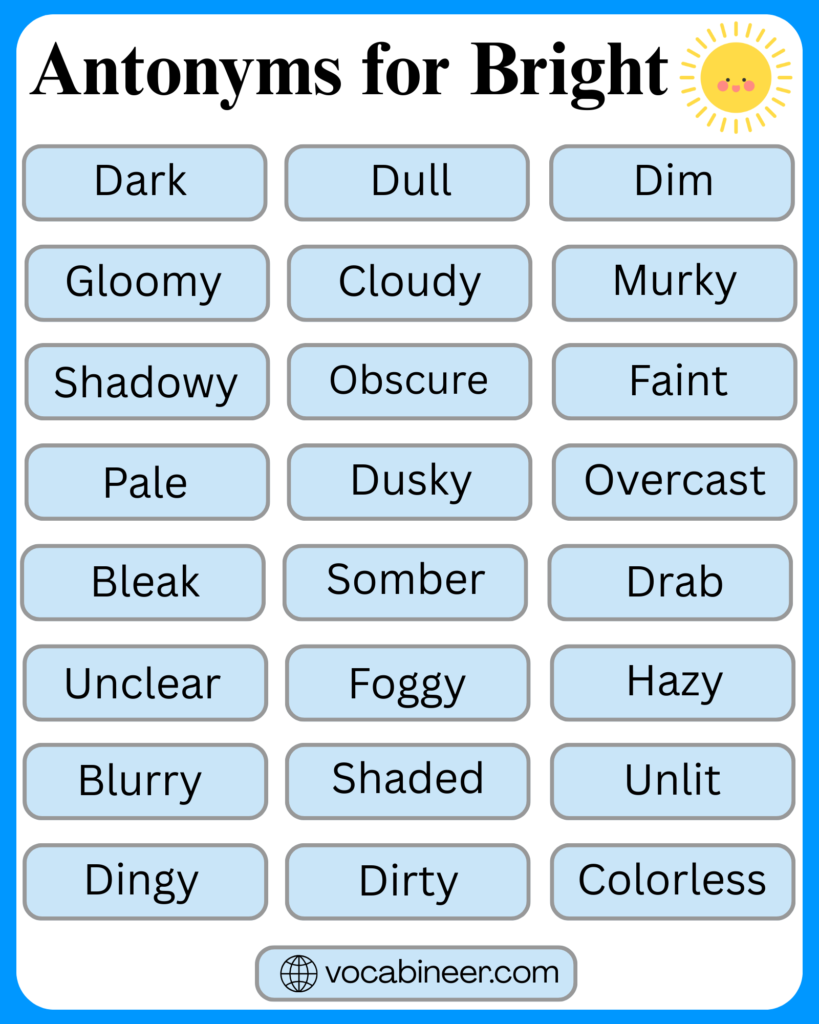
Antonyms for Bright by Context
The opposite of bright can change depending on what kind of brightness you’re talking about—light, color, mood, intelligence, or atmosphere. Choosing the right antonym helps your meaning feel clear and natural.
Physical Light and Visibility
When bright refers to strong light or visibility, its antonyms describe reduced or weak lighting:
- Dark – having little or no light
- Dim – softly lit or low in brightness
- Shadowy – partly dark due to shadows
- Murky – dark and difficult to see through
Mood and Emotions
When bright describes a cheerful or positive mood, antonyms show sadness or emotional heaviness:
- Gloomy – dark or depressing in mood
- Somber – serious and emotionally heavy
- Dreary – dull and spirit-lowering
- Cheerless – lacking happiness or positivity
Colors and Appearance
When bright refers to vivid or lively colors, antonyms show dull or softened tones:
- Dull – lacking shine or vividness
- Muted – toned down or softened in color
- Drab – plain and lacking color
- Pale – light but weak in color intensity
Thinking, Ideas, and Expression
When bright means clear, sharp, or intelligent, antonyms suggest lack of clarity or sharpness:
- Unclear – not easy to understand
- Obscure – hidden or difficult to grasp
- Dull – lacking mental sharpness or interest
- Flat – lacking energy or expression
Bright vs Similar Words
While bright describes strong light, vivid color, cheerful mood, or mental sharpness, these similar words focus on specific kinds of brightness in light, emotions, or ideas.
| Word | Meaning & Usage |
|---|---|
| Bright | Describes strong light, vivid color, positive mood, or quick intelligence. |
| Luminous | Focuses on glowing or shining light, often soft and radiant rather than intense. |
| Vivid | Emphasizes strong, clear, and lively colors or images. |
| Cheerful | Refers to a happy, positive emotional state rather than physical brightness. |
| Radiant | Suggests warmth, joy, or light that seems to shine outward. |
| Sharp | Describes quick thinking or clear intelligence, not physical light. |
| Clear | Focuses on visibility or easy understanding rather than intensity. |
| Sunny | Describes a happy, optimistic mood or weather with strong sunlight. |
| Brilliant | Stronger than bright; suggests exceptional intelligence or intense light. |
| Colorful | Refers to rich or varied colors, not necessarily light intensity. |
How to Choose the Right Antonym for Bright
Choosing the right antonym for bright depends on the context. If you’re describing light or visibility, words like dark, dim, or shadowy fit best. For moods or emotions, use words such as gloomy, somber, or dreary. When referring to colors or appearance, antonyms like dull, muted, or drab work well. And for ideas, thinking, or intelligence, words like unclear, obscure, or flat show a lack of clarity or sharpness. Considering the context ensures your writing or speech is clear, natural, and precise.
Conclusion
Understanding antonyms for bright helps you describe situations, objects, moods, and ideas that lack light, color, energy, or clarity. Whether you’re talking about a dim room, a gloomy day, dull colors, or unclear thoughts, knowing the right opposite words makes your English more accurate and expressive. Using the correct antonym for the situation allows you to highlight contrasts, add detail, and communicate your ideas clearly in everyday speech, writing, or storytelling.
Read More
