Antonyms for forlorn help readers understand how English expresses confidence, comfort, and emotional strength instead of loneliness or sadness. When something is no longer forlorn, the language shifts to show hope, care, energy, or a sense of belonging. These opposite words appear often in stories, school texts, conversations, and descriptive writing, shaping how people, places, and situations are understood. Learning them makes it easier to recognize emotional change, describe recovery or support, and follow how mood and meaning shift within a sentence or scene.
In This Page
Meaning of Forlorn in English
Forlorn describes someone or something that feels lonely, abandoned, sad, or hopeless. It often suggests emotional pain combined with a lack of support or comfort. A forlorn person may feel forgotten, while a forlorn place may seem empty or neglected.
The word is commonly used in stories and descriptions to create a sense of sadness or isolation. When something is not forlorn, English uses different words to show warmth, confidence, happiness, or care.
Common Antonyms for Forlorn With Meanings
Some words clearly express the opposite of forlorn by showing comfort, happiness, or emotional support. These antonyms are frequently used in reading passages, exams, and descriptive writing, especially when situations change from sadness to stability or joy.
- Hopeful: Feeling positive and confident about what may happen next.
- Cheerful: Showing happiness, brightness, and positive energy.
- Comforted: Feeling soothed and supported after distress or sadness.
- Content: Calmly satisfied and emotionally settled.
- Confident: Feeling sure of oneself instead of helpless or abandoned.
- Encouraged: Feeling supported and motivated by others or by events.
- Secure: Feeling safe, protected, and emotionally steady.
- Loved: Feeling valued, cared for, and emotionally supported.
- Optimistic: Expecting good outcomes rather than focusing on loss.
- Reassured: Feeling relief after fear, worry, or uncertainty.
- Peaceful: Feeling calm and free from emotional pain or loneliness.
- Supported: Receiving help, care, or guidance from others.
- Welcomed: Feeling accepted instead of ignored or rejected.
- Connected: Feeling emotionally linked to people or surroundings.
- Protected: Being kept safe from harm or emotional distress.
- Valued: Feeling important and respected rather than forgotten.
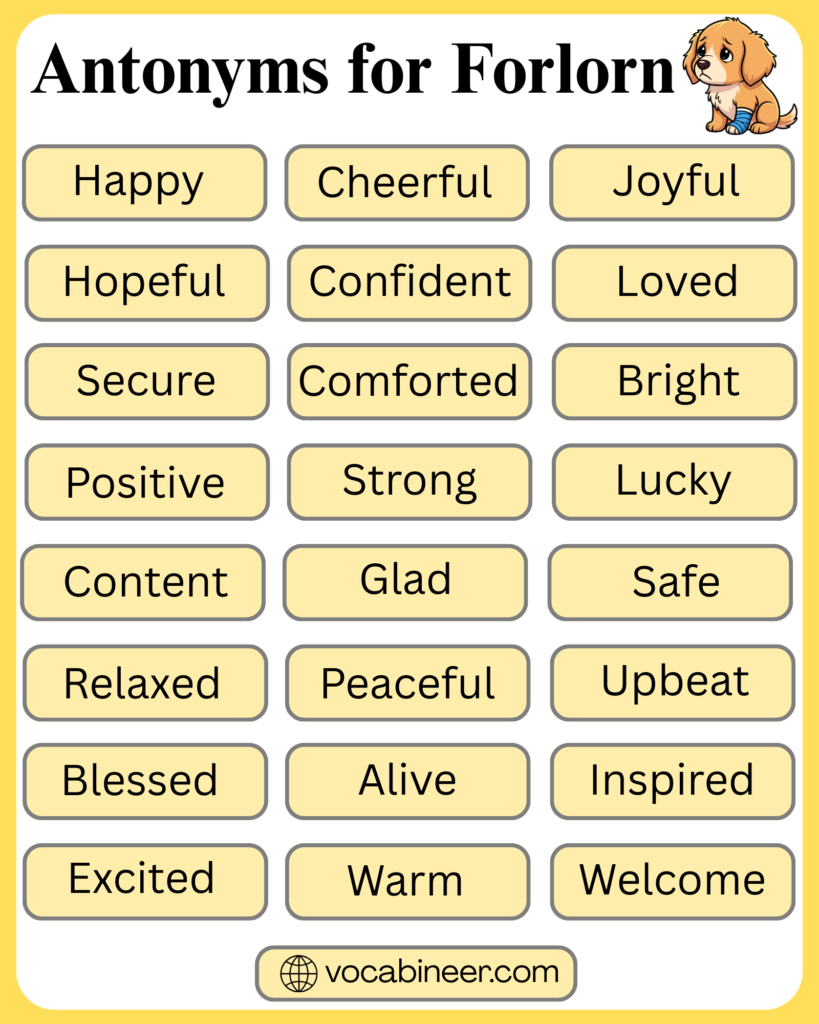
Emotional Antonyms of Forlorn
Some antonyms of forlorn focus mainly on emotions. These words describe feelings that replace sadness or loneliness with warmth, happiness, or emotional balance.
- Happy: Feeling joy instead of sadness.
- Cheerful: Showing bright and positive emotions.
- Joyful: Feeling deep happiness or delight.
- Peaceful: Feeling calm and free from emotional pain.
- Comforted: Emotionally soothed after distress.
- Reassured: Feeling relief after fear or worry.
- Content: Feeling settled and emotionally balanced.
Mental Antonyms of Forlorn
Some antonyms of forlorn describe mindset rather than emotion. These words focus on confidence, belief, and emotional strength.
- Confident: Believing in oneself instead of feeling helpless.
- Optimistic: Expecting positive outcomes.
- Secure: Feeling mentally safe and stable.
- Assured: Feeling certain rather than uncertain.
- Positive: Maintaining a hopeful mental attitude.
- Encouraged: Feeling mentally supported.
Words Related to Comfort and Belonging
Some words do not directly replace forlorn but help describe situations where loneliness disappears. These words are often used alongside antonyms of forlorn to add detail and clarity.
- Supported: Given help or care by others.
- Welcomed: Accepted warmly instead of ignored.
- Cared-for: Looked after with attention and kindness.
- Connected: Feeling part of a group or relationship.
- Protected: Kept safe from harm or worry.
- Valued: Treated as important and meaningful.
Forlorn vs Similar Words
Forlorn describes a feeling of deep sadness combined with loneliness or abandonment. It often suggests that someone feels forgotten, helpless, or without support. Forlorn can describe people, places, or situations that appear emotionally empty or neglected.
Forlorn vs Sad
Sad describes a general feeling of unhappiness. Forlorn goes further by adding a sense of loneliness or being left alone. A person may feel sad for a short time, but forlorn suggests deeper emotional isolation.
Forlorn vs Lonely
Lonely means being alone or feeling a lack of companionship. Forlorn includes loneliness but also carries emotional pain and hopelessness. Someone can be lonely yet hopeful, but forlorn usually feels more heavy and abandoned.
Forlorn vs Hopeless
Hopeless focuses on the belief that things will not improve. Forlorn includes hopelessness but also adds emotional sorrow and a sense of being uncared for. Hopeless describes belief, while forlorn describes emotional state.
Forlorn vs Depressed
Depressed refers to a long-lasting emotional condition involving sadness and low energy. Forlorn is often situational and descriptive, showing sadness and isolation at a specific moment. Depressed can be clinical, while forlorn is more literary.
Forlorn vs Abandoned
Abandoned describes being left behind physically or emotionally. Forlorn describes how it feels after being abandoned. Abandoned explains the situation, while forlorn explains the emotional response.
Antonyms for Forlorn in Sentences
Seeing antonyms used in sentences helps learners understand how these words work naturally in English.
- After hearing the good news, she felt hopeful instead of forlorn.
- The once lonely child now looked cheerful and relaxed.
- He felt comforted by the kind words of his family.
- The rescued dog appeared secure and calm.
- She walked into the room feeling confident, not forlorn.
- The empty house became welcoming after the lights were turned on.
How to Choose the Right Antonym for Forlorn
Choosing the right antonym depends on what kind of change you want to show. If the focus is on emotion, words like happy, cheerful, or content work best. If the focus is on mindset, words like confident, secure, or optimistic are more accurate.
Think about whether the situation changes emotionally, mentally, or socially. Matching the word to the situation makes your English sound clear and natural.
Conclusion
Understanding antonyms for forlorn helps readers recognize how English expresses comfort, happiness, and emotional strength instead of loneliness or sadness. These words appear across stories, school texts, and conversations, shaping how people and places are described. Learning them through explanation and sentence use builds stronger control over emotional and descriptive language.
Read More