

Antonyms for joy helps readers understand how English expresses sadness, emotional pain, and lack of happiness instead of pleasure or delight. When joy fades, language changes to show sorrow, disappointment, or emotional heaviness, helping readers sense a clear shift in mood. These opposite words appear often in stories, school texts, conversations, and descriptive writing, shaping how emotions and moods are clearly communicated and making emotional contrasts easier to recognize and describe accurately.
In This Page
Meaning of Joy in English
Joy describes a strong feeling of happiness, pleasure, or delight. It often suggests deep emotional satisfaction rather than simple comfort. Joy can appear in moments of success, love, celebration, or peace, and it is commonly used in both everyday speech and literary writing.
When joy is absent, English uses different words to show sadness, emotional struggle, or disappointment. Understanding what joy means makes it easier to recognize and use its antonyms correctly.
Common Antonyms for Joy With Meanings
Some words clearly express the opposite of joy by showing sadness, emotional pain, or lack of happiness. These antonyms appear often in reading passages, school writing, conversations, and descriptive texts, especially when positive feelings fade or disappear.
- Sadness: A feeling of unhappiness or emotional low mood.
- Sorrow: Deep emotional pain caused by loss or disappointment.
- Grief: Strong and often lasting sadness, usually linked to serious loss.
- Misery: Ongoing emotional suffering and unhappiness.
- Despair: Complete loss of happiness and hope.
- Melancholy: Quiet, thoughtful sadness that lingers.
- Unhappiness: The state of not feeling joy or pleasure.
- Heartache: Deep emotional pain felt strongly and personally.
- Distress: Emotional suffering caused by worry or pain.
- Gloom: A dark or heavy emotional state with little happiness.
- Dejection: Low spirits caused by disappointment or failure.
- Dismay: Sudden sadness or shock caused by bad news.
- Anguish: Intense emotional pain or suffering.
- Depression: Deep and lasting sadness with low energy or interest.
- Regret: Sadness or disappointment about past actions or events.
- Despondency: A state of low spirits and loss of joy.
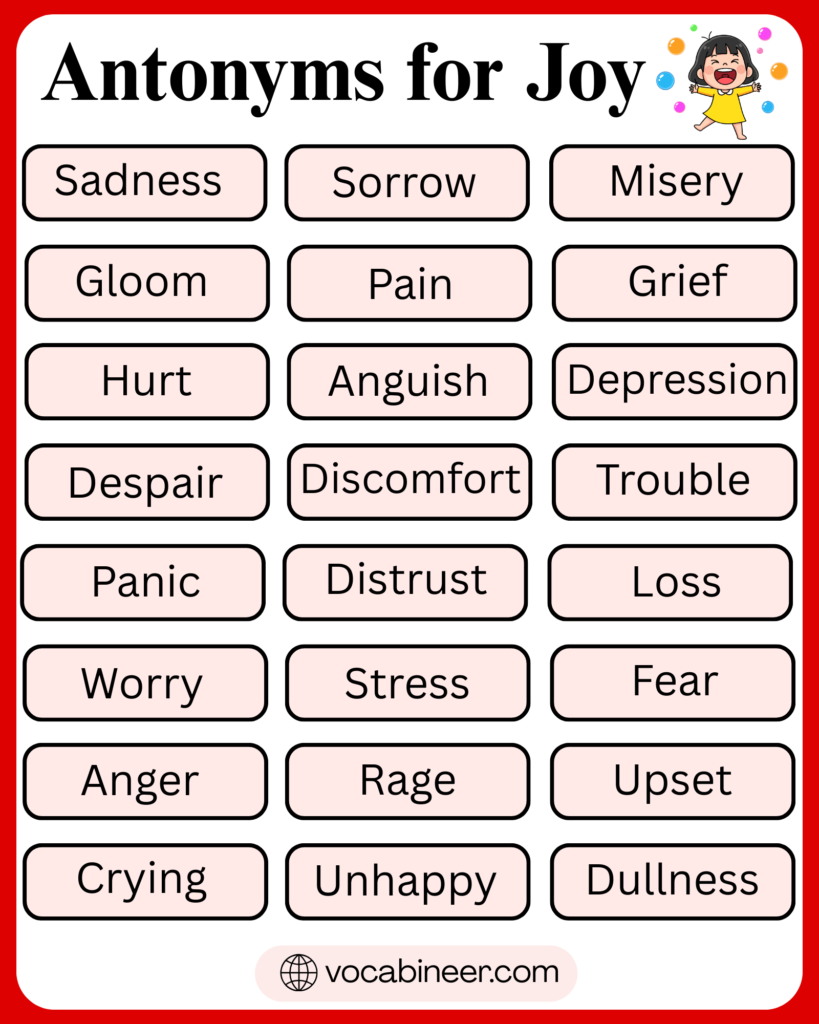
Emotional Antonyms of Joy
Some antonyms of joy focus strongly on emotions. These words describe feelings that replace happiness with sadness or emotional discomfort.
- Sad: Feeling unhappy or low in mood.
- Mournful: Showing deep sadness or grief.
- Depressed: Feeling heavy sadness and lack of energy.
- Upset: Emotionally disturbed or troubled.
- Lonely: Feeling isolated or emotionally disconnected.
- Anguished: Experiencing intense emotional pain.
Mental Antonyms of Joy
Some antonyms of joy describe mindset rather than feeling alone. These words focus on thoughts and emotional outlook when happiness is missing.
- Pessimistic: Expecting negative outcomes instead of happiness.
- Disheartened: Losing emotional strength or encouragement.
- Hopeless: Feeling that joy or improvement is impossible.
- Dismayed: Shocked or disappointed emotionally.
- Discouraged: Losing motivation or positive feeling.
Words Related to Sadness and Emotional Pain
Some words do not directly replace joy but often appear alongside its antonyms. They help describe situations where happiness fades or disappears.
- Loss: Something important being taken away.
- Failure: An outcome that removes happiness or pride.
- Disappointment: Sadness caused by unmet expectations.
- Pain: Emotional suffering or hurt.
- Regret: Sad feeling about past actions or events.
Joy vs Similar Words
Joy describes a deep and lasting feeling of happiness, delight, or emotional satisfaction. It often goes beyond a brief smile or moment of comfort and reflects inner contentment or fulfillment. Joy can be emotional, personal, and meaningful, especially during positive life events.
Joy vs Happiness
Happiness is a general feeling of being pleased or satisfied. Joy is often deeper and more intense, sometimes connected to meaningful experiences. Happiness can be temporary, while joy often feels more lasting.
Joy vs Pleasure
Pleasure refers to enjoyment or satisfaction, usually physical or short-term. Joy is more emotional and heartfelt. Pleasure may come from small comforts, but joy usually comes from meaningful moments.
Joy vs Excitement
Excitement is a strong feeling of enthusiasm or energy, often caused by anticipation. Joy feels calmer and more settled. Excitement may fade quickly, while joy tends to stay longer.
Joy vs Fun
Fun describes light enjoyment or amusement. Joy feels deeper and more emotional. Fun may make someone laugh, but joy touches feelings more strongly.
Joy vs Contentment
Contentment means being quietly satisfied and at peace. Joy is more expressive and emotionally uplifting. Contentment is calm, while joy often feels brighter.
Antonyms for Joy in Sentences
Seeing antonyms used in sentences helps learners understand how these words work naturally in English.
- After the bad news, her joy turned into sadness.
- The family felt deep grief after the loss.
- His face showed sorrow, not joy.
- She lived in constant misery after the failure.
- The sudden change filled him with despair.
- The room felt heavy with gloom.
How to Choose the Right Antonym for Joy
Choosing the right antonym for joy depends on what kind of feeling you want to express. If the situation shows emotional pain or sadness, words like sadness, sorrow, or grief fit best. When the focus is on ongoing unhappiness, words such as misery or despondency are more accurate.
If the emphasis is on mental outlook or reaction, words like discouraged, dismayed, or hopeless work better. Thinking about whether the situation reflects emotion, duration, or mindset helps you select the most natural and precise antonym for joy.
Conclusion
Understanding antonyms for joy helps readers recognize how English expresses sadness, emotional pain, and lack of happiness. These words appear across stories, school texts, and conversations, shaping emotional meaning. Learning them through explanation and sentence use builds stronger emotional vocabulary and clearer expression.
Read More
