

Learning antonyms for love helps readers understand how English expresses dislike, emotional distance, or lack of affection instead of care and attachment. When love fades or is absent, language changes to show coldness, resentment, or emotional separation, making shifts in tone and relationship clear. These opposite words appear often in stories, school texts, conversations, and descriptive writing, shaping how relationships, emotions, and reactions are clearly communicated and helping readers recognize emotional contrast more accurately.
In This Page
Meaning of Love in English
Love describes a strong feeling of affection, care, or deep attachment toward a person, object, or idea. It can express emotional warmth, kindness, loyalty, or strong personal connection. Love appears in many forms, including family love, friendship, and romantic love.
When love is missing or replaced, English uses different words to express dislike, emotional distance, or negative feeling. Knowing what love means makes its antonyms easier to understand and use correctly.
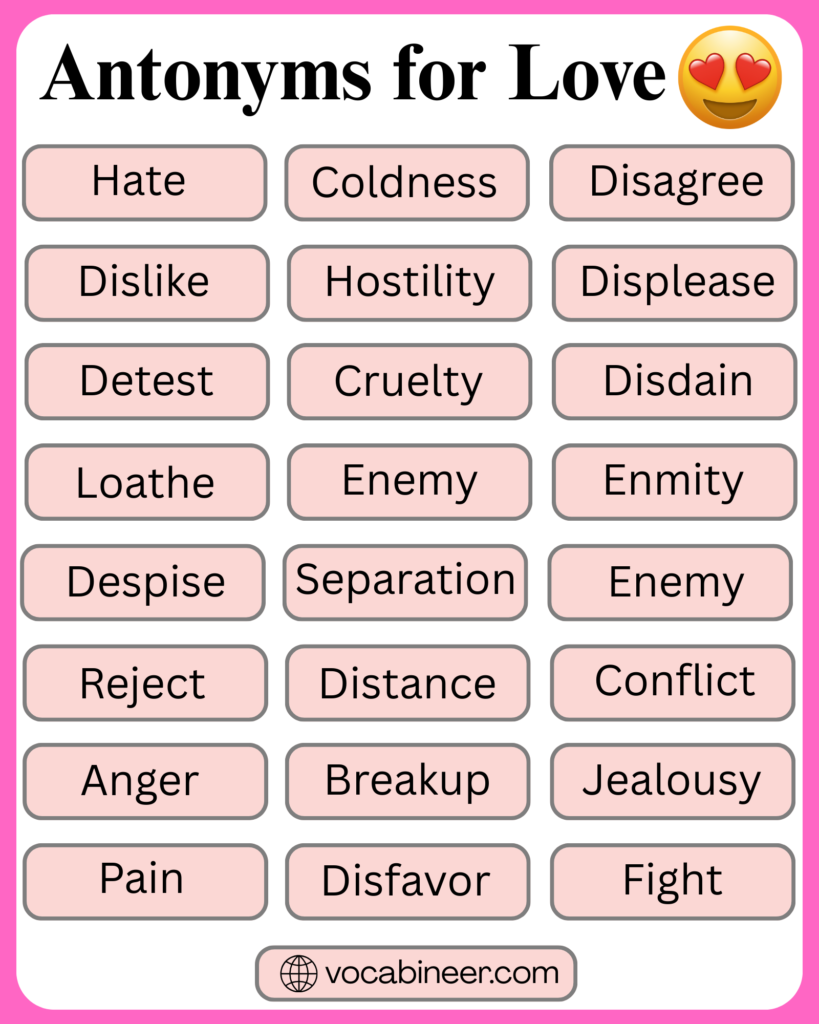
Common Antonyms for Love With Meanings
Some words clearly express the opposite of love by showing dislike, emotional distance, or rejection instead of care and attachment. These antonyms appear often in reading passages, school writing, conversations, and descriptive texts, especially when relationships weaken or turn negative.
- Hate: Strong and intense dislike toward someone or something.
- Dislike: Lack of fondness or mild negative feeling.
- Aversion: Strong desire to avoid something or someone.
- Indifference: Absence of interest, care, or emotional involvement.
- Hostility: Open unfriendliness or anger toward others.
- Resentment: Bitter feeling caused by past hurt or unfair treatment.
- Contempt: Feeling of disrespect or strong disapproval.
- Detachment: Emotional separation or lack of close feeling.
- Coldness: Lack of warmth or affection.
- Rejection: Refusal to accept or care for someone emotionally.
- Apathy: Lack of emotion, concern, or interest.
- Animosity: Strong dislike or hostility.
- Disgust: Strong feeling of rejection or dislike.
- Alienation: Feeling emotionally separated or distant.
- Neglect: Failure to give care or attention.
Emotional Antonyms of Love
Some antonyms of love focus mainly on emotions. These words describe feelings that replace affection with negative emotion or emotional emptiness.
- Hate: Deep emotional dislike.
- Anger: Strong negative emotion toward someone.
- Bitterness: Long-lasting emotional resentment.
- Jealousy: Negative feeling caused by insecurity or comparison.
- Animosity: Strong hostility or ill will.
- Disgust: Strong feeling of rejection or dislike.
Mental Antonyms of Love
Some antonyms of love describe mindset rather than feeling alone. These words focus on emotional distance, lack of care, or emotional withdrawal.
- Indifference: Mental state of not caring.
- Apathy: Lack of emotional response or interest.
- Detachment: Mentally separating from emotional involvement.
- Coldness: Emotionally distant thinking.
- Disinterest: Lack of attention or concern.
Words Related to Emotional Distance and Rejection
Some words do not directly replace love but help describe situations where affection fades or disappears. These words often appear alongside antonyms of love to add clarity.
- Distance: Emotional or relational separation.
- Isolation: Being emotionally apart from others.
- Neglect: Failure to care or give attention.
- Abandonment: Leaving someone emotionally or physically.
- Separation: Ending closeness or attachment.
Love vs Similar Words
Love
Love expresses deep affection, care, or emotional attachment. It involves warmth, concern, and emotional connection that goes beyond liking.
Love vs Like
Like shows enjoyment or preference. Love is deeper and more emotionally committed. Liking can be casual, while love suggests stronger attachment.
Love vs Affection
Affection refers to gentle care or fondness. Love includes affection but also deeper emotional bonds and commitment.
Love vs Desire
Desire focuses on wanting something strongly. Love includes care and concern, while desire may focus on attraction alone.
Love vs Attachment
Attachment describes emotional connection. Love includes attachment but also involves care, warmth, and emotional investment.
Antonyms for Love in Sentences
Seeing antonyms used in sentences helps learners understand how these words fit naturally into English.
- His feelings turned from love to hate.
- She showed indifference instead of affection.
- Years of conflict caused deep resentment.
- His tone sounded cold and full of hostility.
- The decision led to emotional detachment.
- She felt rejected after the argument.
How to Choose the Right Antonym for Love
Choosing the right antonym for love depends on the kind of opposite feeling you want to express. If the situation shows strong negative emotion, words like hate, anger, or contempt are the best fit. When the focus is on emotional distance or lack of care, words such as indifference, apathy, or detachment are more accurate.
If the emphasis is on hurt feelings or lasting bitterness, words like resentment or hostility work better. Thinking about whether the situation shows dislike, distance, or rejection helps you select the most natural and precise antonym for love.
Conclusion
Understanding antonyms for love helps readers recognize how English expresses dislike, emotional distance, and lack of affection. These words appear across stories, school texts, and conversations, shaping how relationships and emotions are described. Learning them through explanation and sentence use builds stronger emotional vocabulary and clearer expression.
Read More
