

Learning the antonyms for peace helps readers understand how calm, harmony, and stability change when tension or disturbance is present. Peace often connects to quiet conditions, agreement, and emotional balance, while its opposites point to conflict, unrest, or violence. These contrasts appear frequently in reading passages, history lessons, and everyday situations where relationships or environments feel unsettled.
This article explains how antonyms for peace work in different situations involving people, emotions, society, and surroundings. Knowing these opposite words helps learners talk about tension, disagreement, disturbance, and lack of calm in school and daily communication.
In This Page
What Does Peace Mean in English?
The word peace is used in English to describe a state of calm, quiet, or freedom from conflict. It can refer to peaceful places, peaceful relationships, inner peace, or peaceful societies. When peace exists, there is harmony and balance. When peace is missing, disturbance or conflict appears. Because the meaning of peace changes by context, its opposite words also change depending on use.
Common Antonyms for Peace With Meanings
Conflict
Conflict means a serious disagreement or struggle between people, groups, or ideas, where calm and harmony are absent.
War
War refers to armed fighting between nations or large groups, representing the complete opposite of peace.
Violence
Violence is the use of force that causes harm, damage, or injury, breaking peaceful conditions.
Unrest
Unrest describes a situation without calm or stability, often involving public disturbance or dissatisfaction.
Disturbance
Disturbance means an interruption of quiet or peace, causing disorder or disruption.
Chaos
Chaos refers to complete disorder and lack of control, where peace and structure are missing.
Turmoil
Turmoil describes a state of great confusion, disturbance, or emotional upset.
Tension
Tension means mental, emotional, or social strain that prevents a peaceful state.
Hostility
Hostility refers to angry, unfriendly behavior that creates conflict instead of peace.
Aggression
Aggression means forceful or hostile actions that disturb calm relationships or settings.
Discord
Discord describes lack of agreement or harmony between people or ideas.
Strife
Strife refers to bitter conflict, struggle, or disagreement over time.
Uproar
Uproar means loud noise or disorder that destroys peace and quiet.
Anxiety
Anxiety is inner unease or worry that prevents emotional peace.
Instability
Instability describes lack of steady calm or balance, leading to uncertainty and disorder.
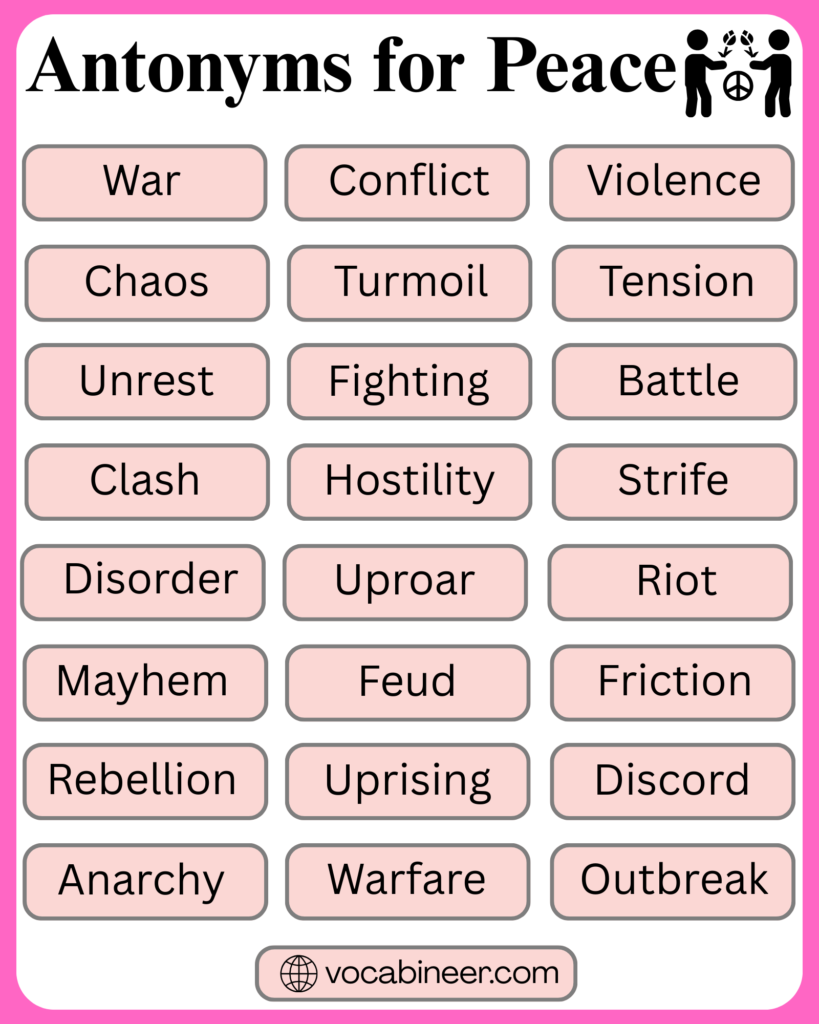
Antonyms for Peace by Context
The opposite of peace can change depending on what kind of peace you’re talking about, such as social peace, emotional peace, or environmental calm. Choosing the right antonym helps your meaning stay clear and accurate.
Social and Political Situations
When peace refers to society or nations, antonyms describe conflict and disorder.
- War – armed conflict
- Unrest – public disturbance
- Conflict – disagreement
- Strife – ongoing struggle
- Instability – lack of order
Emotional and Mental State
When peace refers to inner calm, antonyms describe mental disturbance.
- Anxiety – mental unease
- Tension – emotional strain
- Stress – pressure
- Fear – lack of calm
- Turmoil – emotional disturbance
Environment and Surroundings
When peace refers to quiet places, antonyms focus on noise or disruption.
- Disturbance – interruption
- Uproar – loud disorder
- Chaos – noisy confusion
- Clamor – loud noise
- Commotion – sudden disturbance
Relationships and Interaction
When peace refers to relationships, antonyms describe disagreement.
- Discord – lack of harmony
- Hostility – unfriendly behavior
- Aggression – forceful actions
- Conflict – opposing views
- Strain – tension in relations
Peace vs Similar Words
Understanding peace vs similar words helps readers choose the correct term when talking about calm, harmony, or emotional balance. Some words focus on quiet surroundings, while others describe inner calm or stable relationships. The table below explains how these words differ in meaning and use.
| Word | Meaning & Usage |
|---|---|
| Peace | State of calm or freedom from conflict. |
| Calm | Quiet and relaxed condition without disturbance. |
| Harmony | Peaceful agreement or balance between people or ideas. |
| Tranquility | Deep and steady calm, often in surroundings. |
| Serenity | Peaceful state of mind without stress. |
| Stillness | Absence of movement or sound. |
| Stability | Condition of steady peace and balance. |
| Ease | Freedom from worry or tension. |
| Quiet | Lack of noise or disturbance. |
| Balance | Emotional or social calm without extremes. |
How to Choose the Right Antonym for Peace
Choosing the right antonym for peace depends on context. For social or political settings, war, conflict, or unrest fits best. When describing emotions, anxiety, stress, or tension works naturally. For environments, disturbance or uproar is more accurate. Thinking about where calm is missing helps select the correct opposite.
Conclusion
Understanding antonyms for peace helps you describe situations where calm, harmony, or stability is absent. Whether you are talking about social conflict, emotional tension, noisy surroundings, or strained relationships, knowing the right opposite words makes communication clearer and more precise in everyday learning and communication.
Read More
