

Learning the antonyms for strong helps readers understand how power, force, ability, and intensity change when strength is reduced. Strong often connects to physical power, firm emotions, loud impact, or clear influence, while its opposites point to weakness, softness, fragility, or low intensity. These contrasts appear frequently in reading passages, classroom explanations, and daily descriptions where ability or force matters.
This article explains how antonyms for strong work in different situations involving people, objects, emotions, and conditions. Knowing these opposite words helps learners talk about weak muscles, gentle actions, mild feelings, and fragile materials in school and everyday communication.
In This Page
What Does Strong Mean in English?
The word strong is used in English to describe something having great power, force, or intensity. It can refer to a strong person, strong wind, strong emotion, strong argument, or strong material. A strong person has power, strong wind blows with force, and a strong idea has clear impact. Because the meaning of strong changes by context, its opposite words also change depending on use.
Common Antonyms for Strong With Meanings
Understanding opposites of strong helps readers describe people, objects, emotions, and effects that lack power, firmness, or intensity. These words are commonly used in school texts and everyday descriptions where strength is reduced or missing.
- Weak: Lacking physical power, force, or ability.
- Feeble: Very weak and easily tired or affected.
- Frail: Physically weak or delicate in build.
- Fragile: Easily broken or damaged.
- Soft: Not firm, forceful, or powerful.
- Mild: Not strong in effect, taste, or feeling.
- Gentle: Soft and not forceful in action or behavior.
- Delicate: Easily harmed or damaged by pressure.
- Flimsy: Weakly made and not solid.
- Light: Not heavy or powerful.
- Thin: Lacking thickness or strength.
- Faint: Weak and barely noticeable.
- Unstable: Not firm or strong enough to support.
- Breakable: Able to be broken easily.
- Vulnerable: Easily harmed or affected by force or influence.
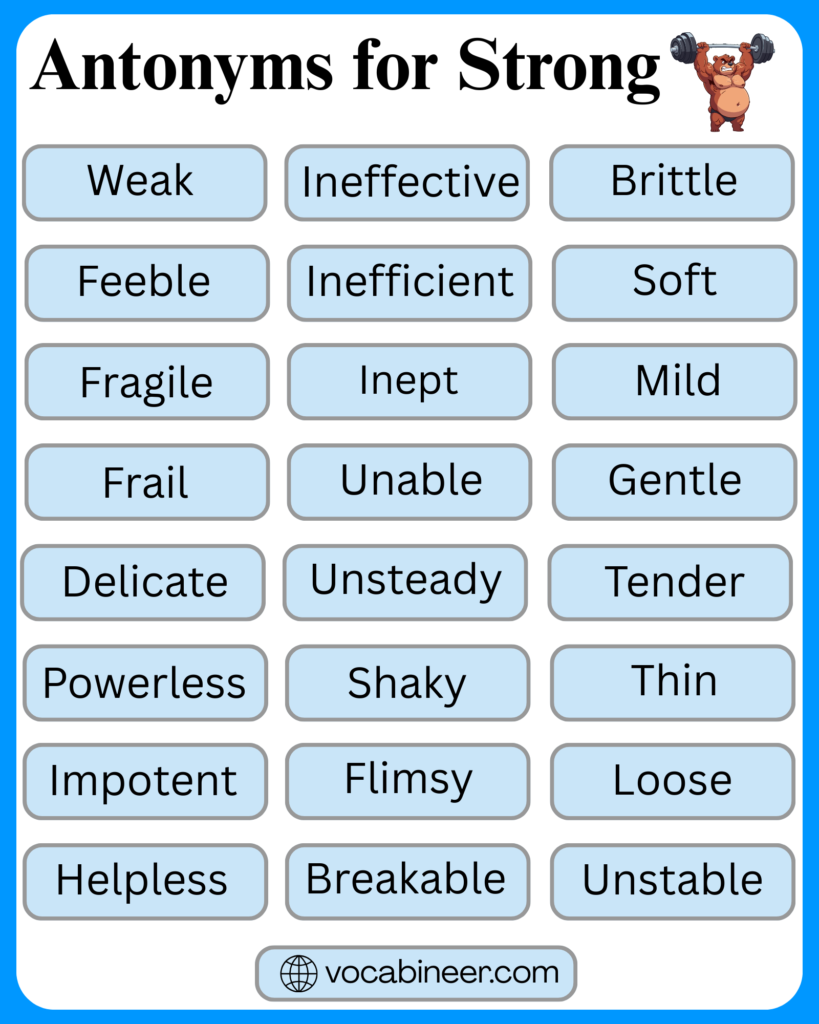
Antonyms for Strong by Context
The opposite of strong can change depending on what kind of strength you’re talking about, such as physical power, emotion, material, or influence. Choosing the right antonym helps your meaning stay clear and accurate.
Physical Strength and Power
When strong refers to physical power, antonyms describe lack of force or ability.
- Weak – lacking power
- Feeble – very weak
- Frail – physically delicate
- Fragile – easily broken
- Unfit – not physically strong
Materials and Objects
When strong describes materials, antonyms focus on weakness or poor structure.
- Flimsy – weakly built
- Breakable – easy to damage
- Thin – lacking strength
- Brittle – breaks easily
- Delicate – easily harmed
Emotions and Effects
When strong refers to feelings, tastes, or effects, antonyms describe low intensity.
- Mild – not intense
- Soft – gentle in effect
- Faint – barely noticeable
- Light – not heavy or strong
- Subtle – not forceful
Influence, Will, and Control
When strong refers to influence, will, or control, antonyms suggest lack of firmness.
- Weak-willed – lacking determination
- Passive – not forceful
- Uncertain – lacking firmness
- Vulnerable – easily affected
- Unstable – not firm or steady
Strong vs Similar Words
Understanding strong vs similar words helps readers choose the right term based on power, force, durability, or intensity. Some words focus on physical strength, while others describe influence, structure, or effect. The table below explains how these words differ in meaning and use.
| Word | Meaning & Usage |
|---|---|
| Strong | Having power, force, or intensity. |
| Powerful | Having great force or influence. |
| Tough | Able to endure pressure or hardship. |
| Solid | Firm and well built, not easily broken. |
| Sturdy | Strong and steady in structure. |
| Forceful | Using power or pressure strongly. |
| Robust | Healthy and strong in body or build. |
| Intense | Very strong in feeling or effect. |
| Firm | Strong but controlled and steady. |
| Durable | Able to last without damage. |
How to Choose the Right Antonym for Strong
Choosing the right antonym for strong depends on context. For people or physical power, weak, frail, or feeble fit best. When describing materials, fragile, flimsy, or brittle are more accurate. For emotions or effects, mild, soft, or faint works naturally. Thinking about what kind of strength is missing helps select the correct opposite.
Conclusion
Understanding antonyms for strong helps you describe people, objects, emotions, and conditions that lack power or intensity. Whether you are talking about a weak person, fragile object, mild feeling, or unstable structure, knowing the right opposite words makes communication clearer and more precise in everyday learning and communication.
Read More
