

Learning the antonyms for truth helps readers understand how facts, honesty, and accuracy change when reality is hidden or distorted. Truth often connects to correctness, honesty, and facts, while its opposites point to falsehood, deception, or incorrect information. These contrasts appear frequently in reading passages, classroom discussions, and everyday communication where accuracy and trust matter.
This article explains how antonyms for truth work in different situations involving facts, statements, beliefs, and information. Knowing these opposite words helps learners talk about lies, errors, misunderstandings, and misleading claims in school and daily communication.
In This Page
What Does Truth Mean in English?
The word truth is used in English to describe something that is real, correct, or based on facts. It can refer to truthful statements, honest behavior, factual information, or accurate beliefs. When truth is present, information matches reality. When truth is missing, confusion, error, or deception appears. Because the meaning of truth changes by context, its opposite words also change depending on use.
Common Antonyms for Truth With Meanings
Understanding opposites of truth helps learners notice how accuracy turns into error or dishonesty in daily communication. These words appear often in reading passages and classroom tasks.
Falsehood
Falsehood means something that is not true or does not match facts. It is often used for incorrect statements or claims.
Lie
A lie is a statement made with the intention to deceive. It involves knowingly saying something untrue.
Fiction
Fiction refers to information or stories that are invented rather than based on real facts.
Error
Error means a mistake that causes information to be wrong or inaccurate.
Inaccuracy
Inaccuracy describes a lack of correctness or precision in facts, details, or statements.
Deception
Deception is the act of misleading others by hiding, twisting, or changing the truth.
Untruth
Untruth refers to a statement or idea that is not true, whether intentional or accidental.
Fabrication
Fabrication means made-up information that is presented as if it were true.
Myth
A myth is a widely believed idea or story that is false or not supported by facts.
Illusion
Illusion describes a false appearance or belief that makes something seem true when it is not.
Distortion
Distortion means changing or twisting facts so they no longer represent the truth accurately.
Fallacy
A fallacy is a false idea or belief based on incorrect reasoning.
Misrepresentation
Misrepresentation refers to giving a false or misleading description of facts or events.
Fraud
Fraud means intentional deception used to gain advantage or cause loss to others.
Hoax
A hoax is a deliberate trick or false story created to deceive people.
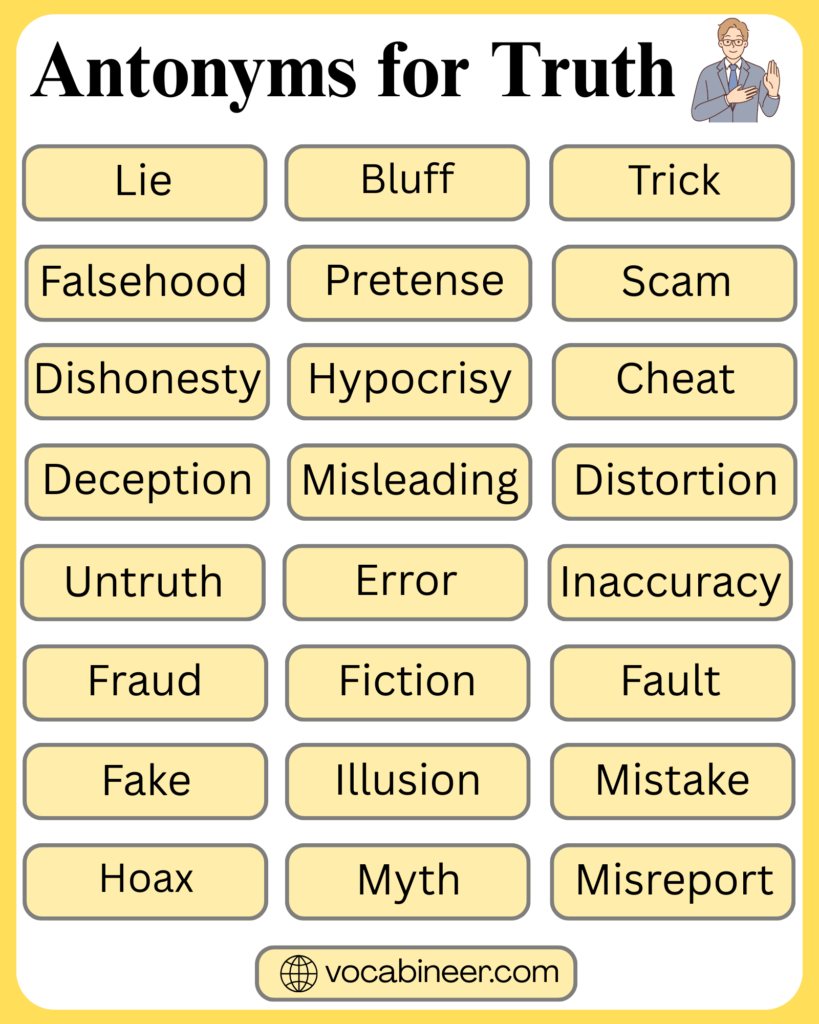
Antonyms for Truth by Context
The opposite of truth can change depending on what kind of truth you’re talking about, such as facts, honesty, belief, or information. Choosing the right antonym helps your meaning stay clear and accurate.
Facts and Information
When truth refers to facts, antonyms describe incorrect or false information.
- Falsehood – not true
- Error – incorrect fact
- Inaccuracy – lack of precision
- Distortion – changed facts
- Fabrication – invented facts
Honesty and Behavior
When truth refers to honesty, antonyms describe deception.
- Lie – dishonest statement
- Deception – misleading behavior
- Fraud – intentional cheating
- Hoax – planned trick
- Misrepresentation – false presentation
Beliefs and Ideas
When truth refers to beliefs, antonyms describe false ideas.
- Myth – false belief
- Fallacy – incorrect reasoning
- Illusion – misleading idea
- Fiction – invented story
- Untruth – false claim
Communication and Media
When truth refers to communication, antonyms focus on misleading messages.
- Propaganda – misleading information
- Misinformation – wrong information
- Disinformation – intentionally false information
- Spin – twisted facts
- Rumor – unverified information
Truth vs Similar Words
Understanding truth vs similar words helps readers choose the correct term when talking about facts, honesty, or accuracy. Some words focus on proven information, while others describe sincerity or correctness. The table below explains how these words differ in meaning and use.
| Word | Meaning & Usage |
|---|---|
| Truth | Fact or reality as it really exists. |
| Fact | Information that is proven to be true. |
| Reality | The actual state of things. |
| Honesty | Telling the truth without deception. |
| Accuracy | Being correct and free from errors. |
| Validity | Being logically or factually sound. |
| Authenticity | Being real, genuine, or original. |
| Sincerity | Honest intention or feeling. |
| Correctness | Freedom from mistake or error. |
| Veracity | Quality of being truthful. |
How to Choose the Right Antonym for Truth
Choosing the right antonym for truth depends on context. For factual errors, falsehood or inaccuracy fits best. When talking about dishonest behavior, lie or deception works naturally. For beliefs or ideas, myth or fallacy is more accurate. Thinking about how truth is missing helps select the correct opposite.
Conclusion
Understanding antonyms for truth helps you describe situations where facts, honesty, or accuracy are missing. Whether you are talking about lies, errors, myths, or misleading information, knowing the right opposite words makes communication clearer and more precise in everyday learning and communication.
Read More
