Baking tools names come up when people measure ingredients, prepare dough, bake items in the oven, and finish baked goods. These names appear in recipes, kitchens, baking classes, and everyday conversations, yet many tools look similar or are called by different names in different places. Knowing the correct baking tools names makes it easier to match each name with the tool’s shape, role, and place in the baking process.
This article explains baking tools names in a clear, organized way so readers can recognize tools easily, understand how they are mentioned in recipes, and talk more clearly about baking tasks at home, while learning, or in professional kitchens.
In This Page
Basic Baking Tools Names
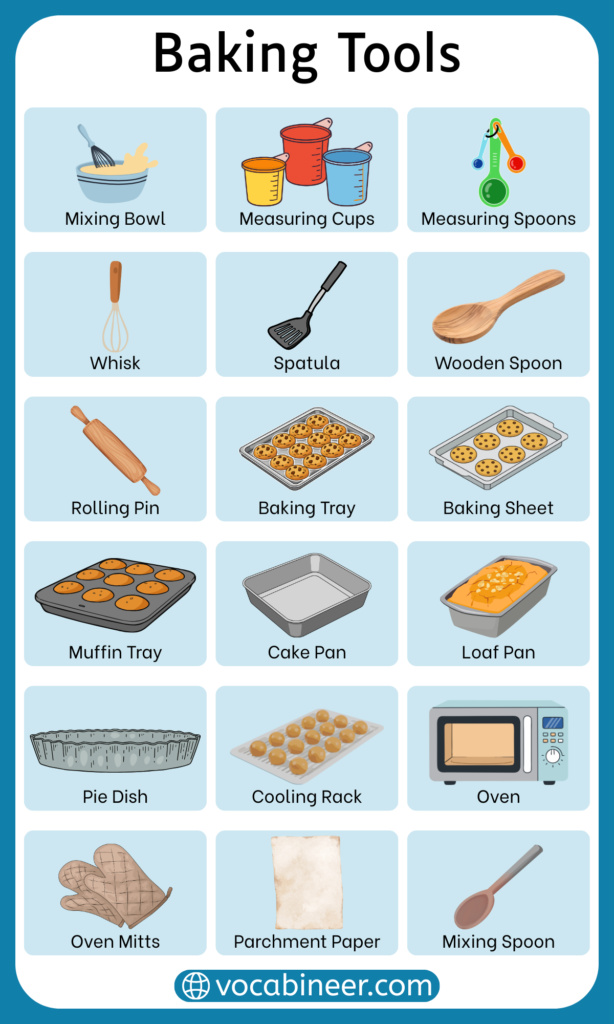
Most people begin baking with a small set of tools that appear in nearly every kitchen. These tools are easy to recognize and are used in simple baking tasks like measuring, mixing, and shaping ingredients. Learning these baking tools names first helps readers follow recipes and understand basic baking steps without confusion.
- Mixing Bowl: Holds ingredients while they are mixed together.
- Measuring Cup: Measures dry or liquid ingredients accurately.
- Measuring Spoon: Measures small amounts like salt, sugar, or baking powder.
- Whisk: Blends ingredients smoothly and adds air to mixtures.
- Spatula: Scrapes bowls and folds batter gently.
- Rubber Scraper: Cleans bowls and helps mix thick batter evenly.
- Wooden Spoon: Stirs batter and dough without damaging bowls.
- Rolling Pin: Flattens dough to an even thickness.
- Baking Pan: Holds batter or dough while baking in the oven.
- Cake Pan: Used specifically for baking cakes.
- Muffin Pan: Bakes muffins or cupcakes evenly.
- Baking Tray: Supports cookies, pastries, or bread in the oven.
- Cooling Rack: Allows baked items to cool evenly from all sides.
- Oven Mitt: Protects hands from heat when handling hot pans.
- Sifter: Removes lumps and adds air to flour or powdered sugar.
- Pastry Brush: Applies butter, oil, egg wash, or glaze.
- Cookie Cutter: Cuts dough into specific shapes.
- Dough Scraper: Lifts, divides, and moves dough cleanly.
- Kitchen Timer: Tracks baking time to avoid overbaking.
- Parchment Paper: Prevents sticking and makes cleanup easier.
Baking Tool Names Commonly Used at Home
In everyday home baking, people often use simple and familiar tool names when talking about baking tasks. These tools are used regularly for cakes, cookies, and bread, making their names easy to remember and widely understood.
- Mixing Bowl: Holds ingredients while they are combined and mixed evenly.
- Measuring Cup: Measures dry or liquid ingredients for everyday recipes.
- Measuring Spoon: Measures small amounts like baking powder or vanilla.
- Whisk: Blends ingredients smoothly and helps add air to mixtures.
- Spatula: Scrapes bowls and folds batter gently without overmixing.
- Wooden Spoon: Stirs thick batters and dough comfortably by hand.
- Rolling Pin: Flattens dough evenly for cookies and pastries.
- Baking Pan: Holds batter or dough while baking in the oven.
- Cake Pan: Used for baking round or square cakes at home.
- Muffin Pan: Bakes muffins or cupcakes in equal portions.
- Baking Tray: Supports cookies and pastries during baking.
- Cooling Rack: Allows baked items to cool without trapping moisture.
- Oven Mitt: Protects hands when removing hot pans from the oven.
- Sifter: Breaks up flour lumps and adds lightness to dry ingredients.
- Kitchen Timer: Helps track baking time accurately.
Baking Tools Names and Their Uses
Baking tools are designed to handle specific steps in the baking process, from measuring and mixing to baking and finishing. Knowing what each tool is used for makes recipes easier to follow and helps avoid mistakes during preparation.
- Mixing Bowl: Holds ingredients while they are mixed together smoothly.
- Measuring Cup: Measures dry or liquid ingredients accurately.
- Measuring Spoon: Measures small ingredient amounts like baking soda or salt.
- Whisk: Blends ingredients and adds air to batters.
- Spatula: Scrapes bowls and folds batter gently.
- Rubber Scraper: Cleans bowl sides and mixes thick batter evenly.
- Wooden Spoon: Stirs batters and dough without damaging cookware.
- Rolling Pin: Flattens dough to an even thickness.
- Baking Pan: Holds batter or dough while baking in the oven.
- Cake Pan: Shapes cakes during baking.
- Muffin Pan: Bakes muffins or cupcakes in equal portions.
- Baking Tray: Supports cookies and pastries during baking.
- Cooling Rack: Allows baked items to cool evenly.
- Oven Mitt: Protects hands from heat when handling hot pans.
- Sifter: Removes lumps and adds air to flour or sugar.
- Pastry Brush: Applies butter, egg wash, or glaze evenly.
- Dough Scraper: Lifts, divides, and moves dough easily.
- Kitchen Timer: Tracks baking time to prevent overbaking.
Measuring Tools Used in Baking
Accurate measuring is important in baking because small changes can affect the final result. These tools help measure ingredients in a consistent and reliable way.
Tools for Measuring Dry Ingredients
Dry ingredients are measured by filling and leveling rather than pouring. These tools help keep amounts accurate.
- Dry Measuring Cup: Measures flour, sugar, and similar ingredients.
- Measuring Spoon: Measures small dry amounts like baking soda or salt.
- Flour Scoop: Transfers flour into measuring cups without packing it down.
Tools for Measuring Liquid Ingredients
Liquids are measured at eye level to avoid mistakes. These tools are designed with clear markings.
- Liquid Measuring Cup: Measures water, milk, or oil accurately.
- Pouring Jug: Holds and pours liquids with better control.
- Measuring Spoon: Measures small liquid amounts like vanilla extract.
Baking Tools Used Before Putting Food in the Oven
Before anything goes into the oven, several tools are used to prepare ingredients, handle dough, and shape mixtures. These tools help bring ingredients together properly so baking results turn out consistent and well-formed.
Tools Used for Mixing Batter and Dough
Mixing tools combine ingredients evenly and help create the right texture for batters and doughs. Some are used by hand, while others use light electric power.
- Mixing Bowl: Holds ingredients while they are stirred or blended together.
- Whisk: Blends liquids and dry ingredients while adding air.
- Wooden Spoon: Stirs thick batters and doughs without damaging bowls.
- Hand Mixer: Mixes ingredients quickly using electric beaters.
- Stand Mixer: Handles heavy mixing tasks with less effort.
- Rubber Spatula: Scrapes bowls and folds ingredients gently.
Tools Used for Kneading and Handling Dough
Kneading tools help develop dough structure and make it easier to shape and move. These tools are especially common in bread and pastry baking.
- Dough Scraper: Lifts, cuts, and moves sticky dough cleanly.
- Pastry Mat: Provides a clean surface for kneading and shaping dough.
- Stand Mixer with Dough Hook: Kneads dough using mechanical motion.
- Bench Knife: Divides dough into portions and cleans work surfaces.
- Flour Duster: Spreads flour lightly to prevent sticking.
Tools Used for Rolling, Cutting, and Shaping
Once dough is ready, shaping tools help form cookies, pastries, and crusts evenly. These tools control thickness, size, and appearance.
- Rolling Pin: Flattens dough to an even thickness.
- Cookie Cutter: Cuts dough into specific shapes.
- Pastry Wheel: Cuts dough edges cleanly or decoratively.
- Pie Crust Shield: Protects edges while shaping pie crusts.
- Mold: Shapes dough or batter into set forms.
Baking Pan and Bakeware Names
Bakeware holds batter or dough while it cooks and gives baked items their final shape. Different pans affect thickness, texture, and baking time, so knowing these names helps avoid confusion during baking.
Cake Pans and How They Are Different
Cake pans come in different shapes and depths, and each one creates a slightly different cake result.
- Round Cake Pan: Used for layered and frosted cakes.
- Square Cake Pan: Common for sheet-style cakes and brownies.
- Springform Pan: Has removable sides, often used for cheesecakes.
- Bundt Pan: Shaped pan used for decorative ring cakes.
- Tube Pan: Tall pan designed for light cakes like angel food cake.
Loaf Pans Used for Bread Baking
Loaf pans support dough while it rises and bakes, helping bread keep its shape.
- Loaf Pan: Used for bread, pound cake, and quick breads.
- Pullman Pan: A straight-sided loaf pan with a lid for square bread.
Muffin, Cupcake, and Baking Tray Names
These pans are designed to bake small portions evenly.
- Muffin Pan: Holds batter for muffins or cupcakes.
- Mini Muffin Pan: Used for bite-sized baked items.
- Cupcake Pan: Similar to muffin pans but often used with liners.
- Brownie Pan: Flat pan used for bars and square desserts.
Sheet Pans, Cookie Sheets, and Baking Trays
Flat pans are used for cookies, pastries, and roasted baked items.
- Sheet Pan: A rimmed pan used for baking and roasting.
- Cookie Sheet: Flat pan without rims, used mainly for cookies.
- Baking Tray: General term for flat pans used in ovens.
Baking Tools Used While Baking
While baking is in progress, certain tools help check doneness and handle hot items safely.
- Oven Mitt: Protects hands from heat when handling pans.
- Oven Thermometer: Checks oven temperature accuracy.
- Timer: Tracks baking time to prevent overbaking.
- Basting Brush: Applies butter or glaze during baking.
Baking Tools Used After Baking
After baking, tools help cool, remove, and finish baked items without damage.
Tools Used for Cooling Baked Items
Cooling tools prevent moisture buildup and help baked goods set properly.
- Cooling Rack: Allows air to circulate under baked items.
- Wire Rack: Used to cool cakes, cookies, and bread evenly.
Tools Used for Decorating and Finishing
Finishing tools add final touches once baked items are cooled.
- Icing Spatula: Spreads frosting smoothly on cakes.
- Piping Bag: Decorates cakes and pastries with icing.
- Pastry Brush: Applies glaze or syrup after baking.
- Sifter: Dusts powdered sugar or cocoa evenly.
Baking Tools Grouped by Material
Baking tools are often made from different materials, and each material affects heat, flexibility, and ease of use. Knowing these material differences helps bakers choose the right tool for specific baking tasks.
Metal Baking Tools
Metal tools are strong and conduct heat well, making them common in everyday baking.
- Aluminum Baking Pan: Heats evenly and is widely used for cakes and cookies.
- Steel Baking Sheet: Holds its shape and works well for high temperatures.
- Metal Mixing Bowl: Durable and suitable for heavy mixing.
- Metal Cooling Rack: Supports baked items while allowing airflow underneath.
Silicone Baking Tools
Silicone tools are flexible and non-stick, which makes them easy to use and clean.
- Silicone Spatula: Scrapes bowls without scratching surfaces.
- Silicone Baking Mat: Replaces parchment paper on baking trays.
- Silicone Muffin Mold: Releases baked items easily without greasing.
- Silicone Pastry Brush: Applies butter or glaze smoothly.
Glass and Ceramic Baking Tools
Glass and ceramic tools retain heat well and are often used for slow, even baking.
- Glass Baking Dish: Common for casseroles and baked desserts.
- Ceramic Pie Dish: Holds heat evenly for pie baking.
- Ceramic Mixing Bowl: Used for mixing and serving.
Baking Tools Chosen by Experience Level
Baking tools often vary based on skill and baking frequency. Beginners usually prefer simple tools, while experienced bakers use more specialized equipment.
Baking Tools Beginners Often Start With
These tools cover basic baking needs and are easy to handle.
- Measuring Cups and Spoons
- Mixing Bowl
- Whisk
- Spatula
- Baking Pan
- Cooling Rack
Baking Tools Used for Regular Home Baking
Home bakers often add tools that improve speed and consistency.
- Hand Mixer
- Rolling Pin
- Muffin Pan
- Cake Pan
- Sifter
Baking Tools Used in Professional Bakeries
Professional kitchens rely on tools designed for accuracy and repeated use.
- Stand Mixer
- Digital Kitchen Scale
- Commercial Baking Sheets
- Bench Scraper
- Large Cooling Racks
Baking Tools That Look Similar but Do Different Jobs
Some baking tools look almost the same, which often causes confusion in kitchens. Small differences in shape, depth, or design change how these tools work and when they should be used. The table below explains common baking tools that appear similar but serve different purposes.
| Tool Pair | Why They Look Similar | How Their Jobs Are Different |
|---|---|---|
| Measuring Cup vs Liquid Measuring Cup | Both are used to measure ingredients | A measuring cup for dry ingredients is filled and leveled, while a liquid measuring cup is read at eye level |
| Baking Tray vs Baking Pan | Both go into the oven | A baking tray is flat for cookies, while a baking pan has sides to hold batter |
| Cookie Sheet vs Sheet Pan | Both are flat metal pans | A cookie sheet has no sides, while a sheet pan has raised edges |
| Spatula vs Rubber Scraper | Both are flat and flexible tools | A spatula spreads and lifts, while a rubber scraper folds batter and cleans bowls |
| Whisk vs Beater | Both mix ingredients | A whisk is used by hand, while a beater is part of an electric mixer |
| Muffin Pan vs Cupcake Pan | Both have round cup shapes | Muffin pans are deeper, while cupcake pans are often used with liners |
| Loaf Pan vs Cake Pan | Both hold batter in the oven | A loaf pan is narrow and deep, while a cake pan is wider and shallower |
| Rolling Pin vs Dough Roller | Both roll dough flat | A rolling pin is manual, while a dough roller may be adjustable or mechanical |
| Sifter vs Strainer | Both have mesh designs | A sifter adds air to dry ingredients, while a strainer mainly removes solids from liquids |
Baking Tool Names People Often Mix Up
Some baking tools are often confused because they look similar or are used during the same step. Knowing the correct names helps avoid mistakes when following recipes or shopping for bakeware.
- Spatula and Rubber Scraper: A spatula spreads and lifts, while a rubber scraper folds and cleans bowls.
- Measuring Cup and Liquid Measuring Cup: One is meant to be leveled for dry ingredients, the other is read at eye level for liquids.
- Cookie Sheet and Baking Sheet: A cookie sheet is flat, while a baking sheet usually has raised edges.
- Muffin Pan and Cupcake Pan: They look alike, but cupcake pans are often used with liners for lighter batters.
- Loaf Pan and Bread Tin: These names are often used interchangeably, but both refer to pans for baking bread.
- Whisk and Beater: A whisk mixes by hand, while a beater is usually part of an electric mixer.
Common FAQs About Baking Tools
Beginners usually need mixing bowls, measuring cups, measuring spoons, a whisk, a spatula, a baking pan, and a cooling rack.
Yes. Baking tools focus on measuring, mixing, shaping, and oven use, while cooking tools are mainly used on the stove.
Baking depends on exact ingredient amounts, so measuring tools help keep texture and results consistent.
Some pans can be reused for different items, but size and depth often affect baking time and results.
A baking tray is usually flat, while a baking pan has raised sides to hold batter.
No. Most home baking can be done with basic tools, while professional tools are designed for frequent and heavy use.
Conclusion
Baking tools names cover a wide range of items used before, during, and after baking. Understanding these names makes it easier to follow recipes, choose the right tools, and talk clearly about baking tasks. When tools are grouped by purpose, material, and experience level, learning baking tools becomes more organized and practical.
Read More