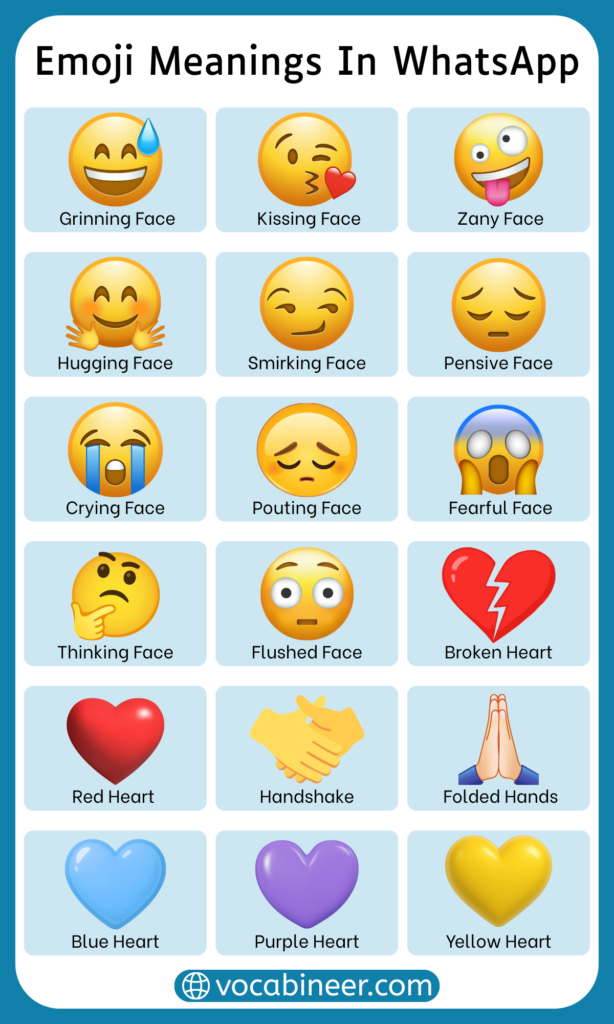
Emoji meanings in WhatsApp change with context, tone, timing, and how the conversation moves. A single emoji can express happiness, sarcasm, support, hesitation, or even discomfort, depending on when it appears. In quick chats, emojis often replace full sentences, so even small symbols carry strong emotional signals that shape how messages feel.
In this article, you’ll learn how emoji meanings shift across private chats, group conversations, short replies, and emotional moments. Understanding these patterns helps you read messages more naturally and respond in ways that match the mood and situation.
In This Page
What Emoji Mean in WhatsApp Chats?
In WhatsApp, emojis act as emotional signals that guide how a message should be read. They soften direct words, add warmth, express mood, and prevent misunderstandings. Because WhatsApp conversations move quickly, emojis often carry more emotional weight than full sentences.
They help show tone in short replies, signal reactions without long explanations, and express feelings that text alone may not communicate clearly. A single emoji can show agreement, hesitation, humor, concern, or emotional support, depending on placement and timing.
Below is a list of common emoji roles in WhatsApp chats:
- Emotion signaling: Shows feelings such as happiness, sadness, anger, excitement, or concern.
- Tone softening: Makes short messages sound polite, friendly, or gentle.
- Reaction expression: Responds quickly without typing full sentences.
- Conversation pacing: Keeps chats flowing smoothly with brief emotional feedback.
- Social bonding: Adds warmth and friendliness to everyday communication.
How Emoji Meaning Changes in WhatsApp Conversations?
Emoji meanings shift based on how messages are structured and exchanged. In WhatsApp, short replies, quick reactions, and ongoing message threads all influence interpretation. The same emoji may feel friendly in one situation and awkward in another.
A smiling emoji sent alone often feels warmer than the same emoji attached to a serious sentence. Similarly, a laughing emoji used after emotional news can feel insensitive, while the same emoji after a joke feels perfectly natural.
Below is a table showing how emoji meaning changes by message position:
| Emoji Placement | Meaning Shift | Typical Emotional Tone |
|---|---|---|
| At message start | Sets emotional mood | Friendly, warm, playful |
| At message end | Softens or emphasizes tone | Polite, gentle, reassuring |
| Used alone | Pure emotional reaction | Direct, expressive |
| In group replies | Social signaling | Supportive, engaging, polite |
| After serious text | Can change emotional reading | Comforting or awkward |
Most Used Emoji Meanings in WhatsApp
Certain emojis appear far more frequently in WhatsApp chats because they express universal emotions clearly and quickly. These commonly used emojis help maintain smooth conversation flow and emotional connection.
Below are the main categories of frequently used WhatsApp emojis:
Smiling and Happy Emoji Meanings in WhatsApp
Smiling emojis signal friendliness, warmth, comfort, and emotional ease. They are often used to soften messages and keep conversations light.
- Smiling face: Gentle happiness, polite friendliness, calm mood
- Smiling face with smiling eyes: Warm emotional comfort, kindness, appreciation
- Beaming face: Cheerful excitement, positive reaction, joyful tone
- Grinning face: Playful happiness, light humor, friendly teasing
- Blushing smile: Shy happiness, gratitude, soft appreciation
Laughing Emoji Meanings in WhatsApp
Laughing emojis express amusement, humor, playful teasing, and emotional release. They help show when something is genuinely funny.
- Face with tears of joy: Strong laughter, humorous reaction, playful exaggeration
- Rolling on the floor laughing: Extreme amusement, uncontrollable laughter
- Grinning squinting face: Light laughter, friendly humor
- Smiling face with sweat: Nervous laughter, awkward humor, mild embarrassment
Sad and Crying Emoji Meanings in WhatsApp
Sad emojis communicate emotional pain, sympathy, disappointment, or emotional vulnerability. They help express feelings gently without long explanations.
- Sad face: Mild disappointment, low mood, gentle sadness
- Pensive face: Reflective sadness, emotional thoughtfulness
- Crying face: Visible emotional pain, personal distress
- Loudly crying face: Deep sadness, grief, emotional overwhelm
Angry and Frustrated Emoji Meanings in WhatsApp
Angry and frustrated emojis show emotional tension, irritation, disappointment, or strong emotional reaction. In WhatsApp chats, these emojis often replace direct words that might sound harsh, allowing users to express emotion without starting conflict.
They are commonly used in moments of stress, emotional overload, disagreement, or strong reaction. The intensity of anger or frustration depends on facial expression, eyebrows, and mouth shape.
- Angry face: Clear irritation, emotional upset, or mild anger
- Pouting face: Strong frustration, emotional protest, or annoyance
- Face with symbols over mouth: Swearing, intense anger, or emotional explosion
- Confounded face: Emotional stress, irritation mixed with confusion
- Face with steam from nose: Determined frustration, stubborn anger, emotional pressure
Love and Heart Emoji Meanings in WhatsApp
Love and heart emojis communicate affection, emotional closeness, care, support, and appreciation. Their meaning can shift from romantic to friendly depending on color, pairing, and context.
In WhatsApp chats, heart emojis frequently appear in supportive messages, emotional bonding, encouragement, gratitude, and affectionate exchanges.
- Red heart: Deep love, emotional attachment, strong affection
- Pink hearts: Gentle love, sweetness, emotional warmth
- Sparkling heart: Excitement, emotional joy, affectionate admiration
- Growing heart: Emotional connection building, increasing affection
- Heart hands: Caring support, gratitude, emotional encouragement
- Blue heart: Trust, loyalty, calm affection
- Purple heart: Emotional care, admiration, sensitive connection
Hand Emoji Meanings in WhatsApp
Hand emojis play a major role in WhatsApp conversations because they express actions, reactions, approval, refusal, greetings, and emotional cues. They often replace short phrases like yes, stop, wait, okay, thank you, and no.
Common Hand Gestures Used in WhatsApp
These hand emojis represent everyday gestures that carry clear emotional meaning across chats.
- Waving hand: Greeting, goodbye, friendly acknowledgment
- Clapping hands: Praise, appreciation, celebration
- Folded hands: Gratitude, request, apology, respect
- Handshake: Agreement, partnership, acceptance
- Raised hands: Celebration, excitement, shared joy
Hand Emojis Showing Approval or Agreement
These emojis express confirmation, acceptance, encouragement, and support.
- Thumbs up: Approval, agreement, confirmation
- OK hand: Everything is fine, understood, accepted
- Victory hand: Success, positive outcome, encouragement
- Flexed biceps: Strength, motivation, support, confidence
Hand Emojis Showing Stop or Caution
These emojis communicate boundaries, warnings, hesitation, or polite refusal.
- Raised hand: Stop, pause, attention
- Palm facing out: No, wait, hold on
- Index finger pointing up: One moment, important point
- Crossed fingers: Hope, wish, nervous anticipation
Hand Emojis Showing Dislike or Refusal
These emojis indicate rejection, disagreement, or negative reaction.
- Thumbs down: Disapproval, rejection, dissatisfaction
- Crossed arms gesture: Strong refusal, emotional block
- Face palm gesture: Frustration, disbelief, disappointment
Emoji Meanings in WhatsApp by Emotional Tone
In WhatsApp chats, emotional tone often matters more than the emoji itself. The same emoji can feel warm, neutral, or even uncomfortable depending on the emotional setting of the conversation. Emotional tone is shaped by the topic, relationship, timing, and message length.
Understanding emotional tone helps readers interpret emoji intent more accurately and respond in ways that match the situation.
Friendly and Polite Emoji Meanings
These emojis create warmth, approachability, and emotional ease. They help maintain friendly conversation flow and prevent messages from sounding cold or blunt.
- Smiling face: Friendly greeting, polite response, light happiness
- Smiling face with smiling eyes: Warm appreciation, gentle kindness
- Waving hand: Friendly hello or goodbye
- Folded hands: Polite thanks, respectful request, gentle apology
- Clapping hands: Encouragement, praise, supportive reaction
Emotional and Sensitive Emoji Meanings
These emojis reflect emotional depth, vulnerability, comfort, and empathy. They are used when emotional awareness and softness are needed.
- Sad face: Mild emotional pain, gentle disappointment
- Crying face: Visible sadness, emotional hurt
- Heart emojis: Care, emotional support, reassurance
- Pensive face: Reflective emotion, thoughtful sadness
- Face with tearful eyes: Emotional vulnerability, sensitivity
Serious and Neutral Emoji Meanings
These emojis carry limited emotional warmth and are often used in professional or neutral chats.
- Neutral face: Calm acknowledgment, emotional restraint
- Thumbs up: Confirmation, acceptance, agreement
- Check mark style emojis: Task confirmation, acknowledgment
- Handshake: Agreement, professional acceptance
Emoji Meaning When Used Alone in WhatsApp
When an emoji appears without accompanying text, it carries stronger emotional impact. In WhatsApp, single-emoji messages function as direct emotional reactions rather than supportive cues.
A single emoji can express agreement, laughter, sympathy, hesitation, or refusal. Because there is no supporting text, the reader relies entirely on the symbol to interpret emotional tone.
Below are common meanings of emojis when used alone:
- Thumbs up alone: Clear approval, acknowledgment, agreement
- Laughing emoji alone: Strong amusement, humor reaction
- Crying emoji alone: Emotional sadness, vulnerability
- Heart emoji alone: Care, affection, emotional bonding
- Neutral face alone: Indifference, uncertainty, restrained response
Emoji Meaning When Used with Text in WhatsApp Messages
When emojis appear alongside text, they modify the emotional tone of the sentence. They soften commands, clarify intent, add warmth, or reduce emotional tension.
For example, a direct instruction may sound firm without an emoji, but gentle when paired with a smile. Similarly, emotional news paired with a heart or tear emoji changes how the message is received.
Below is a table showing how emojis shift meaning when combined with text:
| Emoji Placement | Tone Effect | Emotional Impact |
|---|---|---|
| After positive message | Enhances warmth | Encouraging, friendly |
| After serious statement | Softens tone | Gentle, supportive |
| Before emotional text | Sets mood | Emotional awareness |
| Mid-sentence placement | Adds emphasis | Expressive clarity |
Emoji Meanings in WhatsApp Group Chats
In group chats, emojis play a social role beyond individual emotion. They signal inclusion, agreement, humor, politeness, and emotional support across multiple participants.
Because many readers see the same message, emojis help manage tone, reduce tension, and keep conversations socially balanced.
Common emoji functions in group chats include:
- Agreement signaling: Thumbs up, clapping hands, check-style emojis
- Polite acknowledgment: Smiling faces, folded hands
- Humor sharing: Laughing emojis, playful expressions
- Support expression: Hearts, comforting faces
- Conversation flow control: Raised hand, pointing finger
How Emoji Meanings Change by Context in WhatsApp
Context is one of the strongest factors shaping emoji meanings in WhatsApp. The same emoji can feel caring, playful, awkward, or even rude depending on the topic, relationship, timing, and emotional situation. Short replies, delayed responses, and message history all influence how an emoji is interpreted.
In casual chats, emojis are often read generously. In emotional or serious conversations, they carry heavier meaning. For example, a smiling emoji after difficult news may feel uncomfortable, while a heart or gentle sad face feels supportive. Context also includes who is speaking. A close friend, family member, or coworker may each interpret the same emoji differently.
Common context-based meaning shifts include:
- After good news: Emojis usually express celebration, encouragement, or shared happiness
- After emotional news: Emojis often show sympathy, care, or emotional support
- During disagreement: Emojis can soften tone or intensify emotional reaction
- In fast replies: Emojis act as emotional shortcuts
- In delayed replies: Emojis may feel more intentional and emotionally weighted
Emoji Meanings That Can Feel Rude in WhatsApp
Some emojis may unintentionally appear rude, dismissive, or emotionally distant, especially in serious or emotional conversations. While these emojis are not inherently negative, their tone can shift depending on placement, timing, and emotional setting.
In sensitive conversations, emojis that feel playful or neutral can come across as cold or uncaring. In professional chats, overly casual emojis may feel inappropriate.
Common emojis that can feel rude when used poorly include:
- Thumbs up: Can feel abrupt, dismissive, or emotionally cold
- Laughing emoji: Can appear insensitive during emotional moments
- Neutral face: May suggest indifference or lack of care
- Face with sweat: Can imply awkward dismissal
- Rolling eyes: Signals frustration, sarcasm, or annoyance
Emoji Meanings People Often Misunderstand in WhatsApp
Some emojis look similar or share overlapping emotional signals, which makes confusion common. Small differences in eye shape, mouth curve, or tear placement can completely change emotional meaning.
Misunderstood emojis often lead to emotional misreading, awkward moments, or unclear reactions.
Below is a table showing common emoji confusion pairs:
| Emoji Pair | Common Confusion | Actual Meaning Difference |
|---|---|---|
| 🙂 vs 😊 | Politeness vs warmth | One feels formal, the other emotionally friendly |
| 😅 vs 😂 | Nervous laugh vs strong humor | One shows relief, the other shows intense amusement |
| 😢 vs 😭 | Sadness vs grief | One shows gentle sadness, the other shows heavy emotion |
| 😐 vs 😶 | Neutral vs speechless | One shows calm neutrality, the other emotional pause |
| 🙏 vs 🤲 | Gratitude vs offering | One expresses thanks, the other shows giving or requesting |
Emoji Confusion Pairs in WhatsApp Chats
Emoji confusion often happens because people respond quickly, glance briefly, or rely on emotional instinct rather than detailed observation. In fast-moving chats, subtle visual cues may be overlooked. Some confusion pairs include:
- Smiling face vs slightly smiling face: One suggests warmth, the other politeness
- Sad face vs pensive face: One expresses sadness, the other emotional reflection
- Face with steam from nose vs angry face: One shows frustration, the other direct anger
- Crying face vs loudly crying face: One shows visible sadness, the other emotional distress
Differences Between WhatsApp Emojis and Other Apps
Although emojis appear visually similar across platforms, subtle design differences can influence emotional perception. WhatsApp’s emoji design often emphasizes softer curves and expressive facial features, which can slightly shift emotional tone compared to other messaging platforms.
For example, a smiling emoji on WhatsApp may appear warmer than its version on another app. Similarly, a sad or crying emoji may look more emotionally expressive, affecting how the message is interpreted. These small visual variations can influence emotional response, especially in sensitive conversations.
Emoji Meanings in WhatsApp for Quick Understanding
In fast WhatsApp conversations, people often want instant emotional clarity. Quick-understanding sections help readers decode emoji meanings at a glance without stopping the conversation flow. These quick interpretations focus on emotional intent rather than technical definitions.
Below is a compact table that summarizes commonly used WhatsApp emojis and their typical meanings:
| Emoji Type | Common Meaning | Typical Chat Use |
|---|---|---|
| Smiling face | Friendly mood, polite tone | Greetings, light replies |
| Laughing face | Humor, amusement | Jokes, playful chats |
| Heart | Affection, care | Emotional bonding, support |
| Crying face | Sadness, emotional pain | Comforting messages |
| Thumbs up | Agreement, confirmation | Short replies, approval |
| Folded hands | Thanks, request, apology | Polite exchanges |
| Angry face | Frustration, irritation | Emotional reaction |
| Neutral face | Calm or reserved tone | Serious or formal chats |
Common Emoji Usage Mistakes in WhatsApp Chats
Even experienced users sometimes misuse emojis, leading to confusion or emotional misunderstanding. These mistakes usually happen due to speed, emotional mismatch, or lack of context awareness. Common mistakes include:
- Using laughing emojis in emotional conversations
- Sending neutral emojis in supportive situations
- Overusing emojis in professional or formal chats
- Using ambiguous emojis without clarifying text
- Relying solely on emojis for serious messages
When to Avoid Using Emojis in WhatsApp Messages
There are moments when emojis may weaken message clarity or emotional sensitivity. In serious, emotional, or professional situations, words often communicate more effectively than symbols. Avoid emojis when:
- Discussing sensitive emotional topics
- Sharing serious personal news
- Communicating professional instructions
- Addressing conflict or disagreement
- Giving formal feedback
Emoji Meanings in WhatsApp for Daily Messaging
In everyday WhatsApp use, emojis function as emotional shortcuts that help messages feel warmer, clearer, and more human. They express tone quickly and support smoother conversation flow. Daily messaging commonly uses emojis to:
- Greet friends and family
- Respond politely
- Express appreciation
- Share humor
- Show emotional support
FAQs About Emoji Meanings in WhatsApp
In WhatsApp, emojis mainly show emotion, reaction, and tone. They help express feelings, soften messages, and clarify intent in short replies, making conversations smoother and more emotionally clear.
Emoji meanings change because of context, timing, and message flow. The same emoji can feel friendly, serious, supportive, or awkward depending on the topic and emotional setting.
In professional chats, emojis should be used carefully. Simple emojis like a small smile or thumbs up can feel polite, but too many emojis may seem informal or unclear.
Smiling faces, laughing faces, hearts, thumbs up, folded hands, and crying faces are among the most commonly used emojis in everyday WhatsApp conversations.
Misunderstanding happens because emojis look similar, emotions shift quickly, and short replies leave little context. Small visual differences can change emotional meaning.
Conclusion
Emoji meanings in WhatsApp depend on context, timing, and emotional tone rather than fixed definitions. By understanding how emojis express mood, reaction, and intent in different chat situations, readers can interpret messages more accurately and reply with emotional clarity. This awareness helps create smoother conversations, reduces misunderstandings, and builds stronger connections in everyday digital communication.
Read More