

Flowers that start with E include soft wildflowers, bright garden blooms, and a few unusual plants with eye-catching shapes. Some are easy to grow at home, while others are better known for their rare look or natural beauty. Familiar names like Echinacea, Edelweiss, and Evening Primrose are good examples.
In this clear and easy-to-scan guide, you will find a full list of flowers that start with E along with sections on garden flowers, wildflowers, rare types, and annual and perennial blooms. So, whether you are learning flower names for school, gardening, writing, or general interest, this article will help you quickly explore the best E flowers.
In This Page
Full List of Flowers That Start With E
Below is a full list of flowers that start with E in a simple format that is easy to read and follow.
- Easter Cactus Flower
- Easter Lily
- Echinacea
- Echinops
- Edelweiss
- Egyptian Star Flower
- Elephant’s Head
- Enchanter’s Nightshade
- English Daisy
- English Lavender
- Epimedium
- Epiphyllum
- Erica
- Erigeron
- Erodium
- Eryngium
- Erysimum
- Erythrina
- Erythronium
- Eschscholzia
- Escallonia
- Eustoma
- Eucomis
- Euonymus
- Eupatorium
- Euphorbia
- Euryops
- Evening Primrose
- Evening Stock
- Everlasting Flower
- Everlasting Pea
- Evergreen Candytuft
- Exacum
- European Columbine
- European Globe Flower
- Emperor Tulip
- Eremurus
- Ethiopian Arum
- Ethiopian Lily
- Enkianthus
- Elsholtzia
- Eomecon
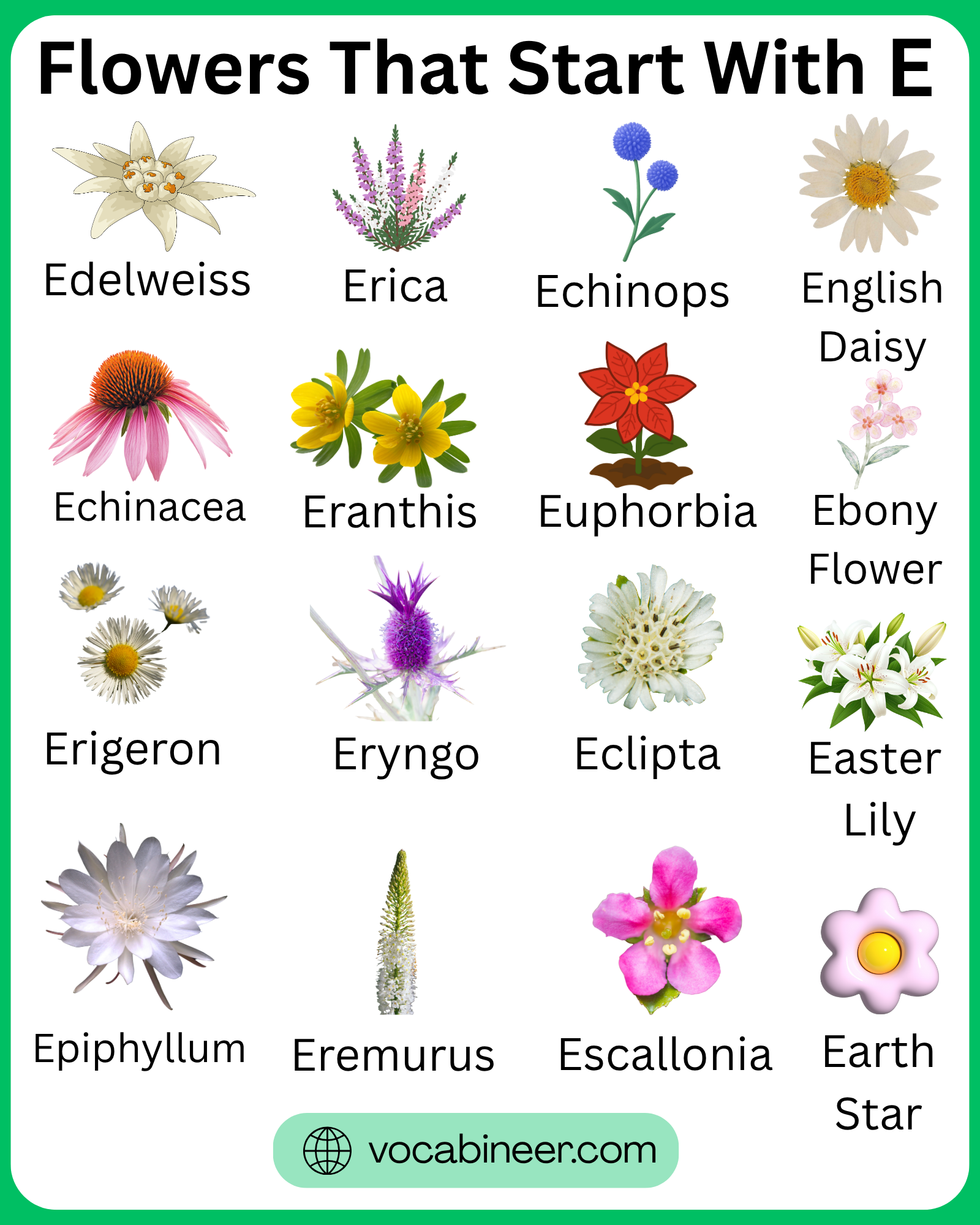
Common Flowers That Start With E
These are some of the best-known flower names that start with E. Many of them are easy to recognize in gardens, books, and flower guides.
- Easter Lily: a graceful white lily often linked with spring
- Echinacea: a popular flower known for its bright petals and cone-shaped center
- English Daisy: a small but cheerful bloom with a classic look
- English Lavender: a fragrant flowering plant loved for both color and scent
- Evening Primrose: a well-known flower that often opens later in the day
- Eustoma: also called lisianthus, a flower with elegant rose-like blooms
- Edelweiss: a famous flower often linked with mountain landscapes
- Evergreen Candytuft: a common low-growing flowering plant for borders
Easy Garden Flowers That Start With E
These flowers starting with E are especially useful for home gardens because they offer color, texture, or strong seasonal interest.
- Echinacea: a hardy garden flower with daisy-like petals and a raised center
- English Daisy: a neat and cheerful flower for cool-season beds and borders
- English Lavender: a fragrant favorite that suits sunny gardens
- Evergreen Candytuft: a low-growing flower that works well along edges and paths
- Erysimum: a bright wallflower that adds long-lasting color
- Euryops: a cheerful flowering shrub with bold yellow blooms
- Exacum: a compact flowering plant that looks lovely in pots and small spaces
- Eucomis: also called pineapple lily, a striking plant that adds shape and interest
Wildflowers and Natural-Looking E Flowers
Some flowers that begin with E grow in open fields, woodland areas, hillsides, or mountain regions. Because of that, they bring a softer and more natural feel to the article.
- Edelweiss: a famous mountain flower with soft white star-shaped blooms
- Elephant’s Head: a unique wildflower with an unusual shape
- Enchanter’s Nightshade: a small woodland flower with delicate blooms
- Erigeron: a daisy-like flower often found in natural open spaces
- Erodium: a delicate wild plant with pink or purple flowers
- Erythronium: a graceful woodland flower that blooms in spring
- Evening Primrose: a soft yellow flower often seen in natural landscapes
- Eschscholzia: also called California poppy, a bright and silky wildflower
Rare and Striking Flowers That Start With E
This section includes E flowers that stand out because of their unusual shape, bold look, or less common name.
- Echinops: a globe-shaped flower with a bold and spiky look
- Epiphyllum: a cactus flower with large, dramatic blooms
- Eryngium: a spiky flower with a strong texture and unusual style
- Erythrina: a tropical flowering plant with bright, striking clusters
- Eremurus: a tall flower with long spikes filled with many small blossoms
- Ethiopian Arum: a bold and elegant flower with a smooth, sculptural shape
- European Globe Flower: a rounded golden flower with a rich appearance
- Eomecon: a lesser-known flower with soft yellow poppy-like blooms
Annual and Perennial Flowers That Start With E
Flowers that start with E include both annual and perennial types. So, this section makes the list more useful for gardeners who want plants for one season or for many years.
Annual Flowers That Start With E
- Eschscholzia: often grown as an annual for bright seasonal color
- Evening Stock: a sweet-smelling annual flower for beds and containers
- Eustoma: commonly grown as an annual in many gardens
- Exacum: usually grown as an annual or tender potted plant
- Egyptian Star Flower: often grown for warm-season color in beds and borders
Perennial Flowers That Start With E
- Echinacea: a strong perennial that returns year after year
- Epimedium: a shade-loving perennial with delicate flowers
- Eryngium: a hardy perennial with bold texture
- Erythronium: a spring-blooming perennial woodland flower
- Evening Primrose: many kinds grow as perennials
- Eucomis: a bulb-like perennial with upright flower spikes
- Eupatorium: a tall perennial that attracts pollinators
FAQs
Some common flowers that start with E are Easter Lily, Echinacea, English Daisy, English Lavender, and Evening Primrose. These flowers are popular because they are easy to recognize and often appear in gardens and flower guides.
Yes, there are several wildflowers that start with E. Good examples include Edelweiss, Elephant’s Head, Erigeron, Erodium, Erythronium, and Eschscholzia. These flowers often grow naturally in woodland, meadow, or mountain areas.
Flowers like Echinacea, English Daisy, English Lavender, Evergreen Candytuft, Erysimum, and Eucomis are good for home gardens. Some are easy to grow, while others add bold shape, fragrance, or long-lasting color.
Flowers that start with E can be annuals or perennials. For example, Evening Stock, Eustoma, and Exacum are often grown as annuals, while Echinacea, Epimedium, Eryngium, and Eupatorium are common perennial choices.
Learning flower names that start with E is useful for gardening, writing, schoolwork, and vocabulary building. It also helps you identify plants more easily and makes alphabet-based flower lists easier to understand.
Summary
This article covered a full list of flowers that start with E and also highlighted easy garden flowers, wildflowers, rare blooms, and both annual and perennial types. It included familiar names like Easter Lily, Echinacea, English Daisy, and Evening Primrose, along with less common flowers such as Eomecon and Eremurus.
This kind of guide is useful for students, gardeners, writers, and English learners because it keeps the topic easy to scan and simple to follow. It also helps readers discover both common and unusual flowers that begin with E in one organized place.
Read More
