

Is it gray or grey? Both spellings refer to the same neutral color between black and white. However, the correct choice depends on regional spelling conventions. In American English spelling, the preferred form is gray. In British English spelling, the standard form is grey. Importantly, there is no difference in meaning, shade, pronunciation, or grammar. So, this is not a vocabulary issue. Instead, it is a regional spelling difference. Therefore, selecting the correct form depends entirely on your audience and the style guide you are following.
In This Page
Gray vs Grey: Quick Definition
Gray is the American English spelling of the color between black and white.
Grey is the British English spelling of the same color.
Gray vs Grey Difference in One Sentence
American English spelling uses gray with an “a.”
British English spelling uses grey with an “e.”
Why Gray and Grey Are Often Confused
Because both spellings refer to the exact same color, many writers assume they are interchangeable everywhere. However, spelling rules differ between American English and British English.
Another reason for confusion is global media. For example, American books, websites, and brands use gray, while British publications and products use grey. As a result, people see both forms online and may not realize the difference is regional.
Additionally, spellcheck settings can influence spelling. If your device is set to American English, it will suggest gray. If it is set to British English, it will suggest grey.
So, the confusion comes from exposure to both spellings, not from a difference in meaning.
Word Origin and Etymology
The word comes from Old English grǣg, which described the color between black and white. Over time, the spelling changed slightly in different regions.
When American English spelling began to simplify certain words, some spellings shifted. However, both gray and grey remained accepted forms in their respective regions.
Today, the difference reflects historical spelling development rather than any change in meaning.
Meaning of Gray
In American English, gray refers to the color between black and white. It can describe objects, weather, hair, mood, or anything lacking strong color.
Definition of Gray
Gray is the American English spelling of the neutral color formed by mixing black and white. It can function as a noun, adjective, or sometimes a verb.
Gray as Part of Speech
Gray functions as:
- An adjective describing color
- A noun referring to the color itself
- A verb meaning to become gray (less common)
Common Uses and Collocations of Gray
Common combinations include:
- gray sky
- gray hair
- gray clouds
- gray area
- shades of gray
- gray suit
Example Sentences With Gray
- The sky turned gray before the storm.
- He wore a gray jacket to the meeting.
- Her hair is slowly turning gray.
- The walls were painted light gray.
- We drove under gray clouds all morning.
- The cat has soft gray fur.
- His beard is mostly gray now.
- The city looked gray in winter.
- That question falls into a legal gray area.
- She bought a dark gray sweater.
- The ocean looked gray at dawn.
- I prefer light gray for the bedroom walls.
Meaning of Grey
In British English, grey refers to the same color between black and white. It can describe appearance, atmosphere, hair color, mood, or anything neutral in tone.
Definition of Grey
Grey is the British English spelling of the neutral color created by combining black and white. It functions as a noun and adjective.
Grey as Part of Speech
Grey functions as:
- An adjective describing color
- A noun referring to the color
- Occasionally a verb meaning to turn grey
Common Uses and Collocations of Grey
Common combinations include:
- grey sky
- grey hair
- grey clouds
- grey area
- shades of grey
- grey coat
Example Sentences With Grey
- The sky became grey before the rain.
- He wore a grey coat to work.
- Her hair is turning grey with age.
- The house had grey stone walls.
- We walked under grey clouds.
- The dog has soft grey fur.
- His beard looks more grey now.
- The morning felt cold and grey.
- That issue lies in a legal grey area.
- She chose a pale grey dress.
- The mountains appeared grey in the distance.
- I like soft grey tones in the living room.
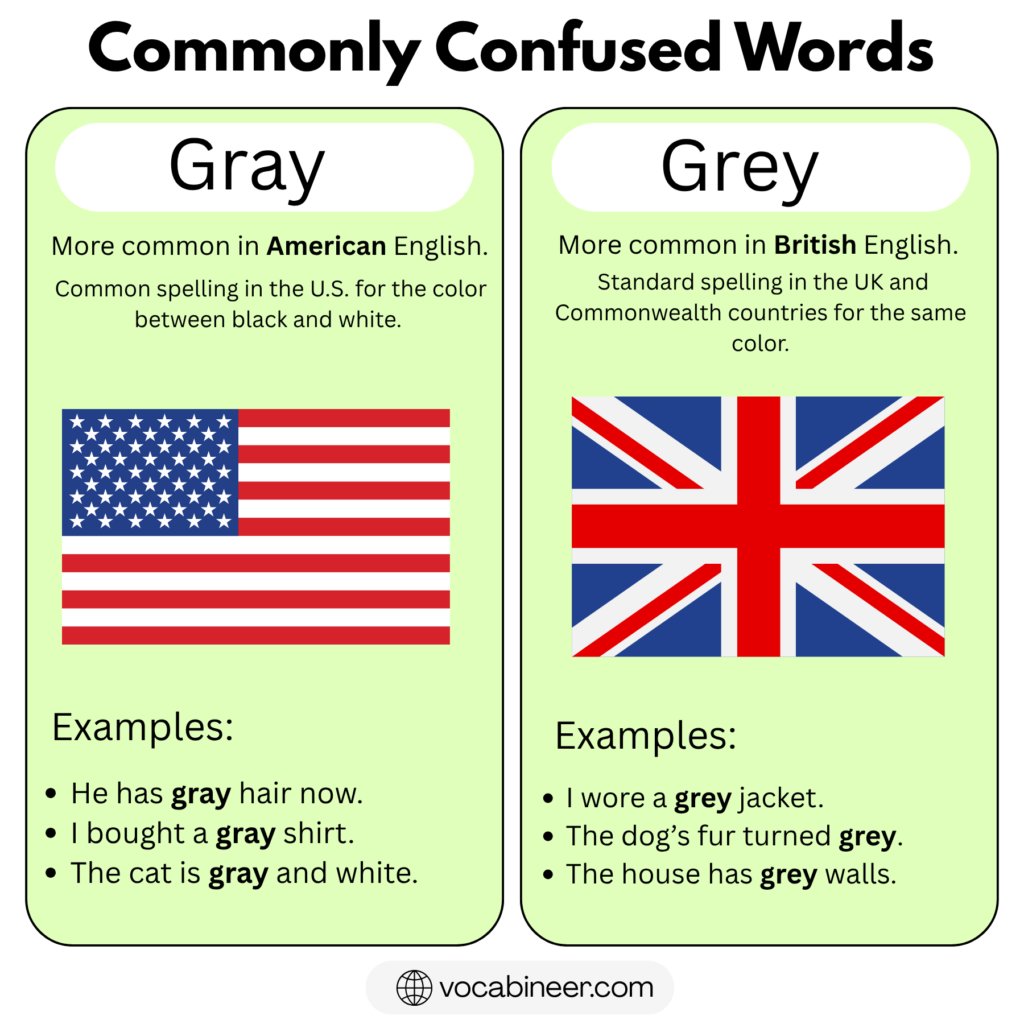
Gray vs Grey: Key Difference Explained
Although gray and grey refer to the same color, the spelling depends on regional usage. The difference is not about meaning, shade, or pronunciation. Instead, it reflects American English spelling and British English spelling conventions.
In the United States, the standard form is gray. American dictionaries, textbooks, and publications consistently use this spelling.
In the United Kingdom and other regions that follow British English, the preferred spelling is grey. British publications, schools, and style guides use this form.
Importantly, both spellings describe the same neutral color between black and white. So, the distinction is purely visual in writing.
In short:
- American English spelling → gray
- British English spelling → grey
Consistency is the key. Do not mix both spellings in the same document.
Gray vs Grey: Difference in One Look (Table)
| Feature | Gray | Grey |
|---|---|---|
| English Variety | American English spelling | British English spelling |
| Meaning | Color between black and white | Color between black and white |
| Pronunciation | Same | Same |
| Grammar Role | Noun / Adjective | Noun / Adjective |
| Common Regions | United States | UK, Australia, others |
| Shade Difference | None | None |
Gray vs Grey: Side by Side Sentence Contrast
Both spellings describe the same color. However, the choice depends on regional spelling. Below, you can see how the sentence meaning stays the same while the spelling changes.
- The sky turned gray before the storm.
- The sky turned grey before the storm.
- He wore a gray suit to the meeting.
- He wore a grey suit to the meeting.
- Her hair is turning gray with age.
- Her hair is turning grey with age.
- That topic falls into a legal gray area.
- That topic falls into a legal grey area.
- The cat has soft gray fur.
- The cat has soft grey fur.
As shown above, the sentence structure and meaning remain identical. Only the regional spelling changes.
Gray vs Grey: Sentence Structure Comparison
Structurally, both words function in the same way. They can be used as adjectives or nouns without any grammar change.
Adjective pattern:
- The gray sky looked heavy.
- The grey sky looked heavy.
Noun pattern:
- I prefer gray for the walls.
- I prefer grey for the walls.
Metaphorical usage:
- It is a legal gray area.
- It is a legal grey area.
So, from a grammar perspective, there is no difference. The only variation appears in spelling based on American English or British English conventions.
When to Use Gray and Grey
The choice between gray and grey depends on your audience and regional spelling standards. Both spellings mean the same thing, but one is preferred in American English and the other in British English.
Choose gray when writing for an American audience. This includes U.S. schools, businesses, publications, and websites that follow American English spelling rules.
Choose grey when writing for a British audience or regions that follow British English conventions, such as the United Kingdom, Australia, and Canada.
The key rule is consistency. Do not switch between gray and grey in the same document.
Here is the simple guide:
- American English spelling → gray
- British English spelling → grey
Context Based Usage Guide
If your audience is American:
- The sky looks gray today.
- He bought a gray sweater.
- Her hair is turning gray.
- That falls into a legal gray area.
If your audience follows British English:
- The sky looks grey today.
- He bought a grey jumper.
- Her hair is turning grey.
- That falls into a legal grey area.
In professional or academic writing, always follow the style guide required by your institution or publisher.
Grammar Difference Between Gray and Grey
From a grammar standpoint, there is no difference between gray and grey. Both words function in exactly the same way. The variation is purely in spelling, not in structure or usage.
Both spellings can act as adjectives and nouns. In rare cases, they may also appear as verbs meaning “to become gray/grey.”
Here is a clear comparison:
| Grammar Feature | Gray | Grey |
|---|---|---|
| Part of Speech | Noun / Adjective | Noun / Adjective |
| Used as Adjective | Yes | Yes |
| Used as Noun | Yes | Yes |
| Used as Verb (rare) | Yes | Yes |
| Grammar Role | Identical | Identical |
So, structurally speaking, both forms follow the same grammar rules.
Pronunciation Difference Between Gray and Grey
There is no pronunciation difference between gray and grey.
Both are pronounced:
/ɡreɪ/
Even though the spelling changes between American English and British English, the sound remains exactly the same. Therefore, the distinction appears only in writing, not in speech.
Common Mistakes With Gray and Grey
Even though the difference is simple, writers still make a few common mistakes.
One mistake is mixing gray and grey in the same article. This creates inconsistency and looks unprofessional.
Another error is assuming the spellings represent different shades. Some people believe grey is darker and gray is lighter. However, there is no official color difference. Both words describe the same color.
Writers also forget to adjust spelling based on audience. For example, using grey in American academic writing can appear incorrect under U.S. style guides.
To avoid mistakes:
- Choose one regional spelling.
- Follow your audience’s language standard.
- Stay consistent throughout your document.
FAQs
Both are correct. Gray is the standard spelling in American English, while grey is preferred in British English.
In the United States, the correct spelling is gray. American schools, books, and style guides follow this version.
In the United Kingdom, the standard spelling is grey. British publications and institutions use this form.
No. There is no official shade difference. Both words describe the same neutral color between black and white.
No. Both are pronounced /ɡreɪ/. The difference appears only in spelling, not in speech.
Final Summary
Gray and grey refer to the same color between black and white. There is no difference in meaning, shade, pronunciation, or grammar. The only distinction is regional spelling. American English spelling uses gray, while British English spelling prefers grey. Therefore, the correct choice depends on your audience. To maintain professional writing, select one regional standard and stay consistent throughout your document.
Read More
- Confusing Words in English
- American vs British Words
- Peace vs Piece in English
- Sight vs Site in English
