The human body makes many different sounds every day. You may hear a cough, sneeze, hiccup, burp, snore, or stomach growl during normal body activities. Some sounds happen when we breathe, eat, sleep, or move.
In this guide, you will learn 30 human body sounds in English with meanings, simple explanations, and easy examples. This article is useful for students, English learners, and general readers who want to understand common body-sound vocabulary in a clear way.
In This Page
What Are Human Body Sounds?
Human body sounds are noises made by the body through breathing, digestion, movement, the throat, the nose, the mouth, and other body functions. Some are normal everyday sounds, while others may show discomfort or illness.
List of 30 Human Body Sounds in English
Here is a quick list of common human body sounds:
- Cough
- Sneeze
- Hiccup
- Burp
- Belch
- Snore
- Wheeze
- Stridor
- Gasp
- Pant
- Sigh
- Yawn
- Sniff
- Throat Clearing
- Swallowing Sound
- Gag
- Retch
- Stomach Growl
- Gurgle
- Rumble
- Bowel Sound
- Flatulence
- Crack
- Pop
- Click
- Jaw Click
- Grunt
- Groan
- Moan
- Humming Breath Sound
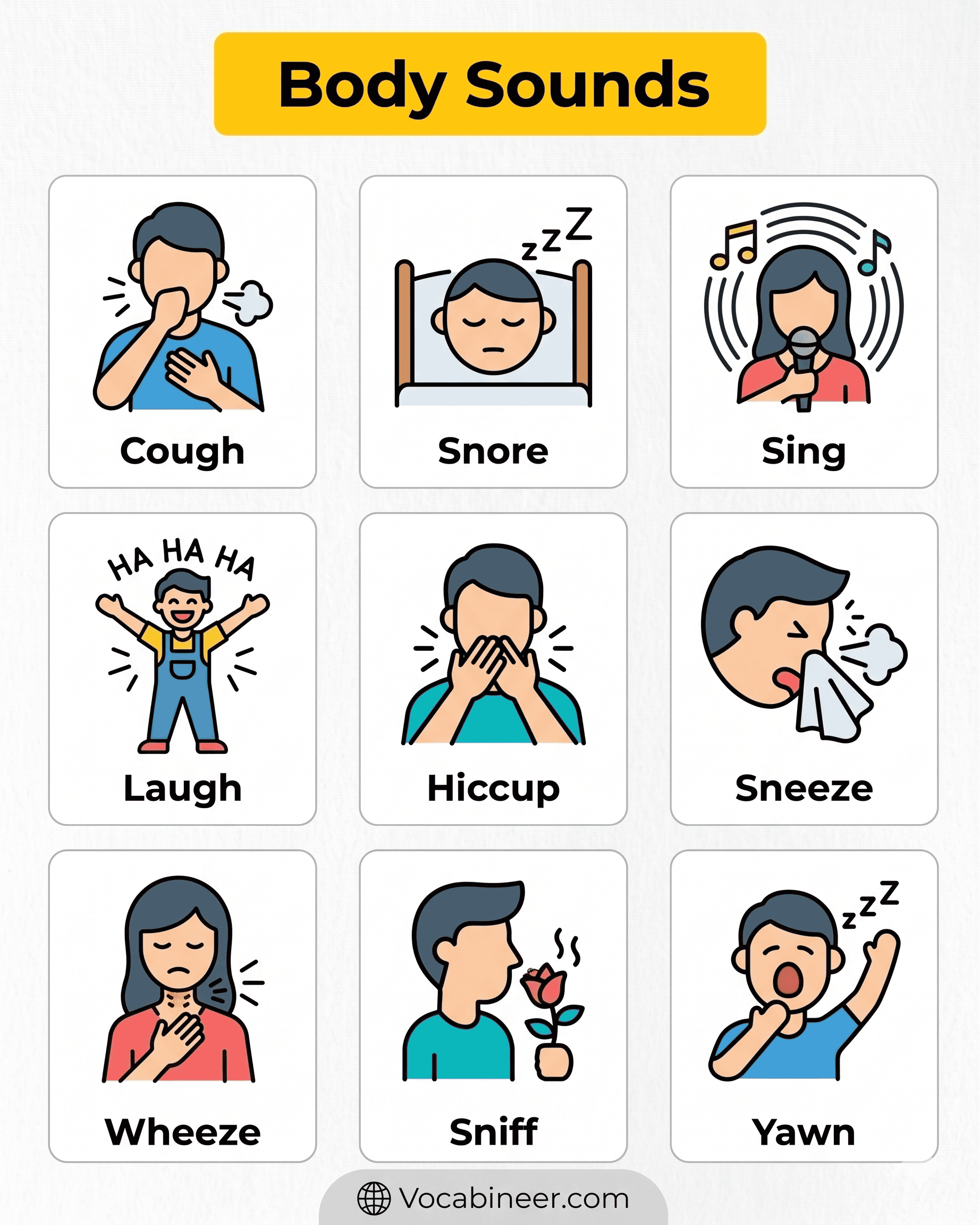
Breathing and Chest Sounds
These sounds usually happen when air moves through the nose, throat, or lungs.
Cough – A cough is a sudden sound made to clear the throat or airways.
Example: He gave a loud cough during the meeting.
Wheeze – A wheeze is a high-pitched breathing sound, often caused by narrow airways.
Example: She started to wheeze after running.
Stridor – Stridor is a harsh, noisy sound while breathing in. It often sounds sharper than a wheeze.
Example: The child made a stridor sound while breathing.
Gasp – A gasp is a quick deep breath caused by surprise, shock, or trouble breathing.
Example: He let out a gasp when the lights went off.
Pant – Panting is fast, heavy breathing, often after exercise.
Example: The runner began to pant after the race.
Sigh – A sigh is a long deep breath out, often showing tiredness, relief, or sadness.
Example: She gave a tired sigh and sat down.
Snore – Snoring is a rough sound made during sleep when breathing is partly blocked.
Example: My grandfather snores loudly at night.
Humming Breath Sound – This is a soft humming-like sound made while breathing out through the nose or mouth.
Example: The baby made a gentle humming breath sound while sleeping.
Nose, Mouth, and Throat Sounds
These sounds come from the upper part of the body and are common in daily life.
Sneeze – A sneeze is a sudden burst of air through the nose and mouth.
Example: She gave a big sneeze because of dust.
Sniff – A sniff is the short sound made when air is pulled in through the nose.
Example: He gave a quick sniff and wiped his nose.
Throat Clearing – This sound happens when someone tries to clear mucus or irritation from the throat.
Example: The teacher cleared his throat before speaking.
Swallowing Sound – This is the sound made when food, drink, or saliva moves down the throat.
Example: We could hear his swallowing sound in the quiet room.
Yawn – A yawn is a wide open-mouth breath, usually caused by tiredness or boredom.
Example: She covered her mouth during a long yawn.
Gag – A gag is the choking-like sound or reaction caused by something unpleasant or blocking the throat.
Example: He began to gag after tasting the bad medicine.
Retch – Retching is the dry heaving sound and action that happens before vomiting or when trying to vomit.
Example: The smell made him retch.
Stomach and Digestion Sounds
These sounds are linked to hunger, digestion, and the movement of gas in the body.
Hiccup – A hiccup is a sudden small sound caused by quick movement of the diaphragm.
Example: The baby had a cute hiccup after feeding.
Burp – A burp is the sound made when gas comes up from the stomach through the mouth.
Example: He gave a small burp after drinking soda.
Belch – Belch has the same meaning as burp, but it often sounds a little more formal.
Example: He tried not to belch at the dinner table.
Stomach Growl – This is the hungry rumbling sound made by the stomach.
Example: My stomach growled before lunch.
Gurgle – A gurgle is a wet, bubbling sound in the stomach or throat.
Example: We heard a gurgle from his stomach.
Rumble – A rumble is a low rolling sound in the stomach or belly.
Example: Her stomach made a soft rumble in class.
Bowel Sound – A bowel sound is the sound of movement inside the intestines during digestion.
Example: The doctor listened for bowel sounds.
Flatulence – Flatulence is gas passing from the body through the rectum, often making a sound.
Example: Flatulence is a normal result of gas in the digestive system.
Joint and Movement Sounds
These sounds happen when the body moves, stretches, or changes position.
Crack – A crack is a sharp sound often heard in fingers, knees, or the neck.
Example: I heard a crack in my knuckles.
Pop – A pop is a short bursting sound from a joint or body movement.
Example: His knee made a pop when he stood up.
Click – A click is a small repeated sound from a joint or body part.
Example: Her shoulder made a clicking sound.
Jaw Click – This is a clicking sound made when opening or closing the mouth.
Example: My jaw click happens when I chew hard food.
Grunt – A grunt is a low short sound made during effort, lifting, pain, or irritation.
Example: He gave a grunt while lifting the box.
Other Common Human Sounds
Some body sounds are linked more to feeling and reaction than to one body system.
Groan – A groan is a deep sound that can show pain, tiredness, or annoyance.
Example: He let out a groan after the long walk.
Moan – A moan is a soft long sound that may show pain, sadness, or discomfort.
Example: The patient gave a quiet moan.
Which Human Body Sounds Are Usually Normal?
Many body sounds are completely normal and happen in everyday life. These include:
- Sneezing because of dust or pepper
- Burping after eating or drinking
- Hiccups for a short time
- Stomach growling when hungry
- Gurgling during digestion
- Mild joint cracking during movement
- Occasional snoring during sleep
- Yawning when tired
These sounds often happen naturally and are not a problem by themselves.
Which Body Sounds May Be a Warning Sign?
Some body sounds may need attention if they happen often, suddenly, or with pain or breathing trouble.
Watch more carefully if there is:
- Repeated wheezing
- Stridor while breathing
- A strong cough that does not stop
- Pain with swallowing sounds
- Very unusual stomach sounds with pain
- Severe gagging or retching
- Loud new snoring with poor sleep
- Painful jaw clicking or joint popping
A body sound is more concerning when it comes with fever, pain, trouble breathing, vomiting, swelling, or dizziness.
Human Body Sounds in Simple Sentences
Here are some easy sentences using body-sound words:
- The old man gave a loud cough.
- She let out a big sneeze.
- The baby had a little hiccup.
- He tried not to burp in public.
- My brother often snores at night.
- The sick child began to wheeze.
- We heard a strange gurgle from the sink-like stomach sound.
- My stomach gave a soft rumble before dinner.
- Her knee made a pop when she stood up.
- He gave a tired sigh after work.
FAQs
Human body sounds are noises made by the body during breathing, eating, digestion, sleep, movement, or reaction.
The body makes sounds because air, food, liquid, gas, and body parts move in different ways. Some sounds are natural, and some happen because of irritation or illness.
No, not all body sounds are normal. Many are harmless, but some may need attention if they are painful, frequent, or linked with other symptoms.
Both words mean the same thing. A burp is the common everyday word, while belch is a more formal term.
Wheezing is a whistling or high-pitched sound while breathing. It may happen when the airways become narrow.
Summary
Human body sounds are a normal part of life. In this article, you learned 30 human body sounds in English with meanings, including sounds linked to breathing, digestion, the throat, movement, and everyday reactions. You also saw simple examples and learned which sounds are usually normal and which ones may need more attention.
Understanding these words can improve both your English vocabulary and your general knowledge of the body.
Read More
- Body Language Gestures
- Road Vocabulary Words
- Human Parts of Body
- Airport Vocabulary in English
- Weather Vocabulary Words
- Nature Vocabulary Words