
Laughing emojis are used to show amusement, shared humor, or playful emotional reactions in digital messages. They rely on facial expressions such as wide smiles, open mouths, squeezed eyes, or tears to show how strong the laughter feels. Learning the meanings of different laughing emojis helps readers understand whether a message is lighthearted, joking, sarcastic, or filled with strong amusement.
In This Page
Common Laughing Emoji Meaning
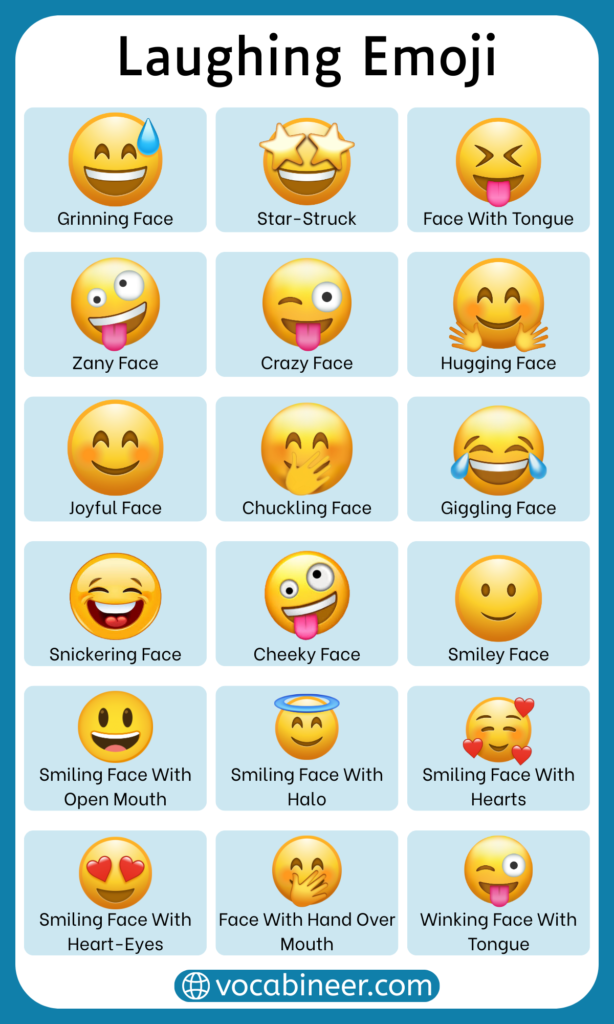
Laughing emojis are commonly used to show amusement, shared humor, or a light emotional reaction in messages. Each laughing emoji carries a slightly different tone based on facial expression, eye shape, and added elements like tears, which affect how the laughter is understood.
- Smiling face: Shows gentle amusement or a friendly reaction without strong laughter.
- Smiling face with smiling eyes: Expresses warm, sincere amusement and positive mood.
- Grinning face: Indicates playful humor or lighthearted fun.
- Smiling face with open mouth: Shows clear enjoyment or reacting happily to something funny.
- Laughing face: Represents open laughter and obvious amusement.
- Grinning face with open mouth: Signals energetic or excited laughter.
- Grinning face with big eyes: Combines surprise with playful humor.
- Face with tears of joy: Means laughing very hard or finding something extremely funny.
- Rolling on the floor laughing face: Shows uncontrollable laughter or extreme amusement.
Types of Laughing Emojis and Their Meanings
Laughing emojis can be grouped by emotional strength. Small facial differences signal how intense or controlled the laughter is.
Light Laughing Emojis
These emojis suggest mild amusement rather than loud laughter. They feel polite and socially comfortable.
- Slightly smiling face: Soft humor or gentle reaction
- Smiling face: Pleasant amusement without strong emotion
- Smiling face with smiling eyes: Friendly laughter and warmth
- Grinning face: Cheerful response with playful tone
Laughing Emojis with Open Mouth
These emojis show clearer, more active laughter. The emotion feels visible and expressive.
- Laughing face: Open enjoyment or reacting to humor
- Smiling face with open mouth: Happy laughter and excitement
- Grinning face with open mouth: Energetic amusement
- Grinning face with big eyes: Surprise mixed with laughter
Laughing Emojis with Tears
These emojis express strong laughter that feels difficult to control. Tears signal emotional intensity rather than sadness.
- Face with tears of joy: Laughing very hard or finding something extremely funny
- Rolling on the floor laughing face: Uncontrollable laughter or extreme amusement
- Laughing face with tilted head: Playful, exaggerated laughter
- Laughing face with squeezed eyes and tears: Overwhelming humor reaction
Laughing Emoji Meanings by Emotional Intensity
Laughing emojis differ in strength based on facial cues such as eye shape, mouth openness, tears, and posture. These details signal whether the laughter is light, clear, or overwhelming.
Below is a table that groups common laughing emojis by how intense the emotion usually feels:
| Emotional Level | Laughing Emoji Names | What They Commonly Express |
|---|---|---|
| Low | Slightly smiling face, Smiling face, Smiling face with smiling eyes | Soft amusement, polite humor, friendly tone |
| Low to Medium | Grinning face, Grinning face with smiling eyes, Smiling face with closed eyes | Cheerful laughter, shared enjoyment |
| Medium | Laughing face, Smiling face with open mouth, Grinning face with open mouth | Clear laughter, active amusement |
| Medium to High | Grinning face with big eyes, Laughing face with tilted head | Excited laughter, playful surprise |
| High | Face with tears of joy, Laughing face with tears | Strong laughter, finding something very funny |
| Very High | Rolling on the floor laughing face | Uncontrollable laughter, extreme amusement |
Laughing Emoji Used in Different Situations
The meaning of a laughing emoji often changes depending on where and how it is used. Context shapes whether the emoji feels warm, playful, or exaggerated.
Laughing Emoji in Casual Conversations
In everyday chats, laughing emojis help keep the tone friendly and relaxed without adding emotional pressure.
- Smiling face: Light humor or friendly response
- Grinning face: Playful agreement or shared joke
- Smiling face with smiling eyes: Warm, positive laughter
Laughing Emoji in Jokes and Humor
When responding to jokes or funny content, stronger laughing emojis are often chosen to show clear amusement.
- Laughing face: Reacting openly to humor
- Face with tears of joy: Finding something extremely funny
- Rolling on the floor laughing face: Laughing uncontrollably at a joke
Laughing Emoji in Replies and Reactions
As reactions, laughing emojis can replace words and quickly show emotional response.
- Grinning face with open mouth: Quick amused reaction
- Laughing face with tears: Strong emotional response to humor
- Grinning face with big eyes: Surprise mixed with laughter
Laughing Emoji Meaning in Text Conversations
In text conversations, laughing emojis help express tone when words alone may sound flat or unclear. The same emoji can feel friendly, playful, or exaggerated depending on placement and message length.
In short replies, laughing emojis often replace a full sentence. A grinning face or smiling face with smiling eyes shows light amusement without pushing the conversation further. When added after text, a laughing face or face with tears of joy reinforces that the message is meant humorously. Used alone, stronger emojis like rolling on the floor laughing face signal a powerful reaction without explanation.
Laughing Emoji vs Similar Emojis
In text conversations, a laughing emoji helps signal tone when words alone might sound flat or unclear. It shows that a message is meant to be playful, humorous, or lighthearted rather than serious or critical. The exact meaning depends on which laughing emoji is used and where it appears in the message.
When a laughing emoji appears at the end of a sentence, it usually softens the message and confirms friendly intent. Placed after a joke or comment, it shows clear amusement and shared humor. Used on its own, a laughing emoji can replace words entirely, acting as a quick emotional reaction.
Different laughing emojis also change the tone. A smiling or grinning face suggests light humor or polite laughter. A laughing face with open mouth shows stronger amusement. Emojis like face with tears of joy or rolling on the floor laughing face signal intense laughter and are often used when something feels extremely funny.
Laughing Emojis People Often Confuse
Laughing emojis people often confuse look similar at first glance, but their meanings vary by emotional strength and tone. Small changes in eyes, mouth shape, or tears can shift an emoji from light amusement to intense laughter, causing easy mix-ups in quick text conversations.
Grinning Face vs Smiling Face with Open Mouth
These two emojis look very similar, which causes frequent confusion. The grinning face often feels playful or slightly teasing, while the smiling face with open mouth shows more open and friendly enjoyment. One feels cheeky, the other feels openly happy.
Smiling Face with Open Mouth vs Laughing Face
Both emojis suggest amusement, but the emotional strength is different. The smiling face with open mouth reflects light enjoyment, while the laughing face shows clearer laughter and a stronger reaction to humor.
Laughing Face vs Face with Tears of Joy
These emojis are often mixed up because both show laughter. The laughing face represents visible but controlled laughter, whereas the face with tears of joy signals much stronger amusement, where laughter feels intense and emotional.
Face with Tears of Joy vs Rolling on the Floor Laughing Face
Although both express strong humor, their intensity differs. The face with tears of joy shows laughing very hard, while the rolling on the floor laughing face exaggerates the emotion to show uncontrollable or overwhelming laughter.
Grinning Face vs Face with Tears of Joy
These emojis can be mistaken for each other in fast replies. The grinning face stays playful and light, while the face with tears of joy communicates a much deeper level of humor and emotional release.
Laughing Emoji Meanings for Quick Understanding
Laughing emojis can be understood quickly by focusing on how strong the laughter feels and what facial details are shown. The table below gives a fast overview that helps readers choose the right emoji without overthinking tone.
| Laughing Emoji Name | Emotional Strength | Common Use in Messages |
|---|---|---|
| Slightly smiling face | Very low | Soft humor, polite friendliness |
| Smiling face | Low | Pleasant reaction or light amusement |
| Smiling face with smiling eyes | Low to medium | Warm, friendly laughter |
| Grinning face | Medium | Playful humor or shared joke |
| Smiling face with open mouth | Medium | Clear enjoyment or happiness |
| Laughing face | Medium | Open laughter at something funny |
| Grinning face with open mouth | Medium to high | Excited or expressive laughter |
| Grinning face with big eyes | Medium to high | Surprise mixed with humor |
| Face with tears of joy | High | Laughing very hard |
| Rolling on the floor laughing face | Very high | Uncontrollable laughter |
FAQs About Laughing Emoji
It usually shows amusement or reacting to something funny, with the intensity depending on the emoji used.
It can feel rude if used during serious or emotional conversations, especially with strong laughing emojis.
Smiling emojis show happiness, while laughing emojis show active humor or amusement.
They quickly show emotional reaction and tone without needing extra explanation.
The rolling on the floor laughing emoji shows the most intense and uncontrollable laughter.
Conclusion
Laughing emojis play an important role in expressing humor and emotional tone in digital communication. Small changes in eyes, mouth shape, or added tears create clear differences in meaning and intensity. Understanding these variations helps readers choose the most accurate emoji for each situation and avoid confusion.
By learning how laughing emojis are grouped, compared, and commonly used, readers can communicate humor more clearly and respond in a way that matches the emotional tone of the conversation.
Read More