Omnivorous animals are animals that eat both plants and animals as part of their diet. They may eat fruits, seeds, insects, meat, fish, and other foods, so they are an important group in animal classification and English vocabulary.
In this post, you’ll learn common omnivorous animals names in English with pictures. It includes easy examples from mammals, birds, reptiles, fish, and insects, so learners can identify and remember these mixed-diet animals more clearly.
In This Page
What Are Omnivorous Animals?
Omnivorous animals are animals that eat both plants and animals. They can feed on fruits, seeds, leaves, insects, meat, fish, and other food sources. Because of this mixed diet, omnivores can live in many different habitats.
Some omnivores eat more plants, while others eat more animal-based food. Even so, the main point stays the same: they can survive on both kinds of food.
Omnivorous Animals Names List
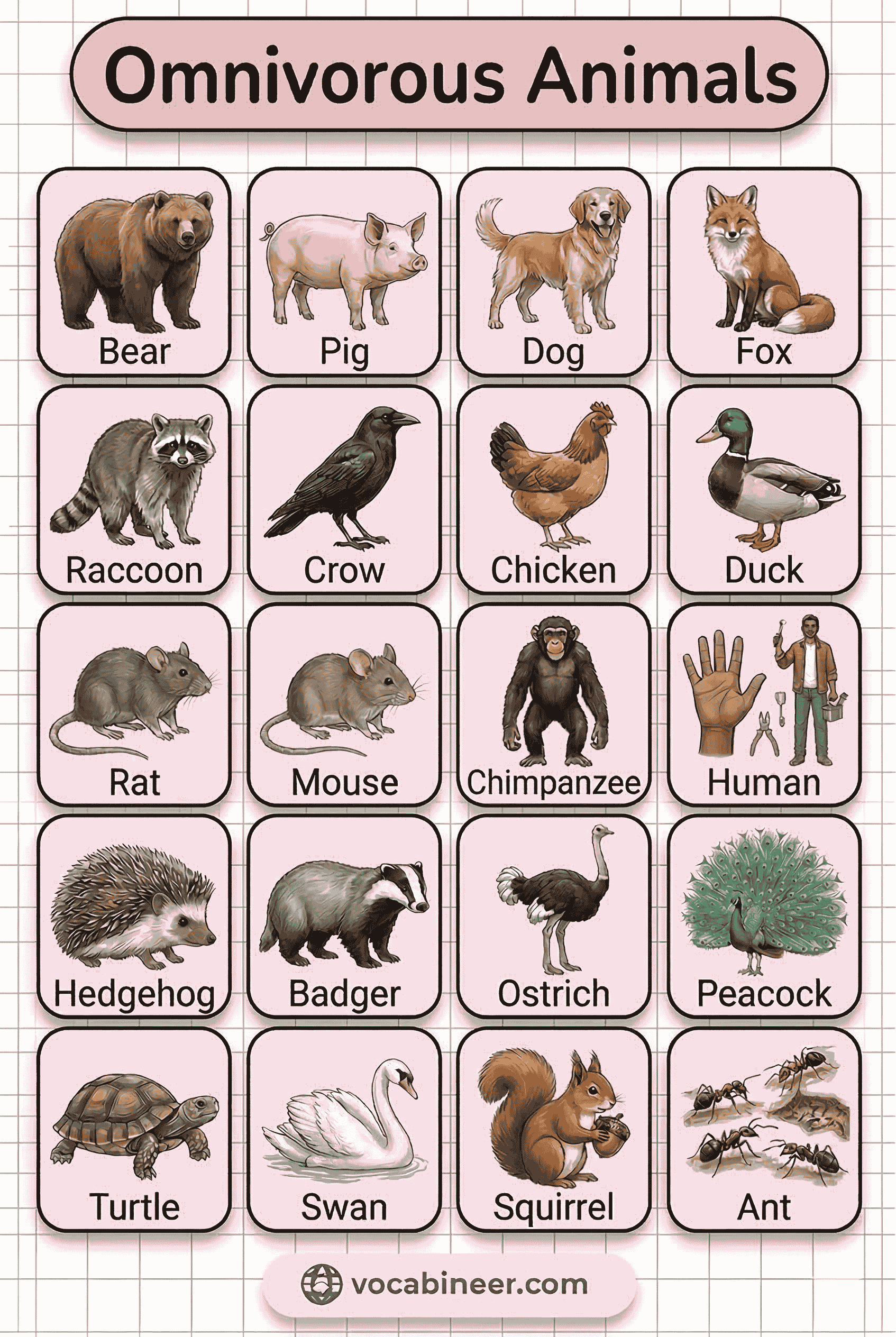
Omnivorous animals are found in many animal groups. Some live on land, some in trees, some near water, and some in the water itself. Because they eat both plant and animal matter, this group includes many familiar animals.
- Bear
- Pig
- Dog
- Fox
- Crow
- Chicken
- Duck
- Monkey
- Rat
- Human
- Raccoon
- Hedgehog
- Chimpanzee
- Squirrel
- Ostrich
- Turtle
- Lizard
- Carp
- Ant
- Cockroach
- Raven
- Seagull
- Hen
- Goatfish
- Catfish
- Baboon
- Opossum
- Skunk
- Crab
- Sparrow
Omnivorous Mammals Names
Many mammals are omnivorous animals because they eat both plant food and animal food. Some eat fruits, seeds, and roots, while others also eat insects, eggs, fish, or small animals.
- Bear: A well-known omnivore that eats berries, roots, fish, insects, and meat.
- Pig: A farm animal that eats plants, grains, insects, and many other foods.
- Fox: A wild omnivore that feeds on fruits, insects, birds, and small animals.
- Monkey: Many monkeys eat fruits, seeds, insects, and small animals.
- Rat: A small omnivore that eats grains, fruits, insects, and scraps.
- Human: Humans are omnivores because they can eat both plant and animal foods.
- Raccoon: A clever animal that eats fruits, insects, eggs, and small animals.
- Hedgehog: A small omnivore that feeds on insects, fruits, and other food.
- Chimpanzee: A primate that eats fruits, leaves, insects, and sometimes small animals.
- Squirrel: Many squirrels eat nuts, seeds, fruits, insects, and eggs.
Omnivorous Birds Names
Many birds are omnivorous because they eat both plant and animal matter. They may feed on seeds, fruits, grains, insects, worms, fish, or small animals.
- Crow: A smart bird that eats grains, fruits, insects, and small animals.
- Chicken: A common bird that feeds on seeds, grains, insects, and worms.
- Duck: An omnivorous bird that eats plants, insects, and small water animals.
- Ostrich: A large bird that eats plants, seeds, and small insects.
- Raven: A bird that feeds on fruits, grains, insects, and meat.
- Seagull: A coastal bird that eats fish, insects, grains, and scraps.
- Sparrow: A small bird that eats seeds as well as insects.
- Hen: A domestic bird that pecks at grains, seeds, and insects.
Other Omnivorous Animals Names
Omnivorous animals are not only mammals and birds. Some reptiles, fish, insects, and water animals also eat both plant and animal matter. This makes the omnivorous group broad and easy to understand through different animal classes.
Omnivorous Reptiles Names
Some reptiles eat fruits, leaves, insects, eggs, and other small animals. Because of that mixed diet, they are placed in the omnivorous group.
- Turtle: Many turtles eat plants, small insects, and water animals.
- Lizard: Some lizards eat fruits, leaves, insects, and small creatures.
- Box Turtle: A common omnivorous reptile that eats berries, mushrooms, insects, and worms.
- Blue-Tongued Skink: A reptile that eats fruits, flowers, insects, and snails.
Omnivorous Fish Names
Some fish eat plant matter as well as insects, worms, and smaller water animals. So, they are also examples of omnivorous animals.
- Carp: A freshwater fish that eats plants, insects, and small water animals.
- Catfish: A fish that feeds on plant matter, insects, and small fish.
- Goatfish: A fish that eats small sea animals along with organic matter from the water.
- Tilapia: A common fish that eats algae, plants, and small aquatic creatures.
Omnivorous Insects Names
Some insects also eat both plant and animal matter. They may feed on leaves, seeds, dead insects, or tiny living organisms.
- Ant: An insect that eats seeds, nectar, dead insects, and small food particles.
- Cockroach: A well-known omnivore that eats plant matter and animal-based scraps.
- Wasp: Some wasps eat nectar and also hunt small insects.
- Beetle: Many beetles eat plants, seeds, and smaller insects.
Omnivorous Animals for Kids
Kids can learn omnivorous animals more easily by starting with common and familiar names. These animals are often seen on farms, in forests, near homes, or in books and school lessons.
- Bear
- Pig
- Dog
- Crow
- Chicken
- Duck
- Monkey
- Human
- Fox
- Rat
- Turtle
- Ant
- Cockroach
- Sparrow
- Raccoon
These names are easy to remember because many of them are common animals. They also help children understand that omnivores eat both plants and animals instead of only one type of food.
Difference Between Omnivorous, Herbivorous, and Carnivorous Animals
These three groups are classified by what they eat. Omnivorous animals eat both plants and animals, herbivorous animals eat plants, and carnivorous animals eat other animals. This comparison makes the difference easy to understand.
| Animal Type | Main Food | Simple Meaning | Common Examples |
|---|---|---|---|
| Omnivorous animals | Plants and animals | Animals that eat both kinds of food | Bear, pig, crow, human |
| Herbivorous animals | Plants | Animals that eat plant-based food | Cow, deer, rabbit, elephant |
| Carnivorous animals | Other animals | Animals that eat meat or other animals | Lion, tiger, wolf, eagle |
Role of Omnivorous Animals in Nature
Omnivorous animals play an important role in nature because they feed on both plant and animal matter. As a result, they connect different parts of the food chain and help keep ecosystems balanced.
They also help control insect or small animal populations, while at the same time feeding on fruits, seeds, and plant material. Because of this flexible diet, omnivores can survive in many places and support natural balance in different habitats.
Conclusion
Omnivorous animals are animals that eat both plants and animals. They include many familiar names from mammals, birds, reptiles, fish, and insects. Because they can feed on different kinds of food, they are found in many habitats around the world.
This omnivorous animals names list makes the topic simple to learn in English. From bears and pigs to ducks and turtles, these animals are easy to understand when grouped by their food habits.
FAQs
Omnivorous animals are animals that eat both plants and animals. They can eat fruits, seeds, insects, meat, fish, and many other foods.
Five common omnivorous animals are bear, pig, crow, duck, and monkey. All of them can eat both plant and animal food.
Yes, omnivorous animals eat both plants and meat. Their diet can include fruits, seeds, insects, fish, eggs, and small animals.
Yes, a dog is commonly placed in the omnivorous group because it can eat both plant-based food and animal-based food.
Omnivorous animals eat both plants and animals, while herbivorous animals eat only plant-based food such as grass, leaves, fruits, and seeds.
Read More
- Animals Name in English
- Crawling Animals Name
- Pet Animals Name List
- Ocean Animals Names
- Herbivorous Animals