Plumbing materials are the materials used to make pipes, fittings, and sealed plumbing connections. They carry water, remove waste, and help keep joints secure in homes and other buildings.
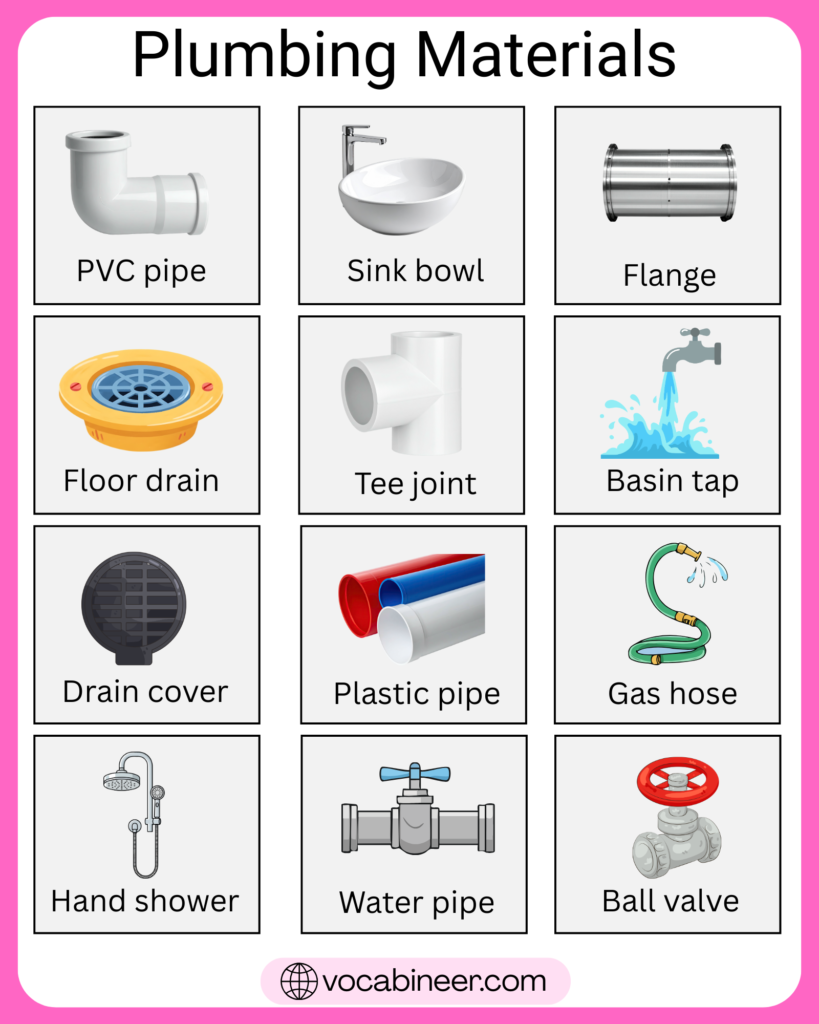
This guide explains common plumbing material names, what each one is used for, and how to recognize it more easily in pictures. It stays focused on plumbing materials, not tools, repair steps, or buying advice.
In This Page
What Are Plumbing Materials?
Plumbing materials are the substances used in supply lines, drain lines, fittings, valves, and sealed joints. Common examples include copper, PEX, PVC, CPVC, ABS, cast iron, galvanized steel, brass, and stainless steel.
Some materials carry clean water, while others move wastewater, connect parts, or seal threaded joints. Once you know the name and role of each one, plumbing systems become easier to understand.
Plumbing Materials Names List With Uses
The easiest way to learn plumbing materials is to group them by use. That makes the list easier to scan and easier to remember.
Pipe materials
These materials form the main pipe runs that carry water or move waste.
- Copper: A durable metal material used mainly for water supply lines. It is strong and resists corrosion well.
- PEX: A flexible plastic material used for hot and cold water supply lines. Many modern homes use it because it bends easily and installs quickly.
- PVC: A lightweight plastic material used for drain, waste, and vent piping. It is common in residential plumbing.
- CPVC: A plastic material used for hot and cold water lines. It handles higher temperatures better than standard PVC.
- ABS: A tough black plastic material used mainly in drain and vent systems. It is known for strength and impact resistance.
- Cast iron: A heavy metal material often found in older drain and sewer systems. It lasts a long time but weighs much more than plastic pipe.
- Galvanized steel: A coated steel material used in older plumbing systems, especially older water supply lines. New homes use it far less often today.
- Polybutylene: A plastic piping material used in some older homes for water supply lines. It is mainly linked with older installations.
- HDPE: A strong plastic material often used for underground water service lines. It offers durability and flexibility.
- Polypropylene: A plastic material used in some hot and cold water piping systems.
Fitting materials
These materials are used in valves, connectors, elbows, tees, and other parts that direct or control flow.
- Brass: A strong metal material commonly used in fittings, valves, taps, and connectors. It handles moisture well and resists corrosion.
- Copper: Also used in fittings that connect copper pipe sections.
- PVC: Used in plastic drain fittings such as elbows, tees, and couplings.
- CPVC: Used in fittings for hot and cold water plastic piping.
- Stainless steel: Used in fittings where corrosion resistance matters more. It is common in some specialty uses.
Joining and sealing materials
These materials connect plumbing parts and help stop leaks at joints.
- PVC cement: Used to bond PVC pipes and fittings together.
- CPVC cement: Used to join CPVC pipes and fittings.
- Plumber’s tape: Wrapped around threaded joints to improve the seal.
- Pipe joint compound: A sealing paste used on threaded plumbing connections.
- Silicone sealant: Used around some joints and fixtures to help keep water from leaking out.
Most Common Plumbing Materials Used in Homes
Some plumbing materials appear more often in homes than others. In most residential systems, the most common materials are PEX, PVC, CPVC, copper, and ABS, while older homes may still contain cast iron or galvanized steel.
- PEX: Common in modern homes for hot and cold water supply lines.
- PVC: Common in drain, waste, and vent systems.
- CPVC: Used in some homes for hot and cold water lines.
- Copper: Still common in many homes for water supply piping.
- ABS: Used in some houses for drain and vent piping.
- Brass: Common in valves, taps, and plumbing fittings rather than main pipe runs.
Difference Between Common Plumbing Materials
Common plumbing materials differ in flexibility, weight, corrosion resistance, and heat handling.
| Material | Main use | Key feature |
|---|---|---|
| Copper | Water supply lines | Durable and corrosion-resistant |
| PEX | Water supply lines | Flexible and easy to install |
| PVC | Drain and vent systems | Lightweight and affordable |
| CPVC | Hot and cold water lines | Handles higher temperatures |
| ABS | Drain and vent systems | Tough and impact-resistant |
| Cast iron | Older drain and sewer lines | Heavy and long-lasting |
| Galvanized steel | Older plumbing systems | Coated steel with rust resistance |
| Brass | Fittings and valves | Strong and corrosion-resistant |
| Stainless steel | Fittings and specialty use | Durable and highly corrosion-resistant |
Copper is strong and long-lasting, PEX is flexible, PVC and ABS are common in drain systems, and brass and stainless steel are more common in fittings and connectors. That simple comparison helps readers understand why plumbing systems use different materials for different jobs.
Summary
A plumbing materials list with names, uses, and pictures helps readers understand more than pipe names alone. The most important materials to know are copper, PEX, PVC, CPVC, ABS, cast iron, galvanized steel, brass, and stainless steel.
Some materials carry water, some handle waste, and others seal or connect plumbing parts. Once you connect each name with its use and appearance, plumbing materials become much easier to recognize and understand.
Read More
- Types of Cameras
- Household Items Names
- Baby Care Items Names
- First Aid Kit Items Names
- Living Room Items Names