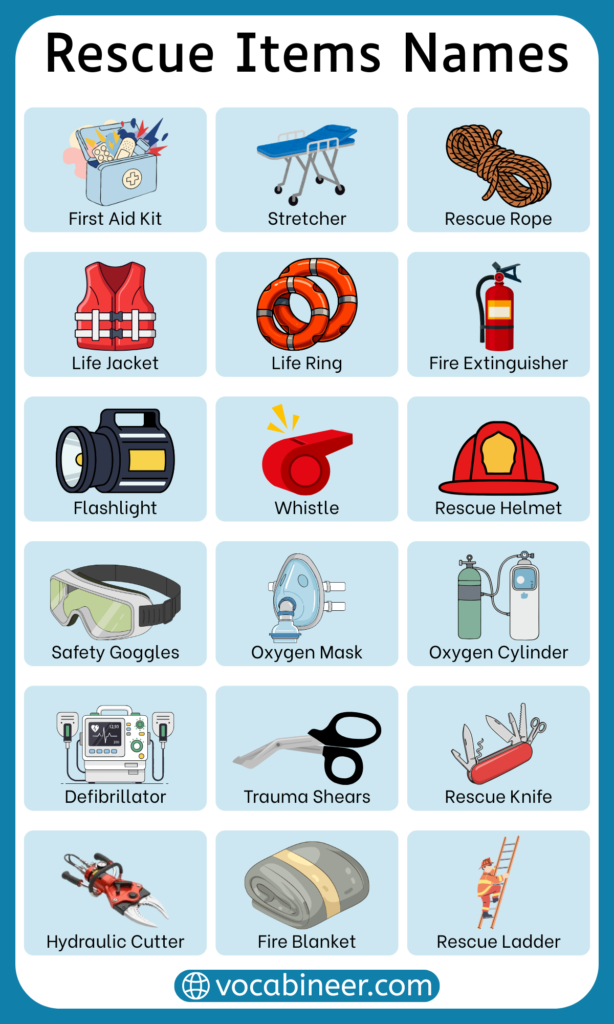
Rescue items are essential tools and equipment used in emergencies to protect individuals, manage accidents, and save lives. These items include personal protective gear, medical supplies, fire and water rescue tools, and disaster equipment. Learning about these items with pictures helps readers quickly identify each item and understand how it works.
Knowing rescue items helps you respond confidently in emergencies, workplaces, schools, and natural disaster situations. Readers will learn the names, types, and practical uses of these items in daily safety, first aid, and rescue operations.
In This Page
What Are Rescue Items?
Rescue items are specially designed tools, devices, and supplies used by emergency responders and civilians to assist injured people, control dangerous situations, and perform safe evacuation during emergencies. These items support life-saving actions such as medical aid, fire control, search operations, communication, and personal protection. Rescue items are commonly used by firefighters, paramedics, search and rescue teams, disaster response units, and households for emergency preparedness.
Importance of Rescue Items in Emergencies
Rescue items play a vital role in keeping people safe during accidents, fires, floods, or disasters. They allow responders to act quickly, reduce injuries, and prevent life-threatening situations. Understanding their use improves awareness and ensures faster reactions when seconds matter.
Learning the names and purposes of rescue items empowers readers to prepare for emergencies at home, school, workplaces, and public areas, creating a safer environment.
Main Types of Rescue Items
Rescue items are grouped into main types based on their function and the type of emergency they address. This classification helps learners understand which tools are needed in different rescue situations.
Personal Protective Rescue Items
Personal protective rescue items help keep rescuers and victims safe from injuries, heat, smoke, and hazards during emergencies. Key items include:
- Helmet: Protects the head from impact and falling debris.
- Protective Gloves: Shield hands from cuts, burns, and chemicals.
- Safety Goggles: Guard eyes against smoke, dust, and flying particles.
- Face Mask / Respirator: Filters harmful fumes and airborne hazards.
- Protective Boots / Steel-Toe Boots: Prevent foot injuries from sharp objects or heat.
- Fire-Resistant Clothing / Jackets: Reduce burn risks and heat exposure.
- High-Visibility Vests: Make rescuers easily visible in low light.
- Ear Protection / Ear Muffs: Protect against loud noises during operations.
- Knee and Elbow Pads: Cushion joints during crawling or debris removal.
- Full-Body Harness: Supports safety during height or rope rescues.
- Hood or Balaclava: Protects head and neck from heat or debris.
- Chemical-Resistant Suits / Aprons: Shield from hazardous liquids or chemicals.
Medical Rescue Items
Medical rescue items are essential tools used to give immediate medical help during accidents, injuries, or sudden health emergencies. These items help control bleeding, support breathing, protect wounds, and stabilize patients until professional medical care arrives.
- First aid kit – A box or bag containing basic medical supplies used for treating minor injuries and providing emergency care.
- Bandages – Strips or rolls of cloth used to cover wounds, stop bleeding, and protect injuries from infection.
- Antiseptic wipes – Medicated wipes used to clean wounds and kill germs before dressing an injury.
- Medical gloves – Disposable gloves worn to prevent infection and maintain hygiene while treating patients.
- CPR mask – A protective mask used during cardiopulmonary resuscitation to safely deliver rescue breaths.
- Oxygen mask – A device placed over the nose and mouth to supply oxygen to patients with breathing difficulties.
- Stretcher – A flat, portable bed used to carry injured or unconscious people safely.
- Splint – A rigid support used to immobilize broken or injured limbs and reduce pain.
Fire Rescue Items
Fire rescue items are specialized tools and equipment designed to control fires, protect rescuers, and safely evacuate people from dangerous environments. These items are essential for firefighters and emergency responders during fire-related emergencies.
- Fire extinguisher – A portable device used to spray chemicals that put out small fires quickly.
- Fire hose – A flexible pipe that delivers water or fire-retardant foam to control large fires.
- Fire blanket – A heat-resistant blanket used to smother flames on people or small fires.
- Protective fire suit – A heat- and flame-resistant outfit worn by firefighters to prevent burns.
- Helmet with face shield – Protective headgear that safeguards against heat, falling debris, and smoke.
- Fire axe – A heavy-duty axe used to break doors, windows, or obstacles during rescue operations.
- Self-contained breathing apparatus (SCBA) – A device that supplies clean air to firefighters in smoke-filled or toxic environments.
- Thermal imaging camera – A device that detects heat signatures to locate people trapped in fires.
Water Rescue Items
Water rescue items are essential tools and equipment used during floods, drowning emergencies, and water-related accidents. These items help rescuers save lives while ensuring safety in aquatic environments.
- Life jacket / Personal flotation device (PFD) – A wearable device that keeps a person afloat in water and prevents drowning.
- Rescue buoy / Lifebuoy – A ring-shaped flotation device thrown to someone in water to help them stay afloat.
- Rescue rope – A strong, durable rope used to pull people safely from water or secure them during rescue.
- Rescue boat / Inflatable boat – Boats used to navigate floodwaters or rivers to reach stranded people.
- Throw bag – A bag containing a rope that can be thrown to a person in distress to pull them to safety.
- Water rescue helmet – Protective headgear designed for rescuers working in fast-moving or dangerous water conditions.
- Wetsuit / Dry suit – Protective suits that insulate and protect rescuers from cold water and hypothermia.
- Rescue paddleboard / Rescue sled – Specialized equipment to transport people safely across water during emergencies.
Disaster and Earthquake Rescue Items
Disaster and earthquake rescue items are specialized tools used during natural calamities such as earthquakes, landslides, and building collapses. These items help rescuers locate trapped victims, remove debris, and provide urgent aid safely.
- Crowbar / Pry bar – A strong metal tool used to lift, remove, or break debris and rubble.
- Shovel – A digging tool used to clear debris and create pathways for rescue operations.
- Pickaxe – A heavy tool used to break concrete, rocks, or hard surfaces during rescue efforts.
- Emergency flashlight – A portable light source that helps rescuers work in dark or collapsed areas.
- Gas detector – A device that senses hazardous gases or chemicals in disaster zones to ensure safety.
- Rescue helmet – Protective headgear that safeguards rescuers from falling debris and injuries.
- First aid kit – Medical supplies for treating injuries sustained during disasters.
- Emergency whistle – A sound device used to signal trapped victims or alert other rescuers.
Search and Detection Rescue Items
Search and detection rescue items help rescuers locate missing, trapped, or injured people in emergency situations. These tools improve efficiency and safety during operations in challenging environments.
- Thermal imaging camera – Detects heat signatures to locate people in dark, smoke-filled, or disaster areas.
- Search dog / Rescue dog – Trained dogs that sniff out survivors trapped under debris or in wilderness areas.
- Metal detector – A tool used to find metallic objects or locate victims with metal implants in disaster zones.
- Binoculars – Used to scan large areas for missing or stranded individuals from a distance.
- GPS device – Provides accurate location tracking for rescuers and victims in remote or disaster-hit areas.
- Two-way radio / Walkie-talkie – Enables communication between rescue teams in large or obstructed zones.
- Drones / UAVs – Unmanned aerial vehicles used to survey disaster sites and locate victims safely from the air.
- Rope and harness – Essential for reaching difficult-to-access areas or lowering rescuers and victims safely.
Emergency Communication Rescue Items
Emergency communication rescue items are tools that help rescuers coordinate efforts, call for backup, and maintain contact during emergencies. Clear communication is critical to save lives and manage rescue operations efficiently.
- Two-way radios / Walkie-talkies – Portable devices that allow rescuers to communicate instantly over short or long distances.
- Satellite phone – A phone that works in remote areas without cellular coverage, ensuring constant communication.
- Megaphone / Loudspeaker – Amplifies voice to alert victims or guide people in crowded or chaotic environments.
- Emergency whistle – A simple but effective signaling device used to attract attention or indicate danger.
- Mobile phone with emergency apps – Smartphones equipped with apps for SOS alerts, location sharing, or disaster notifications.
- Signal flares – Bright flares used to indicate location or signal for help during night or low-visibility conditions.
- Emergency beacon / Personal locator beacon (PLB) – A device that transmits location coordinates to rescue teams during life-threatening situations.
Evacuation and Survival Rescue Items
Evacuation and survival rescue items are essential tools that help victims and rescuers stay safe, navigate hazards, and survive during emergencies or after evacuations. These items are critical in providing protection, food, water, and shelter.
- Emergency tent / Shelter – Portable structures that provide temporary protection from weather and debris.
- Sleeping bag / Thermal blanket – Keeps individuals warm and protected in cold or disaster-affected areas.
- Portable water filter / Purification tablets – Ensure access to safe drinking water during rescue or evacuation.
- Emergency food supplies / Rations – Non-perishable food items that provide nutrition during prolonged emergencies.
- Flashlight / Headlamp – Provides light in dark or collapsed areas, helping rescuers and victims navigate safely.
- Multi-tool / Survival knife – A versatile tool for cutting, opening, or performing basic survival tasks.
- Rope / Climbing gear – Used for evacuating from heights, securing shelters, or crossing difficult terrain.
- Personal flotation device (PFD) – Helps individuals stay afloat in flood or water-based evacuation scenarios.
Difference Between Rescue Items and First Aid Items
The main difference between rescue items and first aid items lies in their purpose, usage, and examples. Understanding these distinctions helps individuals and emergency responders prepare better for accidents, disasters, and health emergencies.
| Aspect | Rescue Items | First Aid Items |
|---|---|---|
| Purpose | Designed to save lives, evacuate people, and control dangerous situations such as fires, floods, and accidents. | Primarily meant to treat injuries, provide immediate medical care, and stabilize patients until professional help arrives. |
| Examples | Fire extinguisher, life jacket, thermal imaging camera, crowbar, rescue rope. | Bandages, antiseptic wipes, CPR mask, splints, medical gloves. |
| Usage | Used by firefighters, search and rescue teams, and disaster management personnel for evacuation, protection, and life-saving operations. | Can be used by both professionals and civilians to provide immediate medical assistance on-site. |
| Focus | Safety, evacuation, and life-saving operations. | Medical treatment, wound care, and stabilization. |
How to Maintain Rescue Items
Regular inspection, proper storage, and timely replacement keep rescue items safe and ready for emergencies. Checking helmets, gloves, ropes, and fire equipment for damage ensures they work when needed. Storing items in clean, dry, and organized spaces prevents deterioration, while replacing worn or expired tools guarantees reliability. Following these steps helps responders and individuals act confidently and effectively during critical situations.
Common FAQs About Rescue Items
Rescue items are essential tools used to protect people, save lives, and manage emergencies like fires, floods, accidents, or natural disasters. They allow responders to act safely and efficiently in critical situations.
Rescue items are used by emergency responders, firefighters, paramedics, disaster relief teams, and trained civilians to handle emergency situations effectively.
Rescue items focus on life-saving and protection during emergencies, including gear like helmets, ropes, and fire equipment. First aid items mainly provide immediate medical care such as bandages, dressings, and antiseptics.
Proper storage and maintenance keep rescue items safe, organized, and ready. Helmets, gloves, fire extinguishers, and first aid kits should be regularly inspected, cleaned, and replaced when worn or expired.
Knowing rescue items names helps you identify and use the right tools quickly during emergencies. This knowledge is useful at workplaces, schools, disaster zones, and home safety situations.
Conclusion
Rescue items are essential tools that save lives and manage emergencies. From protective gear and medical supplies to fire, water, and disaster equipment, each serves a specific purpose. Knowing the types, uses, and proper maintenance of these items ensures faster response, safer rescues, and better preparedness. Combined with first aid knowledge, they form a complete emergency toolkit for professionals and everyday users.
Read More