Sad emoji are commonly used to show unhappiness, disappointment, emotional heaviness, or a low moment in digital messages. Instead of using words, these emojis rely on facial cues such as lowered eyes, gentle frowns, or visible tears to suggest how someone feels. They often appear in short replies, comments, or reactions where emotion matters but long explanations feel unnecessary or awkward.
In everyday messaging, sad emojis help express feelings that might otherwise feel difficult to put into words. They allow emotional tone to come through clearly, even when the message itself is brief.
This article walks through sad emoji names and meanings in a clear, grounded way. It explains how different sad emojis communicate different levels of emotion, how their meanings shift with context, and why similar emojis are often misunderstood in digital conversations.
In This Page
What the Sad Emoji Represents?
A sad emoji usually reflects quiet sadness rather than intense emotional pain. It often suggests feeling let down, emotionally affected, disappointed, or slightly overwhelmed. The expression tends to feel restrained, almost as if the emotion is being held inside rather than released openly.
Because of this restraint, sad emojis are widely used in everyday communication. They allow people to acknowledge emotions, show understanding, or respond thoughtfully without turning a message heavy or dramatic. In many cases, the emoji softens the message rather than intensifying it.
Common Sad Emoji Names and Meanings
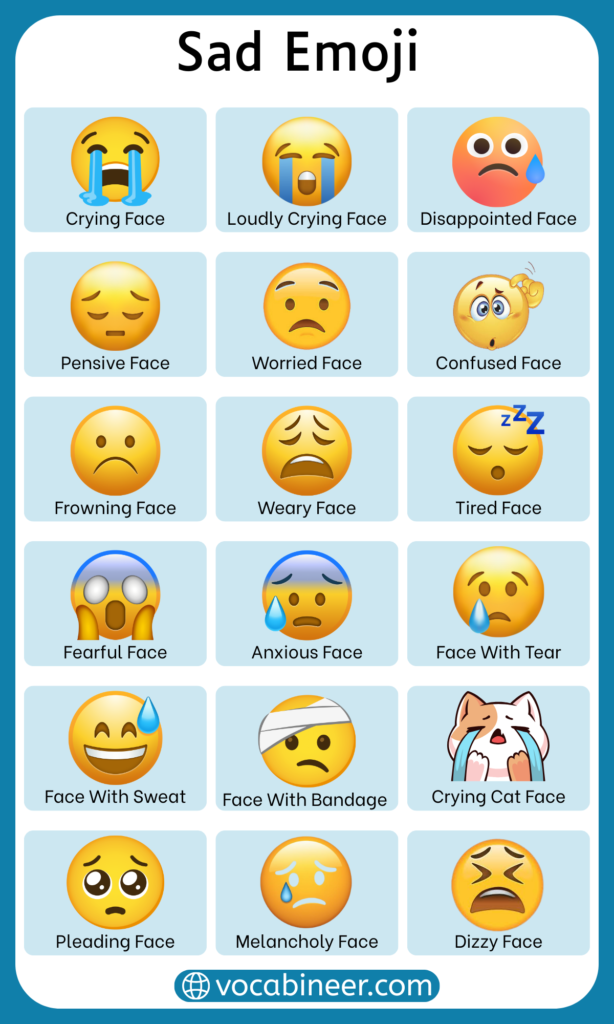
Sad emoji names describe emojis that visually communicate unhappiness or emotional discomfort. While they all fall under sadness, each one carries a slightly different emotional shade.
- Sad face: Shows general unhappiness or a low emotional state without strong intensity.
- Slightly sad face: Expresses mild disappointment or a quiet drop in mood.
- Frowning face: Signals stronger sadness or discomfort than a simple sad face.
- Disappointed face: Used when expectations are not met or something goes wrong.
- Pensive face: Reflects thoughtful sadness, often linked to reflection or regret.
- Worried face: Combines sadness with concern or uncertainty about a situation.
- Face with downcast eyes: Suggests emotional heaviness or inward focus.
- Sad face with single tear: Shows emotional hurt while still staying controlled.
- Crying face: Represents visible sadness or emotional pain that feels more personal.
- Loudly crying face: Expresses intense sadness, grief, or emotional overwhelm.
- Weary face: Indicates emotional exhaustion or feeling drained by a situation.
- Confused sad face: Shows sadness mixed with uncertainty or emotional confusion.
- Pleading sad face: Conveys vulnerability, emotional need, or silent appeal.
- Sad exhausted face: Suggests long-lasting emotional strain or mental fatigue.
- Face with quivering mouth: Shows fragile sadness, often on the edge of tears.
Types of Sad Emojis and Their Meanings
Sad emojis differ mainly in emotional depth. Small changes in eye position, mouth shape, or the presence of tears can completely change how the emotion is understood. Some emojis signal light disappointment, while others express deeper emotional strain.
Slightly Sad Emojis
These emojis suggest mild sadness that usually passes quickly. They feel calm, controlled, and socially comfortable, making them suitable for everyday conversations.
- Slightly sad face: A gentle signal of disappointment or a low mood
- Neutral sad face: Emotion is present but carefully held back
Sad Emojis with Downturned Eyes
These emojis feel quieter and more inward. They suggest emotional processing rather than an immediate reaction.
- Pensive face: Thoughtful sadness, often reflective
- Downcast face: Feeling emotionally weighed down
- Worried face: Concern layered with sadness
Sad Emojis with Tears
When tears appear, the emotion becomes more personal. These emojis suggest emotional hurt, vulnerability, or being deeply affected.
- Sad face with single tear: Feeling emotionally moved or quietly hurt
- Crying face: Visible sadness or emotional pain
- Face with tearful eyes: Holding back stronger emotion
Very Sad or Emotionally Heavy Emojis
These emojis carry noticeable emotional weight. They suggest deeper distress or emotional exhaustion rather than passing sadness.
- Loudly crying face: Strong emotional pain or grief
- Weary face: Emotional burnout or mental fatigue
- Sad exhausted face: Prolonged emotional strain
Sad Emoji Meanings by Emotional Intensity
Sad emojis express different levels of emotion, ranging from light disappointment to deep emotional pain. The intensity is often shown through facial details such as eye shape, mouth position, and the presence of tears. Recognizing these levels helps readers understand how serious or mild the emotion behind a message is.
Low Emotional Intensity
These sad emojis reflect mild or temporary sadness. They are often used in casual situations and do not suggest deep emotional distress.
- Slightly sad face: Shows a small drop in mood or minor disappointment
- Neutral sad face: Indicates quiet emotion without strong reaction
- Frowning face: Signals unhappiness that is noticeable but still controlled
Medium Emotional Intensity
These emojis suggest deeper emotional involvement. They often reflect thoughtfulness, concern, or emotional weight without complete emotional release.
- Pensive face: Shows reflective sadness or emotional thinking
- Downcast face: Suggests feeling emotionally weighed down
- Worried face: Combines sadness with concern or uncertainty
High Emotional Intensity
High-intensity sad emojis clearly communicate emotional pain or vulnerability. Tears usually appear at this level, signaling stronger feelings.
- Sad face with single tear: Expresses emotional hurt while staying composed
- Crying face: Shows visible sadness or emotional pain
- Face with tearful eyes: Indicates holding back stronger emotion
Very High Emotional Intensity
These emojis represent the strongest form of sadness and emotional exhaustion. They suggest deep distress or overwhelming emotion.
- Loudly crying face: Represents intense sadness or grief
- Weary face: Signals emotional burnout or mental fatigue
- Sad exhausted face: Shows prolonged emotional strain
Sad Emoji Used in Different Situations
Sad emojis can take on different meanings depending on where they appear and what the message is about. The same emoji may feel gentle in one situation and heavier in another, so context plays a big role in how it is understood.
Sad Emoji in Personal Messages
In personal chats, sad emojis often show honest emotion without turning the conversation intense. They help share feelings in a soft, relatable way.
- Sad face: Sharing a low mood or emotional moment
- Pensive face: Quiet reflection or emotional thoughtfulness
- Slightly sad face: Mild disappointment in everyday situations
These are common in close conversations where emotional tone matters.
Sad Emoji in Apologies
When used in apologies, sad emojis signal regret and emotional awareness. They make the message feel more sincere without needing many words.
- Disappointed face: Acknowledging a mistake or outcome
- Sad face with single tear: Expressing genuine regret
- Worried face: Showing concern about how someone feels
They help soften apologies and show emotional responsibility.
Sad Emoji in Emotional Reactions
Sad emojis are often used as reactions to news, stories, or shared experiences. In these cases, they act as emotional acknowledgment rather than explanation.
- Crying face: Responding to sad or touching news
- Weary face: Reacting to emotionally heavy situations
- Loudly crying face: Showing strong emotional impact
Sad Emoji vs Similar Emojis
Sad emojis are often confused with other emotional emojis because their facial expressions look similar. Small differences in eyes, mouth shape, or tears change the meaning, so understanding these comparisons helps readers read emotional tone more accurately.
Sad Emoji vs Crying Emoji
Both sad emoji and crying emoji show unhappiness, but the emotional level is different.
- Sad face: Shows quiet, controlled sadness or feeling low
- Crying face: Shows visible emotional pain and emotional release
Sad Emoji vs Disappointed Emoji
These two emojis are closely related but focus on different emotional causes.
- Sad face: Focuses on the feeling itself
- Disappointed face: Focuses on an outcome that did not meet expectations
Sad Emoji vs Frustrated Emoji
Sadness and frustration can overlap, but they are not the same emotion.
- Sad face: Expresses emotional heaviness or low mood
- Frustrated face: Shows stress, irritation, or emotional tension
Sad Emoji vs Worried Emoji
These emojis look similar but express different emotional states.
- Sad face: Shows unhappiness or emotional weight
- Worried face: Shows concern about something uncertain or upcoming
Sad Emoji vs Pensive Emoji
Both emojis appear calm, but their emotional direction differs.
- Sad face: Expresses feeling low or emotionally affected
- Pensive face: Shows thoughtful sadness or emotional reflection
Sad Emojis People Often Confuse
Sad emojis often look very similar at first glance, which can make their meanings easy to mix up. Small differences in eyes, mouth shape, or tears change the emotional message, so understanding these contrasts helps avoid confusion in short replies and reactions.
| Emoji Pair | How They Look Similar | How Their Meanings Differ |
|---|---|---|
| Sad face vs Pensive face | Both have downturned mouths and calm expressions | Sad face shows general unhappiness, while pensive face suggests thoughtful or reflective sadness |
| Sad face vs Disappointed face | Both appear low and unhappy | Sad face reflects mood, while disappointed face reacts to an unmet expectation |
| Sad face vs Worried face | Similar eyes and tense expressions | Sad face shows emotional heaviness, while worried face focuses on concern or anxiety |
| Crying face vs Sad face with single tear | Both include tears | Crying face shows open emotional pain, while single tear shows controlled emotion |
| Sad face vs Weary face | Both look tired or low | Sad face expresses emotion, while weary face signals emotional or mental exhaustion |
Sad Emoji Meaning in Text Conversations
In text conversations, a sad emoji adds emotional tone where words feel too direct or incomplete. It helps show feeling without needing long explanations, especially in short replies or quick messages. The meaning often depends on the topic, relationship, and timing of the message.
Sad Emoji in Short Replies
When used alone or with very few words, a sad emoji often replaces a full sentence. It quietly signals emotion without pushing the conversation deeper.
- Sad face: Feeling low or disappointed without wanting to explain
- Slightly sad face: Mild letdown or soft emotional response
- Pensive face: Thoughtful pause or emotional reflection
Sad Emoji with Words
When paired with text, a sad emoji usually strengthens or softens the message rather than changing it completely.
- Sad face after a sentence: Adds emotional weight to what was said
- Sad emoji before text: Prepares the reader for an emotional message
- Sad emoji at the end: Signals tone so the message is not misread
Sad Emoji in Casual Chats
In everyday conversations, sad emojis are often used lightly. The emotion may not be deep, but it still shows feeling.
- Sad face: Reacting to small problems or inconveniences
- Disappointed face: Responding to plans that did not work out
- Worried face: Expressing concern without panic
Sad Emoji in Serious Conversations
In more emotional discussions, a sad emoji carries stronger meaning. It often signals honesty and emotional openness.
- Sad face with single tear: Quiet emotional hurt or sincerity
- Crying face: Strong emotional reaction or emotional pain
- Weary face: Emotional exhaustion from an ongoing situation
Sad Emoji Meanings for Quick Understanding
Sad emojis often communicate emotion faster than words, especially in short messages. A quick overview helps readers recognize what each sad emoji usually expresses and how strong the feeling is, without overthinking the context.
| Sad Emoji Name | Emotional Level | Common Meaning in Messages |
|---|---|---|
| Slightly sad face | Low | Mild disappointment or a small drop in mood |
| Sad face | Low to medium | General unhappiness or feeling low |
| Frowning face | Medium | Clear displeasure or emotional discomfort |
| Disappointed face | Medium | Reaction to unmet expectations |
| Pensive face | Medium | Quiet, reflective sadness |
| Worried face | Medium | Sadness mixed with concern or uncertainty |
| Sad face with single tear | Medium to high | Controlled emotional hurt or sincerity |
| Crying face | High | Visible sadness or emotional pain |
| Face with tearful eyes | High | Holding back stronger emotions |
| Loudly crying face | Very high | Intense sadness or emotional overwhelm |
| Weary face | Very high | Emotional exhaustion or burnout |
Conclusion
Sad emojis help express emotions that are often hard to put into words, especially in short or casual messages. Each sad emoji carries a different emotional weight, shaped by facial details like eyes, mouth, and tears. Understanding these differences makes it easier to read emotional tone and respond appropriately in conversations.
By learning how sad emojis are commonly used and interpreted, readers can choose the right emoji for the situation and avoid confusion. This awareness supports clearer emotional communication and helps messages feel more thoughtful and accurate.
Read More