Cameras are devices used to capture photos or videos. Different camera types are made for different needs, so some are better for travel, while others are built for action, filmmaking, or high-quality photography.
In this post, you’ll learn the main types of cameras, how they are grouped, and what each type is best known for. The focus stays on camera names, simple classification, and easy recognition.
In This Page
What Are Cameras?
A camera is a device that records still images or moving video. Some cameras use fixed lenses, while others let users change lenses for different shooting needs.
Modern cameras come in many forms, from simple point-and-shoot models to advanced mirrorless and cinema cameras. Because of that, learning camera types is mostly about understanding design, lens system, and purpose.
Main Types of Cameras
The easiest way to understand camera types is to connect each one with its design and main use.
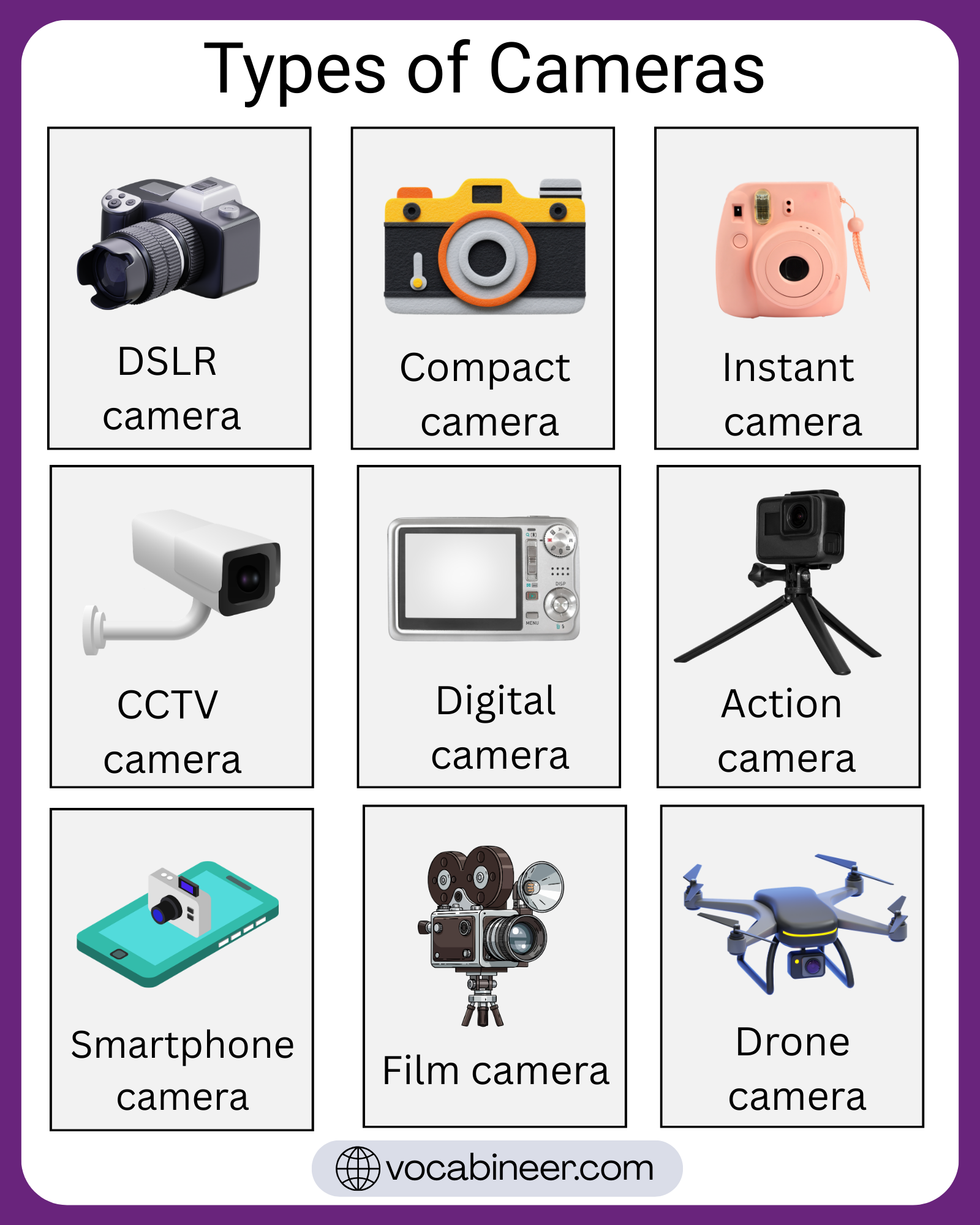
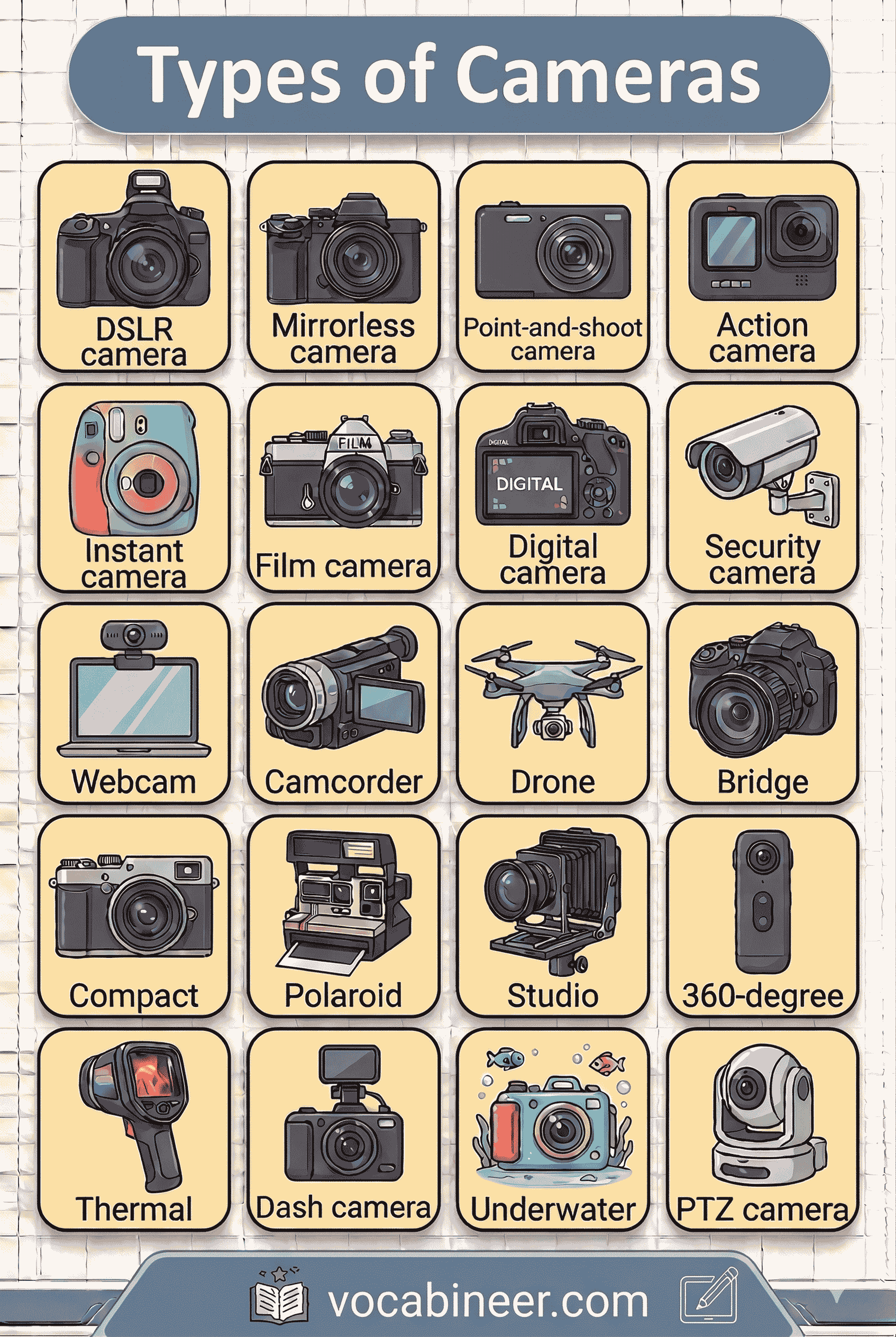
- DSLR camera: A digital camera with a mirror system and optical viewfinder. It is widely used for photography and supports interchangeable lenses.
- Mirrorless camera: A digital camera without a mirror box inside the body. It uses interchangeable lenses and is popular for both photography and video.
- Point-and-shoot camera: A compact camera with a fixed lens and simple controls. It is made for easy everyday photography without manual setup.
- Bridge camera: A fixed-lens camera that sits between a compact camera and a DSLR in style. It usually offers a large zoom range and more manual control.
- Action camera: A small, rugged camera made for movement and outdoor recording. It is commonly used for sports, travel, and first-person video.
- Instant camera: A camera that prints photos soon after the picture is taken. It is known for simple use and instant photo output.
- Film camera: A traditional camera that records images on photographic film instead of a digital sensor. It is still used for classic photography styles and analog shooting.
- Medium format camera: A camera with a larger sensor or film format than standard full-frame systems. It is used for high-detail photography and professional image quality.
- Smartphone camera: A built-in camera system inside a smartphone. It is one of the most common camera types for daily photos and videos.
- Cinema camera: A camera designed mainly for professional video production. It is built for filmmaking features such as advanced video controls and high-quality recording.
Cameras by Lens Type
One simple way to group cameras is by lens type. Some cameras let you change lenses, while others come with a fixed lens attached to the body.
Interchangeable-lens cameras
- DSLR camera: Uses removable lenses, so it can handle portraits, wildlife, sports, and many other styles.
- Mirrorless camera: Also supports lens changes and is widely used for both photos and video.
- Medium format camera: Often uses interchangeable lenses and is built for high-detail professional work.
- Cinema camera: Commonly works with different lenses for filmmaking and advanced video setups.
Fixed-lens cameras
- Point-and-shoot camera: Comes with a built-in lens and is made for simple everyday photography.
- Bridge camera: Has a fixed lens, usually with a long zoom range and more control than a basic compact camera.
- Action camera: Uses a built-in lens and is designed for movement, travel, and outdoor recording.
- Instant camera: Has a fixed lens and is mainly used for quick printed photos.
- Smartphone camera: Uses built-in camera lenses inside the phone body.
Cameras by Use
Camera types can also be grouped by what they are best used for. This makes the topic easier to understand because different cameras are designed for different shooting needs.
Everyday photography
- Point-and-shoot camera: A simple choice for casual photos and daily use.
- Smartphone camera: The most common option for everyday pictures and videos.
- Mirrorless camera: Also works well for daily photography with better control and image quality.
Travel photography
- Compact camera: Easy to carry and useful for light travel.
- Mirrorless camera: Popular for travel because it balances quality and portability.
- Action camera: Useful for outdoor trips, movement, and adventure recording.
Sports and action photography
- Action camera: Built for movement, fast scenes, and outdoor shooting.
- DSLR camera: Often used for sports because of lens options and strong performance.
- Mirrorless camera: Also common for fast-moving subjects and action scenes.
Instant photography
- Instant camera: Best known for printing photos soon after the picture is taken.
- Smartphone camera: Can also create instant results, but it depends on digital sharing or a separate printer.
Video and filmmaking
- Cinema camera: Made for professional video work and advanced filming control.
- Mirrorless camera: Commonly used for video because it combines good quality with a smaller body.
- Action camera: Helpful for movement, outdoor video, and first-person recording.
DSLR vs Mirrorless vs Point-and-Shoot
These three camera types are often compared because they differ in lens system, body design, control level, and everyday use. A DSLR and a mirrorless camera both support interchangeable lenses, while a point-and-shoot camera uses a fixed lens and is built more for simplicity.
| Camera type | Lens type | Main design feature | Best for | Control level |
|---|---|---|---|---|
| DSLR | Interchangeable lens | Mirror system with optical viewfinder | Photography, sports, portraits, general serious use | High |
| Mirrorless | Interchangeable lens | No mirror box, usually smaller body | Photography, video, travel, everyday advanced use | High |
| Point-and-shoot | Fixed lens | Compact body with simple controls | Casual photos, travel, easy everyday use | Low to medium |
A DSLR uses a mirror system inside the body, while a mirrorless camera does not. Because of that, mirrorless cameras are often smaller, whereas DSLRs are usually larger and more traditional in design. A point-and-shoot camera is different from both because it has a built-in lens and is made for quick, simple photography.
Summary
Types of cameras are easiest to understand when you look at design, lens type, and main use together. Some cameras, such as DSLR and mirrorless models, support interchangeable lenses, while others, such as point-and-shoot, action, instant, and smartphone cameras, use fixed lenses.
Each camera type is made for a different purpose. Some are better for everyday photography, some are built for travel or action, and others are designed for instant prints or professional video work. Once you know the main camera names and their basic features, it becomes much easier to tell them apart.
FAQs
The main types of cameras include DSLR, mirrorless, point-and-shoot, bridge, action, instant, film, medium format, smartphone, and cinema cameras.
A DSLR uses a mirror system and optical viewfinder, while a mirrorless camera does not use a mirror box and usually has a smaller body.
A point-and-shoot camera is used for simple everyday photography. It has a fixed lens and is designed for easy use without complex settings.
Action cameras are made for movement and outdoor recording, while DSLR and mirrorless cameras are also commonly used for sports and fast-moving subjects.
An instant camera prints photos soon after the picture is taken. It is mainly used for quick printed photos and simple photography.
Read More