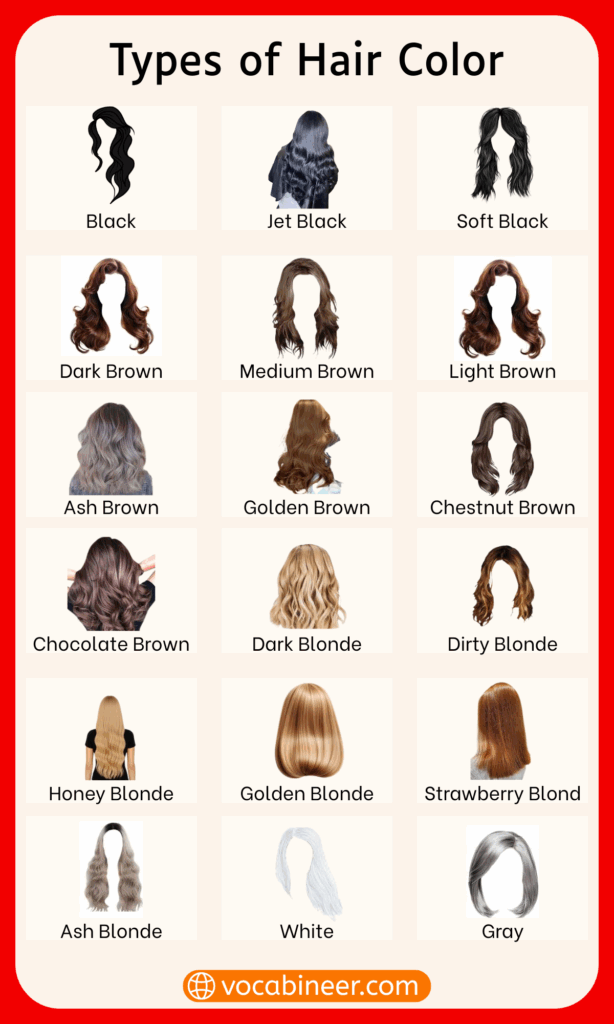
Different hair shades exist in both natural and dyed forms, ranging from dark black and brown to lighter blonde and bright reds. Creative tones like blue, purple, or pink also appear in styles worldwide, while platinum and silver attract attention. Many variations in hair colors reflect cultural meaning and personal style. This post covers types of hair colors with names and pictures. Learning these names helps in daily conversations, school projects, fashion talks, and beauty salon discussions.
In This Page
Types of Hair Colors
Hair colors are chosen based on natural appearance, personal style, and fashion trends. Some shades occur naturally, while others are created through dyeing to achieve lighter, darker, or more creative looks. Below is a well-structured list of hair color names with clear explanations to help recognize and understand each shade easily.
Natural Hair Colors
Natural hair colors are shades that commonly occur without chemical coloring. These colors usually appear softer and more subtle.
- Black: A deep, dark shade that looks rich and naturally glossy.
- Dark Brown: A strong brown shade that can appear nearly black indoors.
- Light Brown: A softer brown shade with a gentle and natural finish.
- Chestnut Brown: A warm brown color with mild red undertones.
- Ash Brown: A cool brown shade with gray or smoky tones.
- Blonde: A light shade ranging from pale yellow to soft gold.
- Platinum Blonde: A very light blonde shade with icy undertones.
- Strawberry Blonde: A blend of blonde and soft red hues.
- Dirty Blonde: A natural-looking mix of blonde and light brown.
- Red: A bright natural color that ranges from copper to deep red.
- Auburn: A dark red-brown shade with warmth and depth.
- Copper Red: A vibrant red shade with orange tones.
- Mahogany: A dark reddish-brown color with a polished look.
- Sandy Blonde: A beige-toned blonde with a soft appearance.
- Golden Blonde: A warm blonde shade with golden highlights.
Dyed and Fashion Hair Colors
Dyed and fashion hair colors are created using hair dye to enhance or change natural shades. These colors often appear richer and more defined.
- Silver: A cool metallic shade resembling polished silver.
- Gray: A neutral shade ranging from light gray to deep charcoal.
- White Blonde: A very pale blonde shade close to white.
- Rose Gold: A soft blend of pink and golden blonde tones.
- Burgundy: A deep red shade with wine-colored undertones.
- Caramel: A warm brown shade with golden softness.
- Honey Blonde: A rich blonde shade with warm golden tones.
- Chocolate Brown: A deep brown shade inspired by dark chocolate.
- Espresso Brown: A very dark brown shade with smooth depth.
- Jet Black: A pure black shade with strong shine.
- Blue Black: A black shade with subtle blue reflections.
- Ash Blonde: A blonde shade with cool gray undertones.
- Champagne Blonde: A soft blonde shade with pale gold hues.
- Toffee Brown: A medium brown shade with caramel warmth.
- Maple Brown: A rich brown shade with warm reddish tones.
Creative and Trendy Hair Colors
Creative hair colors are bold, expressive shades often chosen for fashion and personal style. These colors stand out and allow artistic expression.
- Blue: A bold shade ranging from bright to deep blue tones.
- Navy Blue: A dark blue shade with a subtle, elegant look.
- Pastel Blue: A light blue shade with a soft, faded finish.
- Purple: A strong color ranging from deep plum to bright violet.
- Lavender: A light purple shade with a gentle pastel effect.
- Lilac: A pale purple shade with soft pink hints.
- Violet: A vibrant purple shade with blue undertones.
- Pink: A playful shade ranging from soft blush to bright tones.
- Pastel Pink: A light pink shade with a gentle appearance.
- Hot Pink: A bright and intense pink shade that stands out.
- Green: A bold color ranging from forest green to neon shades.
- Mint Green: A light green shade with cool freshness.
- Emerald Green: A deep green shade inspired by gemstones.
- Teal: A rich blue-green shade with strong depth.
- Turquoise: A bright blue-green shade with tropical tones.
- Yellow: A vibrant shade inspired by sunlight tones.
- Orange: A bold shade ranging from soft orange to bright hues.
- Peach: A soft blend of orange and pink tones.
- Silver Ombre: A gradual blend fading from darker roots to silver ends.
- Rainbow: A multi-color style combining several bright shades together.
Common Types of Natural Hair Colors
Natural shades are the base colors found in most people’s hair. They range from very dark tones to lighter hues, each with unique charm.
- Black: The darkest natural shade, giving a bold and striking appearance.
- Brown: A common shade that varies from light chestnut to dark chocolate.
- Blonde: A lighter color that can be golden, sandy, or ash-toned.
- Red: A rare color with shades from copper to deep auburn.
- Gray and White: Often appear with age, showing a soft, elegant look.
Popular Artificial Hair Shades Names
Artificial shades are dyed variations of natural colors, often chosen to refresh style or experiment with new looks.
- Jet Black: Darker and glossier than natural black, giving a sharp shine.
- Golden Blonde: Bright, sunlit shade with golden undertones.
- Ash Brown: Neutral brown with a cool, ashy finish.
- Burgundy: Deep red mixed with hints of purple for a rich tone.
- Platinum Blonde: Very light blonde, almost silvery in appearance.
- Chocolate Brown: Smooth, deep brown resembling chocolate.
- Honey Blonde: Warm golden shade with soft highlights.
- Copper Red: Vibrant, fiery red with metallic glow.
- Mahogany: Dark red-brown, rich and earthy.
- Caramel Brown: Warm, golden-brown shade with soft depth.
List of Fashion and Creative Hair Colors
Fashion shades bring bold personality and are often used to stand out or make a statement.
- Blue: Ranges from deep navy to pastel sky tones.
- Green: From emerald richness to soft mint shades.
- Purple: Covers violet, lilac, and deep plum hues.
- Pink: Popular in pastel, rose, or neon versions.
- Silver: Metallic and stylish, giving a futuristic look.
- Rose Gold: A mix of pink and gold for a trendy effect.
- Pastel Shades: Soft, dreamy colors like lavender, peach, and baby blue.
Highlighting and Blended Styles
Highlighting styles mix tones together, creating smooth transitions and dimension in hair.
- Blonde Highlights: Lighter streaks over darker bases for contrast.
- Balayage: Hand-painted highlights that blend naturally.
- Ombre: Gradual fade from darker roots to lighter ends.
Current Hair Color Trends
Some shades gain popularity with time, setting trends in fashion and salons.
- Ash Blonde: Cool, muted blonde tone with gray hints.
- Mushroom Brown: A mix of ash brown and soft gray tones.
- Auburn: Warm reddish-brown, lively and rich.
- Champagne Blonde: Soft blonde with pale, golden sparkle.
Choosing the Right Shade for You
Choosing shades depends on personal features like skin tone and lifestyle.
- Colors for Warm Skin Tones: Golden blonde, honey brown, copper red.
- Colors for Cool Skin Tones: Ash blonde, platinum, burgundy.
- Beginner-Friendly Hair Colors: Chocolate brown, caramel, soft highlights.
FAQs about Types of Hair Colors
The most common natural hair colors are black, brown, blonde, and red. Black and dark brown dominate globally, while blonde is more common in Northern Europe. Red hair is the rarest, making up less than 2% of the world’s population.
Natural red hair is the rarest hair color in the world. It occurs due to a genetic variation in the MC1R gene and is mostly found in people of Northern and Western European ancestry. This unique shade ranges from bright copper to deep auburn tones.
Yes, hair colors can change throughout life. Babies often have lighter hair that darkens as they grow. Similarly, some people experience hair lightening from sun exposure, while aging can bring shades of gray, white, or silver as melanin production decreases.
In modern fashion, dyed shades such as platinum blonde, silver, pastel pink, purple, and blue are very popular. These creative tones allow people to express individuality and are commonly seen in celebrities, social media trends, and beauty salons worldwide.
Learning the types of hair colors with names and pictures helps people talk confidently in beauty salons, fashion discussions, or everyday conversations. It is also useful for students in school projects, hairstylists in their profession, and anyone interested in personal style.
Conclusion
Understanding the different types of hair colors with names and pictures helps learners recognize both natural and dyed shades more easily. From basic tones like black, brown, and blonde to creative colors such as pink or silver, knowing these terms makes everyday conversations about style, beauty, and fashion more confident and clear.
Read More