
Types of lunch boxes are the common lunch box styles people recognize by format, material, temperature function, and special features. These include bento boxes, compartment lunch boxes, stackable lunch boxes, insulated lunch boxes, and other practical styles used for school, work, and travel.
In this article, you’ll learn the main lunch box types, how each category is grouped, and what makes one style different from another. You’ll also see simple classifications, common lunch box names, and clear explanations that make lunch box types easier to understand and remember.
In This Page
Lunch Box Types at a Glance
Lunch boxes come in many forms, yet some types are easier to recognize than others. So, before looking at each category in detail, it helps to see the main lunch box types in one quick overview.
- Bento box: A lunch box with separate sections for different foods.
- Compartment lunch box: A lunch box divided into multiple food spaces.
- Stackable lunch box: A lunch box with layers or tiers stacked on top of each other.
- Lunch jar: A round container made for soups, rice, or other packed meals.
- Snack box: A smaller lunch-style container for snacks and light food.
- Plastic lunch box: A lunch box made mainly from plastic.
- Stainless steel lunch box: A lunch box made from metal with a strong body.
- Glass lunch box: A lunch box made from glass, often with a fitted lid.
- Silicone lunch box: A flexible lunch container made from silicone.
- Insulated lunch box: A lunch box made to help keep food warm or cool.
- Non-insulated lunch box: A lunch box without temperature-holding layers.
- Thermos-style lunch container: A lunch container made to keep food hot or cold longer.
- Kids’ lunch box: A lunch box made for children and school use.
- Adult lunch box: A lunch box made for work, travel, or everyday adult use.
- Leakproof lunch box: A lunch box designed to reduce spills.
- Electric lunch box: A lunch box that can warm food using power.
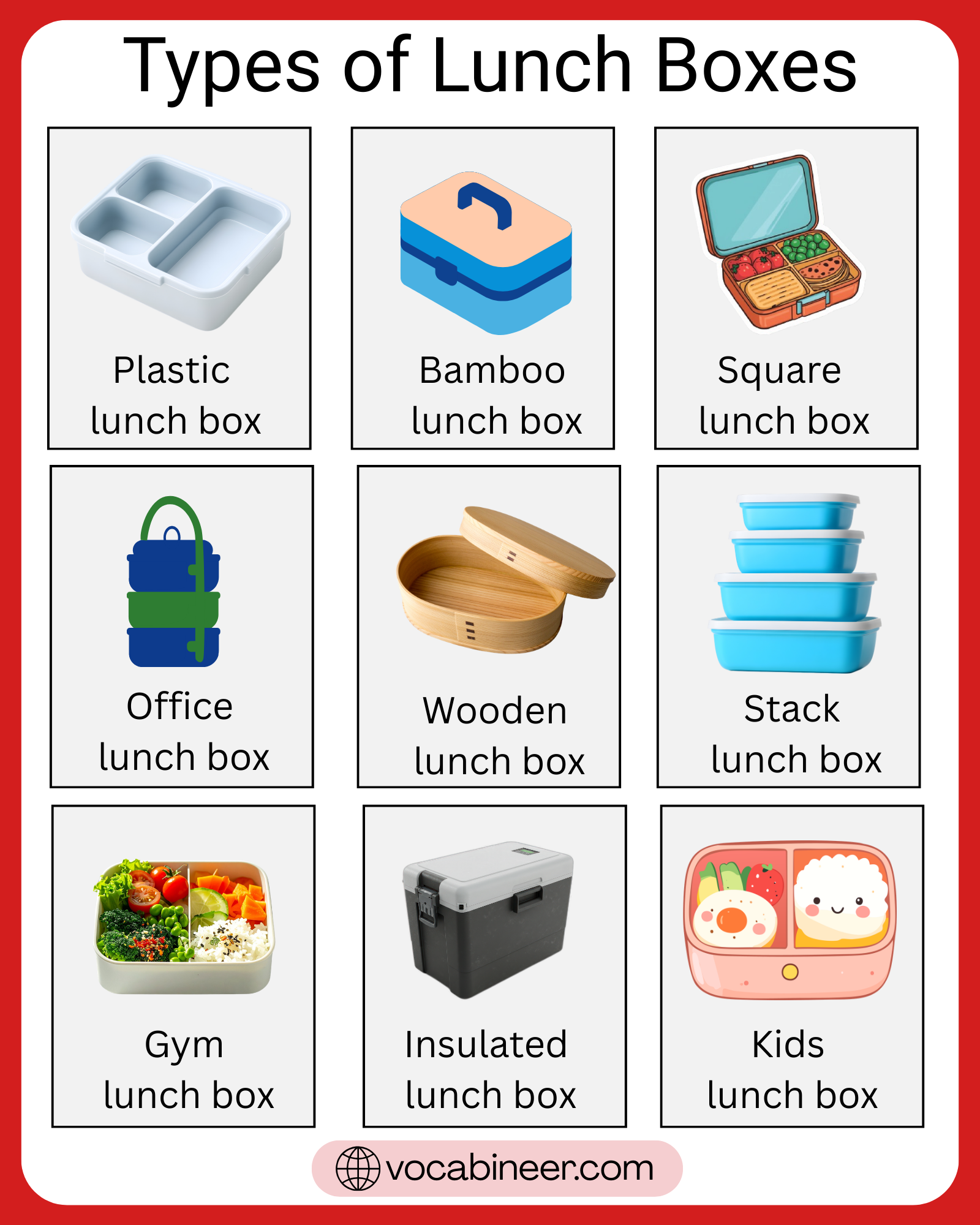
Lunch Boxes by Format
Format is one of the easiest ways to group lunch boxes because the shape and layout are easy to notice. As a result, readers can quickly tell these lunch box types apart.
Bento Box
- Bento box: A lunch box with separate sections that keep foods divided.
- Common use: Packed meals with different food items in one box.
- Easy clue: Multiple sections inside one container.
Compartment Lunch Box
- Compartment lunch box: A lunch box designed with built-in food sections.
- Common use: Organized lunches that keep foods apart.
- Easy clue: Divided inside space for different items.
Stackable Lunch Box
- Stackable lunch box: A lunch box made with layered tiers that sit on top of each other.
- Common use: Meals packed in separate levels.
- Easy clue: More than one container stacked together.
Lunch Jar
- Lunch jar: A rounded meal container often used for rice, noodles, soups, or mixed meals.
- Common use: Packed hot or moist meals.
- Easy clue: Jar-like shape instead of a flat box.
Snack Box
- Snack box: A smaller food container used for snacks, fruit, or light meals.
- Common use: Small food portions and snack packing.
- Easy clue: Compact size and lighter food use.
Lunch Boxes by Material
Material is another simple way to tell lunch box types apart. Because the outer body changes how the lunch box looks and feels, this category is easy to recognize.
Plastic Lunch Box
- Plastic lunch box: A lunch box made mainly from plastic.
- Common use: School lunches, office meals, and general everyday use.
- Easy clue: Lightweight body and smooth plastic finish.
Stainless Steel Lunch Box
- Stainless steel lunch box: A lunch box made from steel with a stronger and firmer body.
- Common use: Daily meals, durable lunch packing, and repeated use.
- Easy clue: Metal body with a shiny or matte finish.
Glass Lunch Box
- Glass lunch box: A lunch container made from glass, usually with a fitted lid.
- Common use: Packed leftovers, meal prep, and home-to-office meals.
- Easy clue: Clear glass body and heavier feel.
Silicone Lunch Box
- Silicone lunch box: A flexible lunch container made from silicone.
- Common use: Light meal packing and foldable storage.
- Easy clue: Soft and bendable body.
Lunch Boxes by Temperature Function
Temperature function is another useful way to group lunch boxes because some are made to help food stay warm or cool longer. So, this section makes it easier to understand which lunch boxes are built for temperature control and which ones are not.
Insulated Lunch Box
- Insulated lunch box: A lunch box made with layers that help keep food warm or cool for longer.
- Common use: School meals, office lunches, and travel food.
- Easy clue: Thicker body or insulated bag-style design.
Non-Insulated Lunch Box
- Non-insulated lunch box: A regular lunch box without extra temperature-holding layers.
- Common use: Everyday packed meals eaten within a shorter time.
- Easy clue: Standard box shape without thick insulated lining.
Thermos-Style Lunch Container
- Thermos-style lunch container: A lunch container made to hold hot or cold food for a longer time.
- Common use: Soups, noodles, rice, and warm meals.
- Easy clue: Tall sealed body with a flask-like design.
Lunch Boxes by User
Some lunch boxes are easier to understand by who they are made for. As a result, this group helps readers connect lunch box styles with age and daily routine.
Kids’ Lunch Box
- Kids’ lunch box: A lunch box made for children and school use.
- Common use: School lunches, snacks, and smaller meals.
- Easy clue: Smaller size, playful design, or child-friendly sections.
Adult Lunch Box
- Adult lunch box: A lunch box made for office meals, travel food, or larger portions.
- Common use: Work lunches, meal prep, and daily commuting.
- Easy clue: Simpler design and more space for full meals.
Lunch Boxes by Special Features
Some lunch boxes stand out because of extra features that change how they work. Because of that, these types are easier to recognize by function rather than only by shape.
Leakproof Lunch Box
- Leakproof lunch box: A lunch box designed to help prevent spills.
- Common use: Saucy foods, packed meals, and travel lunches.
- Easy clue: Tight-sealing lid and spill-resistant design.
Electric Lunch Box
- Electric lunch box: A lunch box that can warm food using power.
- Common use: Office meals, travel meals, and reheating packed food.
- Easy clue: Power cord or heating feature built into the box.
How to Identify Lunch Box Types
You can identify lunch box types by looking at shape, sections, material, and special features. A bento box or compartment lunch box has divided spaces, a stackable lunch box has layered tiers, and a lunch jar has a rounded container shape. Plastic, steel, glass, and silicone lunch boxes are easiest to spot by the body material, while insulated, leakproof, and electric lunch boxes stand out because of how they work.
Lunch Box Names List
This quick list makes the common lunch box names easier to scan and remember.
- Bento box
- Compartment lunch box
- Stackable lunch box
- Lunch jar
- Snack box
- Plastic lunch box
- Stainless steel lunch box
- Glass lunch box
- Silicone lunch box
- Insulated lunch box
- Non-insulated lunch box
- Thermos-style lunch container
- Kids’ lunch box
- Adult lunch box
- Leakproof lunch box
- Electric lunch box
Quick Comparison of Lunch Box Types
This table helps you compare lunch box types by main use and easy recognition features.
| Lunch box type | Main use | Easy clue |
|---|---|---|
| Bento box | Meals with separate foods | Multiple sections in one box |
| Compartment lunch box | Organized packed lunches | Divided inside space |
| Stackable lunch box | Layered meal packing | Tiers stacked together |
| Lunch jar | Soups, rice, and moist meals | Jar-like round shape |
| Snack box | Small food portions | Compact size |
| Plastic lunch box | Everyday school or office meals | Lightweight plastic body |
| Stainless steel lunch box | Durable daily meal packing | Metal body |
| Glass lunch box | Leftovers and meal prep | Clear glass container |
| Silicone lunch box | Flexible storage and light meals | Soft bendable body |
| Insulated lunch box | Keeping food warm or cool longer | Thicker insulated body |
| Non-insulated lunch box | Regular packed meals | Standard box shape |
| Thermos-style lunch container | Hot or cold meals | Flask-like sealed design |
| Kids’ lunch box | School lunches and snacks | Smaller size and child-friendly style |
| Adult lunch box | Work meals and larger portions | Simpler design and more meal space |
| Leakproof lunch box | Spill-resistant packed meals | Tight-sealing lid |
| Electric lunch box | Warming packed food | Built-in heating feature |
Summary
Types of lunch boxes are easier to understand when they are grouped by format, material, temperature function, user, and special features. In this article, the main lunch box types included bento boxes, compartment lunch boxes, stackable lunch boxes, lunch jars, insulated lunch boxes, stainless steel lunch boxes, and other practical styles.
Because the groups are simple and visual, they make lunch box names easier to remember and compare. So, whether you are learning lunch box vocabulary or trying to tell one lunch box type from another, this guide gives a clear starting point.
FAQs
A bento box is a meal box with separate sections, while a compartment lunch box is a more general lunch box with divided spaces.
An insulated lunch box is a lunch box made to help keep food warm or cool longer than a regular lunch box.
A lunch jar is used for soups, rice, noodles, and other packed meals that are easier to carry in a rounded container.
A leakproof lunch box is designed with a tighter seal to help reduce spills from sauces or moist foods.
A kids’ lunch box is usually best for children because it is smaller, easier to carry, and often designed for school meals and snacks.
Read More