

Organic food names are the names of fruits, vegetables, grains, dairy products, eggs, meat, snacks, drinks, and pantry items that can carry an organic label. People often search for organic foods name lists when they want to learn food vocabulary, prepare a shopping list, or recognize common organic products in stores.
However, organic describes how farmers, producers, or brands grow, raise, process, or label food. It does not automatically make every organic product healthier than every regular product, so the food name, ingredient list, portion size, and full meal still matter.
In This Page
Common Organic Food Names
The foods below commonly appear with organic labels in grocery stores, markets, and packaged food sections. Since this section already focuses on organic food names, the list uses clean food names without repeating “organic” before every item.
- Apple
- Banana
- Orange
- Strawberry
- Grapes
- Mango
- Spinach
- Carrot
- Tomato
- Potato
- Cucumber
- Broccoli
- Lettuce
- Rice
- Oats
- Wheat
- Quinoa
- Milk
- Eggs
- Chicken
- Yogurt
- Honey
- Olive oil
- Tea
- Coffee
- Cereal
- Pasta
- Baby food
- Peanut butter
- Granola bars
For example, these names may appear on labels as organic apple, organic oats, organic milk, organic eggs, organic honey, or organic pasta.

What Does Organic Food Mean?
Organic food means food that follows organic farming or production rules. In simple words, organic tells us about the way producers grow, raise, handle, or label food before it reaches the market.
For example, an apple and an organic apple are both apples. However, farmers grow the organic apple under organic standards, while regular apples may come from conventional farming methods. Similarly, brands can sell organic milk, oats, pasta, or cookies, but each product still has its own ingredients and nutrition.
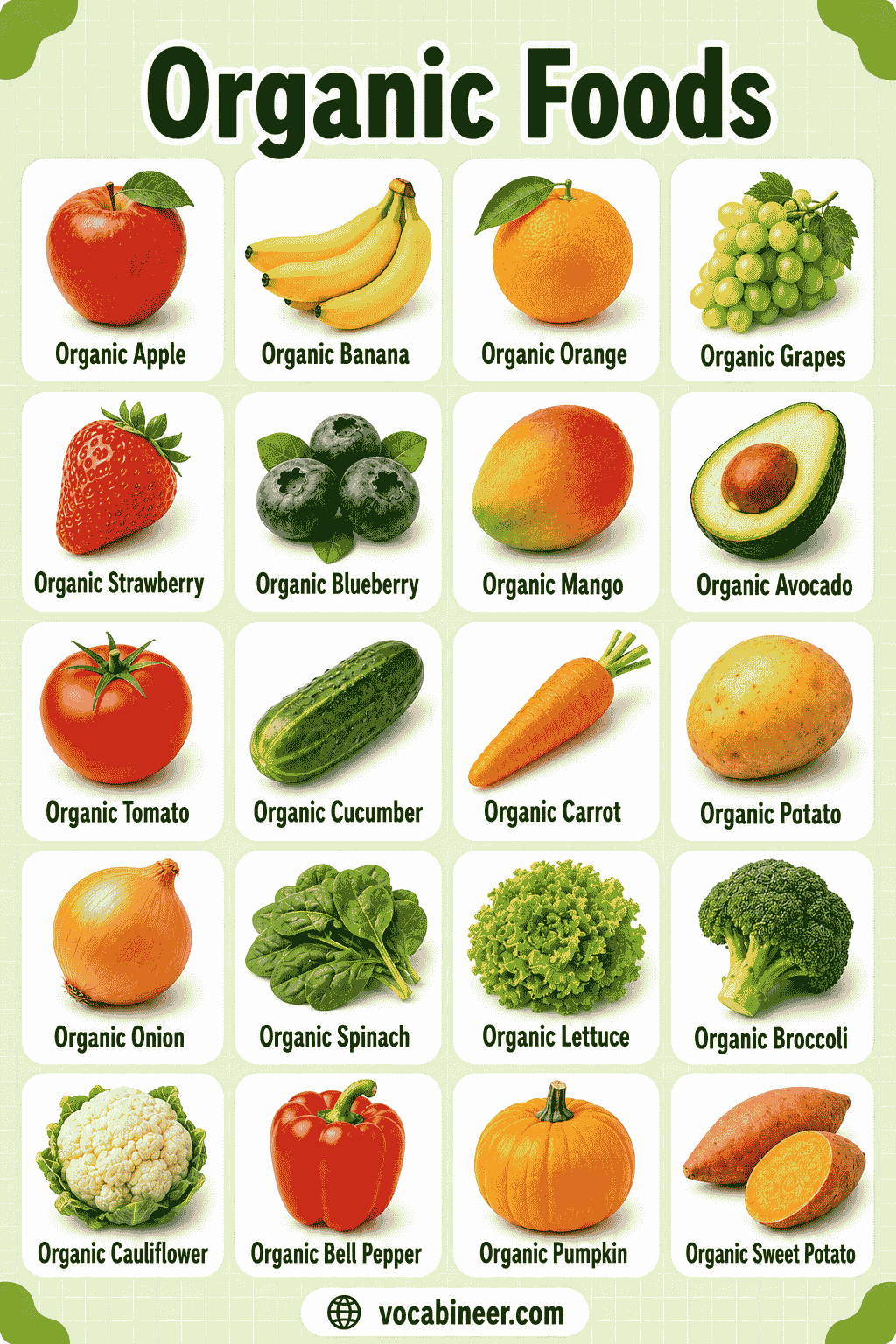
Organic Fruits Names
Organic fruits are among the most common organic foods because shoppers often see them in fresh produce sections. Each fruit name below can appear with an organic label, such as organic mango, organic grapes, or organic blueberries.
- Apple
- Banana
- Orange
- Mango
- Grapes
- Strawberry
- Blueberry
- Raspberry
- Blackberry
- Peach
- Pear
- Plum
- Cherry
- Pineapple
- Watermelon
- Melon
- Kiwi
- Lemon
- Lime
- Pomegranate
- Papaya
- Avocado
- Fig
- Date
- Coconut
In addition, fruit can appear fresh, dried, frozen, canned, or juiced. Therefore, shoppers may see names such as organic dried mango, organic frozen berries, organic apple juice, and organic coconut water.
Organic Vegetables Names
Organic vegetables include leafy greens, root vegetables, salad vegetables, and cooking vegetables. Since vegetables appear in many daily meals, this category gives readers a useful vocabulary set for shopping, cooking, and food learning.
- Spinach
- Lettuce
- Kale
- Cabbage
- Broccoli
- Cauliflower
- Carrot
- Potato
- Sweet potato
- Tomato
- Cucumber
- Onion
- Garlic
- Bell pepper
- Green beans
- Peas
- Zucchini
- Pumpkin
- Eggplant
- Mushroom
- Beetroot
- Radish
- Celery
- Corn
- Asparagus
Vegetables can also come fresh, frozen, canned, dried, or mixed under an organic label. For instance, stores may sell organic frozen peas, organic canned tomatoes, organic dried mushrooms, and organic mixed vegetables.
Organic Grains and Cereal Foods
Organic grains and cereal foods support breakfast, baking, cooking, and meal preparation. These foods often appear as whole grains, flours, cereals, noodles, bread, pasta, and snacks.
- Rice
- Brown rice
- Basmati rice
- Oats
- Rolled oats
- Wheat
- Whole wheat flour
- Barley
- Millet
- Quinoa
- Corn
- Buckwheat
- Rye
- Sorghum
- Amaranth
- Cereal
- Granola
- Muesli
- Bread
- Pasta
- Noodles
- Crackers
- Tortillas
- Pancake mix
- Breakfast flakes
However, grain products can still contain sugar, salt, oil, or refined flour. Because of that, readers should check the ingredient list when buying organic cereal, cookies, crackers, or snack bars.
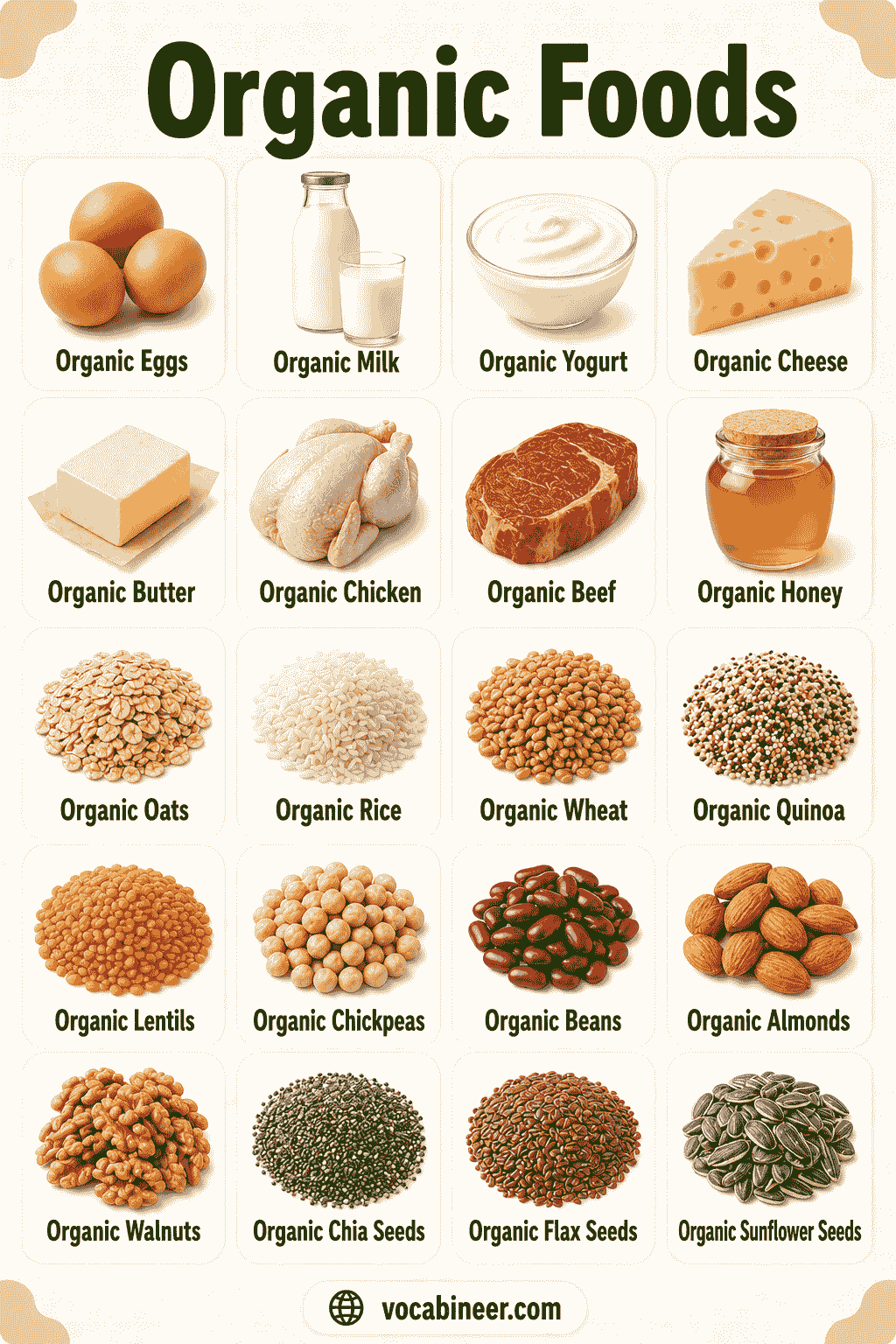
Organic Beans, Lentils, Nuts, and Seeds
Beans, lentils, nuts, and seeds work well as pantry foods. People use them in soups, salads, curries, spreads, snacks, baking recipes, and lunch-box meals.
- Chickpeas
- Kidney beans
- Black beans
- Pinto beans
- Navy beans
- Soybeans
- Green peas
- Lentils
- Red lentils
- Green lentils
- Mung beans
- Almonds
- Walnuts
- Cashews
- Peanuts
- Pistachios
- Hazelnuts
- Chia seeds
- Flaxseeds
- Pumpkin seeds
- Sunflower seeds
- Sesame seeds
- Hemp seeds
- Peanut butter
- Almond butter
Meanwhile, packaged nut and seed products may include added salt, sugar, chocolate, honey, or oil. As a result, organic peanut butter, trail mix, and nut bars still need a quick label check.
Organic Dairy, Eggs, and Meat
Organic dairy, eggs, and meat come from animal-based food categories that companies may sell under organic standards. These names matter because shoppers often see them in refrigerated, frozen, and fresh food sections.
- Milk
- Whole milk
- Low-fat milk
- Yogurt
- Greek yogurt
- Cheese
- Cheddar cheese
- Mozzarella cheese
- Butter
- Cream
- Eggs
- Chicken
- Turkey
- Beef
- Lamb
- Ground meat
- Chicken breast
- Chicken thighs
- Sausages
- Deli meat
- Kefir
- Cottage cheese
- Ghee
- Sour cream
- Ice cream
Although organic labels can help shoppers identify production standards, they do not replace normal food safety, storage, cooking, or portion guidance. For example, organic chicken still needs proper cooking, and organic ice cream can still contain sugar.
Organic Herbs, Spices, and Pantry Foods
Herbs, spices, and pantry foods help people cook flavorful meals. This category includes dry goods, oils, sweeteners, sauces, baking ingredients, seasonings, spreads, and shelf-stable foods.
- Basil
- Mint
- Parsley
- Coriander
- Oregano
- Thyme
- Rosemary
- Turmeric
- Ginger
- Cinnamon
- Black pepper
- Cumin
- Chili powder
- Paprika
- Flour
- Sugar
- Honey
- Maple syrup
- Olive oil
- Coconut oil
- Vinegar
- Tomato sauce
- Pasta sauce
- Soy sauce
- Jam
Additionally, many pantry foods use several ingredients. Therefore, an organic sauce, soup, dressing, or spread can still vary in salt, sugar, oil, and additives.
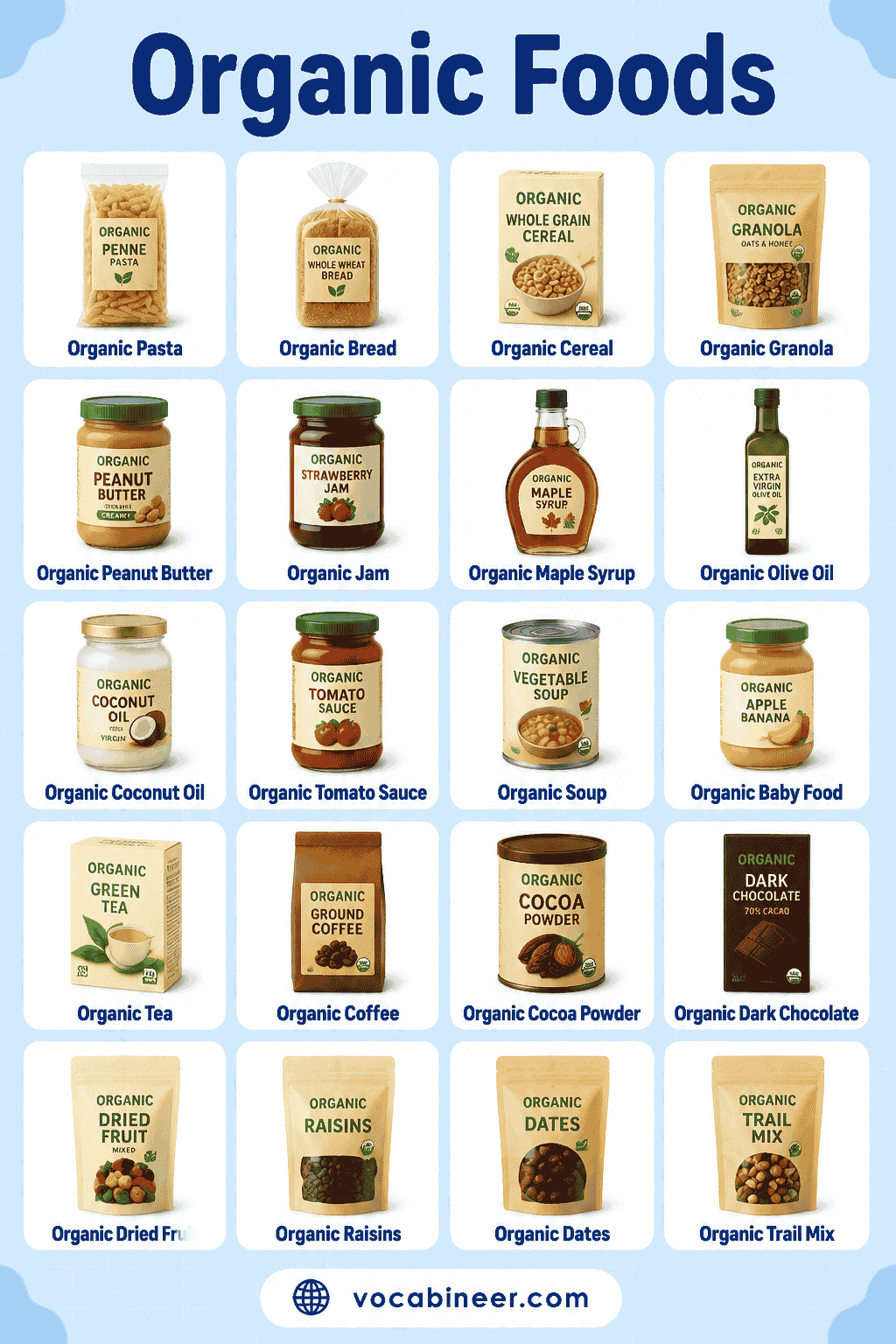
Organic Snacks and Packaged Foods
Organic snacks and packaged foods include ready-to-eat or easy-to-prepare products. These names often appear in supermarkets, school lunch boxes, quick meal sections, and family snack shelves.
- Granola bars
- Cereal bars
- Crackers
- Popcorn
- Chips
- Cookies
- Biscuits
- Rice cakes
- Fruit snacks
- Dried fruit
- Trail mix
- Chocolate
- Peanut butter cups
- Applesauce
- Soup
- Pasta
- Noodles
- Frozen pizza
- Frozen vegetables
- Veggie burgers
- Hummus
- Salsa
- Ketchup
- Salad dressing
- Nut bars
Still, organic packaged food is not automatically a better choice for every diet. For example, organic cookies, chips, and chocolate can still contain added sugar, salt, or oil.
Organic Drinks
Organic drinks include hot drinks, cold drinks, juices, dairy drinks, plant-based drinks, and bottled beverages. These names often appear on café menus, supermarket shelves, breakfast tables, and school lunch lists.
- Tea
- Green tea
- Black tea
- Herbal tea
- Coffee
- Apple juice
- Orange juice
- Grape juice
- Carrot juice
- Coconut water
- Lemonade
- Smoothie
- Milk
- Chocolate milk
- Almond milk
- Soy milk
- Oat milk
- Rice milk
- Kefir
- Kombucha
- Fruit drink
- Vegetable juice
- Iced tea
- Protein drink
- Drinking yogurt
However, drinks can contain different amounts of sugar, caffeine, flavoring, or additives. So, readers should check the label, especially for organic juice, lemonade, flavored milk, and bottled drinks.
Organic Baby Food Names
Organic baby food names are useful for parents, caregivers, teachers, and vocabulary learners. These foods often come as purees, cereals, snacks, pouches, and soft finger foods.
- Baby cereal
- Rice cereal
- Oatmeal cereal
- Fruit puree
- Apple puree
- Banana puree
- Mango puree
- Pear puree
- Vegetable puree
- Carrot puree
- Pumpkin puree
- Sweet potato puree
- Peas puree
- Baby yogurt
- Baby snacks
- Teething biscuits
- Baby puffs
- Baby food pouch
- Mixed fruit pouch
- Vegetable pouch
- Toddler snacks
- Baby oatmeal
- Baby lentil meal
- Baby rice cakes
- Soft fruit bites
When choosing baby food, caregivers should follow age guidance, allergy advice, and professional recommendations when needed. Also, organic labels do not remove the need to check ingredients, texture, sugar content, and serving instructions.
Organic Food Labels to Know
Organic food labels help shoppers understand how a product presents its organic claim. Since rules and wording can vary by country, always check the official label system used in your location.
| Label Term | Simple Meaning |
|---|---|
| Certified organic | A recognized certifying body has checked the product against organic standards. |
| 100% organic | The product claims all or nearly all ingredients meet organic standards, depending on local rules. |
| Organic | The product meets the organic standard required for that label in its market. |
| Made with organic ingredients | The product contains some organic ingredients, but the whole product may not count as fully organic. |
| Organic produce | Fresh fruits or vegetables sold under an organic label. |
| Organic dairy | Milk, yogurt, cheese, or butter sold under organic standards. |
| Organic pantry food | Shelf-stable foods such as flour, oil, rice, pasta, honey, or cereal with organic labeling. |
| Natural | A broad marketing word that does not always mean organic. |
For this reason, shoppers should not treat natural, fresh, local, and organic as the same word. Each label can mean something different.
Organic Foods vs Regular Foods
Organic foods and regular foods can share the same basic names. For example, an organic apple and a regular apple are both apples, while organic rice and regular rice are both rice.
The difference comes from the production and labeling standard, not from a completely different food identity. However, taste, price, availability, farming method, and product ingredients may vary from one brand or farm to another.
| Food Name | Organic Version | Regular Version |
|---|---|---|
| Apple | Organic apple | Regular apple |
| Milk | Organic milk | Regular milk |
| Eggs | Organic eggs | Regular eggs |
| Rice | Organic rice | Regular rice |
| Oats | Organic oats | Regular oats |
| Chicken | Organic chicken | Regular chicken |
| Spinach | Organic spinach | Regular spinach |
| Honey | Organic honey | Regular honey |
In short, the food name stays the same, but the label tells shoppers about the production standard.
Organic and Natural Foods: Are They the Same?
Organic and natural foods are not always the same. Organic usually follows a specific production and labeling standard, while natural can mean different things depending on the product, brand, and local rules.
For example, a product may say “natural” on the package but not carry an organic label. Meanwhile, a certified organic product should show a proper organic label or certification mark according to the market where it sells.
| Term | What It Usually Tells You |
|---|---|
| Organic | The food follows organic production or labeling standards. |
| Natural | The food may avoid certain artificial ingredients, but the meaning can vary. |
| Fresh | The food has not gone through long storage or heavy processing, but it may not be organic. |
| Local | The food comes from a nearby area, but it may or may not be organic. |
| Healthy | This depends on the whole food, ingredients, portion, and diet pattern. |
Therefore, readers should check the actual label instead of trusting one marketing word.
How to Choose Organic Foods
Choose organic foods by starting with the food you already need. For example, if you eat oats, apples, spinach, eggs, or milk regularly, you can look for organic versions of those foods first.
Next, read the label carefully. Check the organic claim, ingredient list, sugar, salt, oil, serving size, and any allergy information. This matters especially for organic snacks, drinks, baby foods, and packaged meals.
Finally, compare price, freshness, and use. Organic food can cost more in some places, so buying foods you will actually eat helps reduce waste and keeps your shopping practical.
FAQs
Organic means the food is grown or made without synthetic pesticides, chemical fertilizers, or genetically modified seeds. For animal foods, it also means organic feed and no routine antibiotics or growth hormones.
Organic foods often have fewer chemical residues, but “healthier” can depend on the food itself. An organic cookie is still a cookie. The main difference is how the food is grown or raised.
Organic farming usually costs more because it avoids cheap chemicals, uses more labor, and often produces smaller crop amounts. Organic animals also need organic feed and better living space.
Look for the word “organic” on the label or price tag. Many stores also separate organic sections for fruits, vegetables, grains, and dairy. Packaged items often show an organic certification mark.
Yes, some organic fruits and vegetables spoil a bit faster because they do not use strong preservatives or chemical sprays. Storing them properly in a cool, dry place helps them last longer.
Conclusion
Organic food items include fruits, vegetables, grains, pulses, dairy, eggs, meat, nuts, seeds, oils, spices, sweeteners, drinks, snacks, and baby foods. The word “organic” simply means these foods are grown or made without harsh chemical methods. When you learn these organic food items names, you can spot them in markets and talk about healthier food choices more clearly.
Read More