Noodles come in many forms, from thin rice vermicelli and chewy udon to egg noodles, glass noodles, ramen, soba, and long pasta shapes. People make noodles with wheat, rice, eggs, starch, buckwheat, legumes, vegetables, or grain blends, and each type brings a different shape, texture, cooking time, and best use.
Learning the different types of noodles helps you recognize noodle names more easily. It also helps you choose the right noodle for soups, stir-fries, salads, saucy meals, baked dishes, and everyday cooking.

In This Page
Common Types of Noodles
Common types of noodles include the varieties people often see in homes, restaurants, grocery stores, Asian dishes, Italian meals, and quick snacks. These names appear often on menus, recipes, food packages, and food vocabulary lists, so they make a useful starting point.
- Wheat noodles: These firm noodles use wheat flour and work well in soups, stir-fries, and saucy dishes.
- Rice noodles: These light noodles use rice flour and appear in Asian soups, stir-fries, salads, and noodle bowls.
- Egg noodles: Eggs give these noodles a yellow color, richer flavor, and tender bite.
- Glass noodles: Starch gives these noodles a translucent look, and they absorb sauces, broth, and seasonings well.
- Ramen noodles: These springy wheat noodles usually appear in hot Japanese-style broths.
- Udon noodles: These thick Japanese wheat noodles have a chewy bite and suit soups, hot pots, and stir-fries.
- Soba noodles: Buckwheat gives these Japanese noodles an earthy taste, and cooks serve them hot or cold.
- Lo mein noodles: These soft Chinese wheat noodles pair well with sauce, vegetables, and protein.
- Chow mein noodles: Cooks stir-fry these Chinese wheat noodles, and some versions turn lightly crisp.
- Rice vermicelli: These very thin rice noodles suit soups, salads, rolls, and light noodle dishes.
- Flat rice noodles: These wide rice noodles hold sauce well in stir-fries, pho-style soups, and saucy dishes.
- Hakka noodles: These thin noodles appear often in Indo-Chinese stir-fried dishes.
- Shirataki noodles: Konjac gives these noodles a very light texture, so many people use them in low-calorie meals.
- Spaghetti: This long Italian pasta often gets called noodles in everyday English.
- Fettuccine: This flat ribbon pasta works especially well with creamy sauces and rich pasta dishes.
Are Pasta and Noodles the Same?
Pasta and noodles are related, but people do not always use the words in the same way. Noodles often refer to long or strip-like foods made with wheat, rice, eggs, starch, buckwheat, or vegetables, while pasta usually refers to Italian wheat-based shapes such as spaghetti, penne, fusilli, macaroni, and lasagna sheets.
However, everyday English often blurs the difference. Many people call long pasta shapes “noodles,” especially spaghetti, fettuccine, linguine, and tagliatelle. For cooking accuracy, use the exact name, such as ramen, udon, rice noodles, spaghetti, egg noodles, glass noodles, or penne.
| Term | Common Meaning | Examples |
|---|---|---|
| Noodles | A broad food term for long or strip-like dough or starch foods | Ramen, udon, soba, rice noodles, egg noodles |
| Pasta | Italian-style wheat-based shapes and strands | Spaghetti, penne, fusilli, macaroni, lasagna |
| Pasta noodles | A casual phrase for long pasta shapes | Spaghetti, fettuccine, linguine |
| Noodle substitutes | Vegetables or light alternatives shaped like noodles | Zucchini noodles, cucumber noodles, shirataki |
Noodles by Main Ingredient
Ingredients affect a noodle’s texture, flavor, color, cooking time, and best cooking method. For example, wheat noodles usually feel firm and chewy, while rice noodles feel lighter and softer. Meanwhile, starch noodles often turn glossy or translucent after cooking.
Ingredients also matter for diet needs. Wheat noodles usually contain gluten, while rice noodles often suit gluten-free meals. In addition, egg noodles taste richer, and legume-based noodles usually feel denser than classic wheat pasta.
| Main Ingredient | Noodle Examples | Common Texture |
|---|---|---|
| Wheat | Ramen, udon, lo mein, chow mein, hand-pulled noodles | Firm, chewy, springy |
| Rice | Rice vermicelli, rice sticks, flat rice noodles, bánh phở | Soft, smooth, light |
| Egg and wheat | Egg noodles, Cantonese egg noodles, Hakka noodles | Tender, rich, slightly springy |
| Starch | Glass noodles, mung bean noodles, dangmyeon | Clear, slippery, chewy |
| Buckwheat | Soba, buckwheat naengmyeon | Earthy, firm, nutty |
| Beans and legumes | Chickpea noodles, lentil noodles, edamame noodles | Dense, filling, protein-rich |
| Vegetables | Zucchini noodles, carrot noodles, cucumber noodles | Fresh, light, crisp or soft |
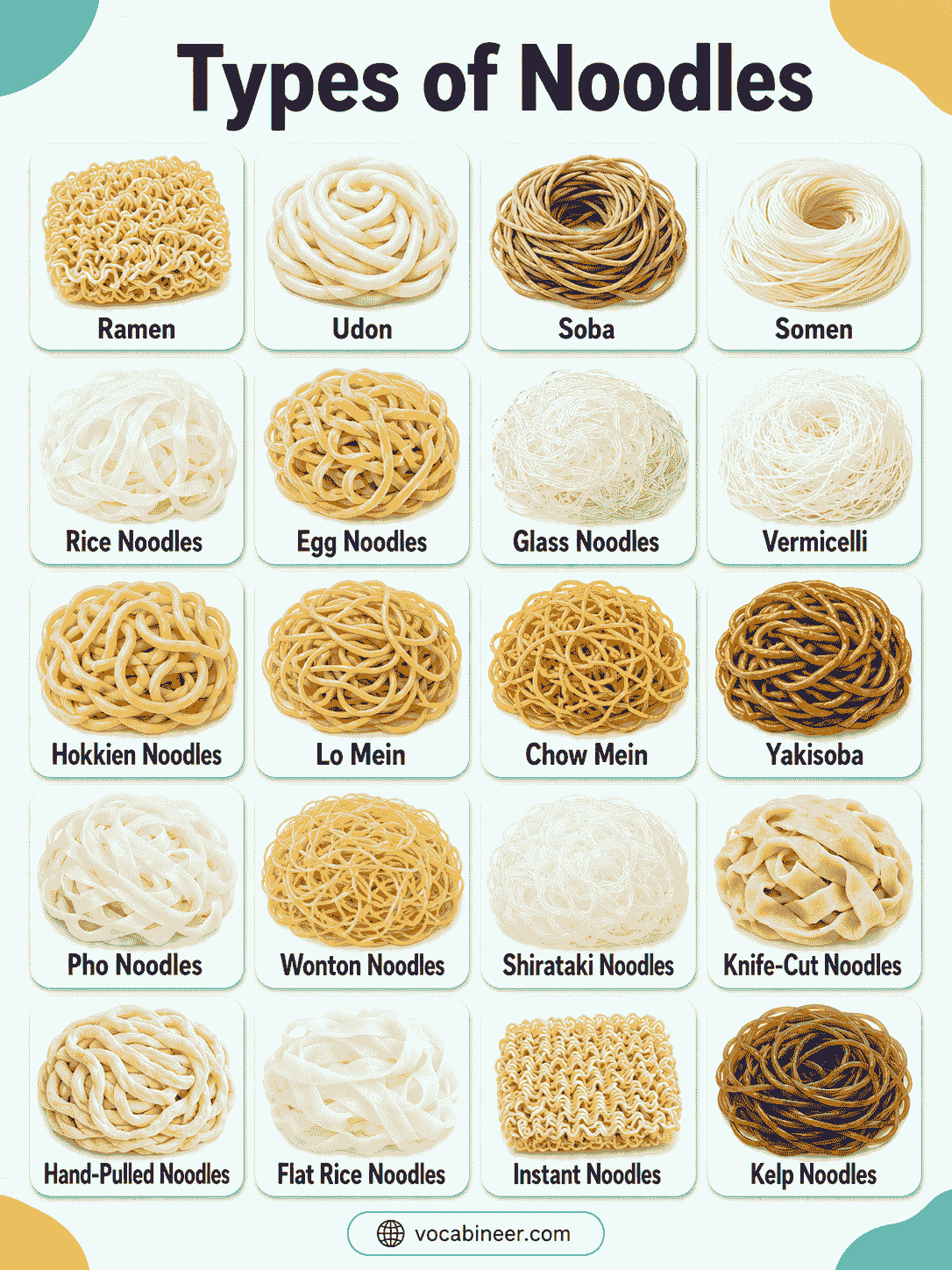
Wheat-Based Noodles
People make wheat-based noodles mainly with wheat flour and water. Many wheat noodles have a firm or chewy texture, so they hold sauces, broth, and stir-fry seasonings well.
Ramen noodles have a springy bite and appear most often in Japanese-style noodle soups. Their thinner shape works well with broth, toppings, and bold seasonings.
Udon noodles have a thick, chewy texture and a soft bite. Cooks use them in warm broth, cold dipping dishes, hot pots, and quick stir-fries.
Lo mein noodles have a soft texture that mixes easily with sauce, vegetables, and protein. Usually, cooks boil them first and then toss them with other ingredients.
Chow mein noodles work well in stir-fried dishes. Depending on the style, cooks prepare them soft, lightly crisp, or crunchy.
Hand-pulled noodles come from dough that noodle makers stretch by hand into long strands. Their uneven handmade texture suits broths, spicy sauces, and stir-fried dishes.
Knife-cut noodles have thick, irregular edges because cooks shave or cut them from dough. As a result, their rough surface catches sauce and broth well.
Somen noodles are very thin Japanese wheat noodles. People often eat them cold with a light dipping sauce or add them to delicate soups.
Hiyamugi noodles are thin Japanese wheat noodles that sit between somen and udon in thickness. They suit chilled summer meals and light dipping sauces.
Chinese wheat noodles include round, flat, thin, and thick varieties. Cooks use them in soups, stir-fries, cold noodle dishes, and street food meals.
Wonton noodles combine a thin egg-wheat texture with a springy bite. Restaurants often pair them with wontons, broth, and leafy greens.
Rice-Based Noodles
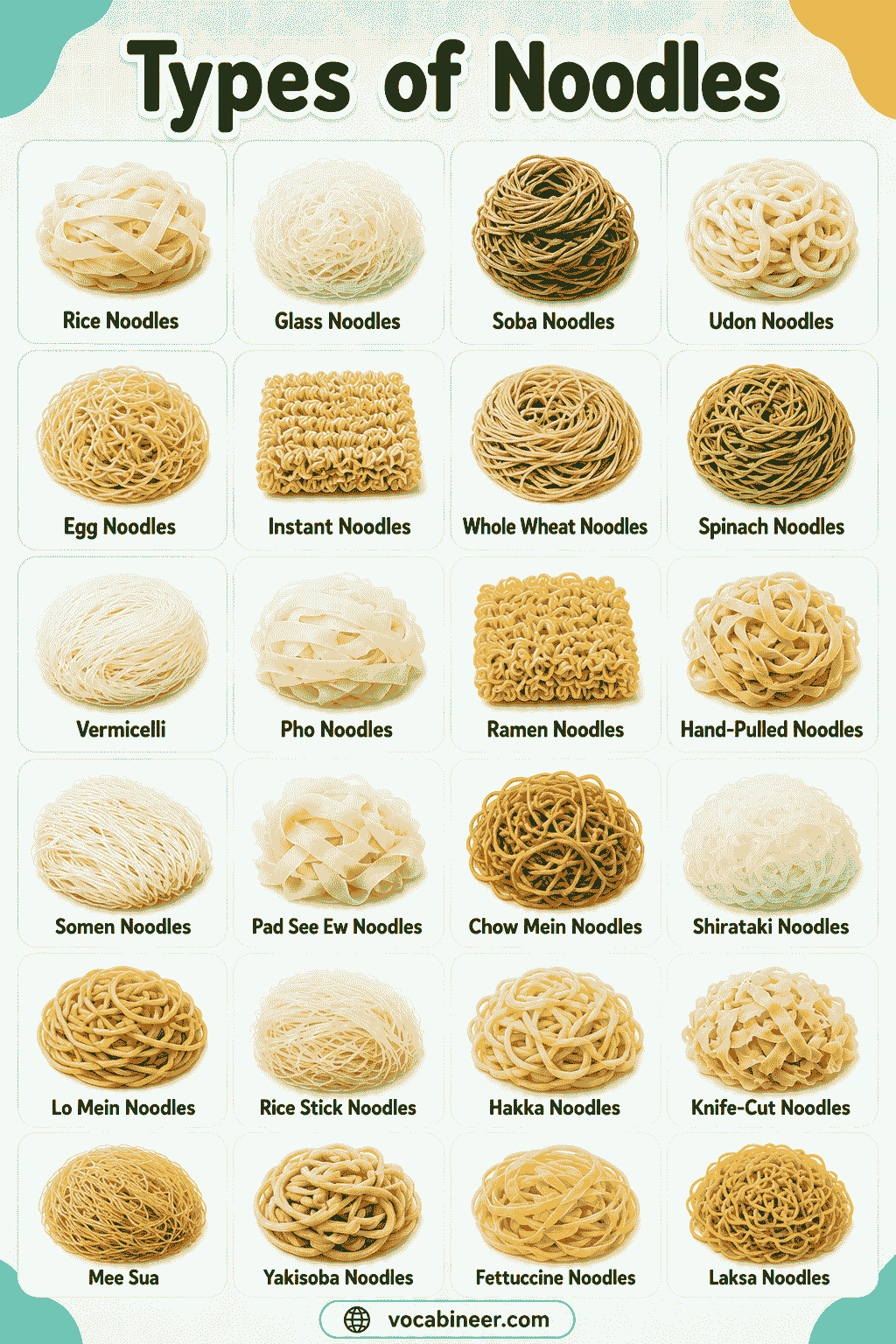
Cooks make rice-based noodles with rice flour and water. These noodles usually have a smooth, soft texture and cook quickly, so they suit soups, stir-fries, spring rolls, and cold salads.
Rice vermicelli are very thin rice noodles used in soups, salads, stir-fries, and noodle bowls. Many recipes soak them before adding them to the dish.
Flat rice noodles have a wide, soft shape that catches sauce easily. Therefore, cooks use them in stir-fries and noodle soups where sauce or broth matters.
Rice stick noodles have a medium-width shape and appear often in pad Thai and many Southeast Asian dishes. A short soak helps them stay flexible during stir-frying.
Bánh phở noodles are flat rice noodles used in Vietnamese pho. Their smooth texture holds broth without making the bowl feel heavy.
Rice ribbon noodles have a broad, silky surface. They work well in saucy stir-fries because their wide shape catches flavor.
Pad Thai noodles are medium rice stick noodles used in pad Thai. Careful soaking helps them stay tender without turning mushy.
Sen yai noodles are wide Thai rice noodles used in stir-fries and noodle soups. Their large, flat shape gives dishes a soft, chewy bite.
Sen lek noodles are medium Thai rice noodles used in pad Thai and noodle bowls. They sit between wide sen yai and thin sen mee.
Sen mee noodles are very thin Thai rice noodles similar to rice vermicelli. They suit light soups, salads, and quick stir-fries.
Kway teow noodles are flat rice noodles common in Southeast Asian cooking. Cooks often stir-fry them with sauces, eggs, seafood, vegetables, or meat.
Egg Noodles
Egg noodles use wheat flour and eggs, which give them a yellow color, richer taste, and tender texture. Because of that, cooks use them in soups, casseroles, stir-fries, creamy dishes, and saucy meals.
Basic egg noodles have a soft texture and mild flavor. They work well in home-style soups, creamy sauces, and simple comfort meals.
Cantonese egg noodles have a thin, firm texture and bright yellow color. Cooks use them in Chinese soups, dry noodle dishes, and wonton noodle bowls.
Hakka noodles appear often in Indo-Chinese dishes. Their thin shape works well with vegetables, sauces, and quick stir-frying.
Wide egg noodles have a flat surface that holds thick sauces well. They suit creamy dishes, stews, and hearty home-style meals.
Thin egg noodles cook quickly and mix easily with broth or vegetables. Their fine shape works well in light soups and fast stir-fries.
Wonton egg noodles pair with wontons, broth, and leafy greens. Their springy bite makes them useful in Cantonese-style soups.
Ribbon egg noodles look like small flat ribbons. Cooks use them with butter, gravy, creamy sauces, and simple meat dishes.
Spaetzle are small soft egg noodles or dumpling-like noodles used in Central European cooking. People often serve them with butter, cheese, gravy, or stews.
Kluskies are thick egg noodles used in soups and hearty home-style meals. Their soft, filling texture holds up well in broth.
Glass and Starch Noodles
Glass noodles use starch instead of rice flour. After cooking, they often turn clear or translucent, which explains the common name cellophane noodles.
Glass noodles, also called cellophane noodles, become slippery and transparent when cooked. They absorb sauces and broths well in soups, stir-fries, and salads.
Mung bean noodles use mung bean starch. They have a light, clear texture and appear in many Asian dishes.
Sweet potato starch noodles have a chewy, springy texture. Korean cooks often use them in japchae, where they hold sweet-savory sauce well.
Dangmyeon are Korean sweet potato starch noodles. Japchae recipes use them for their chewy bite and glossy finish.
Tapioca noodles use tapioca starch and often feel elastic. Some regional Asian dishes use them for their chewy texture.
Harusame noodles are Japanese-style glass noodles that often use starch. Cooks add them to salads, soups, hot pots, and light side dishes.
Bean thread noodles are another common name for thin glass noodles. Most recipes soak them first, then heat them until they turn clear.
Potato starch noodles have a bouncy, slippery texture. They work well in soups, stir-fries, and dishes that need a chewy noodle.
Cellophane noodles usually refer to the same clear starch noodle category as glass noodles. However, ingredients can vary by brand, so checking the label helps.
Buckwheat, Whole Grain, and Alternative-Grain Noodles
Buckwheat, whole grain, and alternative-grain noodles offer deeper flavor, heartier texture, or a different ingredient profile. However, the full meal still depends on portion size, sauce, vegetables, protein, and cooking method.
Soba noodles use buckwheat flour fully or partly. Their earthy flavor works well in cold dipping dishes and warm broths.
Whole wheat noodles use whole wheat flour. They usually taste nuttier than refined wheat noodles and often feel firmer.
Brown rice noodles use brown rice flour. Many people choose them as a wheat-free option, but the label still matters.
Millet noodles use millet flour or millet blends. They have a mild grain flavor and appear in some gluten-free or alternative-grain meals.
Oat noodles use oats or oat flour blends. Since recipes vary, check whether the product also contains wheat.
Quinoa noodles use quinoa flour or gluten-free flour blends. Many brands market them as an alternative to regular wheat pasta.
Corn noodles use corn flour or corn blends. They often appear in gluten-free pasta-style meals.
Chickpea noodles use chickpea flour and usually feel denser than regular pasta. They suit simple sauces and higher-protein meals.
Lentil noodles use red lentil, green lentil, or mixed legume flour. They work well with vegetable sauces and hearty meals.
Edamame noodles use green soybean flour or soy-based blends. They often feel firm and contain more plant-based protein than many classic noodles.
Noodles by Shape and Texture
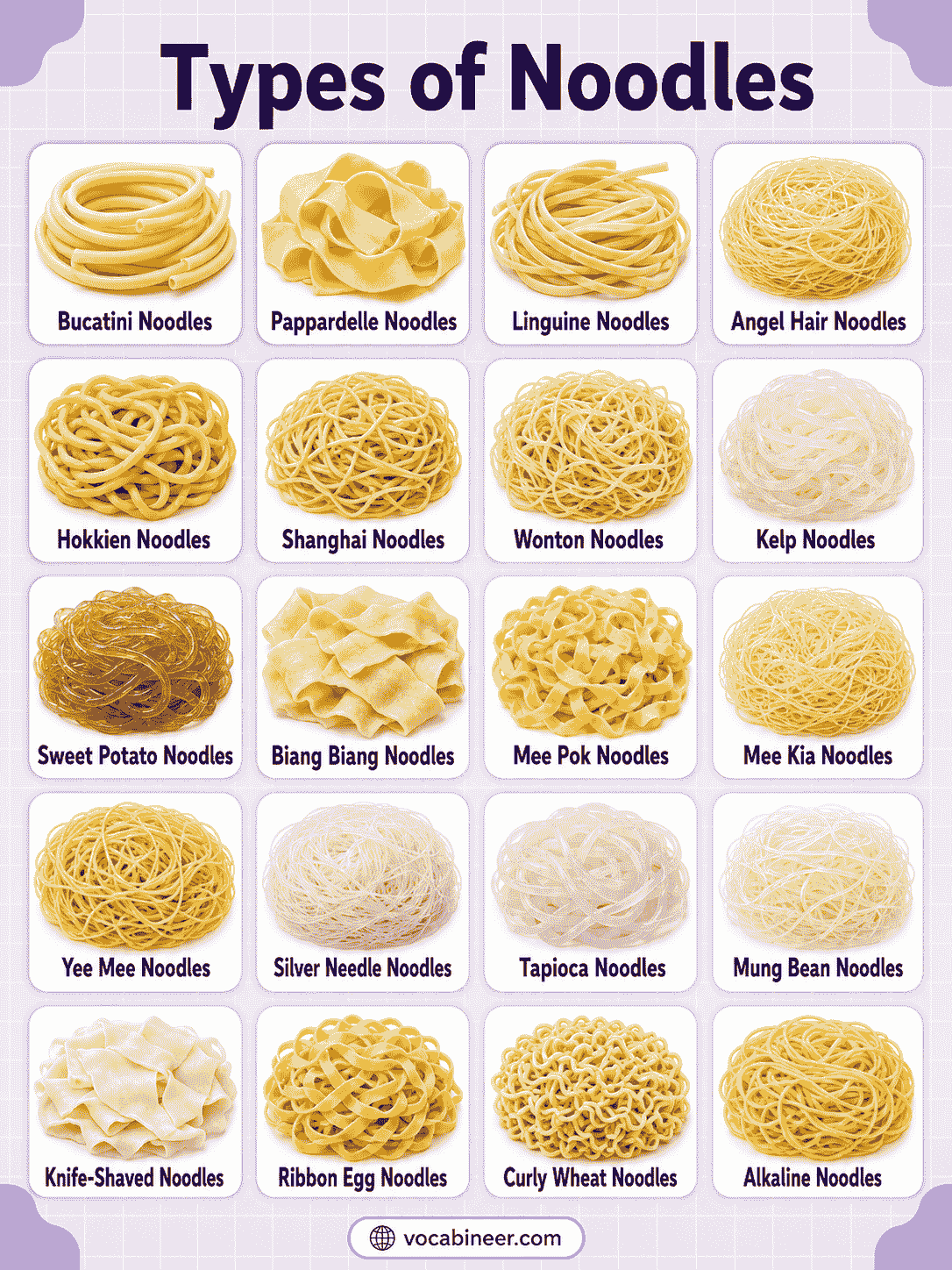
Shape changes how noodles cook, hold sauce, and feel in the mouth. Thin noodles cook quickly, flat noodles catch sauce well, and thick noodles give dishes a chewy, filling bite.
| Shape or Texture | Examples | Best Use |
|---|---|---|
| Thin noodles | Rice vermicelli, somen, thin egg noodles, capellini | Light soups, salads, quick meals |
| Flat noodles | Flat rice noodles, fettuccine, linguine, rice ribbons | Stir-fries and saucy dishes |
| Thick noodles | Udon, thick egg noodles, wide wheat noodles, knife-cut noodles | Broths, hearty meals, stir-fries |
| Springy noodles | Ramen, Cantonese egg noodles, wonton noodles | Soups and dry noodle bowls |
| Translucent noodles | Glass noodles, mung bean noodles, harusame | Soups, salads, stir-fries |
| Ribbon noodles | Fettuccine, tagliatelle, rice ribbon noodles | Creamy sauces and wide stir-fries |
| Tube shapes | Penne, macaroni, rigatoni | Baked dishes and thick sauces |
| Spiral shapes | Fusilli, rotini, spiralized vegetables | Saucy dishes and salads |
| Shell shapes | Conchiglie, small shells | Creamy pasta and baked meals |
| Short shapes | Orzo, ditalini, elbow macaroni | Soups, salads, casseroles |
Long noodles such as ramen, udon, soba, spaghetti, and rice vermicelli usually appear in strands. In contrast, short shapes such as macaroni, penne, shells, and orzo belong more closely to pasta, although learners may still meet them in broad noodle vocabulary lists.
Asian Types of Noodles
Asian noodles include wheat, rice, egg, starch, and buckwheat varieties. Cooks use them in soups, stir-fries, cold dishes, salads, noodle bowls, hot pots, and street food meals.
Ramen are Japanese wheat noodles with a springy texture. Restaurants usually pair them with broth, toppings, and rich soup bases.
Udon are thick Japanese wheat noodles with a soft, chewy bite. They work well in hot broth, cold dipping dishes, and stir-fried meals.
Soba are Japanese buckwheat noodles with an earthy flavor. People serve them cold with dipping sauce or warm in light broth.
Somen are very thin Japanese wheat noodles. They appear often in cold summer dishes and light soups.
Hiyamugi are thin Japanese wheat noodles that sit between somen and udon in thickness. They usually come chilled with dipping sauce.
Shirataki noodles use konjac and have a translucent look. People often add them to soups, hot pots, and very light meals.
Rice noodles appear across Southeast and East Asian cooking. For example, pho, pad Thai, noodle salads, and stir-fried rice noodle dishes all use different rice noodle styles.
Lo mein and chow mein both use Chinese wheat noodles. Lo mein stays soft and sauce-tossed, while chow mein often goes through stir-frying and may turn crispier.
Glass noodles use starch and turn clear after cooking. They absorb strong flavors in soups, salads, and stir-fries.
Dangmyeon are Korean sweet potato starch noodles. Their chewy texture makes them the classic noodle for japchae.
Naengmyeon noodles often use buckwheat, starch, or blended ingredients. Korean cold noodle dishes use them with chilled broth or spicy sauce.
Knife-cut noodles have thick, uneven edges. Chinese-style soups and saucy dishes use them for their hearty bite.
Laksa noodles may use rice noodles or wheat noodles, depending on the region and recipe. They appear in rich Southeast Asian noodle soups.
Bánh phở are Vietnamese flat rice noodles used in pho. Their smooth, soft texture works well in aromatic broth.
Italian Pasta Shapes Often Called Noodles
Italian pasta usually uses wheat, and many pasta shapes do not count as “noodles” in a strict cooking sense. Still, people often call long pasta shapes noodles in everyday English, especially when teaching food names to beginners or children.
Spaghetti are long, round pasta strands used with tomato sauce, meat sauce, seafood, and simple oil-based sauces. They are one of the most familiar pasta shapes worldwide.
Fettuccine are flat, ribbon-like pasta strands. Their wide shape suits creamy sauces, especially Alfredo-style sauces.
Linguine are long, flat pasta strands narrower than fettuccine. Cooks often pair them with seafood, pesto, or light sauces.
Tagliatelle are flat ribbon pasta strands similar to fettuccine. They work well with rich meat sauces.
Pappardelle are very wide ribbon pasta strands. Their broad shape handles thick sauces and hearty meat dishes well.
Capellini are very thin pasta strands, often called angel hair pasta. They cook quickly and work best with light sauces.
Lasagna sheets are wide, flat pasta sheets used in layered baked dishes. They do not form strands, but they belong to broader pasta vocabulary.
Penne are short tube-shaped pasta pieces. Their hollow center holds sauce in baked pasta and saucy meals.
Rigatoni are larger tube-shaped pasta pieces with ridges. They catch thick sauces and work well in baked dishes.
Fusilli are spiral-shaped pasta pieces. Their twisted shape catches sauce, herbs, and small bits of vegetables or meat.
Rotini are short spiral pasta pieces similar to fusilli. Pasta salads and saucy dishes often use them.
Macaroni are short curved tubes. People use them in macaroni and cheese, pasta salads, and baked dishes.
Orzo is small rice-shaped pasta. Soups, salads, and light side dishes often include it.
Noodle Options Often Chosen for Lighter Meals
Some noodles work well in lighter meals, higher-fiber dishes, or special diets, but the full dish matters more than the noodle name alone. Portion size, sauce, oil, sodium, vegetables, and protein all affect how balanced a noodle meal feels.
Common lighter or higher-fiber choices include whole wheat noodles, brown rice noodles, buckwheat soba, chickpea noodles, lentil noodles, shirataki noodles, and zucchini noodles.
- Shirataki noodles: Konjac fiber gives these noodles a very light texture.
- Zucchini noodles: Spiralized zucchini creates fresh vegetable strips for lighter meals.
- Whole wheat noodles: Whole wheat flour gives these noodles more fiber than refined wheat versions.
- Brown rice noodles: Brown rice gives these noodles a mild flavor and wheat-free ingredient base.
- Buckwheat soba: Buckwheat adds an earthy taste and works well in simple meals.
- Chickpea noodles: Chickpea flour creates a dense, filling pasta-style noodle.
- Lentil noodles: Lentil flour gives these noodles a hearty texture.
- Quinoa noodles: Quinoa flour or gluten-free blends create an alternative-grain noodle option.
Gluten-Free Noodle Options
Brands make gluten-free noodles without wheat, barley, or rye ingredients, but shoppers should still check labels. Some products include wheat blends or come from facilities that also handle gluten-containing foods.
- Rice noodles: These noodles often suit gluten-free soups, stir-fries, and salads.
- Glass noodles: Mung bean, sweet potato, or tapioca starch usually forms the base.
- Corn noodles: Corn flour or corn blends create a pasta-style noodle.
- Quinoa noodles: Quinoa flour or gluten-free flour blends create an alternative to wheat pasta.
- Chickpea noodles: Chickpea flour gives these noodles a denser bite and more protein.
- Lentil noodles: Lentil flour creates a common pasta alternative.
- Brown rice noodles: Whole grain rice gives these noodles a wheat-free base.
- Shirataki noodles: Konjac yam fiber creates a very light noodle.
- Edamame noodles: Soybean flour or soy-based blends create a firm, protein-rich noodle.
- Black bean noodles: Black bean flour creates a high-protein pasta substitute.
Gluten-free does not automatically mean healthier for every person. Portion size, sauce, oil, sodium, vegetables, and protein shape the full meal.
Vegetable Noodles and Spiralized Noodles
People usually cut or spiralize vegetables such as zucchini, carrot, cucumber, beet, daikon, cabbage, or sweet potato into vegetable noodles. These strips do not work like traditional flour or starch noodles, but they can replace noodles in lighter meals, salads, and quick stir-fries.
Zucchini noodles, often called zoodles, come from spiralized zucchini. They cook quickly and pair well with light sauces or vegetables.
Carrot noodles add sweetness, crunch, and bright color. They work well in salads, stir-fries, and vegetable bowls.
Cucumber noodles are fresh cucumber ribbons or spirals. People usually serve them cold in salads rather than cooked.
Beet noodles bring a bright color and earthy taste. They suit salads and vegetable-based meals.
Sweet potato noodles can mean two different things. Korean cooking uses sweet potato starch noodles, while vegetable cooking uses spiralized sweet potato strips.
Butternut squash noodles have a mild sweet flavor. Cooks can roast, sauté, or add them to vegetable bowls.
Daikon noodles come from daikon radish strips. They taste crisp and fresh in salads or light Asian-style dishes.
Cabbage noodles use thin strips of cabbage as a noodle substitute. Stir-fries soften them, and sauces cling to the leaves.
Fresh, Dried, and Instant Noodles
Storage style changes how noodles cook and taste. Fresh noodles cook quickly and feel softer, while dried noodles last longer and usually need boiling or soaking.
Fresh noodles have a soft texture and may use wheat, eggs, or rice. Grocery stores often keep them in refrigerated sections, and noodle shops may prepare them fresh.
Dried noodles have most of their moisture removed. Common examples include spaghetti, dried rice noodles, dried soba, dried udon, and dried vermicelli.
Instant noodles go through pre-cooking or processing for quick preparation. However, many people add vegetables, eggs, or protein because seasoning packets can contain a lot of sodium.
Frozen noodles give cooks a convenient option for storage. Stores often sell frozen udon and fresh-style wheat noodles.
Vacuum-packed noodles come sealed in packets and may feel fresh, semi-fresh, or pre-cooked. Quick meal kits and stir-fry packs often include them.
Cup noodles come packaged in a cup or bowl for hot water preparation. They suit quick meals and snacks.
Packet noodles come in small packs and may include seasoning powder, sauce, oil, or dried vegetables. Many instant ramen products use this format.
Best Noodles for Soups, Stir-Fries, and Sauces
Different dishes need different noodle textures. Soup needs noodles that stay pleasant in broth, stir-fries need noodles that can handle tossing, and saucy dishes need shapes that hold flavor.
| Cooking Use | Good Noodle Choices |
|---|---|
| Clear soups | Rice noodles, somen, thin egg noodles, glass noodles |
| Rich broths | Ramen, udon, egg noodles, wonton noodles |
| Stir-fries | Lo mein, chow mein, flat rice noodles, udon |
| Cold dishes | Soba, somen, rice vermicelli, naengmyeon |
| Saucy pasta meals | Spaghetti, fettuccine, linguine, penne |
| Creamy sauces | Fettuccine, tagliatelle, wide egg noodles, macaroni |
| Noodle salads | Rice vermicelli, glass noodles, soba, cucumber noodles |
| Light meals | Shirataki noodles, zucchini noodles, rice noodles |
| Chewy dishes | Udon, dangmyeon, thick wheat noodles, knife-cut noodles |
| Baked dishes | Lasagna sheets, penne, rigatoni, macaroni |
| Quick meals | Instant ramen, cup noodles, thin egg noodles |
| Hot pots | Udon, glass noodles, shirataki, fresh wheat noodles |
Cooking time matters too. Thin noodles can overcook quickly, while thick noodles need more time to soften and absorb flavor.
Noodles Often Confused with Each Other
Some noodles look similar but behave differently in cooking. Therefore, knowing the difference helps you choose the right noodle and avoid the wrong texture.
| Confusing Pair | Main Difference |
|---|---|
| Ramen vs Udon | Ramen usually feels thinner and springier; udon feels thick, soft, and chewy. |
| Udon vs Soba | Udon uses wheat; soba uses buckwheat fully or partly. |
| Rice Noodles vs Glass Noodles | Rice noodles use rice flour; glass noodles use starch and turn translucent. |
| Lo Mein vs Chow Mein | Lo mein stays soft and sauce-tossed; chow mein usually goes through stir-frying and may turn crispier. |
| Spaghetti vs Noodles | Spaghetti names an Italian pasta shape; noodles names a broader everyday food group. |
| Glass Noodles vs Cellophane Noodles | Many recipes use both names for the same transparent starch noodle. |
| Pad Thai Noodles vs Pho Noodles | Pad Thai usually uses medium rice sticks; pho uses flat bánh phở noodles. |
| Somen vs Hiyamugi | Both use wheat, but hiyamugi usually has a slightly thicker shape. |
| Fettuccine vs Linguine | Both have a flat shape, but fettuccine looks wider and suits creamy sauces better. |
| Penne vs Rigatoni | Both have a tube shape, but rigatoni looks larger and usually has ridges. |
| Zucchini Noodles vs Shirataki Noodles | Zucchini noodles come from vegetables; shirataki noodles come from konjac fiber. |
These differences help because names can change by country, brand, restaurant, and home cooking style.
How to Choose the Right Noodle
Choose noodles according to the dish, not just the name on the packet. For example, soups need noodles that stay pleasant in broth, stir-fries need noodles that can handle tossing, and cold dishes need noodles that taste good after rinsing or cooling.
A soft soup works well with ramen, udon, rice noodles, glass noodles, or egg noodles. Meanwhile, lo mein, chow mein, flat rice noodles, kway teow, and udon suit stir-fries because they hold sauce well. For lighter meals, rice noodles, soba, shirataki, zucchini noodles, or cucumber noodles can work, depending on your taste and diet needs. Always check the ingredient label for gluten-free, higher-fiber, or egg-free needs, and read the cooking instructions because soaking, boiling, rinsing, and stir-frying times vary by noodle type.
FAQs
There are hundreds of noodle types around the world. People can group them by ingredient, shape, thickness, texture, region, storage style, and cooking use.
They are related, but people do not always use the words in the same way. Pasta usually means Italian wheat-based shapes, while noodles can use wheat, rice, eggs, starch, buckwheat, legumes, or vegetables.
Common Asian noodles include ramen, udon, soba, somen, hiyamugi, rice noodles, rice vermicelli, glass noodles, lo mein, chow mein, shirataki, and sweet potato starch noodles.
Rice noodles, glass noodles, corn noodles, quinoa noodles, lentil noodles, chickpea noodles, shirataki noodles, and many vegetable noodles often fit gluten-free diets, but shoppers should always check labels.
Ramen, udon, rice noodles, egg noodles, wonton noodles, and glass noodles work well in soups. Meanwhile, lo mein, chow mein, flat rice noodles, kway teow, and udon work well in stir-fries.
Conclusion
Types of noodles include many varieties based on ingredients, shape, thickness, region, and cooking use. From wheat and rice noodles to egg, starch, and vegetable-based noodles, each type is prepared and used differently. Understanding the different types of noodles helps readers recognize noodle names easily and choose the right noodles for soups, stir-fried dishes, and everyday meals.
Read More
- 100+ Food Names in English
- Different Types of Fast Food
- 100 Breakfast Food Names
- Different Types of Candy
- Sweets and their Names
- Different Types of Chips