

Umbrellas are portable covers used to protect people from rain or sun. They come in different shapes, sizes, and opening styles, so each type fits a different everyday need.
In this post, you’ll learn the common types of umbrellas, how they differ, and how to recognize them more easily. The focus stays on umbrella names, simple classification, and basic use.
In This Page
What Are Umbrellas?
Umbrellas are handheld covers with a canopy stretched over a frame. Most are designed for rain protection, while some are made mainly for sun shade.
Although the basic purpose stays the same, umbrella types differ by size, folding style, handle, canopy shape, and opening method. That is why some work better for travel, while others are better for strong wind or daily carry.
Common Types of Umbrellas
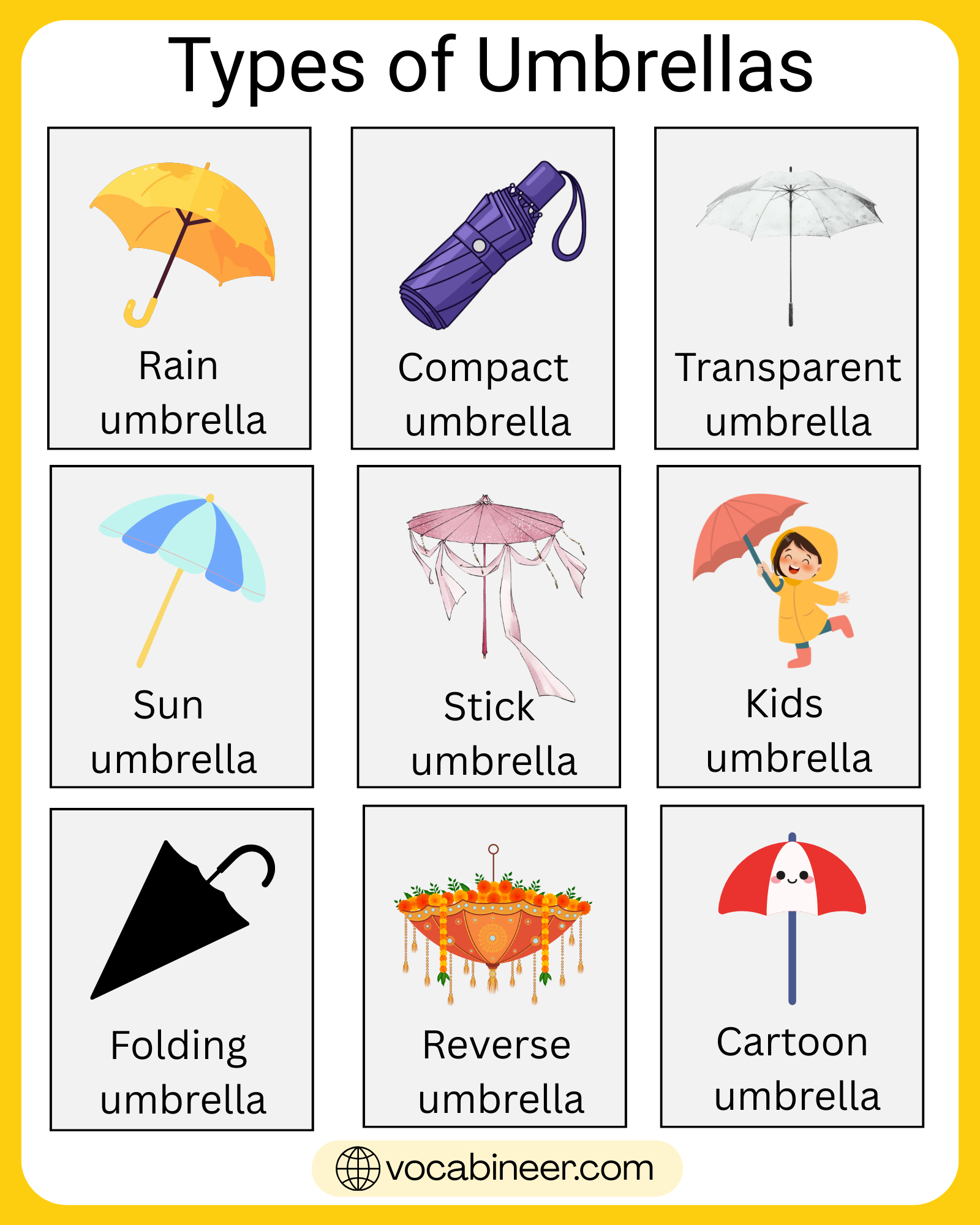
The easiest way to learn umbrella types is to connect each name with its shape and main use. Once you notice the folding style, canopy size, and handle design, each type becomes easier to identify.
- Compact umbrella: A small umbrella that folds down for easy carrying. It is popular for daily use because it fits in bags and backpacks.
- Folding umbrella: A collapsible umbrella with a shaft that folds into sections. It is made for convenience and easy storage.
- Stick umbrella: A full-length umbrella with a straight shaft and fixed shape. It is often stronger than folding types and gives wider coverage.
- Automatic umbrella: An umbrella that opens with the press of a button. Some models also close automatically, which makes them quick to use.
- Bubble umbrella: A dome-shaped umbrella with a deep curved canopy. It offers extra face and shoulder coverage during rain.
- Golf umbrella: A large umbrella with a wide canopy and sturdy frame. It is designed to cover more space and handle outdoor weather better.
- Windproof umbrella: An umbrella built to resist turning inside out in strong wind. It usually has a stronger frame and flexible ribs.
- Travel umbrella: A lightweight umbrella made for carrying on the go. It is usually compact, foldable, and easy to pack.
- Parasol: A sun umbrella used mainly for shade instead of rain. It is often lighter and more focused on blocking sunlight.
Umbrella Types by Design
Umbrella design affects how an umbrella opens, folds, and covers the user. Looking at the frame, shaft, and canopy shape makes each type easier to tell apart.
Straight umbrellas
These umbrellas have a full-length shaft and do not fold in the middle. They are easy to recognize and often provide stronger support and wider coverage.
- Stick umbrella: A classic straight umbrella with a fixed shaft and full canopy.
Collapsible umbrellas
These umbrellas fold into a smaller size, which makes them easier to carry and store. They are common for daily use, travel, and commuting.
- Compact umbrella: A small folding umbrella made to fit in bags.
- Folding umbrella: A collapsible umbrella with sections that fold inward.
- Travel umbrella: A lightweight folding umbrella made for portability.
Dome-shaped umbrellas
These umbrellas have a deeper canopy that curves down around the user. This shape gives better side coverage during rain.
- Bubble umbrella: A rounded umbrella with a clear or curved dome-like canopy.
Auto-open umbrellas
These umbrellas open with a button instead of being pushed open by hand. That feature makes them faster to use in sudden rain.
- Automatic umbrella: An umbrella that opens quickly with a push-button system.
Umbrella Types by Use
Umbrellas can also be grouped by how people use them. Some are made for rain, while others are better for travel, wind, or sun protection.
Rain umbrellas
These umbrellas are mainly used to keep rain off the head, face, and shoulders. Most everyday umbrellas fall into this group.
- Stick umbrella: Gives solid coverage and a classic full-size design.
- Bubble umbrella: Covers more of the face and sides during rain.
- Automatic umbrella: Opens quickly in sudden wet weather.
Sun umbrellas
These umbrellas are made more for shade than for rain. They are usually lighter and more focused on blocking sunlight.
- Parasol: Used mainly for sun protection and light shade.
Travel umbrellas
These umbrellas are designed to be easy to carry from place to place. Smaller size and lighter weight make them more convenient on the go.
- Compact umbrella: Fits easily into bags and backpacks.
- Folding umbrella: Folds down for easy storage.
- Travel umbrella: Made for portability and daily carrying.
Wind-resistant umbrellas
These umbrellas are built to handle stronger air movement. A sturdier frame helps them stay usable in rough weather.
- Windproof umbrella: Made to resist flipping in windy conditions.
- Golf umbrella: Often has a stronger frame and wider canopy for outdoor use.
How to Recognize Different Types of Umbrellas
Umbrella types can be identified by their shape and structure. Compact and travel umbrellas fold small, stick umbrellas have a straight shaft, bubble umbrellas have a dome canopy, golf umbrellas are larger, automatic umbrellas open by button, and parasols are mainly used for shade.
Summary
Types of umbrellas are easiest to understand by looking at shape, design, and use together. Once you notice whether an umbrella folds, opens automatically, has a dome canopy, or gives wider coverage, the type becomes easier to recognize.
Common umbrella types include compact, folding, stick, automatic, bubble, golf, windproof, travel, and parasol. Together, these cover the main umbrella categories most people see in everyday use.
FAQs
The most common types are compact, folding, stick, automatic, bubble, golf, windproof, travel, and parasol umbrellas.
A compact umbrella is mainly defined by its small size, while a folding umbrella is defined by its collapsible frame and shaft. In many cases, the two overlap.
A windproof umbrella is best for strong wind because it has a stronger frame and is built to resist flipping inside out.
A bubble umbrella is used for rain protection. Its deep dome-shaped canopy gives extra coverage around the face and shoulders.
A parasol is an umbrella used mainly for sun protection rather than rain. It is designed to provide shade and block sunlight.
Read More
