
Winter clothes are garments designed to protect the body from cold temperatures, wind, and harsh weather. These clothes help retain body heat while allowing comfort and movement during winter months. Different types of winter clothes are worn based on climate, daily activities, age, and how cold the environment is.
Understanding the names and purposes of winter clothing helps readers recognize what people wear in cold seasons. It also makes it easier to talk about outfits, shopping needs, travel packing, and seasonal dressing in clear terms.
In This Page
Why Warm Clothing Is Needed in Winter?
Warm clothing is needed in winter because cold temperatures can lower body heat quickly. When the body loses heat faster than it can produce it, discomfort and health problems may occur. Winter clothes help maintain body temperature by reducing heat loss. In addition to warmth, winter clothing protects the skin from cold wind, rain, and snow. Proper winter wear allows people to work, travel, and spend time outdoors safely and comfortably during the cold season.
Winter clothing includes any garment specifically made to keep the body warm in cold weather. These clothes are usually thicker, layered, or insulated to trap heat and block cold air. Some winter clothes are worn directly on the skin, while others are worn as outer layers. Winter clothing can include tops, bottoms, outerwear, and accessories. Items like sweaters, coats, jackets, scarves, gloves, and thermal wear all fall under winter clothing because they are designed to provide warmth and protection during low temperatures.
Common Winter Clothing Items
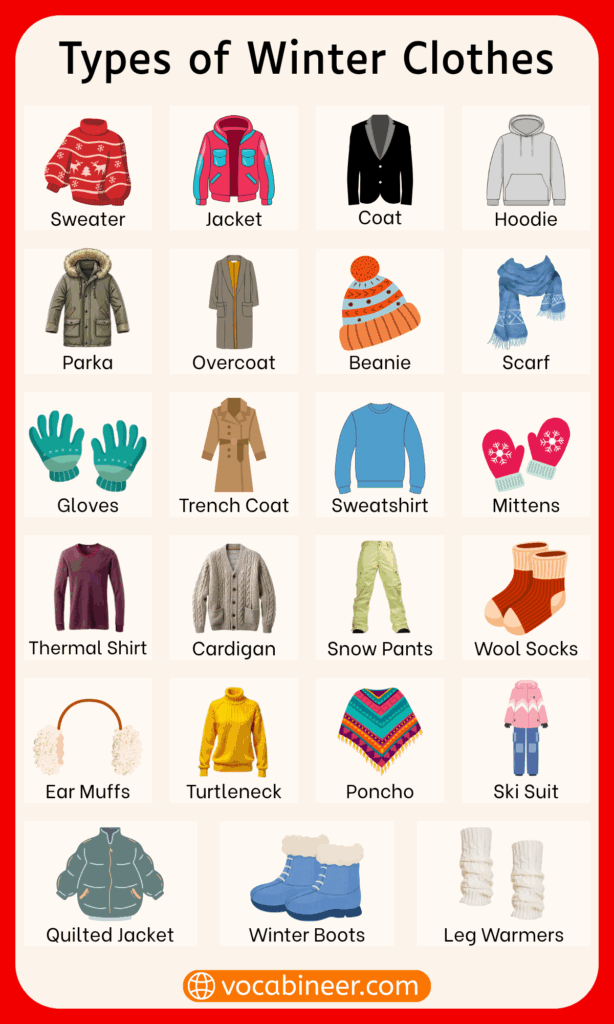
Common winter clothing items are the garments most people wear during cold weather for daily activities. These clothes provide basic warmth and comfort and are suitable for mild to moderately cold conditions. They are often worn alone or combined with other layers depending on the temperature.
- Sweater: A knitted top worn over shirts to keep the upper body warm
- Jacket: A short outer garment that protects against cold air and wind
- Coat: A longer outer layer designed to provide stronger warmth
- Hoodie: A casual warm top with a hood, often worn daily
- Cardigan: An open-front sweater that can be layered easily
- Scarf: A long fabric worn around the neck to reduce heat loss
- Gloves: Hand coverings that protect fingers from cold temperatures
- Beanie: A close-fitting knitted cap worn to keep the head warm
- Thermal top: An inner layer worn under clothes to retain body heat
- Winter socks: Thick socks designed to keep feet warm in cold weather
Upper Body Clothes for Winter
Upper body winter clothes focus on keeping the chest, arms, and upper back warm. These garments are often layered, with lighter clothes worn underneath heavier outerwear. They are chosen based on comfort, warmth, and activity level.
- Thermal top: A close-fitting shirt worn under other clothes to retain heat
- Sweatshirt: A thick cotton top used for warmth in cool weather
- Fleece jacket: A soft, lightweight jacket that traps body heat
- Pullover: A warm top worn by pulling it over the head
- Turtleneck: A sweater with a high collar that covers the neck
- Wool sweater: A thick sweater made from wool for strong insulation
Lower Body Clothes for Cold Weather
Lower body winter clothes help keep the legs and lower body warm during cold temperatures. These garments are often thicker than regular pants and may be worn over thermal layers for extra insulation. They are chosen based on weather conditions, comfort, and daily activities.
- Thermal leggings: Close-fitting bottoms worn under pants to trap body heat
- Wool trousers: Thick pants made from wool for warmth
- Corduroy pants: Heavy fabric pants suitable for cold weather
- Fleece-lined pants: Pants with an inner warm lining
- Track pants: Comfortable pants often worn for casual winter use
- Snow pants: Waterproof pants designed for snow and extreme cold
Heavy Coats and Jackets
Heavy coats and jackets are worn as outer layers to protect against strong cold, wind, and rain. These garments are essential in very cold climates and are often insulated to provide maximum warmth.
- Puffer jacket: A jacket filled with insulation that traps heat
- Down jacket: A coat filled with feathers for high warmth
- Parkа: A long coat designed for extreme cold conditions
- Overcoat: A long formal coat worn over regular clothes
- Trench coat: A water-resistant coat used in cool and wet weather
- Fur-lined coat: A coat with an inner fur layer for extra warmth
Clothing for Extremely Cold Conditions
Clothing for extremely cold conditions is designed to protect the body in freezing temperatures and harsh weather. These clothes are usually thicker, insulated, and made to block wind and moisture. They are commonly worn in snowy regions and during outdoor winter activities.
- Insulated parka: A heavy coat designed to trap heat in very low temperatures
- Snow suit: A full-body outfit that provides complete cold protection
- Thermal innerwear: Clothing worn next to the skin to retain body heat
- Windproof jacket: A jacket that blocks cold air and strong winds
- Waterproof outer layer: A protective layer that keeps moisture out
Layered Clothing for Winter
Layered clothing is a common way to stay warm in winter by wearing multiple clothing layers. Each layer has a specific role, such as retaining heat or protecting from wind. Layering allows people to adjust clothing based on temperature changes.
- Base layer: A thin layer worn next to the skin to keep warmth in
- Mid layer: A thicker layer that provides insulation
- Outer layer: A protective layer that blocks wind and rain
- Thermal base wear: Helps regulate body temperature
- Insulating jacket: Adds warmth without too much weight
Thermal and Insulated Wear
Thermal and insulated wear is designed to keep body heat close to the skin during cold weather. These clothes are usually worn as inner or middle layers and help maintain a steady body temperature. They are especially useful in winter mornings, cold regions, and outdoor settings.
- Thermal shirt: A fitted top worn under other clothes to retain heat
- Thermal leggings: Warm inner bottoms that protect the legs from cold
- Insulated jacket: A jacket filled with materials that trap body warmth
- Quilted vest: A sleeveless insulated layer worn over tops
- Padded coat: A coat with extra filling for added insulation
Wool-Based Winter Clothing
Wool-based winter clothing is popular because wool naturally keeps the body warm. Wool traps heat while still allowing air to circulate, which helps maintain comfort in cold conditions. These clothes are commonly worn in everyday winter outfits.
- Wool sweater: A thick knitted top that provides strong warmth
- Wool cardigan: An open-front wool sweater worn over other clothing
- Wool coat: A heavy outer garment made from wool
- Wool scarf: A neck accessory that helps keep warmth around the throat
- Wool socks: Thick socks that keep feet warm in cold weather
Synthetic Fabrics Used for Winter Wear
Synthetic fabrics are often used in winter clothing because they are lightweight, durable, and quick to dry. These materials are designed to trap heat while resisting moisture, making them useful in cold and wet conditions. Many modern winter clothes use synthetic fibers instead of natural fabrics.
- Polyester jacket: A lightweight jacket that provides insulation and dries quickly
- Fleece top: A soft synthetic fabric that traps heat efficiently
- Nylon outerwear: A wind-resistant layer used in jackets and coats
- Acrylic sweater: A wool-like sweater made from synthetic fibers
- Insulated lining: A synthetic inner layer that adds warmth to outerwear
Everyday Winter Clothing
Everyday winter clothing includes items people wear regularly for work, school, or casual outings. These clothes balance warmth with comfort and are suitable for daily use in cold weather.
- Sweatshirt: A thick cotton top worn for warmth and comfort
- Hoodie: A casual warm top with a hood
- Jeans with lining: Denim pants designed for cold weather
- Casual jacket: A light jacket worn for mild winter days
- Pullover sweater: A warm top worn over shirts
Winter Clothing for Outdoor Activities
Winter clothing for outdoor activities is designed to keep the body warm while allowing movement. These clothes are often flexible, insulated, and weather-resistant, making them suitable for walking, hiking, sports, and other outdoor tasks during cold weather.
- Fleece jacket: A lightweight jacket that provides warmth without restricting movement
- Insulated vest: A sleeveless layer that keeps the core warm
- Water-resistant jacket: Protects against light rain and snow
- Thermal base layer: Helps maintain body temperature during activity
- Windbreaker: Blocks cold air during outdoor movement
Clothing for Snowy and Cold Travel
Traveling in snowy or very cold areas requires clothing that offers strong protection from low temperatures and moisture. These clothes are chosen for comfort during long exposure to cold environments.
- Snow jacket: A thick jacket designed for snowy conditions
- Waterproof coat: Keeps the body dry in snow and rain
- Thermal pants: Provide insulation during travel
- Insulated boots: Keep feet warm in cold and snowy areas
- Travel parka: A long coat suitable for extended outdoor exposure
Winter Wear for Work and Formal Settings
Winter wear for work and formal settings is designed to provide warmth while maintaining a neat and professional appearance. These clothes are often tailored and made from heavier fabrics so they can be worn comfortably in offices, meetings, and formal gatherings during cold weather.
- Overcoat: A long, formal coat worn over suits or office clothes
- Wool blazer: A structured jacket made from wool for warmth and style
- Formal sweater: A fine-knit sweater worn over shirts
- Thermal undershirt: An inner layer that keeps the body warm without adding bulk
- Dress trousers with lining: Formal pants designed for winter use
Casual Clothing for Winter
Casual winter clothing focuses on comfort and everyday wear. These clothes are suitable for relaxed outings, home use, and informal social settings, offering warmth without a formal look.
- Hoodie: A comfortable top with a hood for casual warmth
- Casual jacket: A lightweight jacket for daily use
- Pullover sweater: A warm top worn over t-shirts or shirts
- Track pants: Comfortable pants used for casual winter wear
- Beanie: A knitted cap worn to keep the head warm
Winter Clothing for Men
Winter clothing for men includes garments designed to provide warmth while matching daily routines, work needs, and outdoor activities. These clothes range from inner layers to heavy outerwear and are chosen based on comfort, protection, and style during cold weather.
- Wool sweater: A warm knitted top worn over shirts
- Men’s jacket: A short outer layer for everyday winter use
- Puffer coat: An insulated coat that traps body heat
- Thermal vest: An inner layer worn under shirts or sweaters
- Wool trousers: Thick pants suitable for cold conditions
- Winter hoodie: A casual warm top for relaxed wear
Winter Clothing for Women
Winter clothing for women combines warmth with comfort and style. These garments are designed to protect against cold while allowing flexibility for daily wear, work, and social settings.
- Long coat: A knee-length or ankle-length coat for added warmth
- Cardigan: An open-front sweater worn over tops
- Wool dress: A warm dress suitable for winter wear
- Thermal leggings: Inner wear that keeps legs warm
- Shawl: A large wrap worn over shoulders
- Padded jacket: A lightweight insulated jacket for cold days
Winter Clothing for Children
Winter clothing for children is designed to keep them warm, comfortable, and protected during cold weather. These clothes are usually soft, insulated, and easy to wear so children can move freely while staying warm during outdoor play or school activities.
- Kids’ winter jacket: A warm outer layer that protects from cold air
- Sweater: A knitted top worn over shirts for warmth
- Thermal set: Inner wear that keeps body heat close
- Hooded coat: A coat with a hood to protect the head and neck
- Snow suit: A full-body outfit used in very cold or snowy conditions
Winter Accessories and Extra Layers
Winter accessories and extra layers help protect parts of the body that lose heat quickly. These items are often worn along with main winter clothing to provide complete cold protection.
- Scarf: Worn around the neck to prevent heat loss
- Gloves: Protect hands and fingers from cold
- Mittens: Hand coverings that keep fingers together for warmth
- Beanie: A knitted cap worn on the head
- Ear muffs: Cover the ears to protect from cold wind
Footwear and Socks for Winter
Footwear and socks for winter are designed to keep feet warm, dry, and protected from cold surfaces. Since feet are often exposed to snow, rain, and cold ground, winter footwear focuses on insulation, grip, and moisture protection.
- Winter boots: Insulated boots that protect feet in cold and snowy weather
- Snow boots: Waterproof boots designed for walking on snow
- Leather boots: Durable boots that provide warmth and protection
- Wool socks: Thick socks that help retain heat
- Thermal socks: Socks designed to keep feet warm in low temperatures
- Fleece-lined shoes: Shoes with an inner warm lining for added comfort
Winter Clothing Used Around the World
Winter clothing varies across countries based on climate, culture, and tradition. While some regions require heavy insulation, others use lighter winter wear due to milder cold conditions.
In colder regions, people often wear thick coats, thermal layers, and insulated boots. In areas with mild winters, sweaters, jackets, and light scarves are more common. Despite these differences, the main purpose of winter clothing worldwide remains the same, which is to protect the body from cold and maintain comfort.
Traditional Winter Clothing Still Worn
Traditional winter clothing includes garments that have been worn for generations and are still used today because of their warmth and practicality. These clothes are often linked to local culture and climate and are made from materials that provide strong insulation.
- Wool cloak: A long outer garment worn over clothes for warmth
- Fur coat: A heavy coat made from animal fur for extreme cold
- Poncho: A loose outer garment worn in cold mountainous regions
- Sheepskin jacket: A coat lined with wool for insulation
- Traditional shawl: A thick wrap worn over shoulders in cold weather
Winter Clothing Names That Cause Confusion
Some winter clothing items have similar names or overlapping uses, which can confuse learners. Understanding the differences between these items helps in choosing the right clothing for specific winter conditions.
- Coat vs Jacket: Coats are longer and warmer than jackets
- Sweater vs Pullover: Pullovers are worn over the head, sweaters can open
- Thermal vs Insulated: Thermals are inner layers, insulated clothes are outer layers
- Parka vs Overcoat: Parkas are casual and insulated, overcoats are formal
- Hoodie vs Sweatshirt: Hoodies have hoods, sweatshirts do not
Winter Clothing Compared to Regular Clothing
Winter clothing and regular clothing serve different purposes based on weather conditions. Clothing made for winter focuses on warmth and protection from cold, while regular clothing is meant for comfort in mild or warm temperatures. The table below highlights the key differences between these two types of clothing.
| Aspect | Winter Clothing | Regular Clothing |
|---|---|---|
| Purpose | Protects the body from cold | Provides comfort in mild weather |
| Fabric thickness | Thick and insulated | Thin and lightweight |
| Layering | Often worn in layers | Usually worn as a single layer |
| Warmth level | High heat retention | Low heat retention |
| Weather protection | Blocks cold wind and moisture | Little protection from cold |
| Common materials | Wool, fleece, insulated fabrics | Cotton, linen, light blends |
| Typical examples | Coats, sweaters, thermals | T-shirts, shirts, light pants |
| Seasonal use | Cold seasons | Warm or mild seasons |
When Heavy Winter Clothing Is Necessary
Heavy winter clothing is necessary when temperatures drop significantly or when people spend long hours outdoors in cold conditions. These clothes are important in snowy regions, during winter travel, or while working outside in low temperatures.
Heavy winter wear is also needed during early mornings, late nights, or extreme weather conditions. Wearing proper heavy clothing helps prevent cold-related discomfort and keeps the body safe and warm.
FAQs about Types of Winter Clothes
Winter clothing includes garments made to protect the body from cold weather, such as sweaters, jackets, coats, thermal wear, scarves, gloves, and insulated footwear.
Layering helps trap body heat while allowing flexibility. Inner layers keep warmth close to the skin, and outer layers block wind and moisture.
Wool, fleece, and insulated synthetic fabrics are commonly used because they retain heat and provide comfort in cold conditions.
Regular clothes can be worn with proper layers, but on their own they usually do not provide enough warmth in cold weather.
Scarves, gloves, caps, thermal socks, and warm footwear are essential because they protect body parts that lose heat quickly.
Read More