Verbs that start with K are less common than many other letter groups, but they are still useful in English. These words can describe movement, actions, feelings, sounds, and everyday situations, so they can help make speaking and writing more clear.
In this article, you’ll find a full list of verbs that start with K with meanings and examples. You’ll also explore common K verbs, action verbs, useful verbs, beginner-friendly verbs, and more in a clear and easy-to-scan format.
In This Page
Common Verbs That Start With K
This section includes common verbs that start with K. These verbs are useful because they appear in simple speaking, writing, and daily English.
- Keep: to continue to have something
- Kick: to hit with the foot
- Kid: to joke with someone
- Kill: to cause death
- Kiss: to touch with the lips
- Kneel: to go down on the knees
- Knit: to make clothing from yarn
- Knock: to hit a door or surface
- Know: to understand or be aware
- Knot: to tie into a knot
- Key: to put information into a machine
- Kindle: to start a fire or feeling
- Knead: to press and fold dough
- Keep on: to continue
- Keep up: to continue at the same level
- Kick off: to begin something
- Kick back: to relax
- Knock out: to make unconscious or defeat
- Knock over: to make something fall
- Knuckle down: to begin working seriously
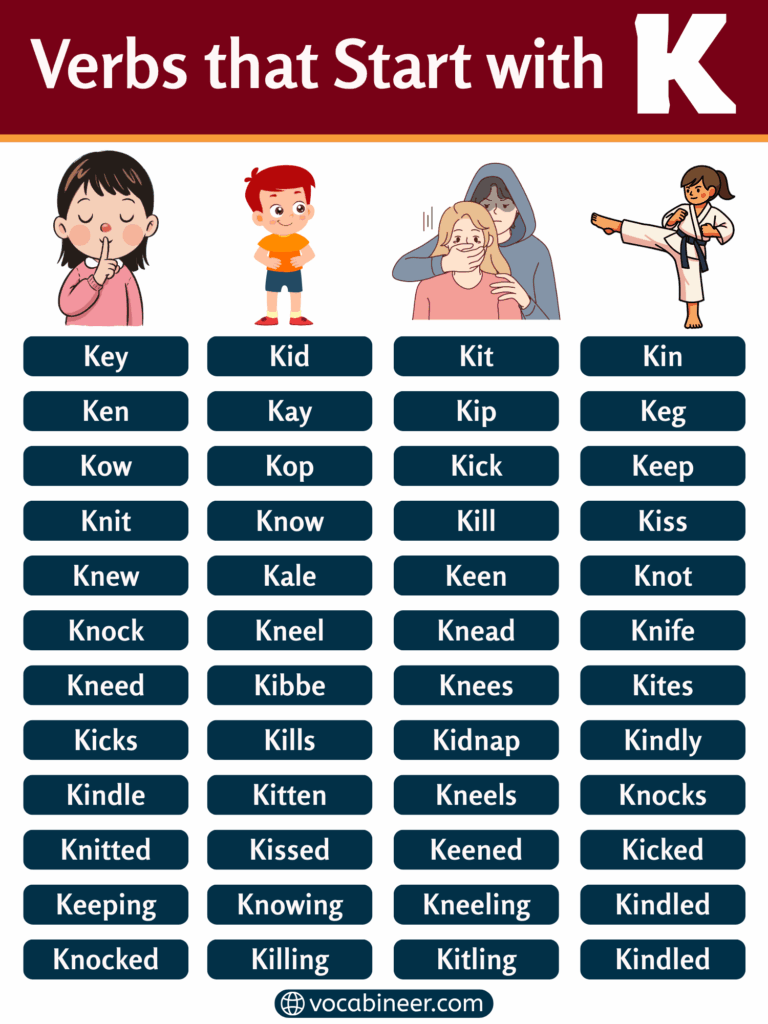
Action Verbs Beginning With K
Action verbs beginning with K show what someone or something does. These verbs are useful because they describe clear actions in simple and direct English.
- Keep: to continue to have something
- Kick: to hit with the foot
- Kid: to joke with someone
- Kill: to cause death
- Kiss: to touch with the lips
- Kneel: to go down on the knees
- Knit: to make clothing from yarn
- Knock: to hit a door or surface
- Know: to understand or be aware
- Knot: to tie into a knot
- Key: to put information into a machine
- Keel over: to fall down suddenly
- Knife: to cut or attack with a knife
- Kayak: to travel in a kayak
- Keep back: to hold something away
- Keep on: to continue
- Keep up: to continue at the same level
- Knock over: to hit and make something fall
- Knock out: to make unconscious or defeat
- Knock down: to hit something so it falls
- Kick off: to begin something
- Kick around: to move something about or discuss casually
- Kiss away: to remove with kisses
- Kick back: to relax or push back
- Knuckle down: to begin working seriously
Useful and Positive Verbs That Start With K
This section includes useful and positive verbs that start with K. These verbs can show support, progress, care, or helpful action in speaking and writing.
- Keep: to continue or maintain something well
- Know: to understand clearly
- Kiss: to show love or affection
- Knit: to bring things together
- Keep up: to continue successfully
- Keep on: to continue with effort
- Kick off: to start something
- Key: to enter or set something correctly
- Keen: to make sharp or eager
- Kiss away: to comfort lovingly
- Knit together: to unite closely
- Keep safe: to protect
- Keep going: to continue despite difficulty
- Keep smiling: to stay cheerful
- Keep improving: to become better step by step
- Keep learning: to continue gaining knowledge
- Kick-start: to help something begin quickly
- Kindle: to start a fire or feeling
- King: to place in a position of honor
- Knead: to work something gently with the hands
Everyday Verbs Starting With K
These K verbs are useful in daily speaking and writing. They are simple, practical, and easy to use in common sentences.
- Keep: to continue to have something
- Kick: to hit with the foot
- Kid: to joke with someone
- Kill: to cause death
- Kiss: to touch with the lips
- Kneel: to go down on the knees
- Knit: to make clothing from yarn
- Knock: to hit a door or surface
- Know: to understand or be aware
- Knot: to tie into a knot
- Key: to put information into a machine
- Keep back: to hold something away
- Keep on: to continue
- Keep up: to continue at the same level
- Knock over: to hit and make something fall
- Knock out: to make unconscious or defeat
- Kick off: to begin something
- Kick back: to relax
- Knuckle down: to start working seriously
- Kindle: to start a fire or feeling
Easy K Verbs for Kids and Beginners
These K verbs are simple and easy to learn. They are useful for kids, students, and beginners because the meanings are short and clear.
- Keep: to continue to have something
- Kick: to hit with the foot
- Kid: to joke with someone
- Kiss: to touch with the lips
- Kneel: to go down on the knees
- Knit: to make clothing from yarn
- Knock: to hit a door or surface
- Know: to understand or be aware
- Knot: to tie into a knot
- Key: to put information into a machine
- Kindle: to start a fire or feeling
- Knead: to press and fold dough
- Keep up: to continue
- Kick off: to begin something
- Knock over: to make something fall
Phrasal Verbs That Start With K
Phrasal verbs that start with K are not very common, but some are still useful in speaking and everyday English. These verb phrases often appear in informal language.
- Keep at: to continue working on something
- Keep away: to stay far from something
- Keep back: to hold something back
- Keep down: to control or prevent from rising
- Keep off: to stay away from
- Keep on: to continue
- Keep out: to stay outside
- Keep to: to follow or stay with something
- Keep up: to continue at the same level
- Kick back: to relax
- Kick in: to start having an effect
- Kick off: to begin
- Kick out: to force someone to leave
- Knock about: to move around casually
- Knock back: to reject or drink quickly
- Knock down: to hit so something falls
- Knock off: to stop working or remove
- Knock out: to make unconscious or impress greatly
- Knock over: to make something fall
- Knuckle down: to begin working seriously
Full List of Verbs That Start With K
This section includes a longer list of verbs that start with K. These K verbs help make the article more complete and useful for vocabulary building.
- Keep
- Kick
- Kid
- Kill
- Kiss
- Kneel
- Knit
- Knock
- Know
- Knot
- Key
- Kindle
- Knead
- Keel
- Kernelize
- Kayak
- Knife
- Keel over
- Keep at
- Keep away
- Keep back
- Keep down
- Keep off
- Keep on
- Keep out
- Keep to
- Keep up
- Kick around
- Kick back
- Kick in
- Kick off
- Kick out
- Kick-start
- Kid around
- Knit together
- Knock about
- Knock around
- Knock back
- Knock down
- Knock off
- Knock out
- Knock over
- Knock up
- Knuckle down
- Knuckle under
- Kowtow
- Kayo
- Kedge
- Keck
- Keckle
- Keelhaul
- Keen
- Kennel
- Kettle
- Keynote
- Kick-start
- Kidnap
- Kill off
- Kin
- King
- Kiss away
- Kite
- Knacker
- Knap
- Knapper
- Kneecap
- Knife through
- Knit up
- Knock together
- Knot up
- Know of
- Know about
- Know by heart
FAQs
Verbs that start with K are verbs that begin with the letter K. These words can show an action, a state, or something that happens. Examples include keep, kick, kiss, knock, and know.
Some common verbs that start with K are keep, kick, kid, kiss, kneel, knit, knock, and know. These verbs are useful in daily English because they appear in simple speaking and writing.
No, not all verbs that start with K are used in exactly the same way. Many K verbs show clear actions, such as kick, kiss, and knock, while others may show a state or a different meaning depending on the sentence.
Some positive verbs that start with K are keep, know, kiss, knit, kindle, and kick-start. These verbs can show support, care, growth, progress, or helpful action.
You can learn them by starting with the most common K verbs first. Then, read short lists, use the verbs in simple sentences, and practice them often in speaking and writing. This makes them easier to remember and use naturally.
Summary
Verbs that start with K may be fewer than some other letter groups, but they are still useful in English. In this article, you explored common K verbs, action verbs, useful and positive verbs, everyday verbs, easy verbs for kids and beginners, phrasal verbs, and a full list of verbs that start with K.
By learning these K verbs step by step, you can improve your vocabulary and use English more clearly in speaking and writing.
Read More