

Verbs that start with S are very useful in English because they can describe actions, movement, feelings, speech, and daily tasks. Some of these words are common in simple speaking and writing, while others are more useful in formal, descriptive, or academic English.
In this article, you’ll find a full list of verbs that start with S with meanings and examples. You’ll also explore common S verbs, everyday verbs, action verbs, useful verbs, and more in a clear and easy-to-scan format.
In This Page
Common Verbs That Start With S
This section includes common verbs that start with S. These words are useful because they appear often in daily English and simple writing.
- Sail: to travel on water
- Save: to keep safe or store for later
- Say: to speak words
- Search: to look for something
- See: to notice with the eyes
- Seem: to appear a certain way
- Sell: to give something in exchange for money
- Send: to cause something to go somewhere
- Serve: to give food, help, or service
- Set: to put something in a place
- Shake: to move something quickly back and forth
- Share: to give part of something to others
- Shine: to give off light
- Shoot: to send something out quickly
- Shop: to buy things
- Show: to let someone see something
- Shut: to close something
- Sing: to make musical sounds with the voice
- Sit: to rest on a seat
- Sleep: to rest with the eyes closed
- Slide: to move smoothly across a surface
- Smile: to show happiness on the face
- Solve: to find an answer
- Speak: to say words
- Spend: to use time or money
- Stand: to be on the feet
- Start: to begin
- Stay: to remain in a place or condition
- Steal: to take without permission
- Step: to move one foot forward
- Stick: to attach or stay fixed
- Stop: to come to an end
- Study: to learn about a subject
- Succeed: to do well
- Suggest: to give an idea
- Support: to help or hold up
- Surprise: to make someone feel unexpected wonder
- Survive: to stay alive
- Swim: to move in water
- Switch: to change from one thing to another
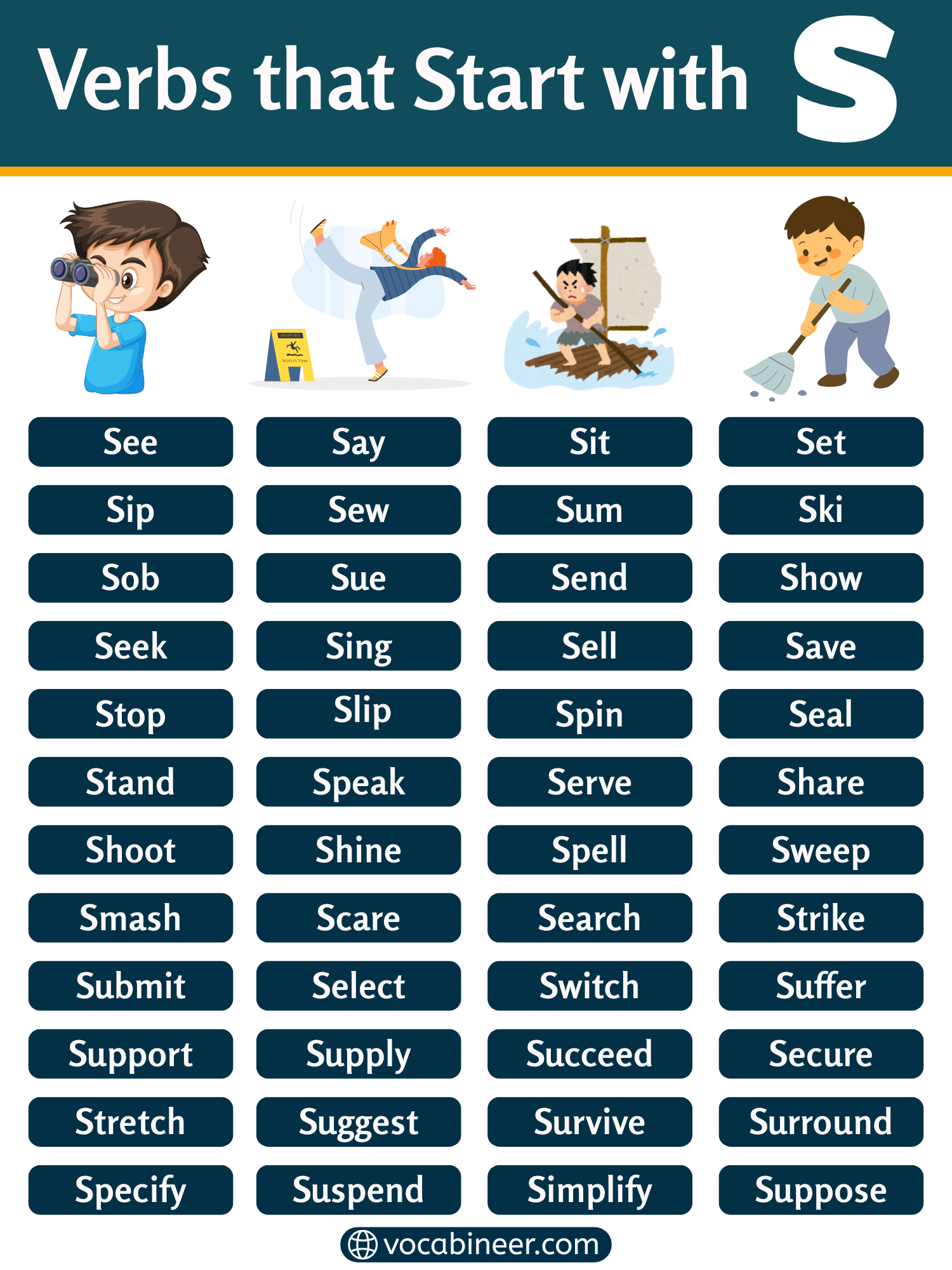
Everyday Verbs Beginning With S
These S verbs are useful in daily speaking and writing. They are simple, practical, and easy to use in common sentences.
- Save: to keep safe or store for later
- Say: to speak words
- Search: to look for something
- See: to notice with the eyes
- Seem: to appear a certain way
- Sell: to give something for money
- Send: to cause something to go somewhere
- Serve: to give food, help, or service
- Set: to put something in a place
- Share: to give part of something to others
- Shop: to buy things
- Show: to let someone see something
- Shut: to close something
- Sit: to rest on a seat
- Sleep: to rest with the eyes closed
- Smile: to show happiness on the face
- Solve: to find an answer
- Speak: to say words
- Spend: to use time or money
- Stand: to be on the feet
- Start: to begin
- Stay: to remain in a place or condition
- Step: to move one foot forward
- Stop: to come to an end
- Study: to learn about a subject
- Suggest: to give an idea
- Support: to help or hold up
- Survive: to stay alive
- Swim: to move in water
- Switch: to change from one thing to another
Action Verbs That Start With S
Action verbs that start with S show what someone or something does. These verbs are useful because they describe clear actions in simple and direct English.
- Sail: to travel on water
- Save: to keep safe or store for later
- Say: to speak words
- Search: to look for something
- See: to notice with the eyes
- Sell: to give something for money
- Send: to cause something to go somewhere
- Serve: to give food, help, or service
- Set: to put something in a place
- Shake: to move something quickly back and forth
- Share: to give part of something to others
- Shine: to give off light
- Shoot: to send something out quickly
- Shop: to buy things
- Show: to let someone see something
- Shut: to close something
- Sing: to make musical sounds with the voice
- Sit: to rest on a seat
- Sleep: to rest with the eyes closed
- Slide: to move smoothly across a surface
- Smile: to show happiness on the face
- Solve: to find an answer
- Speak: to say words
- Spend: to use time or money
- Stand: to be on the feet
- Start: to begin
- Stay: to remain in a place or condition
- Steal: to take without permission
- Step: to move one foot forward
- Stick: to attach or stay fixed
- Stop: to come to an end
- Study: to learn about a subject
- Succeed: to do well
- Suggest: to give an idea
- Support: to help or hold up
- Surprise: to make someone feel unexpected wonder
- Survive: to stay alive
- Swim: to move in water
- Switch: to change from one thing to another
- Sweep: to clean with a broom
Positive and Useful Verbs That Start With S
This section includes positive and useful verbs that start with S. These verbs can show support, progress, care, growth, or helpful action in speaking and writing.
- Save: to keep safe
- Serve: to help or provide for others
- Set: to put something in the right place
- Share: to give part of something to others
- Shine: to give light or stand out in a good way
- Show: to let others see or understand
- Smile: to show happiness
- Solve: to find an answer
- Speak: to say words clearly
- Start: to begin something
- Stay: to remain steady or present
- Study: to learn carefully
- Succeed: to do well
- Suggest: to give a helpful idea
- Support: to help or hold up
- Survive: to stay alive or continue through difficulty
- Strengthen: to make stronger
- Simplify: to make easier to understand
- Secure: to make safe
- Spark: to begin something exciting or useful
- Stabilize: to make steady
- Soothe: to calm or comfort
- Supply: to give what is needed
- Sustain: to support over time
- Safeguard: to protect from harm
Easy S Verbs for Kids and Beginners
These S verbs are simple and easy to learn. They are useful for kids, students, and beginners because the meanings are short and clear.
- Save: to keep safe
- Say: to speak words
- See: to notice with the eyes
- Sell: to give something for money
- Send: to cause something to go somewhere
- Set: to put something in a place
- Share: to give part to others
- Show: to let someone see something
- Shut: to close
- Sing: to make musical sounds
- Sit: to rest on a seat
- Sleep: to rest with the eyes closed
- Slide: to move smoothly
- Smile: to show happiness on the face
- Solve: to find an answer
- Speak: to say words
- Stand: to be on the feet
- Start: to begin
- Stop: to come to an end
- Swim: to move in water
Phrasal Verbs with S
Phrasal verbs with S are useful in speaking and everyday English. These verb phrases often appear in common conversations and simple writing.
- Set off: to begin a journey
- Set up: to arrange or prepare something
- Settle down: to become calm or start a steady life
- Show off: to try to impress others
- Show up: to arrive
- Shut down: to close or stop operating
- Sit down: to take a seat
- Speak up: to talk louder
- Stand by: to support or wait ready
- Stand out: to be easy to notice
- Start off: to begin in a particular way
- Stay up: to remain awake
- Step in: to become involved and help
- Step out: to leave for a short time
- Stick to: to continue doing something or follow a plan
- Stop by: to visit briefly
- Sort out: to organize or solve
- Split up: to separate
- Slow down: to reduce speed
- Sign up: to join or register
Complete List of Verbs That Start With S
This section includes a longer list of verbs that start with S. These S verbs help make the article more complete and useful for vocabulary building.
- Sail
- Save
- Say
- Search
- See
- Seem
- Sell
- Send
- Serve
- Set
- Shake
- Share
- Shine
- Shoot
- Shop
- Show
- Shut
- Sing
- Sit
- Sleep
- Slide
- Smile
- Solve
- Speak
- Spend
- Stand
- Start
- Stay
- Steal
- Step
- Stick
- Stop
- Study
- Succeed
- Suggest
- Support
- Surprise
- Survive
- Swim
- Switch
- Sweep
- Strengthen
- Simplify
- Secure
- Spark
- Stabilize
- Soothe
- Supply
- Sustain
- Safeguard
- Set off
- Set up
- Settle down
- Show off
- Show up
- Shut down
- Sit down
- Speak up
- Stand by
- Stand out
- Start off
- Stay up
- Step in
- Step out
- Stick to
- Stop by
- Sort out
- Split up
- Slow down
- Sign up
FAQs
Verbs that start with S are verbs that begin with the letter S. These words can show an action, a state, or something that happens. Examples include say, see, sit, sleep, and start.
Some common verbs that start with S are save, say, see, send, set, show, sit, sleep, speak, and start. These verbs are useful in daily English because they appear often in simple speaking and writing.
No, not all verbs that start with S are used in the same way. Many S verbs show clear actions, such as send, show, and swim, while others may show a different meaning depending on the sentence.
Some positive verbs that start with S are save, serve, share, shine, smile, solve, succeed, support, and strengthen. These verbs can show care, growth, help, progress, or useful action.
You can learn them by starting with the most common S verbs first. Then, read short lists, use them in simple sentences, and practice them often in speaking and writing. This makes them easier to remember and use naturally.
Summary
Verbs that start with S are very useful in English because they help describe actions, movement, feelings, speech, and daily tasks. In this article, you explored common S verbs, everyday verbs, action verbs, positive and useful verbs, easy verbs for kids and beginners, phrasal verbs, and a complete list of verbs that start with S.
By learning these S verbs step by step, you can improve your vocabulary and use English more clearly in speaking and writing.
Read More
