
Angry emoji are used to express irritation, frustration, or strong displeasure in digital messages. These emojis rely on facial features like eyes, brows, and mouth shape to communicate emotional intensity. Understanding how angry emoji are commonly interpreted helps readers recognize emotional tone in short replies, reactions, and conversations where words are limited or absent.
This article helps readers learn Angry Emoji meanings through pictures and organized explanations. Knowing these meanings supports accurate understanding of messages in chats, comments, and reactions where anger or frustration is visually expressed.
In This Page
Common Angry Emoji and Their Meanings
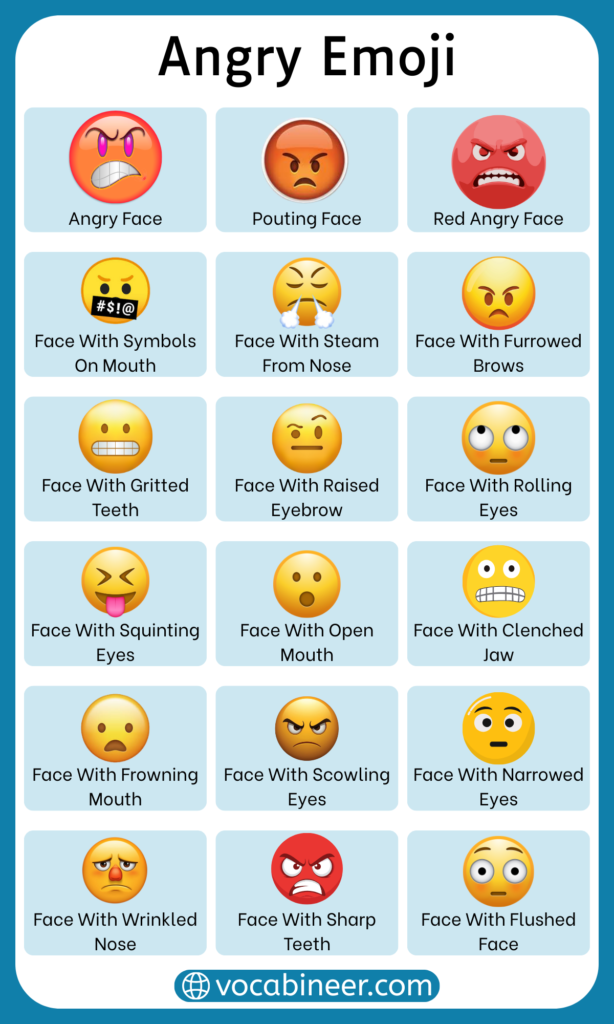
Common angry emoji represent frequently used facial expressions that show annoyance, anger, or emotional tension. These emojis appear often in reactions and short messages where people express displeasure quickly. Below is a list of common angry emoji and how their meanings are generally understood in everyday digital communication.
- Angry Face Emoji: This emoji shows clear anger or annoyance. It is used to express irritation, displeasure, or dissatisfaction.
- Pouting Face Emoji: This face represents stronger anger or rage. It is commonly used when emotions feel intense or hard to control.
- Face with Steam From Nose Emoji: This emoji shows frustration or irritation. It often represents being annoyed rather than openly angry.
- Face With Symbols on Mouth Emoji: This emoji expresses anger mixed with censored speech. It is used to show strong frustration without words.
- Confounded Face Emoji: This face shows stress combined with anger. It appears when someone feels upset and overwhelmed.
- Face with Raised Eyebrow Emoji: This emoji represents irritation or disbelief. It is often used to show annoyed questioning.
- Face with Rolling Eyes Emoji: This emoji signals annoyance or impatience. It commonly appears when reacting to something frustrating.
- Red Face Emoji: This face shows heated emotion. It can represent anger, tension, or emotional overload.
- Frowning Face Emoji: This emoji expresses mild anger or displeasure. It is used when someone feels unhappy or annoyed.
- Face with Open Mouth and Angry Eyes Emoji: This face shows shock mixed with anger. It appears in sudden or reactive situations.
Angry Emoji Showing Different Levels of Anger
Angry emojis express different degrees of emotional intensity, from mild irritation to strong rage. These facial cues help readers understand how serious the feeling is without extra words. Recognizing the level of anger shown by each emoji helps interpret tone correctly in reactions, short replies, and ongoing conversations.
- Frowning Face Emoji: This emoji represents mild displeasure or irritation. It suggests unhappiness without strong emotional intensity.
- Confounded Face Emoji: This face shows stress mixed with frustration. It often appears when someone feels upset and confused at the same time.
- Face with Steam From Nose Emoji: This emoji signals noticeable irritation. It reflects annoyance that is stronger than mild displeasure but not full anger.
- Angry Face Emoji: This face represents clear anger. It is used when frustration turns into open displeasure or annoyance.
- Pouting Face Emoji: This emoji shows intense anger or rage. It communicates strong emotional reaction and loss of patience.
- Face With Symbols on Mouth Emoji: This face represents extreme anger with restrained language. It is used when emotions feel heated but words are held back.
- Red Face Emoji: This emoji indicates emotional overload. It can show anger building quickly or strong internal tension.
Angry Emoji Used as Reactions
Angry emojis are often used as quick reactions when people respond without typing full messages. These emojis communicate displeasure, disagreement, or frustration instantly. Understanding how angry emoji function as reactions helps readers interpret emotional responses correctly in chats, comments, and fast-moving conversations.
- Angry Face Emoji: This reaction shows clear disagreement or annoyance. It is often used to respond negatively to a statement or action.
- Pouting Face Emoji: This emoji reacts with strong anger or outrage. It appears when someone feels very upset about what was said.
- Face with Steam From Nose Emoji: This reaction signals irritation or impatience. It commonly appears when someone is annoyed but not furious.
- Face With Symbols on Mouth Emoji: This emoji reacts to extreme frustration. It represents anger that words cannot express politely.
- Confounded Face Emoji: This reaction shows stress mixed with frustration. It is used when a situation feels upsetting and confusing.
- Face with Rolling Eyes Emoji: This emoji reacts with irritation or impatience. It often signals annoyance rather than direct anger.
- Red Face Emoji: This reaction shows emotional intensity. It can represent anger building or feeling overwhelmed by frustration.
Angry Emoji People Often Confuse
Angry emojis people often confuse look similar but express different emotional strength or intent. Small changes in facial features such as mouth shape, eyebrows, or symbols can shift meaning. Understanding these differences helps readers avoid misreading tone when similar angry emojis appear in short replies or reactions.
Angry Face Emoji vs Pouting Face Emoji
These two emojis look similar but express different intensity. Angry Face Emoji shows regular anger or annoyance that feels controlled. Pouting Face Emoji represents much stronger anger or rage, often signaling loss of patience. The deeper red color and tighter facial expression make the emotion feel more intense.
Angry Face Emoji vs Face with Steam From Nose Emoji
Angry Face Emoji communicates direct anger toward a situation or message. Face with Steam From Nose Emoji usually reflects frustration or irritation instead of open anger. One feels confrontational, while the other suggests pressure building or annoyance being held in.
Pouting Face Emoji vs Face With Symbols on Mouth Emoji
Pouting Face Emoji shows visible rage through facial expression alone. Face With Symbols on Mouth Emoji adds the idea of censored or restrained speech, suggesting anger that words cannot express. The symbols imply extreme frustration rather than just emotional heat.
Confounded Face Emoji vs Face with Steam From Nose Emoji
Confounded Face Emoji mixes stress, confusion, and anger together. Face with Steam From Nose Emoji focuses more on irritation and impatience. The first feels overwhelmed, while the second feels annoyed and pressured.
Red Face Emoji vs Angry Face Emoji
Red Face Emoji often represents anger building internally or emotional overload. Angry Face Emoji shows anger that is already visible and settled. The difference lies between rising emotion and clearly expressed displeasure.
What Angry Emojis Mean in Different Messages
Angry emoji meanings can shift depending on how and where they are used in a message. The same emoji may express frustration in one situation and stronger anger in another. Understanding message context helps readers interpret whether the emotion feels serious, exaggerated, or reactionary when words are brief or missing.
- Angry Emoji in Serious Conversations: In serious messages, angry emojis often signal genuine displeasure or concern. They are used when emotions are strong and the topic matters.
- Angry Emoji in Jokes or Sarcasm: When used playfully, angry emojis can exaggerate emotion. They may signal mock anger or humorous frustration rather than real upset.
- Angry Emoji Used Without Text: An angry emoji sent alone can feel intense. Without words, readers rely fully on the facial expression to judge emotion.
- Angry Emoji in Short Replies: In brief responses, angry emojis replace explanation. They often communicate instant reaction or disagreement.
- Angry Emoji in Group Chats: In group conversations, angry emojis can amplify tension. They may influence how others perceive tone quickly.
- Angry Emoji in Emotional Messages: When emotions run high, angry emojis intensify feeling. They add weight to frustration or dissatisfaction already present in the message.
Angry Emoji That Can Feel Rude
Angry emojis can sometimes feel rude or harsh depending on how they are used. When sent without explanation or in sensitive conversations, these emojis may sound dismissive or aggressive. Understanding which angry emojis carry a stronger tone helps readers judge when a message might feel unfriendly or too direct.
- Pouting Face Emoji: This emoji can feel overly intense. In calm discussions, it may sound aggressive rather than expressive.
- Face With Symbols on Mouth Emoji: This emoji often feels harsh because it suggests censored anger. It can come across as explosive or confrontational.
- Angry Face Emoji: Used without words, this emoji may feel blunt. It can signal displeasure without room for discussion.
- Face with Steam From Nose Emoji: In serious messages, this emoji may feel impatient. It can suggest irritation toward the other person.
- Red Face Emoji: This emoji shows emotional overload. It may feel overwhelming or uncomfortable in professional or neutral conversations.
- Face with Rolling Eyes Emoji: Although sometimes playful, this emoji can feel rude. It may suggest annoyance or disrespect toward what was said.
Angry Emojis Showing Anger Building Up
Angry emojis can also show how emotions build over time rather than how strong they are at one moment. Emotional escalation reflects anger growing from mild irritation into sudden or intense reaction. Understanding this progression helps readers recognize when frustration is increasing and when anger appears quickly without warning.
- Angry Emoji Showing Growing Anger: These emojis represent irritation that slowly intensifies. Faces like Confounded Face or Face with Steam From Nose suggest frustration building step by step.
- Angry Emoji Showing Sudden Anger: These emojis express quick emotional outbursts. Pouting Face or Face With Symbols on Mouth often appear when anger rises instantly.
- Red Face Emoji in Escalation: This emoji signals emotional overload. It often appears when anger reaches a tipping point.
- Angry Face Emoji in Escalation: This face shows anger becoming visible. It reflects a shift from internal frustration to open displeasure.
- Pouting Face Emoji in Escalation: This emoji represents peak anger. It communicates loss of patience or strong emotional reaction.
- Face With Symbols on Mouth in Escalation: This emoji marks extreme escalation. It suggests anger is intense but restrained verbally.
Angry Emoji vs Frustrated Emoji
Angry emoji and frustrated emoji often look similar, but they express different emotional states. Anger usually shows a direct and strong reaction, while frustration reflects stress or irritation caused by ongoing problems. Understanding this difference helps readers interpret tone correctly when emotions are shared through facial emojis in messages.
| Aspect | Angry Emoji | Frustrated Emoji |
|---|---|---|
| Main feeling | Shows direct anger or strong displeasure | Shows irritation caused by stress or delay |
| Emotional strength | Feels sharp and intense | Feels heavy and ongoing |
| Expression style | Open and visible anger | Tension or stress without rage |
| Common use | Reacting to something upsetting | Reacting to problems or obstacles |
| Tone in messages | Can feel confrontational | Feels strained or worn down |
| Speed of emotion | Appears suddenly | Builds slowly over time |
| Message impact | Signals clear displeasure | Signals difficulty or pressure |
Angry Emoji Meanings Table
This table brings common angry emoji meanings together in one place for quick reference. Seeing the emoji, its name, and its meaning side by side helps readers recognize emotional tone faster when angry emojis appear in messages, reactions, or short replies.
| Emoji | Angry Emoji Name | Meaning |
|---|---|---|
| 😠 | Angry Face | Clear anger, annoyance, or displeasure |
| 😡 | Pouting Face | Strong anger, rage, or intense frustration |
| 😤 | Face with Steam From Nose | Irritation, frustration, or suppressed anger |
| 🤬 | Face With Symbols on Mouth | Extreme anger with censored speech |
| 😖 | Confounded Face | Stress mixed with anger or frustration |
| 😒 | Unamused Face | Annoyance, irritation, or dissatisfaction |
| 🙄 | Face with Rolling Eyes | Impatience, annoyance, or mild anger |
| 😓 | Downcast Face with Sweat | Frustration with pressure or stress |
| 😩 | Weary Face | Emotional exhaustion mixed with irritation |
| 😬 | Grimacing Face | Tension, discomfort, or restrained frustration |
| 🥵 | Hot Face | Overwhelmed emotion or heated frustration |
| 😕 | Confused Face | Mild frustration or uncertainty |
| 😑 | Expressionless Face | Emotional flatness with irritation underneath |
| 😐 | Neutral Face | Suppressed annoyance or controlled anger |
| 😶 | Face Without Mouth | Silent frustration or withheld anger |
FAQs About Angry Emoji
An angry emoji represents feelings of anger, irritation, or strong displeasure. It is commonly used to show emotional reaction when someone feels upset about a situation or message.
Angry face emoji shows regular anger or annoyance, while pouting face emoji represents much stronger anger or rage. The deeper color and tighter expression signal higher intensity.
This emoji usually represents frustration or irritation rather than direct anger. It is often used when someone feels annoyed, stressed, or fed up instead of furious.
Yes, angry emojis are sometimes used in a playful or sarcastic way. In casual messages, they can exaggerate emotion rather than express real anger, depending on context.
Angry emojis can feel rude if sent without explanation, especially in short replies or serious conversations. Tone and situation strongly affect how the message is received.
Conclusion
Angry Emoji meanings help readers understand how anger, irritation, and frustration are expressed through facial symbols in digital messages. By learning how different angry emojis vary in intensity, context, and tone, readers can better interpret reactions, replies, and conversations where emotions are shown visually instead of explained with words.
Read More