Body language gestures include movements of the hands, face, eyes, head, arms, and body that express emotions, reactions, and thoughts without spoken words. These gestures help people understand feelings, attitudes, and intentions during communication. Learning body language gestures with pictures makes it easier to recognize actions, read emotions clearly, and respond naturally in daily conversations, social situations, classrooms, and professional settings.
In This Page
What Do Body Language Gestures Mean?
Body language gestures express emotions, reactions, and thoughts through visible movements of the face, hands, eyes, head, and body. These gestures allow people to understand feelings such as happiness, sadness, anger, fear, confidence, and interest without spoken words. Small actions like eye contact, posture shifts, hand movements, and facial changes combine to form clear emotional signals that guide communication, strengthen understanding, and shape social interaction in daily life.
How Body Language Gestures Work?
Body language gestures work by sending visual signals that reflect emotional and mental states. The brain quickly processes these movements and connects them to meaning, allowing people to understand emotions even before words are spoken. Small gestures like eye contact, hand movements, posture shifts, and facial changes combine to form clear emotional messages during interaction, helping communication flow smoothly and naturally.
Main Types of Body Language Gestures
Body language gestures can be grouped into different types based on the body parts involved. Each type expresses emotions, reactions, intentions, and attitudes in its own way. These categories help readers understand how different body movements work together to communicate feelings and meaning without spoken words.
The main types of body language gestures include:
Hand Gestures
Hand gestures include movements of the fingers, palms, and hands that express emotions, intentions, reactions, and social signals, helping people communicate clearly without spoken words.
- Waving hand: Shows greeting, farewell, or friendly attention
- Thumbs up: Expresses approval, agreement, or encouragement
- Thumbs down: Shows dislike, rejection, or disagreement
- Pointing finger: Directs attention toward a person or object
- Clenched fist: Indicates anger, strength, or determination
- Open palms: Show honesty, openness, or peaceful intention
- Hand on chest: Expresses sincerity, gratitude, or respect
- Finger tapping: Suggests impatience, nervousness, or waiting
- Crossed fingers: Shows hope or wishing for good luck
- Hand rubbing: Indicates excitement, anticipation, or nervous energy
- Raised palm: Signals stop or request for pause
- Handshake: Shows greeting, agreement, or social bonding
Facial Expressions
Facial expressions involve movements of the eyes, eyebrows, lips, cheeks, and jaw that express emotions, mood, and reactions, allowing quick understanding during communication.
- Smile: Shows happiness, friendliness, or satisfaction
- Frown: Expresses sadness, worry, or disappointment
- Raised eyebrows: Indicate surprise, curiosity, or interest
- Lowered eyebrows: Suggest anger, confusion, or concern
- Wide eyes: Show shock, fear, or excitement
- Narrowed eyes: Express suspicion, focus, or annoyance
- Lip biting: Indicates nervousness, anxiety, or uncertainty
- Pursed lips: Suggest hesitation or emotional restraint
- Open mouth: Shows surprise or amazement
- Tight jaw: Signals anger, stress, or emotional control
Head Movements
Head movements include actions of the head, chin, and neck that express agreement, refusal, attention, emotions, and reactions during conversation, helping others understand thoughts and feelings easily.
- Nodding: Shows agreement, understanding, or approval
- Shaking head: Expresses refusal, disagreement, or denial
- Head tilt: Indicates curiosity, interest, or careful listening
- Lowered head: Shows sadness, guilt, or embarrassment
- Raised chin: Expresses confidence, pride, or authority
- Head pull back: Shows surprise, fear, or sudden shock
- Side head movement: Suggests doubt, confusion, or hesitation
- Slow nod: Signals thoughtful agreement
- Quick nod: Indicates eager approval or excitement
Eye Movements
Eye movements include changes in eye direction, focus, and blinking that reveal emotions, attention, interest, nervousness, and mental activity during interaction.
- Direct eye contact: Shows confidence, honesty, and attention
- Avoiding eye contact: Indicates shyness, discomfort, or nervousness
- Wide eyes: Express shock, fear, or excitement
- Narrowed eyes: Show suspicion, focus, or irritation
- Frequent blinking: Suggests nervousness, stress, or tension
- Slow blinking: Shows calmness, comfort, or trust
- Side glance: Indicates curiosity, caution, or uncertainty
- Staring: Shows strong focus, surprise, or emotional intensity
- Eye rolling: Expresses annoyance, disbelief, or playful frustration
Arm Movements
Arm movements include gestures made using the arms and shoulders that express openness, confidence, defensiveness, welcome, or hesitation during communication.
- Open arms: Show friendliness, welcome, or openness
- Crossed arms: Indicate defensiveness, discomfort, or resistance
- Arms raised: Express excitement, celebration, or victory
- Arms folded behind back: Show confidence or authority
- Arms held close: Suggest nervousness, fear, or insecurity
- Arms stretched out: Indicate relaxation or openness
- Arms waving: Signal attention, greeting, or excitement
- One arm support: Shows tiredness or emotional heaviness
Leg and Foot Movements
Leg and foot movements include posture changes, shifting weight, and foot positioning that reveal comfort, tension, impatience, confidence, or emotional readiness during interaction.
- Crossed legs: Show relaxation, comfort, or sometimes emotional distance
- Restless foot tapping: Indicates impatience, nervousness, or anxiety
- Feet pointing forward: Express interest, openness, or attention
- Feet pointing away: Suggest discomfort, boredom, or desire to leave
- Shifting weight: Shows restlessness, uncertainty, or waiting
- Firm standing posture: Expresses confidence and emotional strength
- Slow walking movement: Indicates calmness or thoughtful mood
- Quick steps: Show excitement, urgency, or nervous energy
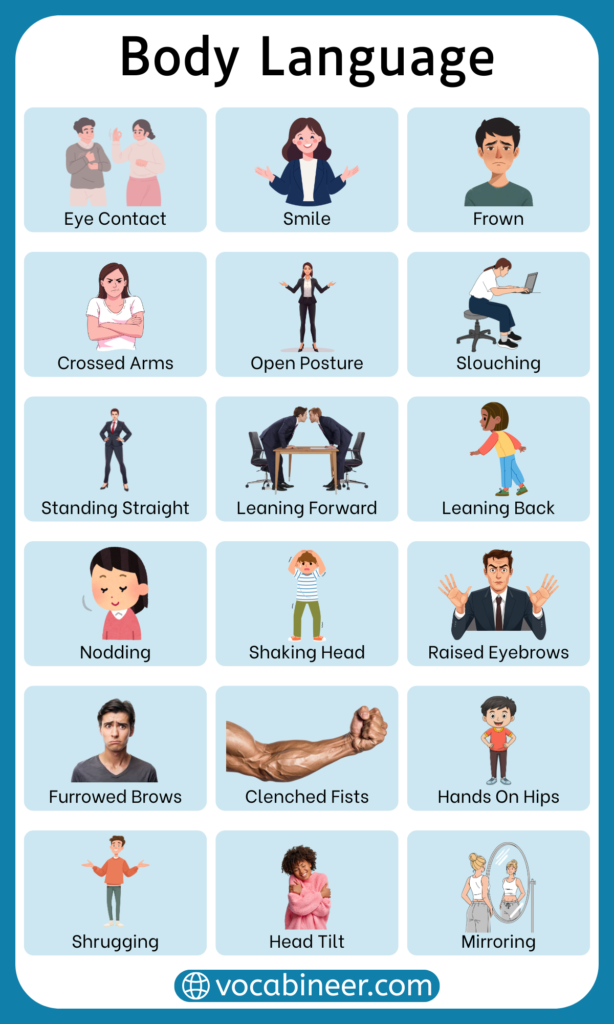
Positive Body Language Gestures
Positive body language gestures include movements that express friendliness, confidence, interest, comfort, and emotional openness, helping create trust and healthy communication.
- Warm smile: Shows kindness, friendliness, and emotional comfort
- Open posture: Expresses confidence, honesty, and openness
- Direct eye contact: Indicates attention, trust, and sincerity
- Gentle nodding: Shows understanding and agreement
- Relaxed shoulders: Suggest calmness and emotional ease
- Open palms: Express honesty and peaceful intention
- Leaning slightly forward: Shows interest and engagement
- Natural hand movements: Indicate comfort and relaxed communication
Negative Body Language Gestures
Negative body language gestures include movements that express discomfort, anger, fear, stress, or emotional withdrawal, often signaling tension or unease during interaction.
- Crossed arms tightly: Show defensiveness or emotional resistance
- Avoiding eye contact: Indicates discomfort, fear, or nervousness
- Clenched fists: Express anger, frustration, or emotional tension
- Tight lips: Suggest irritation, restraint, or stress
- Rigid posture: Shows anxiety, fear, or emotional pressure
- Excessive blinking: Indicates nervousness or tension
- Fidgeting hands: Suggest restlessness or emotional discomfort
- Turning body away: Expresses disinterest or emotional withdrawal
Neutral Body Language Gestures
Neutral body language gestures include movements that do not strongly express positive or negative emotions but instead show balance, calmness, or simple attention during communication.
- Relaxed standing posture: Shows calmness and emotional balance
- Light head nod: Indicates listening and polite attention
- Soft eye contact: Expresses interest without emotional pressure
- Hands resting naturally: Suggest comfort and neutral emotional state
- Straight sitting posture: Shows readiness and awareness
- Still body position: Indicates focus and careful listening
- Slow breathing movement: Suggests calm thinking and emotional control
Body Language Gestures in Daily Life
In everyday routines, body language gestures naturally express emotions, reactions, and intentions during simple activities such as talking, listening, walking, and social interaction. Through small movements, people share comfort, interest, and emotional response without spoken words.
- Smiling while greeting: Creates warmth and signals friendly intention
- Nodding during conversation: Confirms understanding and active listening
- Hand waving: Serves as a friendly greeting or casual farewell
- Eye contact while speaking: Builds trust and shows honest engagement
- Open posture during discussion: Encourages openness and emotional comfort
- Relaxed sitting position: Reflects calm interaction and ease
- Gentle head tilt while listening: Shows curiosity and emotional connection
Body Language Gestures in Social Situations
During social gatherings, body language gestures help people understand emotions, respect boundaries, and respond appropriately to others. Subtle movements guide social behavior and improve communication comfort.
- Firm handshake: Builds confidence and mutual respect
- Friendly smile: Creates warmth and polite interaction
- Open arms: Suggest welcome and emotional openness
- Leaning slightly forward: Communicates attention and engagement
- Maintaining eye contact: Strengthens sincerity and emotional connection
- Relaxed posture: Supports ease and comfort in conversation
- Respectful distance: Preserves personal space and social awareness
Body Language Gestures in the Workplace
Within professional settings, body language gestures reflect confidence, cooperation, and emotional control, shaping how people interact and build trust. Proper posture and movement improve clarity, professionalism, and workplace communication.
- Firm handshake: Establishes professionalism and respectful greeting
- Upright posture: Signals alertness, readiness, and self-assurance
- Direct eye contact: Builds trust and focused engagement
- Open body position: Encourages cooperation and active listening
- Controlled hand movements: Support calm, clear communication
- Relaxed facial expression: Creates emotional balance and approachability
- Respectful personal distance: Maintains professional boundaries
Body Language Gestures in Learning Environments
Body language gestures in learning environments help students and teachers communicate interest, understanding, confusion, and attention during lessons and classroom activities.
- Raising hand: Shows readiness to ask or answer a question
- Nodding head: Indicates understanding and agreement
- Focused eye contact: Reflects attention and engagement
- Leaning forward: Shows interest and curiosity
- Relaxed sitting posture: Expresses comfort and readiness to learn
- Facial expressions of curiosity: Indicate thinking and mental effort
- Still posture during listening: Suggests focus and concentration
Cultural Differences in Body Language Gestures
Cultural differences influence how body language gestures are used, understood, and interpreted, as the same movement can carry different meanings across societies.
- Eye contact: Shows confidence in some cultures but may seem disrespectful in others
- Hand gestures: Can express approval or offense depending on cultural context
- Personal space: Varies widely between cultures and social settings
- Head movements: May signal agreement or refusal differently across regions
- Touch gestures: Accepted in some cultures and avoided in others
- Posture styles: Reflect cultural values and social expectations
Commonly Misread Body Language Gestures
Some body language gestures are often misunderstood because their meanings can change based on context, emotion, culture, and situation, leading to confusion during communication.
- Crossed arms: May show comfort, coldness, or defensiveness depending on context
- Avoiding eye contact: Can indicate respect, shyness, or nervousness, not always dishonesty
- Smiling: Sometimes hides discomfort, politeness, or emotional tension
- Foot tapping: Can express excitement or impatience, depending on the situation
- Head tilt: May show curiosity, confusion, or thoughtful listening
- Silence with still posture: Can mean focus, confusion, or emotional restraint
Body Language Gestures Chart
Body language gestures can be easily understood when organized into a clear chart that connects movements with their emotional meanings, helping readers quickly recognize expressions and reactions.
| Body Part | Gesture | Meaning |
|---|---|---|
| Hands | Thumbs up | Approval, agreement |
| Hands | Open palms | Honesty, openness |
| Face | Smile | Happiness, friendliness |
| Face | Frown | Sadness, worry |
| Head | Nodding | Agreement, understanding |
| Head | Shaking | Disagreement, refusal |
| Eyes | Direct gaze | Confidence, attention |
| Eyes | Avoiding contact | Shyness, discomfort |
| Arms | Crossed arms | Defensiveness, resistance |
| Legs | Foot tapping | Impatience, nervousness |
| Posture | Upright stance | Confidence, readiness |
| Posture | Slouched posture | Tiredness, low energy |
How to Understand Body Language Gestures
Understanding body language gestures requires careful observation of facial expressions, posture, movement, eye contact, and emotional context rather than focusing on a single action. People should notice how gestures appear together, how often they repeat, and how they match spoken words. Paying attention to the situation, timing, and emotional setting helps readers correctly interpret feelings, intentions, and reactions during communication.
Common FAQs About Body Language Gestures
Body language gestures are physical movements of the face, hands, eyes, head, and body that express emotions, reactions, and thoughts without spoken words.
They help people understand feelings, attitudes, and intentions, making communication clearer and more meaningful.
Yes, meanings change based on culture, situation, and emotional context, so gestures must be understood carefully.
Yes, facial expressions play a major role in showing emotions such as happiness, anger, fear, and surprise.
By practicing eye contact, relaxed posture, controlled movements, and emotional awareness during communication.
Conclusion
Body language gestures play a powerful role in communication by expressing emotions, thoughts, and reactions without words. Understanding these gestures helps people connect better, interpret feelings accurately, and respond naturally in daily conversations, social settings, classrooms, and professional environments. Learning body language gestures through pictures, examples, and structured explanations makes communication clearer, more confident, and more meaningful in every situation.
Read More