Cooking Verbs describe the actions used while preparing and cooking food. They appear in recipe instructions and kitchen steps such as chop, slice, boil, bake, fry, and stir. Each verb explains a specific action applied to ingredients during preparation or heat.
This post presents Cooking Verbs with organized lists, short explanations, and pictures to help you recognize and understand each action clearly. You will see how these verbs are grouped by stage and cooking method for structured learning.
In This Page
Common Cooking Verbs
These are general kitchen actions used in almost every recipe. They describe basic movements and food handling steps.
- Cook: Prepare food by applying heat until it is ready to eat.
- Prepare: Get ingredients ready before the main cooking begins.
- Make: Combine ingredients to create a dish.
- Add: Put an ingredient into a mixture or pan.
- Mix: Combine ingredients evenly using a spoon or mixer.
- Stir: Move ingredients around gently in a circular motion.
- Heat: Raise the temperature of food or liquid.
- Pour: Transfer liquid carefully into another container.
- Serve: Place food on a plate for eating.
- Taste: Check flavor during the cooking process.
- Season: Add salt, spices, or herbs for flavor.
- Garnish: Decorate the dish before serving.
- Drain: Remove extra liquid from cooked food.
- Cool: Allow food to reduce in temperature.
- Store: Keep food safely for later use.
- Reheat: Warm cooked food again.
- Marinate: Soak food in seasoned liquid before cooking.
- Soak: Leave food in liquid for a period of time.
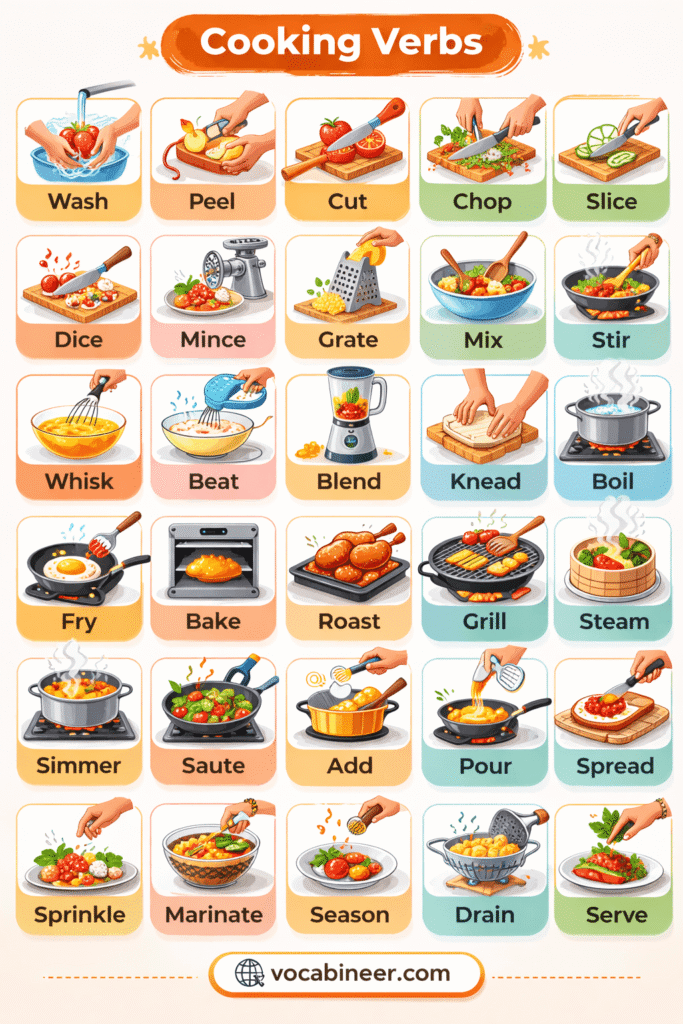
Cooking Verbs for Food Preparation
Before heat is applied, food must be cleaned, shaped, or divided. These verbs describe preparation steps.
- Wash: Clean fruits or vegetables with water.
- Peel: Remove the outer skin of fruits or vegetables.
- Chop: Cut food into rough pieces.
- Slice: Cut into thin flat pieces.
- Dice: Cut into small even cubes.
- Mince: Cut into very tiny pieces.
- Grate: Rub food against a grater to create small shreds.
- Shred: Cut into thin strips.
- Crush: Press food until it breaks apart.
- Mash: Press cooked food until soft and smooth.
- Blend: Mix ingredients using a blender until smooth.
- Whisk: Beat ingredients quickly to add air.
- Beat: Mix forcefully using a spoon or whisk.
- Knead: Press and fold dough repeatedly.
- Roll: Flatten dough using a rolling pin.
- Trim: Remove unwanted parts of meat or vegetables.
- Core: Remove the center of fruits like apples.
- Seed: Remove seeds from fruits or vegetables.
- Measure: Check the amount of an ingredient.
Cooking Verbs for Heat Methods
These verbs describe how food is cooked using heat. Different methods change texture and flavor.
- Boil: Cook food in bubbling water.
- Simmer: Cook gently just below boiling point.
- Fry: Cook in hot oil or fat.
- Sauté: Cook quickly in a small amount of oil.
- Deep fry: Cook food completely submerged in oil.
- Bake: Cook food in an oven using dry heat.
- Roast: Cook food in the oven, usually uncovered.
- Grill: Cook food over direct heat.
- Broil: Cook with high heat from above.
- Steam: Cook using hot vapor.
- Poach: Cook gently in hot liquid.
- Blanch: Briefly boil food, then cool quickly.
- Toast: Brown food using dry heat.
- Brown: Cook until surface turns golden.
- Caramelize: Heat sugar until it melts and turns brown.
Cooking Verbs for Texture and Consistency
Some Cooking Verbs describe how food changes in texture during preparation or heat. These actions affect thickness, smoothness, and firmness. You will often see them in sauce recipes, baking steps, and dessert instructions.
- Thicken: Make a liquid denser, often using flour or starch.
- Reduce: Boil a liquid to decrease its volume and intensify flavor.
- Melt: Turn solid food into liquid using heat.
- Soften: Make food less firm through heat or soaking.
- Crisp: Cook until the surface becomes firm and crunchy.
- Tenderize: Make meat softer by pounding or marinating.
- Whip: Beat cream or egg whites until light and airy.
- Fold: Gently combine ingredients without losing air.
- Glaze: Coat food with a shiny thin layer.
- Coat: Cover food evenly with sauce or crumbs.
- Dust: Lightly sprinkle flour or sugar over food.
- Sprinkle: Scatter small pieces evenly over the surface.
- Drizzle: Pour liquid slowly in a thin stream.
- Brush: Apply liquid gently using a brush.
- Layer: Arrange ingredients in stacked levels.
- Stuff: Fill food with another mixture inside.
- Chill: Cool food in a refrigerator until firm.
- Freeze: Lower temperature until food becomes solid.
Difference Between Similar Cooking Verbs
Some Cooking Verbs sound similar but describe slightly different actions. Understanding these differences helps you follow recipes more accurately. Below is a comparison table of commonly confused cooking verbs.
| Cooking Verbs | Key Difference |
|---|---|
| Boil | Cook in rapidly bubbling liquid at high heat |
| Simmer | Cook gently in liquid just below boiling point |
| Fry | Cook food in hot oil, sometimes deep or shallow |
| Sauté | Cook quickly in a small amount of oil over medium heat |
| Bake | Cook using dry heat in an oven, often for bread or cakes |
| Roast | Cook uncovered in oven, usually for meat or vegetables |
| Grill | Cook over direct heat from below |
| Broil | Cook with direct heat from above in the oven |
| Whip | Beat to add air and create a light texture |
| Beat | Mix strongly without necessarily adding much air |
| Chop | Cut into rough, uneven pieces |
| Dice | Cut into small, even cubes |
| Slice | Cut into thin flat pieces |
| Mince | Cut into very fine, tiny pieces |
| Blend | Mix until smooth using a blender |
| Mix | Combine ingredients without fully smoothing |
| Reduce | Boil liquid to decrease volume and thicken |
| Thicken | Make a liquid denser using an ingredient like flour |
Cooking Verbs by Cooking Stage
Cooking follows a natural order. Preparation happens first, heat comes next, and finishing steps complete the dish. Organizing Cooking Verbs by stage makes the kitchen process easier to understand from start to finish.
Verbs Used Before Cooking
Before heat is applied, ingredients must be cleaned and prepared properly.
- Wash: Clean ingredients with water before cutting or cooking.
- Peel: Remove the outer skin from fruits or vegetables.
- Trim: Cut away unwanted fat, stems, or rough edges.
- Slice: Cut food into thin, flat pieces.
- Dice: Cut into small, even cubes.
- Mince: Chop into very fine, tiny pieces.
- Chop: Cut into rough, uneven pieces.
- Grate: Shred food into small thin pieces using a grater.
- Measure: Check exact ingredient amounts before mixing.
- Marinate: Soak food in seasoned liquid to add flavor.
- Soak: Leave food in water or liquid to soften.
- Season: Add salt, spices, or herbs before cooking.
Verbs Used During Cooking
Once heat begins, these verbs describe active cooking steps.
- Boil: Cook in rapidly bubbling liquid.
- Simmer: Cook gently just below boiling temperature.
- Fry: Cook food in hot oil or fat.
- Sauté: Cook quickly in a small amount of oil.
- Bake: Cook using dry heat inside an oven.
- Roast: Cook uncovered in the oven until browned.
- Grill: Cook over direct heat from below.
- Steam: Cook using hot vapor instead of direct water.
- Stir: Move ingredients while they cook.
- Flip: Turn food to cook the other side evenly.
- Brown: Cook until the surface turns golden.
- Reduce: Boil liquid to decrease volume and thicken.
Verbs Used After Cooking
After heat is removed, final actions prepare food for serving or storage.
- Cool: Allow food to lower in temperature naturally.
- Slice: Cut cooked food into serving portions.
- Garnish: Decorate the dish before presenting it.
- Plate: Arrange food neatly on a serving plate.
- Serve: Present food for eating.
- Store: Keep leftovers safely in containers.
- Reheat: Warm cooked food again before serving.
- Cover: Place a lid or wrap over food for storage.
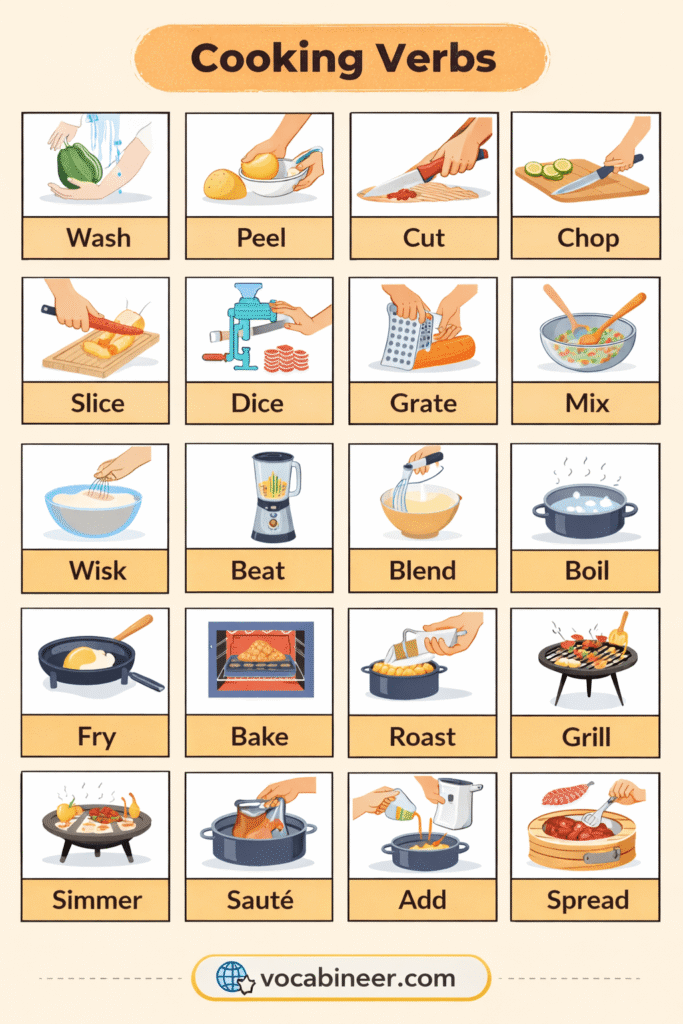
Cooking Verbs by Cooking Tools
Certain cooking actions are closely connected to specific kitchen tools. Recognizing this link makes recipe instructions easier to follow. When you notice the tool mentioned, you can quickly understand the action required.
Cooking Verbs Used with Oven
An oven applies dry heat from all sides. The following verbs are commonly used with oven cooking:
- Bake
- Roast
- Broil
- Toast
Cooking Verbs Used with Pan
A pan is placed directly on the stove. These verbs describe actions performed with stovetop heat:
- Fry
- Sauté
- Sear
- Flip
- Brown
Cooking Verbs Used with Grill
Grilling uses direct heat, often from below. The verbs below are linked with grill cooking:
- Grill
- Char
- Smoke
Cooking Verbs Used with Blender or Mixer
Blenders and mixers combine ingredients mechanically. These verbs describe mixing and smoothing actions:
- Blend
- Puree
- Whisk
- Beat
Cooking Verbs in Simple Sentences
Using Cooking Verbs in short sentences improves understanding of kitchen instructions.
- She chopped the onions.
- He boiled the rice.
- They baked the cake.
- She whisked the eggs.
- He grilled the chicken.
- They steamed the vegetables.
- She kneaded the dough.
- He reduced the sauce.
- They melted the butter.
- She stuffed the peppers.
- He blended the soup.
- They marinated the meat.
- She sliced the tomatoes.
- He caramelized the sugar.
- They served the dish.
FAQs
Cooking verbs are action words used in recipes and kitchen instructions. They describe food preparation and cooking steps such as chop, boil, bake, fry, mix, and serve.
Cooking verbs tell you exactly what action to perform on the ingredients. Without them, recipe steps would be unclear and difficult to follow correctly.
Boil means cooking food in rapidly bubbling liquid. Simmer means cooking gently just below the boiling point with small bubbles forming.
Both use oven heat. Bake is commonly used for bread and desserts, while roast is more often used for meat and vegetables.
Most everyday recipes use 20 to 40 common cooking verbs. Advanced recipes may include more specialized action words.
Conclusion
Understanding Cooking Verbs helps you follow recipes correctly and describe kitchen actions clearly. You covered preparation verbs, heat methods, texture changes, stage-based verbs, and tool-based verbs. This structured approach improves clarity when reading or writing cooking instructions.
Read More