

Kitchen Utensils are small handheld tools used to prepare, cook, and serve food. Common examples include knives, spoons, spatulas, whisks, peelers, and measuring cups. Each utensil performs a specific action such as cutting, mixing, measuring, draining, or lifting ingredients during food preparation.
This post presents a structured kitchen utensils name list with pictures and clear uses. You will learn to identify essential tools accurately and understand how each one functions during everyday kitchen tasks in an organized way.
In This Page
What Are Kitchen Utensils?
Kitchen utensils are the tools we use in the kitchen to help prepare, cook, serve, and store food. In fact, these tools include simple items like spoons, knives, and measuring cups, as well as more advanced tools like whisks, tongs, and ladles. Moreover, they are essential because they make cooking easier, faster, and safer. Therefore, understanding the names and uses of kitchen utensils helps beginners and ESL learners feel more confident in the kitchen.
Common Kitchen Utensils
Most kitchens rely on a set of everyday tools for preparing and serving food. These common Kitchen Utensils handle tasks such as cutting, mixing, measuring, and serving ingredients. Therefore, knowing their names helps you recognize each tool quickly and use it correctly during regular kitchen work.
- Chef’s knife: Main cutting tool for vegetables, fruits, and meat.
- Paring knife: Small knife for peeling and trimming.
- Cutting board: Flat surface used for safe chopping.
- Peeler: Removes thin skin from fruits and vegetables.
- Grater: Shreds cheese or vegetables into small pieces.
- Wooden spoon: Stirs hot dishes without scratching cookware.
- Spatula: Flips or spreads food in a pan.
- Turner: Lifts and flips items like pancakes or eggs.
- Whisk: Beats eggs and mixes sauces smoothly.
- Mixing bowl: Holds ingredients during preparation.
- Measuring cup: Measures liquid or dry ingredients.
- Measuring spoon: Measures small amounts like salt or spices.
- Colander: Drains pasta or washed vegetables.
- Strainer: Separates small solids from liquid.
- Ladle: Serves soups, stews, or sauces.
- Tongs: Grips and turns hot food safely.
- Can opener: Opens metal food cans.
- Rolling pin: Flattens dough evenly.
- Garlic press: Crushes garlic cloves quickly.
- Kitchen scissors: Cuts herbs and food packaging.

List of Kitchen Utensils A to Z
Arranging Kitchen Utensils alphabetically improves recognition and recall. In fact, this format is often used in school charts and organized name lists. Therefore, below is a broad A to Z list of kitchen utensils with short, clear descriptions for easier identification.
Kitchen Utensils from A to F
- Apron: Protective cloth worn over clothes while cooking.
- Apple corer: Removes the core from apples easily.
- Basting brush: Spreads butter or sauce over food.
- Blender: Electric tool used to mix or puree ingredients.
- Bottle opener: Opens sealed bottle caps.
- Bread knife: Serrated knife for slicing bread.
- Butter knife: Small knife used to spread butter.
- Can opener: Cuts open metal cans safely.
- Carving fork: Holds meat steady while slicing.
- Cheese slicer: Cuts thin, even slices of cheese.
- Chef’s knife: Large knife for chopping and slicing.
- Cleaver: Heavy knife used for cutting meat or bones.
- Colander: Drains pasta or washed vegetables.
- Cooking spoon: General spoon for stirring hot food.
- Cutting board: Flat surface for safe cutting.
- Dough scraper: Lifts and divides dough.
- Egg beater: Tool used to beat eggs quickly.
- Funnel: Helps pour liquids into narrow openings.
- Food processor: Electric appliance for chopping and blending.
- Fork: Used to hold or lift food.
Kitchen Utensils from G to L
- Garlic press: Crushes garlic cloves.
- Grater: Shreds cheese or vegetables.
- Grill brush: Cleans grill surfaces.
- Hand mixer: Electric tool for mixing batter.
- Ice cream scoop: Forms round scoops.
- Juicer: Extracts juice from fruits.
- Kitchen scissors: Cuts herbs and packaging.
- Kitchen scale: Measures ingredients by weight.
- Knife sharpener: Restores sharp edges on knives.
- Ladle: Deep spoon for soups and sauces.
- Lemon squeezer: Presses juice from citrus fruits.
- Measuring cup: Measures liquid or dry ingredients.
- Measuring spoon: Measures small ingredient amounts.
- Mixing bowl: Holds ingredients during mixing.
Kitchen Utensils from M to R
- Masher: Crushes cooked vegetables.
- Mortar and pestle: Grinds spices into powder or paste.
- Nutcracker: Breaks open hard nut shells.
- Oven mitt: Protects hands from heat.
- Paring knife: Small knife for peeling and trimming.
- Pastry brush: Applies butter or glaze.
- Peeler: Removes skin from fruits and vegetables.
- Pepper grinder: Crushes peppercorns.
- Pizza cutter: Cuts pizza into slices.
- Rolling pin: Flattens dough.
- Rubber spatula: Scrapes batter from bowls.
Kitchen Utensils from S to Z
- Salad spinner: Dries washed greens.
- Serving spoon: Serves food onto plates.
- Sieve: Sifts flour or strains liquid.
- Skimmer: Lifts food from hot oil or broth.
- Slotted spoon: Drains liquid while lifting food.
- Spatula: Flips or spreads food.
- Strainer: Separates solids from liquids.
- Tongs: Grips and turns food safely.
- Turner: Flat tool for flipping food.
- Whisk: Beats eggs or mixes batter.
- Wooden spoon: Stirs hot dishes without scratching pans.
- Zester: Removes thin peel from citrus fruit.
Kitchen Utensils for Cutting and Peeling
Cutting and peeling tools are used at the very start of food preparation. They help shape ingredients before cooking begins. A good kitchen usually has more than one cutting utensil because each tool serves a slightly different purpose.
- Chef’s knife: Large all purpose knife for chopping vegetables and meat quickly.
- Paring knife: Small knife used for peeling and trimming fruits or vegetables.
- Bread knife: Serrated knife designed to slice bread without crushing it.
- Utility knife: Medium sized knife for general cutting tasks.
- Cleaver: Heavy knife used to cut through meat and bones.
- Peeler: Removes thin outer skin from vegetables and fruits.
- Julienne peeler: Creates thin strip cuts from vegetables.
- Apple corer: Removes the core from apples in one motion.
- Mandoline slicer: Cuts very thin and even slices quickly.
- Grater: Shreds vegetables or cheese into fine pieces.
- Zester: Removes thin citrus peel for flavoring.
- Kitchen scissors: Cuts herbs, packaging, or small food items.
- Cutting board: Flat surface used for safe cutting and chopping.
Kitchen Utensils for Mixing and Stirring
After cutting, ingredients are often combined. Mixing tools help blend, fold, or stir food evenly. Some are used for light mixing, while others handle thick dough or batter.
- Mixing spoon: Used to stir soups, sauces, and batters.
- Wooden spoon: Strong spoon for stirring hot food.
- Slotted spoon: Lifts food while leaving liquid behind.
- Ladle: Deep spoon used to stir and serve soups.
- Whisk: Beats eggs or cream to add air.
- Hand whisk: Manual tool for quick mixing.
- Electric hand mixer: Blends batter smoothly with rotating beaters.
- Spatula: Flips food or spreads mixture evenly.
- Rubber spatula: Scrapes bowls clean and folds mixtures gently.
- Turner: Flat utensil used to flip pancakes or eggs.
- Tongs: Grips and turns food safely.
- Pastry brush: Spreads butter or glaze over food.
- Mixing bowl: Holds ingredients while mixing.
Kitchen Utensils for Measuring
Measuring utensils ensure accuracy in cooking and baking. Recipes often depend on correct quantities for good results.
- Measuring cup: Measures liquids or dry ingredients.
- Liquid measuring cup: Transparent cup marked for liquid levels.
- Dry measuring cup: Used for flour, sugar, or rice.
- Measuring spoon: Measures small amounts of ingredients.
- Kitchen scale: Measures ingredients by weight.
- Thermometer: Checks internal temperature of food.
- Timer: Tracks cooking time accurately.
Kitchen Utensils for Straining and Draining
Straining tools are used to separate solids from liquids. They are especially useful when washing vegetables, draining pasta, or filtering sauces. Different utensils have different hole sizes depending on the task.
- Colander: Bowl-shaped utensil with large holes for draining pasta or vegetables.
- Strainer: Fine mesh tool used to separate smaller particles from liquid.
- Sieve: Used to sift flour or strain sauces smoothly.
- Skimmer: Flat perforated spoon used to lift food from hot oil or broth.
- Slotted spoon: Lifts cooked food while letting liquid drain away.
- Cheesecloth: Thin cloth used to strain yogurt, broth, or juice.
- Salad spinner: Dries washed leafy vegetables by spinning them.
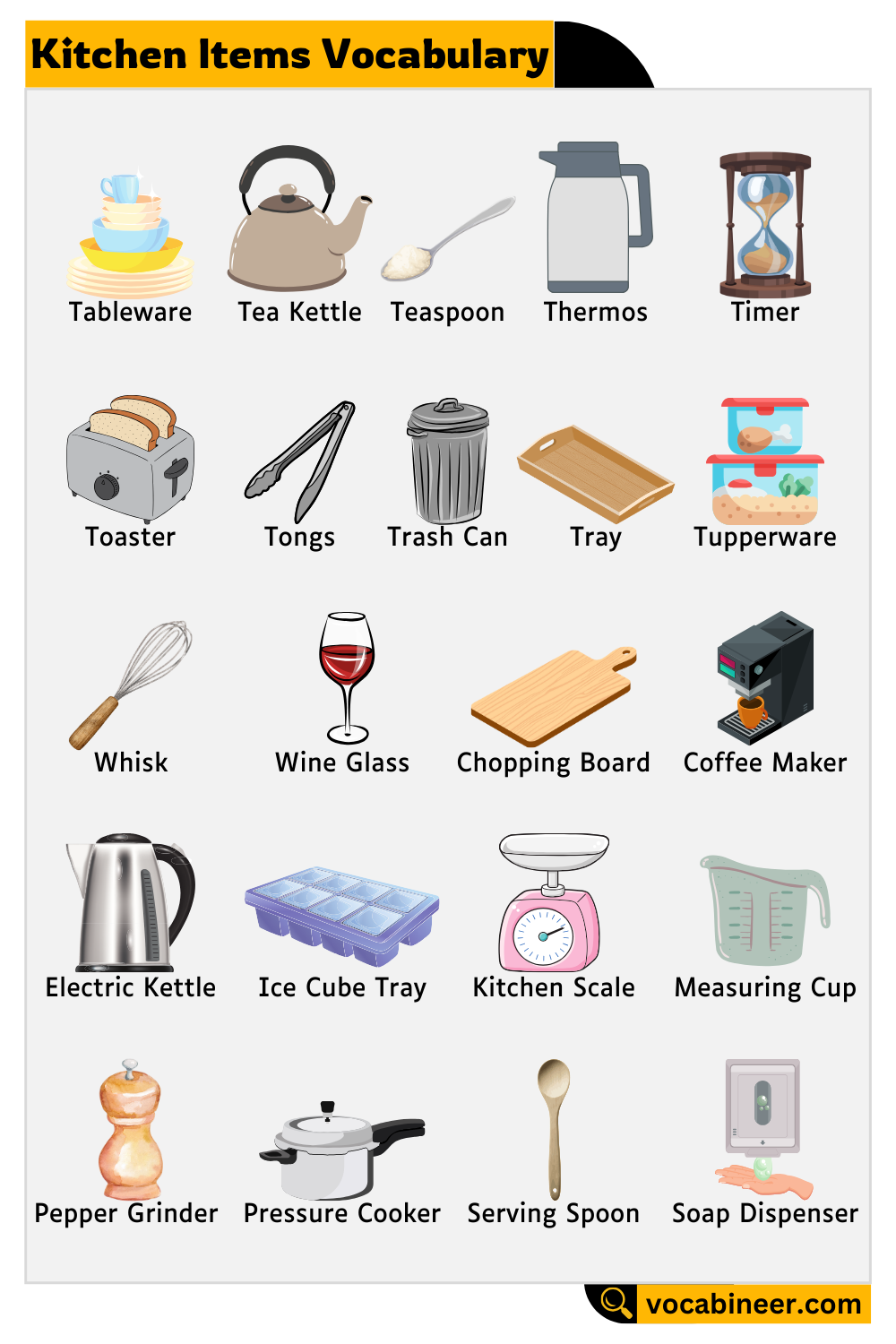
Kitchen Utensils for Baking Preparation
Baking requires tools that help shape dough and apply ingredients evenly. These utensils support tasks before and during oven baking.
- Rolling pin: Flattens dough evenly for bread or pastry.
- Pastry cutter: Cuts butter into flour while making dough.
- Dough scraper: Divides and lifts sticky dough easily.
- Pastry brush: Spreads egg wash or butter on dough surface.
- Cookie scoop: Portions dough into even round shapes.
- Flour sifter: Aerates flour and removes lumps.
- Cooling rack: Allows baked goods to cool evenly.
Kitchen Utensils for Serving
Serving utensils help transfer food from cookware to plates safely and neatly. They are designed for portion control and easy handling.
- Serving spoon: Transfers food from bowl to plate.
- Ladle: Serves soups, stews, and sauces.
- Slotted spoon: Serves food while draining excess liquid.
- Carving fork: Holds meat steady while slicing.
- Cake server: Lifts cake slices cleanly.
- Tongs: Serves bread, salad, or grilled items.
- Gravy boat with spoon: Pours sauce over food easily.
Essential Kitchen Utensils for Beginners
If someone is starting to cook, a basic set of utensils is enough to handle most simple meals. These tools cover cutting, mixing, measuring, and serving tasks without making the kitchen feel crowded.
- Chef’s knife: Main cutting tool for vegetables, fruits, and meat.
- Cutting board: Safe surface for chopping and slicing.
- Peeler: Removes thin skin from vegetables and fruits.
- Wooden spoon: Stirs hot dishes without scratching cookware.
- Spatula: Flips and turns food while cooking.
- Whisk: Mixes eggs, sauces, and batters smoothly.
- Measuring cup: Measures liquid and dry ingredients accurately.
- Measuring spoon: Measures small ingredient quantities.
- Mixing bowl: Holds ingredients during preparation.
- Colander: Drains pasta and washed vegetables.
- Ladle: Serves soups and curries neatly.
- Tongs: Grips and turns hot food safely.
- Can opener: Opens canned food quickly.
- Kitchen scissors: Cuts herbs and food packaging.
These utensils allow a beginner to complete most everyday recipes comfortably.
Small Kitchen Utensils Used Daily
Some utensils may be small in size, but they are used almost every day. They handle quick tasks and make cooking more efficient.
- Teaspoon: Used for stirring tea or measuring small amounts.
- Tablespoon: Used for serving or measuring ingredients.
- Garlic press: Crushes garlic cloves quickly.
- Bottle opener: Opens sealed drink bottles.
- Vegetable peeler: Quickly removes vegetable skins.
- Zester: Scrapes citrus peel for flavor.
- Egg separator: Separates egg yolk from white.
- Pizza cutter: Cuts pizza into even slices.
- Nutcracker: Breaks hard nut shells.
- Lemon squeezer: Extracts juice from citrus fruits.
- Ice cream scoop: Forms even scoops easily.
- Pepper grinder: Grinds whole peppercorns fresh.

Difference Between Similar Kitchen Utensils
Some kitchen utensils look similar but serve different purposes. The table below explains the key differences clearly.
| Kitchen Utensils | Main Difference |
|---|---|
| Spoon | Shallow bowl used for stirring and serving small portions |
| Ladle | Deep bowl used for serving soups and liquids |
| Spatula | Used for scraping and spreading mixtures |
| Turner | Used mainly for flipping food in a pan |
| Strainer | Fine mesh used to separate small particles from liquid |
| Colander | Large holes used to drain pasta or vegetables |
| Peeler | Removes thin outer skin quickly |
| Paring Knife | Small knife for detailed cutting and trimming |
| Grater | Shreds cheese or vegetables into strips |
| Zester | Removes thin citrus peel without white pith |
| Measuring Cup | Measures larger quantities of ingredients |
| Measuring Spoon | Measures small ingredient amounts |
| Whisk | Adds air while mixing liquids or eggs |
| Spoon | Mixes ingredients without adding much air |
| Tongs | Grips and lifts hot food safely |
| Fork | Holds or pierces food but does not grip firmly |
Kitchen Utensils in Simple Sentences
Using kitchen utensils names in short sentences improves recognition and clarity.
- She used a knife to slice the tomatoes.
- He stirred the soup with a wooden spoon.
- They drained the pasta in a colander.
- She measured sugar with a measuring cup.
- He flipped the pancake using a turner.
- She whisked eggs with a whisk.
- They served soup with a ladle.
- He grated cheese using a grater.
- She rolled dough with a rolling pin.
- He squeezed lemon with a lemon squeezer.
Common FAQs About Kitchen Utensils Names
Kitchen utensils are handheld tools used for preparing, cooking, and serving food. They include items such as knives, spoons, spatulas, whisks, and measuring cups.
Kitchen utensils are small tools used by hand, like tongs or peelers. Cookware refers to larger items like pots and pans used directly on heat.
Most kitchens need a chef’s knife, cutting board, wooden spoon, spatula, whisk, measuring cups, measuring spoons, colander, and ladle.
Measuring cups and spoons help maintain correct ingredient amounts. Accurate measurements are especially important in baking recipes.
Kitchen utensils should be kept clean and dry. They can be stored in drawers, utensil holders, or wall racks for easy access.
Conclusion
Learning Kitchen Utensils names helps you identify tools accurately and understand their specific functions. Throughout this article, you covered common utensils, alphabetical lists, functional categories, beginner essentials, daily tools, and key differences. As a result, this organized approach strengthens recognition and supports proper usage during everyday kitchen tasks.
Read More
