

A chicken has many body parts that help it eat, drink, breathe, walk, scratch, balance, and protect itself. Some parts are easy to see on the outside, such as the comb, beak, wattles, wings, feathers, legs, toes, and claws.
This guide explains 30 parts of a chicken with names, simple functions, and pictures. You will learn about the head, face, body, wings, legs, feet, feathers, and internal organs of a chicken in clear and easy words. It is useful for kids, students, English learners, and anyone studying basic chicken anatomy.
In This Page
Chicken Body Parts Chart
| Chicken Part | Body Area | Simple Function |
|---|---|---|
| Comb | Head | Helps with body temperature and display. |
| Beak | Head | Helps the chicken eat, peck, and drink. |
| Wattles | Head | Help with cooling and visual display. |
| Eye | Head | Helps the chicken see food, danger, and movement. |
| Earlobe | Head | A soft part near the ear area. |
| Nostril | Head | Helps the chicken breathe. |
| Neck | Body | Connects the head to the body. |
| Hackle Feathers | Neck | Feathers around the neck area. |
| Breast | Body | Front part of the chicken’s body. |
| Back | Body | Upper rear part of the body. |
| Saddle Feathers | Body | Feathers near the back before the tail. |
| Tail Feathers | Tail | Help with balance and display. |
| Wing | Wing | Helps with balance and short flight. |
| Wing Feathers | Wing | Cover and support the wing. |
| Primary Feathers | Wing | Main flight feathers on the outer wing. |
| Secondary Feathers | Wing | Inner wing feathers that help with lift. |
| Thigh | Leg | Upper part of the chicken’s leg. |
| Hock | Leg | Joint between the thigh and shank. |
| Shank | Leg | Lower leg part covered with scales. |
| Spur | Leg | A pointed growth, often larger in roosters. |
| Toe | Foot | Helps the chicken stand, walk, and grip. |
| Claw | Foot | Helps scratch the ground and grip surfaces. |
| Crop | Internal | Stores food before digestion. |
| Gizzard | Internal | Grinds food with the help of grit. |
| Heart | Internal | Pumps blood through the body. |
| Liver | Internal | Helps process nutrients and clean the blood. |
| Lungs | Internal | Help the chicken breathe. |
| Intestines | Internal | Help digest food and absorb nutrients. |
| Vent | Body | Opening used for waste and egg laying. |
| Skin | Body | Covers and protects the body. |
Head and Face Parts
The head and face parts help a chicken eat, drink, breathe, see, and communicate. These parts are also useful for identifying chickens in pictures.
Comb
The comb is the soft, fleshy part on top of a chicken’s head. It can help with body temperature and may be larger in roosters than in hens.
Beak
The beak is the hard mouthpart of a chicken. Chickens use it to peck food, drink water, pick up small objects, and explore the ground.
Wattles
Wattles are the soft, fleshy parts hanging below the beak. They help with cooling and are often more noticeable in adult chickens.
Eye
The eye helps the chicken see food, movement, danger, and other chickens. Good eyesight helps chickens search for food and stay alert.
Earlobe
The earlobe is a small soft area near the chicken’s ear opening. It can be different colors depending on the breed.
Nostril
Nostrils are small openings on the beak. They help the chicken breathe through the nose area.
Neck, Body, and Feather Parts
The neck and body parts support movement, protection, balance, and body shape. Feathers also help cover the body and protect the skin.
Neck
The neck connects the head to the body. It helps the chicken move its head while eating, drinking, looking around, or pecking.
Hackle Feathers
Hackle feathers are the feathers around the neck. In roosters, they are often longer, brighter, and more pointed.
Breast
The breast is the front part of the chicken’s body. It covers strong muscles used for wing movement.
Back
The back is the upper rear part of the chicken’s body. It connects the neck, wings, saddle area, and tail.
Saddle Feathers
Saddle feathers are found near the lower back before the tail. In roosters, these feathers are often longer and more decorative.
Tail Feathers
Tail feathers are found at the back of the chicken. They help with balance and may also be used for display, especially in roosters.
Wing Parts
Chicken wings help with balance, movement, and short flight. Even though many chickens do not fly far, their wings are still important.
Wing
The wing is the side body part used for balance and short flying movements. Chickens may flap their wings when running, jumping, or escaping danger.
Wing Feathers
Wing feathers cover the wing and help support movement. They also protect the wing and help with balance.
Primary Feathers
Primary feathers are the main feathers on the outer part of the wing. They are important for flight and wing movement.
Secondary Feathers
Secondary feathers are found on the inner part of the wing. They help create lift when the chicken flaps its wings.
Leg and Foot Parts
The legs and feet help a chicken walk, run, scratch the ground, perch, and balance. These parts are easy to identify in a chicken diagram.
Thigh
The thigh is the upper part of the chicken’s leg. It helps the chicken walk, run, jump, and move with strength.
Hock
The hock is the joint between the thigh and the shank. It works like a bending point in the leg.
Shank
The shank is the lower part of the chicken’s leg. It is usually covered with scales and connects to the foot.
Spur
A spur is a pointed growth on the back of the leg. It is often larger and sharper in roosters.
Toe
Toes help the chicken stand, walk, scratch, and grip the ground. Most chickens have several toes on each foot.
Claw
Claws are the hard tips at the end of the toes. Chickens use them to scratch soil, search for food, and grip surfaces.
Internal Parts of a Chicken
Internal parts are inside the chicken’s body. These parts help with breathing, digestion, blood flow, and body function.
Crop
The crop is a pouch near the neck that stores food before digestion. It lets the chicken eat quickly and digest food later.
Gizzard
The gizzard is a strong organ that grinds food. Chickens often swallow small stones or grit, which helps the gizzard break down food.
Heart
The heart pumps blood through the chicken’s body. It helps carry oxygen and nutrients to different body parts.
Liver
The liver helps process nutrients and clean the blood. It is an important internal organ for digestion and body health.
Lungs
The lungs help the chicken breathe. They take in oxygen and help remove carbon dioxide from the body.
Intestines
The intestines help digest food and absorb nutrients. They also help move waste through the body.
Hen vs Rooster Body Parts
Hens and roosters have the same basic body parts, but some parts may look different. Roosters often have larger combs, bigger wattles, longer tail feathers, sharper spurs, and more noticeable hackle and saddle feathers.
| Body Part | Hen | Rooster |
|---|---|---|
| Comb | Usually smaller | Often larger and brighter |
| Wattles | Usually smaller | Often larger |
| Tail Feathers | Shorter or simpler | Longer and more decorative |
| Spurs | Smaller or less noticeable | Often larger and sharper |
| Hackle Feathers | Shorter and softer | Longer and more pointed |
| Saddle Feathers | Less noticeable | Longer and more decorative |
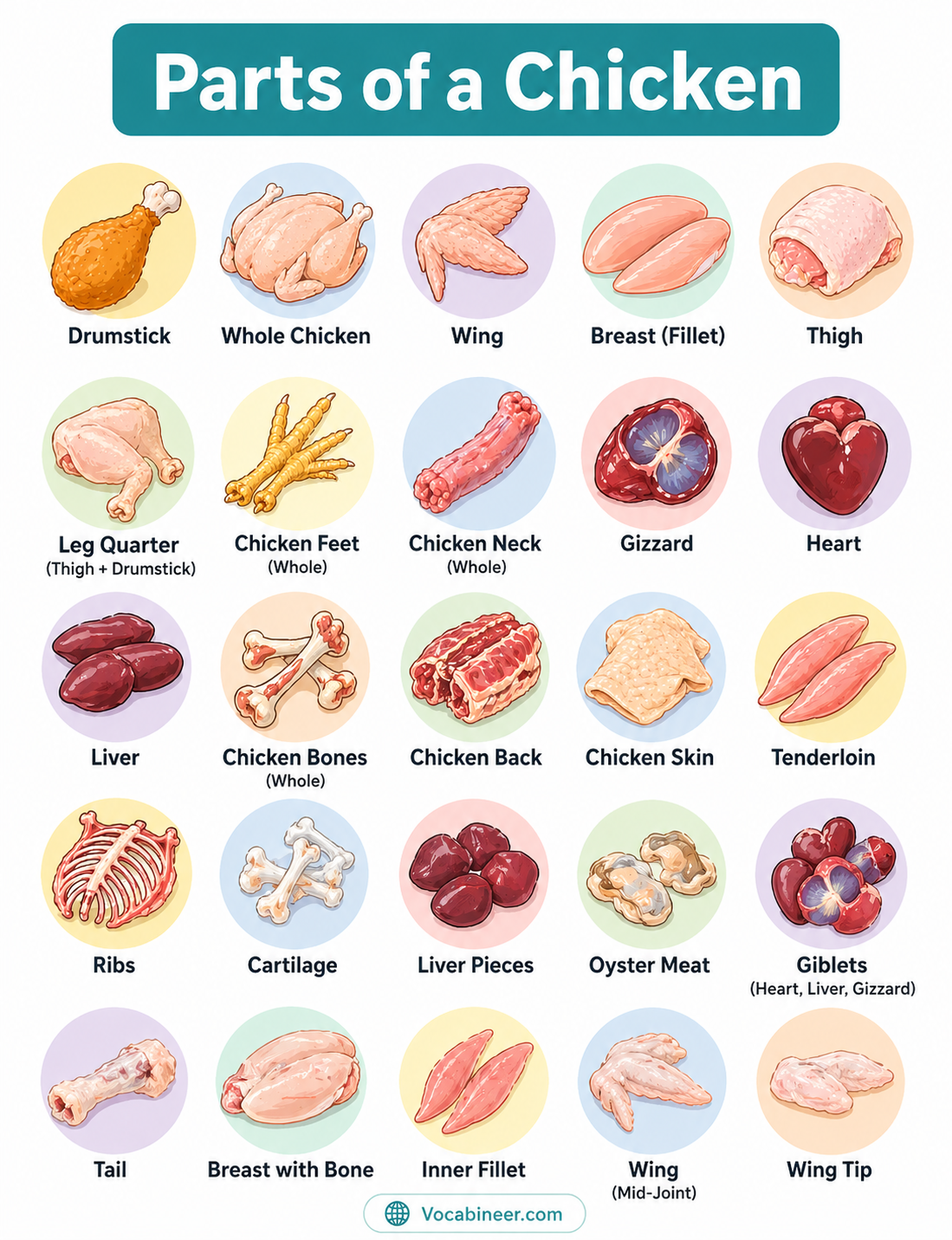
Chicken Body Parts vs Chicken Meat Cuts
Chicken body parts and chicken meat cuts are not always the same thing. Body parts describe the living chicken’s anatomy, while meat cuts describe parts used in cooking.
| Chicken Body Part | Chicken Meat Cut |
|---|---|
| Breast | Chicken breast |
| Wing | Chicken wing |
| Thigh | Chicken thigh |
| Shank / lower leg area | Drumstick |
| Back | Chicken back |
| Liver | Chicken liver |
| Heart | Chicken heart |
| Gizzard | Chicken gizzard |
FAQs
The main parts of a chicken include the comb, beak, wattles, eyes, neck, breast, back, wings, feathers, tail, thighs, shanks, toes, and claws. Chickens also have internal parts such as the crop, gizzard, heart, liver, lungs, and intestines.
The comb is the soft fleshy part on top of a chicken’s head. It helps with body temperature and may also show health, age, or breed features. Roosters often have larger combs than hens.
Wattles are the soft parts that hang below the chicken’s beak. They help with cooling and visual display. They are often larger and more noticeable in adult roosters.
Chicken claws help chickens scratch the ground, search for food, grip surfaces, and balance while walking. Claws are important for natural chicken behavior, especially scratching soil.
Hens and roosters have the same main body parts, but roosters often have larger combs, bigger wattles, longer tail feathers, sharper spurs, and more decorative hackle and saddle feathers.
Summary
Parts of a chicken include head parts, body parts, wing parts, leg and foot parts, and internal organs. Common chicken body parts include the comb, beak, wattles, neck, breast, wings, tail feathers, thigh, shank, toes, claws, crop, gizzard, heart, liver, lungs, and intestines. Learning these names helps students, kids, and English learners understand chicken anatomy with pictures more easily.
Read More
- Types of Eyebrows
- Human Parts of Body
- Types of Feelings & Emotions
- Facial Expressions Names
- Body Language Gestures