
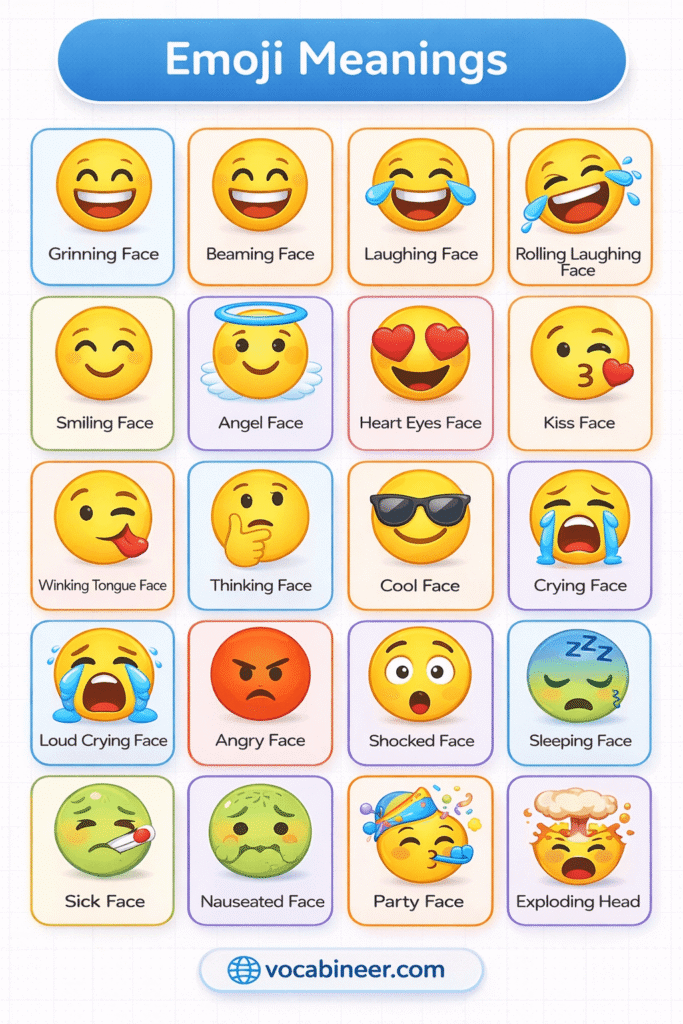
Emoji names are commonly used to understand visual symbols that appear in messages, comments, and digital text. Each emoji represents a specific idea, emotion, or reaction, and its name helps readers understand what the symbol stands for when words are missing. Learning these names helps readers correctly read emoji-based communication across chats, posts, and short messages used every day.
In this article, readers will learn emoji names with meaning through organized sections and complete lists shown with pictures. Knowing these names supports better understanding of emotional tone, message intent, and visual communication used in online conversations, captions, and quick responses.
In This Page
What Does an Emoji Mean?
An emoji name is the standard label used to describe what a visual emoji represents. It explains the idea, emotion, action, or symbol shown by the emoji so readers can understand its meaning when it appears in messages without relying only on visual guesswork.
Common Emoji Names
Common emoji names include symbols that people recognize quickly because they appear often in messages and comments. These emojis usually express basic emotions and reactions that replace short words or sentences. Learning their names helps readers instantly understand what a message is trying to say without guessing the emotion or tone behind it.
Smile Emoji Names
Smile emojis represent happiness, friendliness, and positive reactions. They are often used to soften messages or show polite emotion without sounding serious or cold.
- Smiling Face shows gentle happiness or friendly intent.
- Grinning Face represents excitement, cheerfulness, or playful mood.
- Smiling Face with Smiling Eyes expresses warmth and sincere happiness.
- Beaming Face with Smiling Eyes shows strong joy or proud emotion.
- Smiling Face with Sunglasses suggests confidence or relaxed attitude.
Sad Emoji Names
Sad emojis communicate disappointment, emotional pain, or sympathy. They help show feelings that may be difficult to explain with short text.
- Sad Face represents unhappiness or mild disappointment.
- Crying Face shows visible sadness with emotional weight.
- Loudly Crying Face expresses intense sorrow or emotional overwhelm.
- Disappointed Face signals letdown or unmet expectations.
- Weary Face reflects emotional exhaustion or distress.
Angry Emoji Names
Angry emojis show frustration, annoyance, or strong emotional reactions. They are often used to express feelings without using harsh words.
- Angry Face represents irritation or displeasure.
- Pouting Face shows stronger anger or resentment.
- Face with Steam from Nose indicates frustration or emotional pressure.
- Red Angry Face emphasizes intense anger or rage.
- Confounded Face shows confusion mixed with irritation.

Emoji Names and Meanings Table
This table helps readers quickly match commonly used emojis with their names and meanings.
| Emoji | Emoji Name | Meaning |
|---|---|---|
| 🙂 | Smiling Face | Polite happiness or friendly emotion |
| 😀 | Grinning Face | Cheerful mood or open excitement |
| 😐 | Neutral Face | No strong emotion or reaction |
| 😢 | Crying Face | Sadness or emotional pain |
| 😭 | Loudly Crying Face | Strong sadness or emotional distress |
| 😂 | Face with Tears of Joy | Laughter or amusement |
| 😮 | Astonished Face | Surprise or disbelief |
| 😱 | Face Screaming in Fear | Shock or sudden fear |
| 😡 | Angry Face | Anger or frustration |
| 😍 | Heart Eyes Face | Love or strong admiration |
| ❤️ | Red Heart | Love or deep emotional connection |
| 💔 | Broken Heart | Emotional pain or loss |
| 👍 | Thumbs Up | Approval or agreement |
| 👏 | Clapping Hands | Praise or appreciation |
| 🙌 | Raised Hands | Celebration or excitement |
| 🙏 | Folded Hands | Respect, thanks, or polite request |
| 🤔 | Thinking Face | Doubt or careful thinking |
| 👉 | Backhand Index Pointing Right | Direction or attention |
| 🔥 | Fire | Intensity, excitement, or emphasis |
| 🌧️ | Cloud with Rain | Rainy weather or sadness |
| 🚫 | Prohibited Sign | Not allowed or restricted |
| 🎉 | Party Popper | Celebration or achievement |
Emotion Emoji Names
Emotion emoji names focus on inner feelings that people want to express quickly in messages. These emojis help readers understand mood, emotional reaction, or personal feeling without long explanations. Learning emotion emoji names allows readers to correctly interpret emotional context in short texts, replies, and comments where tone matters more than detail.
Happy Emoji Names
Happy emoji names represent joy, excitement, and positive emotional reactions. These emojis are commonly used when someone feels pleased, amused, or emotionally satisfied.
- Grinning Face with Big Eyes shows open happiness and excitement.
- Face with Tears of Joy represents laughter caused by humor or relief.
- Star-Struck Face expresses admiration or strong excitement.
- Party Face shows celebration or cheerful mood.
- Relieved Face reflects calm happiness after stress or tension.
Love Emoji Names
Love emoji names express affection, emotional attachment, or caring feelings. They are used when people want to show warmth or closeness without using emotional sentences.
- Smiling Face with Heart Eyes represents love or strong liking.
- Smiling Face with Hearts shows affectionate and caring emotion.
- Kissing Face with Closed Eyes expresses gentle affection.
- Face Blowing a Kiss represents emotional closeness or gratitude.
- Heart Face signals deep emotional warmth.
Fear and Shock Emoji Names
Fear and shock emoji names show surprise, alarm, or emotional reaction to unexpected situations. These emojis replace sudden emotional responses in text.
- Face Screaming in Fear represents shock or fear.
- Wide-Eyed Face shows surprise or disbelief.
- Flushed Face expresses embarrassment or sudden emotion.
- Astonished Face signals being overwhelmed or stunned.
- Fearful Face reflects nervousness or worry.
Face Emoji Names by Expression
Face emoji names by expression focus on how facial features communicate emotion. These emojis rely on eyes, mouth, and facial posture to show feeling, reaction, or attitude. Learning face emoji names by expression helps readers understand tone when messages contain few words and emotion must be read visually.
Smiling Face Emoji Names
Smiling face emoji names represent positive expressions that range from polite happiness to strong joy. Small changes in eyes or mouth shape often change the emotional meaning.
- Slightly Smiling Face shows polite happiness or calm friendliness.
- Smiling Face with Open Mouth represents cheerful excitement or welcoming emotion.
- Smiling Face with Halo suggests innocence or good intention.
- Smiling Face with Hearts expresses affection through facial emotion.
- Smiling Face with Tear shows mixed emotion, happiness with sadness.
Neutral Face Emoji Names
Neutral face emoji names show limited or unclear emotion. They are used when a message needs to sound serious, uncertain, or emotionally flat.
- Neutral Face represents no strong feeling or reaction.
- Expressionless Face shows emotional distance or boredom.
- Face Without Mouth indicates silence or speechlessness.
- Unamused Face expresses mild displeasure or lack of interest.
- Confused Face shows uncertainty or lack of understanding.
Crying Face Emoji Names
Crying face emoji names show sadness, emotional pain, or emotional release. The amount of tears often changes the intensity of emotion.
- Crying Face represents visible sadness.
- Loudly Crying Face shows strong emotional distress.
- Sad Face with Tear expresses quiet sadness.
- Pleading Face shows emotional vulnerability or request.
- Disappointed Face reflects emotional letdown.
Hand Gesture Emoji Names
Hand gesture emoji names represent actions people normally express with their hands. These emojis communicate meaning through movement or position, helping readers understand intent without spoken language. Learning hand gesture emoji names supports clearer understanding of approval, greeting, or caution in short digital messages.
Greeting Hand Emoji Names
Greeting hand emoji names are used to acknowledge someone, start a conversation, or signal goodbye. They create a friendly or polite tone in messages.
- Waving Hand represents greeting or farewell.
- Raised Hand shows attention, request, or participation.
- Open Hands expresses welcome or openness.
- Handshake represents agreement or cooperation.
- Folded Hands shows respect or gratitude.
Approval Hand Emoji Names
Approval hand emoji names show agreement, encouragement, or positive response. They often replace short confirmation words.
- Thumbs Up represents approval or agreement.
- OK Hand signals confirmation or acceptance.
- Clapping Hands expresses praise or appreciation.
- Victory Hand shows success or positive outcome.
- Sign of the Horns represents enthusiasm or celebration.
Warning Hand Emoji Names
Warning hand emoji names communicate caution, pause, or refusal. They help signal limits or concern without strong language.
- Raised Hand with Palm shows stop or warning.
- Crossed Fingers represents hope or uncertainty.
- Pointing Finger directs attention or instruction.
- Backhand Index Pointing Left signals direction or emphasis.
- Backhand Index Pointing Right shows focus or guidance.
Body Gesture Emoji Names
Body gesture emoji names represent full-body actions or posture that express reaction, attitude, or response. These emojis go beyond hands and faces to show how a person feels or reacts physically. Learning body gesture emoji names helps readers understand nonverbal cues that appear in short messages and visual communication.
Shrug Emoji Names
Shrug emoji names express uncertainty, confusion, or lack of concern. They are used when someone does not know an answer or does not feel responsible.
- Person Shrugging represents uncertainty or lack of knowledge.
- Man Shrugging shows indifference or confusion.
- Woman Shrugging expresses doubt or unclear response.
- Shrug with Neutral Face signals emotional distance.
- Shrug with Raised Shoulders emphasizes confusion or uncertainty.
Raised Arms Emoji Names
Raised arms emoji names show excitement, celebration, or success. They often express positive reaction through body movement.
- Person Raising Both Hands represents celebration or joy.
- Man Raising Hands shows achievement or excitement.
- Woman Raising Hands expresses happiness or success.
- Raised Hands with Motion Lines emphasizes strong celebration.
- Raised Arms Gesture shows emotional relief or victory.
Bowing and Standing Emoji Names
Bowing and standing emoji names represent respect, posture, or emotional response through body position.
- Person Bowing shows respect or apology.
- Man Bowing represents polite acknowledgment.
- Woman Bowing expresses gratitude or respect.
- Person Standing indicates readiness or presence.
- Person Kneeling shows submission or emotional moment.
Heart Emoji Names
Heart emoji names represent emotional connection, affection, and emotional states related to care or attachment. These emojis are widely used to show feelings without using emotional sentences. Learning heart emoji names helps readers understand emotional tone in messages where words are brief but feelings are strong.
Colored Heart Emoji Names
Colored heart emoji names show different shades of emotion depending on color. Each color carries a slightly different emotional meaning.
- Red Heart represents deep love or strong emotion.
- Blue Heart shows trust or calm emotional bond.
- Yellow Heart expresses friendship or happiness.
- Purple Heart represents care or admiration.
- Green Heart shows growth or supportive emotion.
Broken Heart Emoji Names
Broken heart emoji names communicate emotional pain, loss, or sadness related to relationships.
- Broken Heart represents emotional hurt or separation.
- Mending Heart shows healing after emotional pain.
- Heart with Bandage expresses recovery from emotional hurt.
- Heart with Arrow represents emotional impact or sudden affection.
- Heavy Heart Symbol shows emotional burden.
Decorative Heart Emoji Names
Decorative heart emoji names focus on symbolic or expressive heart designs rather than emotional states alone.
- Sparkling Heart represents excitement or admiration.
- Growing Heart shows increasing affection.
- Beating Heart expresses active emotional feeling.
- Two Hearts represents shared affection.
- Revolving Hearts shows mutual emotional exchange.
People Emoji Names
People emoji names represent individuals, roles, and human relationships shown through visual symbols. These emojis help readers identify human presence, actions, or social roles in messages without written explanation. Learning people emoji names supports clearer understanding of who is involved in a message and what role or identity is being shown.
Person Emoji Names
Person emoji names represent a single individual without focusing on a specific role. These emojis are often used to show presence, reaction, or general reference to a person.
- Person Standing represents presence or readiness.
- Person Walking shows movement or progress.
- Person Running expresses urgency or activity.
- Person Gesturing No represents refusal or disagreement.
- Person Gesturing Yes shows agreement or acceptance.
Family Emoji Names
Family emoji names represent family relationships and household groups. They are used to show family structure or close relationships.
- Family represents parents and children together.
- Man and Woman with Child shows a parental family unit.
- Two Parents with Children represents a larger household.
- Single Parent with Child shows individual caregiving role.
- Couple with Child represents partnership and parenting.
Profession Emoji Names
Profession emoji names show work roles and occupations. These emojis help indicate profession without written titles.
- Teacher represents education role.
- Doctor shows medical profession.
- Police Officer represents law enforcement.
- Construction Worker shows labor or building work.
- Office Worker represents professional work setting.
Animal Emoji Names
Animal emoji names represent animals commonly used to show traits, emotions, or simple references in messages. These emojis help readers understand meaning through familiar animal images without written explanation. Learning animal emoji names supports correct interpretation of tone, symbolism, or subject when animals appear in digital communication.
Pet Animal Emoji Names
Pet animal emoji names include animals people commonly keep at home. These emojis are often used to show affection, behavior, or personality traits.
- Dog Face represents loyalty, friendliness, or excitement.
- Cat Face shows independence or curiosity.
- Hamster Face represents cuteness or small size.
- Rabbit Face shows gentleness or speed.
- Fish represents calmness or aquatic life.
Wild Animal Emoji Names
Wild animal emoji names represent animals that live in natural environments. They are often used symbolically to express strength, danger, or personality traits.
- Lion Face represents courage or leadership.
- Tiger Face shows power or intensity.
- Bear Face represents strength or protection.
- Wolf Face shows independence or alertness.
- Elephant represents wisdom or memory.
Bird and Insect Emoji Names
Bird and insect emoji names represent flying or small creatures often linked to freedom or nature.
- Bird represents freedom or peace.
- Eagle shows strength or focus.
- Butterfly represents change or growth.
- Bee shows activity or teamwork.
- Lady Beetle represents nature or small life.
Food Emoji Names
Food emoji names represent items people eat or drink and are commonly used to show meals, cravings, or shared moments. These emojis help readers understand references to food without written detail. Learning food emoji names supports correct interpretation of messages related to eating, celebration, or daily routines.
Fruit Emoji Names
Fruit emoji names show common fruits that appear often in messages and captions. They are used to refer to healthy eating, snacks, or specific foods.
- Apple represents fruit or healthy choice.
- Banana shows a common snack or playful reference.
- Grapes represent fruit or freshness.
- Strawberry shows sweetness or dessert-related food.
- Watermelon represents refreshment or summer food.
Meal Emoji Names
Meal emoji names represent prepared foods that people eat during main meals. These emojis are frequently used in casual conversations about eating.
- Pizza Slice represents casual food or group meals.
- Hamburger shows fast food or quick eating.
- Rice Bowl represents staple meals or comfort food.
- Cooked Rice shows daily food in many cultures.
- Sandwich represents simple meals or lunch food.
Dessert Emoji Names
Dessert emoji names show sweet foods often linked to celebration or enjoyment. These emojis appear in messages about treats or special occasions.
- Birthday Cake represents celebration or events.
- Ice Cream shows sweets or enjoyment.
- Cupcake represents treats or small celebrations.
- Chocolate Bar shows dessert or indulgence.
- Cookie represents snacks or comfort food.
Nature Emoji Names
Nature emoji names represent natural elements, weather conditions, and environmental features. These emojis help readers understand references to surroundings, climate, or natural forces without written description. Learning nature emoji names supports accurate reading of messages related to environment, seasons, and natural events shown visually.
Weather Emoji Names
Weather emoji names show different climate conditions and atmospheric changes. They are commonly used to describe current conditions or seasonal situations.
- Sun represents sunny weather or brightness.
- Cloud shows cloudy conditions or dull atmosphere.
- Cloud with Rain represents rainfall or wet weather.
- Snowflake shows cold temperature or snowfall.
- Cloud with Lightning represents storms or severe weather.
Element Emoji Names
Element emoji names represent basic natural forces found in the environment. They are often used symbolically to express intensity or energy.
- Fire represents heat, danger, or strong emotion.
- Water Wave shows water movement or calmness.
- Droplet represents liquid or moisture.
- Wind Face shows air movement or breeze.
- Rock represents stability or strength.
Plant and Tree Emoji Names
Plant and tree emoji names represent vegetation and natural growth. These emojis are used to refer to nature, environment, or growth-related ideas.
- Tree represents nature or stability.
- Palm Tree shows tropical environment or travel.
- Leaf Fluttering in Wind represents freshness or change.
- Seedling shows growth or beginning stage.
- Herb represents plants or natural ingredients.
Object Emoji Names
Object emoji names represent items people use, see, or interact with in daily life. These emojis help readers identify tools, belongings, and common items without written explanation. Learning object emoji names supports better understanding of messages that rely on visual references instead of detailed text.
Everyday Object Emoji Names
Everyday object emoji names include common items used at home, school, or work. They appear often in messages describing routine activities or needs.
- Book represents reading, learning, or written content.
- Light Bulb shows ideas, thoughts, or realization.
- Key represents access or importance.
- Clock shows time or schedule.
- Chair represents sitting or waiting.
Technology Object Emoji Names
Technology object emoji names represent digital tools and electronic devices. These emojis are widely used in conversations about communication or work.
- Mobile Phone represents calling or texting.
- Laptop shows work or study activity.
- Computer Mouse represents digital control or tasks.
- Camera shows photography or recording.
- Headphones represent listening or audio activity.
Tool and Equipment Emoji Names
Tool and equipment emoji names represent objects used for work, repair, or tasks. They often indicate action or responsibility.
- Hammer represents building or fixing.
- Wrench shows repair or adjustment.
- Toolbox represents work readiness.
- Scissors show cutting or crafting.
- Paintbrush represents creativity or design.
Symbol Emoji Names
Symbol emoji names represent signs, marks, and visual signals that carry specific meaning without words. These emojis are often used to guide attention, express rules, or highlight reactions in short messages. Learning symbol emoji names helps readers correctly understand instructions, warnings, and expressive signs used in digital communication.
Warning Symbol Emoji Names
Warning symbol emoji names communicate caution, danger, or restriction. They are used when messages need to signal attention or limits clearly.
- Warning Sign represents caution or alert.
- No Entry shows restriction or denial.
- Prohibited Sign represents something not allowed.
- Exclamation Mark shows urgency or emphasis.
- Cross Mark represents rejection or error.
Direction Symbol Emoji Names
Direction symbol emoji names show movement, guidance, or orientation. They are often used to point attention or indicate flow.
- Right Arrow represents forward movement or next step.
- Left Arrow shows backward direction.
- Up Arrow represents increase or upward movement.
- Down Arrow shows decrease or downward movement.
- Circular Arrows represent repetition or cycle.
Celebration Symbol Emoji Names
Celebration symbol emoji names represent events, success, or joyful moments. They add emotional tone to positive messages.
- Party Popper represents celebration or achievement.
- Confetti Ball shows festive atmosphere.
- Balloon represents events or happiness.
- Sparkles show excitement or highlight.
- Fireworks represent major celebration.
Place and Travel Emoji Names
Place and travel emoji names represent locations, buildings, and movement between places. These emojis help readers understand references to travel, surroundings, or destinations without written detail. Learning place and travel emoji names supports accurate reading of messages related to location, movement, and environment shown visually.
Transport Emoji Names
Transport emoji names show vehicles and travel-related movement. They are commonly used when people talk about journeys, commuting, or transportation.
- Car represents road travel or personal transport.
- Bus shows public transportation.
- Airplane represents air travel or trips.
- Train shows rail transport or commuting.
- Bicycle represents cycling or eco-friendly travel.
Building Emoji Names
Building emoji names represent structures and places where activities happen. They are used to show location or type of place.
- House represents home or living place.
- School Building shows education-related location.
- Office Building represents work environment.
- Hospital Building shows healthcare location.
- Hotel Building represents travel stay or accommodation.
Landmark Emoji Names
Landmark emoji names represent notable places or well-known location symbols. These emojis help show destination or cultural reference.
- Statue represents historical or cultural place.
- Castle shows historic building or attraction.
- Bridge represents connection or crossing.
- Tower shows city landmark or structure.
- Tent represents outdoor stay or camping.
Emoji Names Used as Reactions
Reaction emoji names are used to respond quickly without writing full sentences. These emojis show acknowledgment, agreement, disagreement, or emotional response in a single symbol. Learning reaction emoji names helps readers correctly understand replies that contain only emojis, especially in fast conversations and comment sections.
Approval Reaction Emoji Names
Approval reaction emojis show positive response, acceptance, or encouragement. They are commonly used to confirm messages or show support.
- Thumbs Up represents approval or agreement.
- Clapping Hands show praise or appreciation.
- Check Mark signals confirmation or completion.
Disagreement Reaction Emoji Names
Disagreement reaction emojis communicate refusal, concern, or negative response without using strong language.
- Cross Mark represents rejection or error.
- Face with Raised Eyebrow shows doubt or questioning.
- Angry Face signals dissatisfaction or frustration.
Surprise Reaction Emoji Names
Surprise reaction emojis express sudden emotional response to unexpected information.
- Astonished Face represents shock or disbelief.
- Wide-Eyed Face shows surprise or amazement.
- Face Screaming in Fear expresses intense surprise.
How Emoji Meaning Changes in Different Messages
Emoji meaning does not stay fixed in every situation. The same emoji can express different emotions depending on surrounding words, message length, or emotional tone. Learning how emoji names behave in different message types helps readers correctly interpret intent when visual symbols replace or support text.
Same Emoji Used with Different Emotions
An emoji may express warmth in one message and sarcasm in another. Emotional context changes how the emoji name is understood.
- Smiling Face can show friendliness or polite agreement.
- Neutral Face may represent calmness or emotional distance.
- Thinking Face can indicate curiosity or doubt.
Emoji Meaning in Short Replies
In very short replies, emojis often replace words completely. Their meaning depends heavily on conversation flow.
- Thumbs Up may confirm agreement or acknowledge receipt.
- Check Mark can signal completion or approval.
- Raised Hand may show pause or attention.
Emoji Meaning in Emotional Messages
In emotional messages, emojis intensify feeling rather than replace words.
- Broken Heart strengthens emotional pain or loss.
- Crying Face adds emotional depth to sadness.
- Heart Face emphasizes affection or emotional closeness.
Emoji Names People Often Confuse
Some emoji appear very similar but communicate different emotions or intentions. Small visual changes such as tears, mouth shape, or hand position affect meaning. Learning the correct emoji names helps readers avoid confusion when messages rely on pictures instead of words, especially in short replies or emotional conversations.
Crying Face vs Loudly Crying Face
Crying Face and Loudly Crying Face both show sadness, but they communicate very different emotional strength. Crying Face represents quiet sadness, disappointment, or emotional hurt that feels controlled and private. Loudly Crying Face expresses intense grief, emotional pain, or overwhelming sadness. The heavier tears and open mouth clearly signal stronger emotion.
Slightly Smiling Face vs Smiling Face
Slightly Smiling Face and Smiling Face look similar at first glance, yet their tone is different. Slightly Smiling Face often shows polite friendliness, mild agreement, or neutral positivity without strong emotion. Smiling Face represents clear happiness, warmth, or genuine joy. This contrast helps readers judge emotional intensity accurately.
Folded Hands vs Clapping Hands
Folded Hands and Clapping Hands are commonly confused because both show hands together. Folded Hands expresses respect, gratitude, or a polite request and often appears in thankful or respectful messages. Clapping Hands represents praise, approval, or appreciation, usually reacting to success or achievement. The intent shifts from humility to recognition.
Neutral Face vs Expressionless Face
Neutral Face and Expressionless Face both appear calm, but their meanings are not the same. Neutral Face shows no strong emotion and often signals uncertainty or emotional balance. Expressionless Face feels more distant and may suggest discomfort, boredom, or emotional withdrawal. Subtle facial details change the message tone.
Thinking Face vs Face with Raised Eyebrow
Thinking Face and Face with Raised Eyebrow both relate to thought, but they communicate different reactions. Thinking Face represents consideration, doubt, or careful thinking before responding. Face with Raised Eyebrow signals skepticism or silent questioning of what was said. One reflects thinking, while the other reflects doubt.
FAQs About Emoji Names
An emoji name is the official or commonly accepted name given to a visual symbol. It describes what the emoji represents, such as an emotion, object, action, or idea, helping readers understand the intended meaning when the emoji appears in a message.
Emoji names stay consistent, but meanings can slightly change based on context. The same emoji may express happiness, sarcasm, or emphasis depending on the surrounding words, situation, or conversation tone.
Many emojis share similar facial expressions or shapes, but small design differences change their meaning. These differences are reflected in their names, which helps distinguish emotion strength, intent, or reaction level.
Emoji names usually remain stable, but new emojis are added regularly. Meanings may expand as people use emojis in new ways, yet the original name continues to define the core idea of the symbol.
Yes, learning emoji names helps readers correctly interpret tone and intent in short messages. It reduces misunderstanding when emojis replace words or emotional explanations in chats, comments, and captions.
Conclusion
Emoji names with meaning help readers understand visual symbols used in digital communication. By learning how emojis represent emotions, actions, objects, and places, readers can correctly interpret messages that rely on pictures instead of words. This understanding supports clearer reading of conversations, captions, and short online interactions where emojis carry important meaning.
Read More
- Hand Emoji Meanings in English
- Emoji Meanings in WhatsApp
- Laughing Emojis Meaning
- Emoji Meanings in Chat