

Doctors help people understand health problems, get the right treatment, and manage their overall well-being. Some doctors provide general care for everyday health needs, while others focus on specific areas such as the heart, skin, brain, bones, lungs, teeth, pregnancy, mental health, or emergency care. Because every health problem is different, there are many types of doctors with different roles and specialties.
Learning about the different types of doctors can be useful for patients, students, English learners, and anyone building medical vocabulary. This guide explains 100 types of doctors and what they do in simple language. It includes common doctor categories, doctor meanings, which doctor treats what, clinic vs hospital doctors, and basic comparisons between similar doctor types. The goal is to make doctor names easier to understand without using difficult medical language.
In This Page
Medical Disclaimer
This article is for general education only. It does not replace medical advice, diagnosis, or treatment from a qualified healthcare professional. If you have chest pain, trouble breathing, stroke symptoms, severe bleeding, loss of consciousness, a serious injury, or another life-threatening emergency, seek emergency care immediately.
How to Use This Guide
This guide is designed for general learning. You can use it to understand common doctor names, what different doctors do, and which doctor may treat certain health problems. It is helpful for students, patients, English learners, and anyone building medical vocabulary.
Use this guide to:
- Learn common types of doctors
- Understand simple doctor meanings
- Compare general doctors and specialists
- Find which doctor may treat a health problem
- Build health and medical vocabulary
Do not use this guide for self-diagnosis. For personal medical concerns, speak with a qualified healthcare professional.
What Are Doctors?
Doctors are trained healthcare professionals who diagnose illnesses, treat injuries, manage diseases, prescribe medicines, perform procedures, and guide patients through health decisions. Some doctors treat common health problems, while others specialize in one area such as the heart, skin, brain, bones, lungs, kidneys, cancer, or mental health.
Doctors may work in clinics, hospitals, emergency rooms, laboratories, operating rooms, public health departments, specialist centers, or private practices.
Why There Are Different Types of Doctors
There are many types of doctors because the human body is complex. A patient with a heart problem may need a cardiologist, while a child may need a pediatrician, and someone with a broken bone may need an orthopedic doctor.
Doctor types often differ by:
- Age group
- Symptoms
- Body system
- Disease type
- Emergency level
- Surgery needs
- Pregnancy or reproductive health
- Mental health
- Diagnostic testing
- Long-term care

Medical Doctors vs Other Healthcare Providers
Not every healthcare professional is a medical doctor in every country. Some providers are called doctors because of their professional degree, while others are licensed healthcare specialists with different training paths.
| Provider Type | Main Role | Example |
|---|---|---|
| Medical doctor | Diagnoses and treats medical conditions, prescribes medicine, and may perform procedures | Family doctor, cardiologist, surgeon |
| Dental doctor | Treats teeth, gums, mouth, and jaw problems | Dentist, orthodontist, oral surgeon |
| Eye care provider | Checks vision or treats eye disease depending on training | Optometrist, ophthalmologist |
| Hearing specialist | Tests hearing and helps manage hearing problems | Audiologist |
| Musculoskeletal provider | Treats movement, spine, muscle, or joint problems depending on training | Chiropractor, podiatrist, physiatrist |
Doctor Titles May Vary by Country
Doctor names and titles can change depending on the country. The same type of doctor may have different names in different healthcare systems.
For example:
- General practitioner is commonly used in the UK and many other countries.
- Family physician or family medicine doctor is common in the US and other regions.
- Primary care physician often means a doctor who provides first-contact care.
- Consultant often means a senior specialist doctor in countries such as the UK, Pakistan, India, and other regions.
- Attending physician is commonly used in the US for a fully trained supervising doctor.
- Internal medicine doctor may be called an internist in some places.
Main Types of Doctors by Category
Doctors can be grouped by the kind of care they provide. This table gives a simple overview before the full 100-doctor list.
| Category | What They Do | Examples |
|---|---|---|
| Primary care doctors | Provide first-contact care, checkups, basic treatment, and referrals | Family medicine doctor, general practitioner, internist |
| Specialist doctors | Treat specific organs, diseases, or body systems | Cardiologist, dermatologist, neurologist |
| Surgical doctors | Treat conditions through operations and procedures | General surgeon, neurosurgeon, orthopedic surgeon |
| Children’s doctors | Treat babies, children, and teenagers | Pediatrician, neonatologist, pediatric cardiologist |
| Women’s health doctors | Treat pregnancy, childbirth, fertility, and reproductive health | Gynecologist, obstetrician, OB-GYN |
| Mental health doctors | Treat mental health, behavior, sleep, or addiction concerns | Psychiatrist, addiction medicine doctor, sleep medicine doctor |
| Diagnostic doctors | Help find diseases through scans, tests, and samples | Radiologist, pathologist, geneticist |
| Emergency doctors | Treat urgent and life-threatening problems | Emergency medicine doctor, trauma doctor, intensivist |
| Dental, eye, and hearing providers | Treat oral health, vision, eye disease, and hearing problems | Dentist, ophthalmologist, optometrist, audiologist |
Which Doctor Treats What?
Many readers want to know which doctor to visit for a specific health problem. This table gives a simple patient-friendly guide.
| Health Problem or Need | Doctor to See |
|---|---|
| General health problem | Primary care doctor or family medicine doctor |
| Heart problems | Cardiologist |
| Skin, hair, or nail problems | Dermatologist |
| Child health | Pediatrician |
| Pregnancy or childbirth | Obstetrician or OB-GYN |
| Bone, joint, or muscle pain | Orthopedic doctor |
| Mental health concerns | Psychiatrist |
| Cancer | Oncologist |
| Kidney problems | Nephrologist |
| Stomach or digestion problems | Gastroenterologist |
| Lung or breathing problems | Pulmonologist |
| Eye disease or eye surgery | Ophthalmologist |
| Vision check or glasses | Optometrist |
| Teeth or gum problems | Dentist |
| Emergency symptoms | Emergency medicine doctor |
Simple Body Area Doctor Guide
This simple body-area guide helps readers connect common body parts or health areas with the right doctor type.
| Body Area or Health Need | Doctor Type |
|---|---|
| Heart | Cardiologist |
| Skin, hair, and nails | Dermatologist |
| Brain and nerves | Neurologist |
| Mental health | Psychiatrist |
| Lungs and breathing | Pulmonologist |
| Stomach and digestion | Gastroenterologist |
| Kidneys | Nephrologist |
| Bones and joints | Orthopedic doctor |
| Pregnancy | Obstetrician or OB-GYN |
| Children’s health | Pediatrician |
| Teeth and gums | Dentist |
| Eyes | Ophthalmologist or optometrist |
| Ear, nose, and throat | ENT specialist |
| Cancer | Oncologist |
| Hormones and diabetes | Endocrinologist |
Doctors for Different Life Stages
Different life stages may need different types of doctors. Some doctors treat people of all ages, while others focus on children, pregnancy, adults, or older adults.
| Life Stage or Need | Doctor Type | What They Do |
|---|---|---|
| Babies and children | Pediatrician | Treats babies, children, and teenagers |
| Newborn babies | Neonatologist | Treats premature or sick newborns |
| Adults | Primary care doctor or internal medicine doctor | Provides routine care and treats adult health problems |
| Whole family | Family medicine doctor | Treats children, adults, and older adults |
| Pregnancy | Obstetrician or OB-GYN | Provides pregnancy and childbirth care |
| Women’s reproductive health | Gynecologist or OB-GYN | Treats reproductive health concerns |
| Older adults | Geriatric doctor | Treats age-related health problems |
| Mental health needs | Psychiatrist | Treats mental health conditions and may prescribe medicine |
Primary Care Doctors
Primary care doctors are usually the first doctors patients see for common health problems. They provide routine care, checkups, prevention, basic treatment, and referrals to specialists.
Family medicine doctor
A family medicine doctor provides general healthcare for people of all ages, including children, adults, and older adults.
General practitioner
A general practitioner treats common health problems and refers patients to specialists when needed.
Internal medicine doctor
An internal medicine doctor treats adults and often manages complex or long-term medical conditions.
Primary care physician
A primary care physician is a first-contact doctor for routine care, non-emergency health issues, screenings, and referrals.
Geriatric doctor
A geriatric doctor treats older adults and focuses on age-related health problems, memory issues, falls, and long-term care.
Common Specialist Doctors
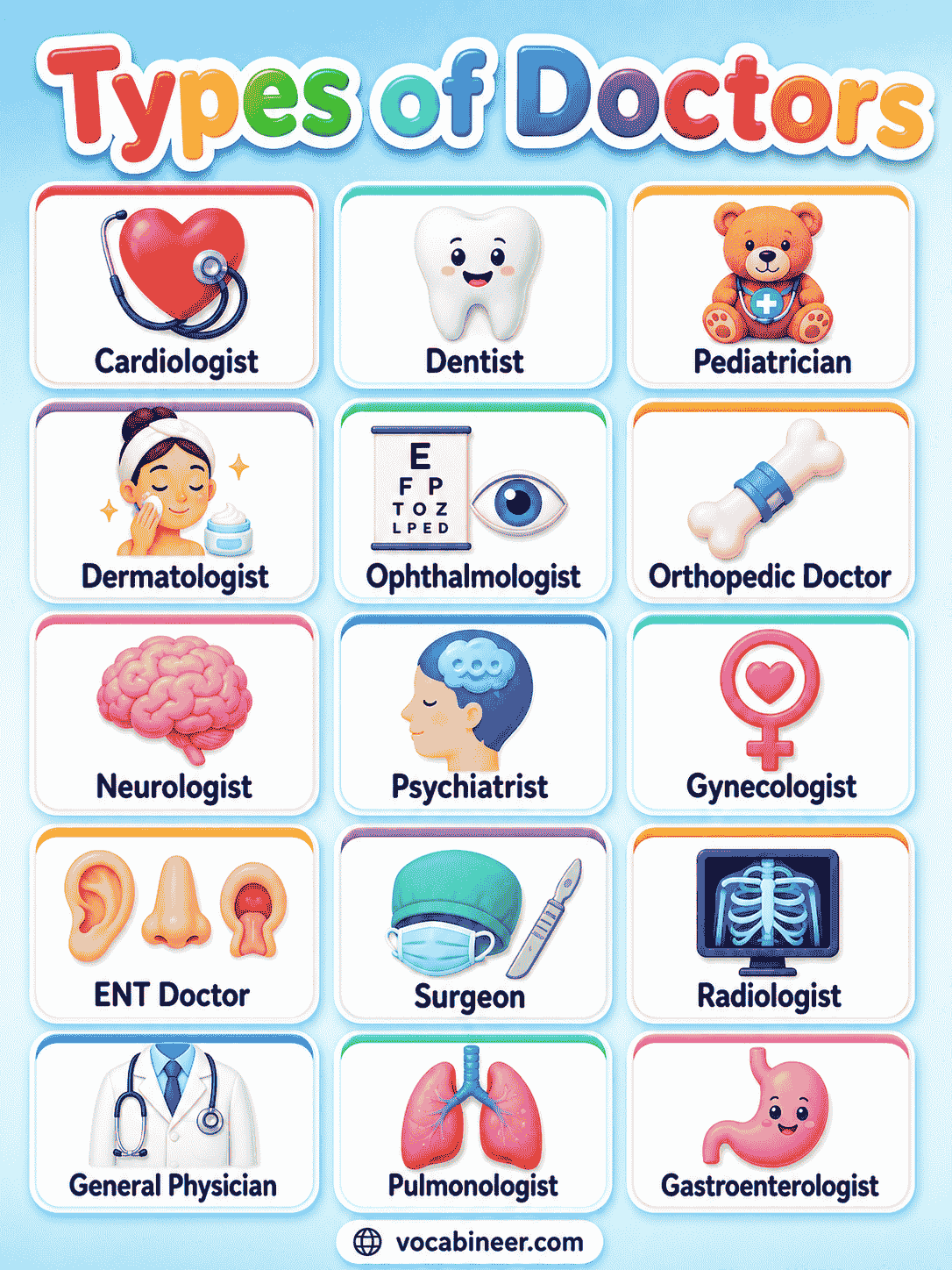
Specialist doctors focus on a specific body system, disease, age group, or type of treatment. Patients often see specialists after a primary care doctor recommends further care.
- Cardiologist: treats heart and blood vessel diseases
- Dermatologist: treats skin, hair, and nail conditions
- Endocrinologist: treats hormones, diabetes, and thyroid problems
- Gastroenterologist: treats stomach, intestine, liver, and digestion problems
- Hematologist: treats blood disorders
- Infectious disease doctor: treats serious or unusual infections
- Nephrologist: treats kidney disease
- Neurologist: treats brain, spinal cord, and nerve disorders
- Oncologist: treats cancer
- Pulmonologist: treats lung and breathing diseases
- Rheumatologist: treats arthritis and autoimmune diseases
Surgical Doctors
Surgical doctors treat diseases, injuries, or body problems through operations and procedures. Some surgeons are generalists, while others focus on one body area.
General surgeon
A general surgeon performs common surgeries, often involving the abdomen, skin, soft tissue, or digestive tract.
Cardiothoracic surgeon
A cardiothoracic surgeon performs surgery on the heart, lungs, chest, and related structures.
Neurosurgeon
A neurosurgeon performs surgery on the brain, spine, and nerves.
Orthopedic surgeon
An orthopedic surgeon performs surgery on bones, joints, muscles, ligaments, and tendons.
Plastic surgeon
A plastic surgeon performs reconstructive or cosmetic surgery.
Vascular surgeon
A vascular surgeon treats blood vessel problems with surgery or procedures.
Trauma surgeon
A trauma surgeon treats serious injuries that may require emergency surgery.
Pediatric surgeon
A pediatric surgeon performs surgery on babies, children, and teenagers.
Colon and rectal surgeon
A colon and rectal surgeon treats colon, rectum, and anus problems with surgery.
Transplant surgeon
A transplant surgeon performs organ transplant surgery.
Children’s Doctors
Children’s doctors care for babies, children, and teenagers. This group includes general pediatric doctors as well as specialists who treat heart, brain, hormone, cancer, and development-related conditions in young patients.
Pediatrician
For everyday child health needs, a pediatrician provides checkups, vaccines, growth monitoring, and treatment for common illnesses.
Neonatologist
Newborn babies, especially premature or seriously ill babies, may be treated by a neonatologist.
Pediatric cardiologist
Heart problems in babies, children, and teenagers are treated by pediatric cardiologists.
Pediatric neurologist
Brain, nerve, seizure, and movement-related conditions in children are treated by pediatric neurologists.
Pediatric oncologist
Cancer in children is treated by a pediatric oncologist.
Pediatric endocrinologist
Hormone, growth, thyroid, puberty, and diabetes problems in children are treated by pediatric endocrinologists.
Developmental pediatrician
Developmental pediatricians help children with learning, behavior, speech, growth, attention, or developmental concerns.
Women’s Health Doctors
Women’s health doctors treat reproductive health, pregnancy, childbirth, fertility, and pelvic health conditions. Some focus on general women’s health, while others treat high-risk or specialized problems.
Gynecologist
A gynecologist treats women’s reproductive health conditions.
Obstetrician
An obstetrician treats pregnancy, childbirth, and related medical care.
OB-GYN
An OB-GYN treats both pregnancy care and women’s reproductive health.
Maternal-fetal medicine specialist
A maternal-fetal medicine specialist treats high-risk pregnancies.
Reproductive endocrinologist
A reproductive endocrinologist treats fertility and reproductive hormone problems.
Urogynecologist
A urogynecologist treats pelvic floor and bladder problems in women.
Mental Health Doctors
Mental health doctors treat conditions involving mood, behavior, addiction, sleep, and emotional well-being. Some mental health professionals are medical doctors, while others may provide therapy or counseling depending on their training.
Psychiatrist
A psychiatrist treats mental health conditions and can prescribe medicine.
Neuropsychiatrist
A neuropsychiatrist treats conditions that involve both neurology and psychiatry.
Addiction medicine doctor
An addiction medicine doctor treats substance use and addiction disorders.
Sleep medicine doctor
A sleep medicine doctor treats sleep problems, such as insomnia and sleep apnea.
Dental, Eye, and Hearing Care Providers
Dental, eye, and hearing care providers help with oral health, vision, eye disease, and hearing problems. Their titles and scope of practice may vary by country.
Dentist
A dentist treats teeth, gums, cavities, oral hygiene, and general dental health.
Orthodontist
An orthodontist straightens teeth and corrects bite problems.
Oral and maxillofacial surgeon
An oral and maxillofacial surgeon performs surgery on the mouth, jaw, face, and related structures.
Ophthalmologist
An ophthalmologist treats eye diseases and can perform eye surgery.
Optometrist
An optometrist checks vision, prescribes glasses or contact lenses, and may manage some eye conditions depending on local rules.
Audiologist
An audiologist tests hearing and helps manage hearing problems.
Emergency and Hospital-Based Doctors
Emergency and hospital-based doctors treat urgent, serious, or complex health problems. They often work in emergency departments, operating rooms, intensive care units, and hospital wards.
Emergency medicine doctor
An emergency medicine doctor treats urgent and emergency medical problems.
Critical care doctor
A critical care doctor treats seriously ill patients in intensive care.
Intensivist
An intensivist is a specialist doctor for ICU patients.
Anesthesiologist
An anesthesiologist gives anesthesia and manages pain during surgery or procedures.
Trauma doctor
A trauma doctor treats serious injuries, often after accidents, falls, or violence.
Hospitalist
A hospitalist provides care for patients admitted to the hospital.
Diagnostic and Lab-Based Doctors
Diagnostic and lab-based doctors help identify diseases through scans, tissue samples, lab tests, genetic testing, and infection analysis. Many patients may not meet these doctors directly, but their work supports diagnosis and treatment.
Radiologist
A radiologist interprets medical imaging, such as X-rays, CT scans, MRIs, and ultrasounds.
Pathologist
A pathologist diagnoses disease by studying tissues, cells, and lab samples.
Nuclear medicine doctor
A nuclear medicine doctor uses radioactive tracers for diagnosis and treatment.
Clinical geneticist
A clinical geneticist evaluates genetic conditions and inherited disorders.
Medical microbiologist
A medical microbiologist studies and helps diagnose infections caused by microbes.
100 Types of Doctors With Meanings
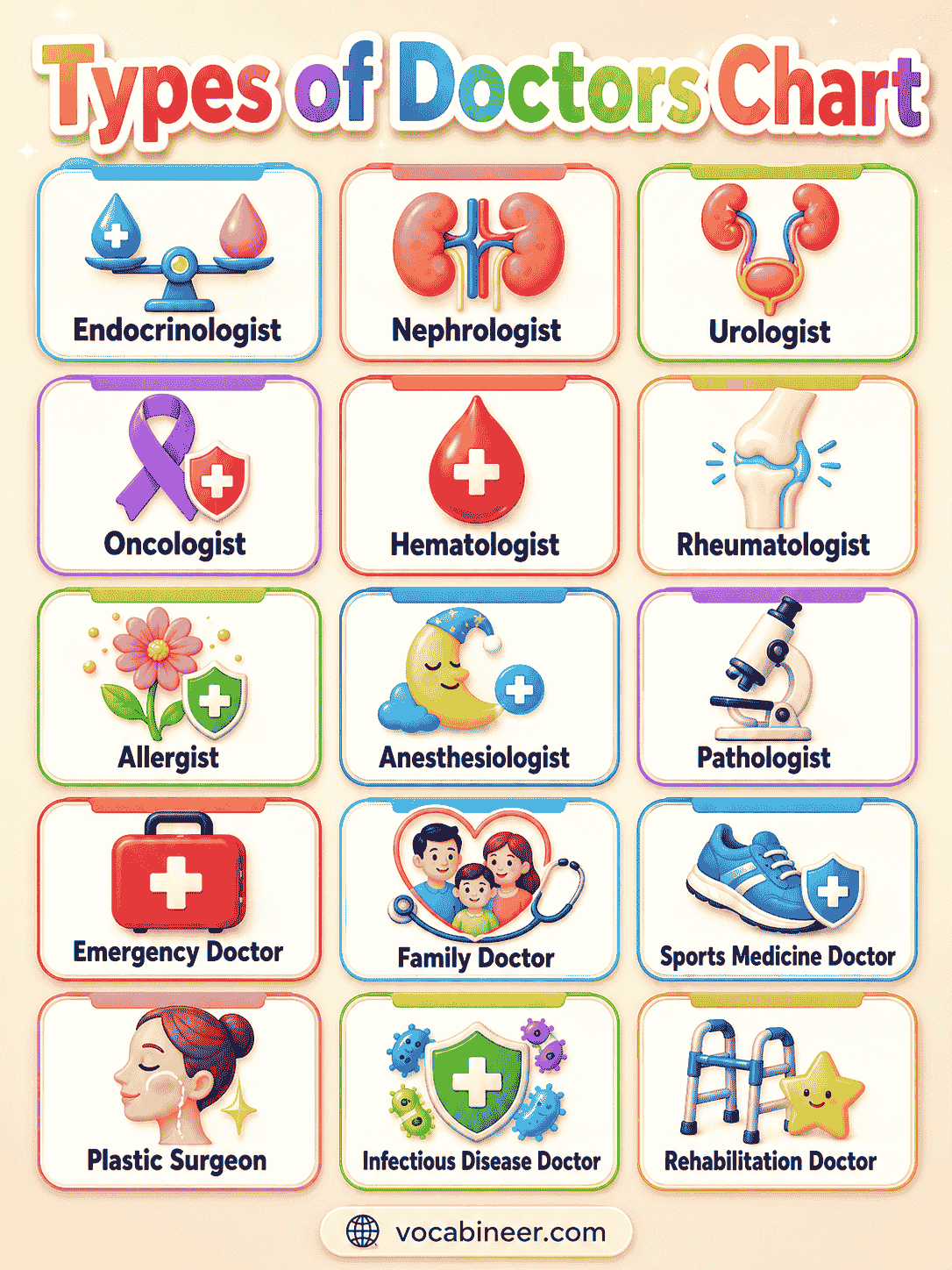
A numbered doctor chart helps students, patients, and English learners understand doctor types quickly. Some titles in this list are medical doctors, while others are dental, eye care, hearing, or licensed healthcare providers. Titles, training, and scope of practice may vary by country. This list is for general learning and medical vocabulary, not for self-diagnosis.
| No. | Doctor Type | Simple Meaning |
|---|---|---|
| 1 | Family medicine doctor | Provides general healthcare for people of all ages |
| 2 | General practitioner | Treats common health problems and gives referrals |
| 3 | Internal medicine doctor | Treats adult diseases and complex medical conditions |
| 4 | Primary care physician | First-contact doctor for routine and non-emergency care |
| 5 | Geriatric doctor | Treats older adults and age-related health problems |
| 6 | Pediatrician | Treats babies, children, and teenagers |
| 7 | Neonatologist | Treats newborn babies, especially premature or sick newborns |
| 8 | Developmental pediatrician | Helps children with developmental, learning, or behavior concerns |
| 9 | Pediatric cardiologist | Treats heart problems in children |
| 10 | Pediatric neurologist | Treats brain and nerve problems in children |
| 11 | Pediatric oncologist | Treats cancer in children |
| 12 | Pediatric endocrinologist | Treats hormone and diabetes problems in children |
| 13 | Cardiologist | Treats heart and blood vessel diseases |
| 14 | Interventional cardiologist | Performs catheter-based heart procedures |
| 15 | Electrophysiologist | Treats heart rhythm problems |
| 16 | Cardiac surgeon | Performs heart surgery |
| 17 | Cardiothoracic surgeon | Performs surgery on the heart, lungs, and chest |
| 18 | Vascular surgeon | Treats blood vessel problems with surgery or procedures |
| 19 | Dermatologist | Treats skin, hair, and nail conditions |
| 20 | Cosmetic dermatologist | Provides cosmetic skin treatments |
| 21 | Hair transplant doctor | Treats hair loss with transplant procedures |
| 22 | Endocrinologist | Treats hormone disorders |
| 23 | Diabetologist | Focuses on diabetes care |
| 24 | Thyroid specialist | Treats thyroid gland problems |
| 25 | Gastroenterologist | Treats stomach, intestine, and digestive problems |
| 26 | Hepatologist | Treats liver diseases |
| 27 | Colorectal surgeon | Treats colon, rectum, and anus problems with surgery |
| 28 | Bariatric surgeon | Performs weight-loss surgery |
| 29 | Hematologist | Treats blood disorders |
| 30 | Transfusion medicine doctor | Manages blood transfusion and blood products |
| 31 | Infectious disease doctor | Treats serious or unusual infections |
| 32 | Allergist | Treats allergies and allergic reactions |
| 33 | Immunologist | Treats immune system disorders |
| 34 | Nephrologist | Treats kidney disease |
| 35 | Urologist | Treats urinary system and male reproductive problems |
| 36 | Andrologist | Focuses on male reproductive and sexual health |
| 37 | Male fertility specialist | Treats male fertility problems |
| 38 | Neurologist | Treats brain, spinal cord, and nerve disorders |
| 39 | Neurosurgeon | Performs surgery on the brain, spine, and nerves |
| 40 | Psychiatrist | Treats mental health conditions and can prescribe medicine |
| 41 | Neuropsychiatrist | Treats conditions involving both neurology and psychiatry |
| 42 | Addiction medicine doctor | Treats substance use and addiction disorders |
| 43 | Sleep medicine doctor | Treats sleep problems such as insomnia and sleep apnea |
| 44 | Pulmonologist | Treats lung and breathing diseases |
| 45 | Respiratory medicine doctor | Treats breathing and respiratory conditions |
| 46 | Rheumatologist | Treats arthritis and autoimmune diseases |
| 47 | Oncologist | Treats cancer |
| 48 | Medical oncologist | Treats cancer with medicines such as chemotherapy |
| 49 | Radiation oncologist | Treats cancer with radiation therapy |
| 50 | Surgical oncologist | Treats cancer with surgery |
| 51 | Gynecologic oncologist | Treats cancers of the female reproductive system |
| 52 | Gynecologist | Treats women’s reproductive health conditions |
| 53 | Obstetrician | Treats pregnancy and childbirth |
| 54 | OB-GYN | Treats pregnancy and women’s reproductive health |
| 55 | Maternal-fetal medicine specialist | Treats high-risk pregnancies |
| 56 | Reproductive endocrinologist | Treats fertility and reproductive hormone problems |
| 57 | Urogynecologist | Treats pelvic floor and bladder problems in women |
| 58 | General surgeon | Performs common abdominal and soft tissue surgeries |
| 59 | Orthopedic surgeon | Performs surgery on bones, joints, and muscles |
| 60 | Orthopedic doctor | Treats bone, joint, and muscle problems |
| 61 | Sports medicine doctor | Treats sports injuries and exercise-related conditions |
| 62 | Physiatrist | Treats physical medicine and rehabilitation problems |
| 63 | Podiatrist | Treats foot and ankle problems |
| 64 | Chiropractor | Provides spinal and musculoskeletal care in some systems |
| 65 | Plastic surgeon | Performs reconstructive and cosmetic surgery |
| 66 | Trauma surgeon | Treats serious injuries requiring emergency surgery |
| 67 | Pediatric surgeon | Performs surgery on babies and children |
| 68 | Transplant surgeon | Performs organ transplant surgery |
| 69 | Ophthalmologist | Treats eye diseases and performs eye surgery |
| 70 | Optometrist | Checks vision and prescribes glasses or contact lenses |
| 71 | ENT specialist | Treats ear, nose, and throat problems |
| 72 | Otolaryngologist | Medical name for an ENT specialist |
| 73 | Audiologist | Tests hearing and helps with hearing problems |
| 74 | Dentist | Treats teeth, gums, and oral health |
| 75 | Orthodontist | Straightens teeth and corrects bite problems |
| 76 | Periodontist | Treats gum disease |
| 77 | Endodontist | Treats tooth pulp and root canal problems |
| 78 | Prosthodontist | Replaces or restores missing teeth |
| 79 | Oral and maxillofacial surgeon | Performs surgery on the mouth, jaw, and face |
| 80 | Pediatric dentist | Treats children’s dental health |
| 81 | Radiologist | Interprets medical imaging such as X-rays, CT scans, and MRIs |
| 82 | Pathologist | Diagnoses disease by studying tissues, cells, and lab samples |
| 83 | Nuclear medicine doctor | Uses radioactive tracers for diagnosis and treatment |
| 84 | Clinical geneticist | Evaluates genetic conditions and inherited disorders |
| 85 | Medical microbiologist | Studies and helps diagnose infections caused by microbes |
| 86 | Emergency medicine doctor | Treats urgent and emergency medical problems |
| 87 | Critical care doctor | Treats seriously ill patients in intensive care |
| 88 | Intensivist | Specialist doctor for ICU patients |
| 89 | Anesthesiologist | Gives anesthesia and manages pain during surgery |
| 90 | Pain medicine doctor | Treats chronic or severe pain |
| 91 | Palliative care doctor | Helps patients with serious illness manage symptoms and comfort |
| 92 | Preventive medicine doctor | Focuses on disease prevention and public health |
| 93 | Occupational medicine doctor | Treats work-related health problems |
| 94 | Travel medicine doctor | Advises on vaccines and health risks for travel |
| 95 | Clinical pharmacologist | Studies medicines, drug safety, and drug effects |
| 96 | Medical geneticist | Diagnoses and manages genetic disorders |
| 97 | Public health doctor | Works on community health and disease prevention |
| 98 | Forensic medicine doctor | Applies medical knowledge to legal investigations |
| 99 | Hospitalist | Provides care for patients admitted to the hospital |
| 100 | Hospice doctor | Provides end-of-life care and symptom support |
Most Common Types of Doctors
Some doctors are more commonly visited than others because they treat everyday health problems, routine checkups, common diseases, or widely needed care.
Common types of doctors include:
- Family medicine doctor
- General practitioner
- Internal medicine doctor
- Pediatrician
- Gynecologist
- Dentist
- Dermatologist
- Cardiologist
- Orthopedic doctor
- Ophthalmologist
- ENT specialist
- Psychiatrist
- Gastroenterologist
- Endocrinologist
- Emergency medicine doctor
Clinic Doctors vs Hospital Doctors
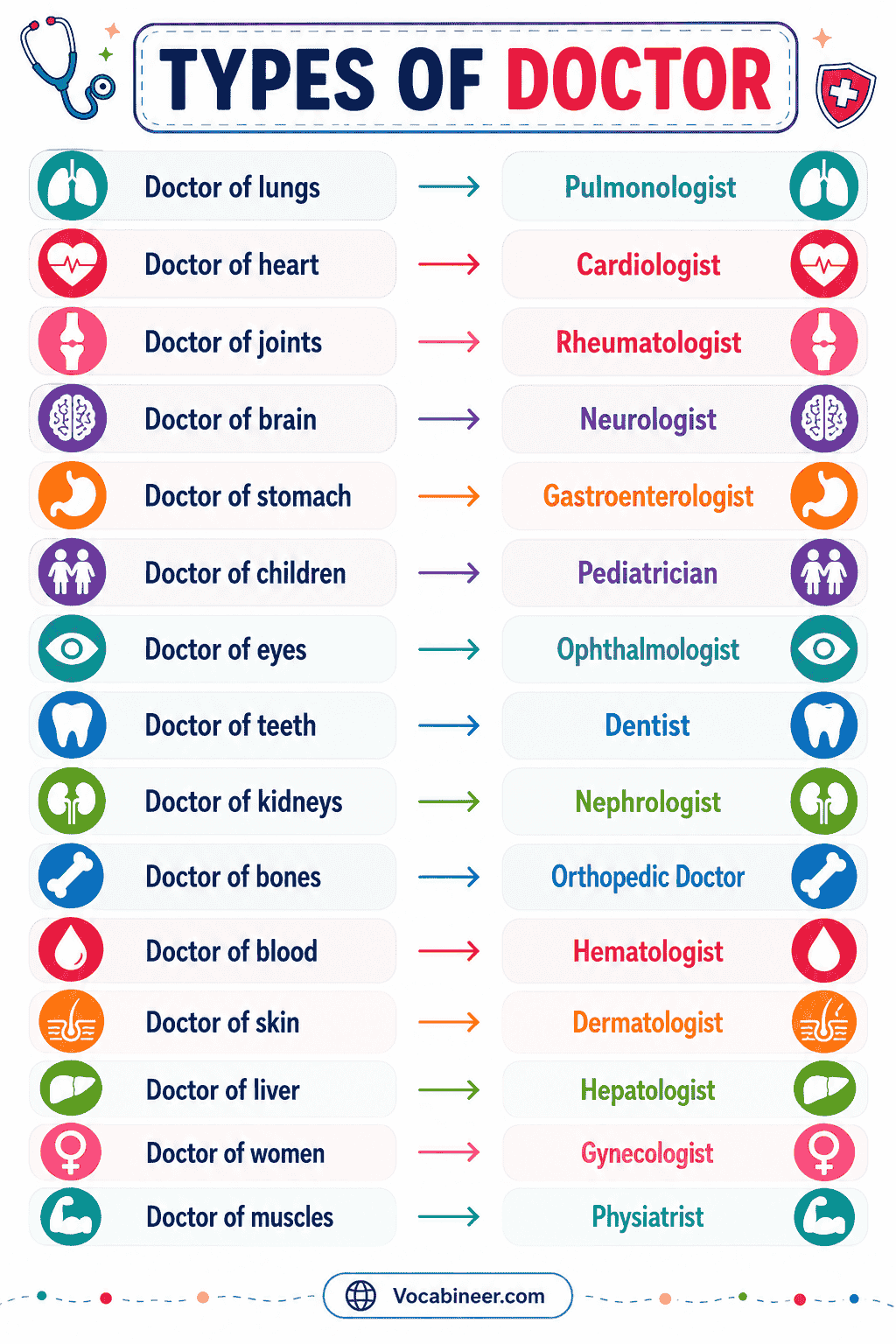
Clinic doctors usually treat routine, non-emergency, and follow-up health problems. Hospital doctors often care for patients who need emergency treatment, surgery, admission, intensive care, or advanced testing.
| Setting | Common Doctor Types | Typical Care |
|---|---|---|
| Clinic | Family doctor, general practitioner, pediatrician, dermatologist, gynecologist | Checkups, routine care, mild illness, referrals |
| Hospital | Hospitalist, emergency doctor, surgeon, intensivist, anesthesiologist | Serious illness, surgery, emergency care, inpatient treatment |
| Specialist center | Cardiologist, oncologist, neurologist, nephrologist | Focused care for one disease or body system |
| Diagnostic center | Radiologist, pathologist, nuclear medicine doctor | Imaging, lab diagnosis, test interpretation |
When to Seek Emergency Care
Some symptoms need urgent medical help and should not wait for a normal doctor appointment. Emergency care is needed when symptoms are sudden, severe, or life-threatening.
Seek emergency care immediately for:
- Chest pain
- Trouble breathing
- Stroke symptoms
- Severe bleeding
- Loss of consciousness
- Serious injury
- Severe allergic reaction
- Sudden weakness or confusion
- Severe burns
- Sudden severe pain
For mild or non-emergency symptoms, a primary care doctor, family doctor, or general practitioner is usually a good first step.
How to Choose the Right Type of Doctor
Choosing the right doctor depends on your symptoms, age, medical history, location, and urgency. For non-emergency issues, a primary care doctor is often the best starting point.
Check your symptoms
Think about the main problem, such as chest pain, skin rash, stomach pain, breathing trouble, injury, or mental health concern.
Start with a primary care doctor
For general or unclear symptoms, a family medicine doctor, general practitioner, or primary care physician can guide the next step.
Ask for a referral
A referral can help you reach the right specialist for your condition.
Choose a specialist when needed
Specialists are helpful for focused problems such as heart disease, cancer, kidney disease, infertility, or neurological symptoms.
Consider emergency care for serious symptoms
Do not wait for a specialist appointment if symptoms are severe, sudden, or life-threatening. Seek emergency care for chest pain, severe bleeding, trouble breathing, stroke symptoms, major injury, or loss of consciousness.
Difference Between Common Doctor Types
Many doctor titles sound similar, but they do not always mean the same thing. This comparison table makes the differences easier to understand.
| Comparison | Main Difference |
|---|---|
| Physician vs surgeon | A physician usually treats with exams, medicines, and non-surgical care; a surgeon performs operations |
| Primary care doctor vs specialist | A primary care doctor treats general health needs; a specialist focuses on one area of medicine |
| Pediatrician vs family doctor | A pediatrician treats children; a family doctor treats people of all ages |
| Psychiatrist vs psychologist | A psychiatrist is a medical doctor who can prescribe medicine; a psychologist mainly provides therapy and testing in many systems |
| Dentist vs orthodontist | A dentist treats general oral health; an orthodontist straightens teeth and corrects bite problems |
| Optometrist vs ophthalmologist | An optometrist checks vision and prescribes glasses; an ophthalmologist treats eye disease and performs eye surgery |
| Nephrologist vs urologist | A nephrologist treats kidney disease; a urologist treats urinary system and male reproductive problems |
| Cardiologist vs cardiac surgeon | A cardiologist treats heart disease medically; a cardiac surgeon performs heart surgery |
Common Mistakes When Learning Doctor Types
Many learners confuse similar doctor names. A few simple comparisons can make the differences easier.
One common mistake is confusing a cardiologist with a cardiac surgeon. A cardiologist treats heart disease with medical care and procedures, while a cardiac surgeon performs heart surgery.
Another mistake is confusing a psychiatrist with a psychologist. A psychiatrist is a medical doctor and can prescribe medicine, while a psychologist often provides therapy, testing, and counseling.
Some people also confuse an optometrist with an ophthalmologist. An optometrist checks vision and glasses, while an ophthalmologist treats eye diseases and performs surgery.
Learners may also mix up a nephrologist and a urologist. A nephrologist treats kidney disease, while a urologist treats urinary system problems and male reproductive health.
Related Medical and Healthcare Vocabulary
Related medical vocabulary helps students and English learners understand healthcare topics more clearly. These terms also support articles about hospitals, body systems, diseases, and medical jobs.
Useful related topics include:
- Types of nurses
- Hospital departments
- Medical specialists
- Human body systems
- Common diseases
- Medical tests
- Health vocabulary
- Emergency vocabulary
- Medical equipment
- Healthcare jobs
FAQ
The main types of doctors include primary care doctors, specialist doctors, surgical doctors, children’s doctors, women’s health doctors, mental health doctors, emergency doctors, and diagnostic doctors.
For most non-emergency health problems, start with a primary care doctor, family medicine doctor, or general practitioner. They can check your symptoms and refer you to a specialist if needed.
A primary care doctor treats general health problems and provides routine care. A specialist focuses on one area, such as the heart, skin, brain, kidneys, lungs, or cancer.
A cardiologist treats heart and blood vessel problems. For heart surgery, a patient may see a cardiac surgeon or cardiothoracic surgeon.
A dermatologist treats skin, hair, and nail problems, including acne, rashes, eczema, hair loss, nail infections, and skin conditions.
Summary
There are many types of doctors because different health problems need different kinds of training and care. Primary care doctors help with routine and general health needs, while specialists focus on areas such as the heart, skin, brain, lungs, kidneys, digestion, cancer, pregnancy, or mental health. Surgeons perform operations, diagnostic doctors help identify disease, and emergency doctors treat urgent conditions. Understanding doctor types can help patients, students, and English learners know what each doctor does and when a specialist may be needed.
FAQs
Common doctors include general practitioners, pediatricians, dentists, gynecologists, and dermatologists.
A physician uses medicine to treat illness, while a surgeon performs medical operations.
Psychiatrists and psychologists help patients with mental health problems.
You may visit an orthopedic doctor, a physiotherapist, or a neurologist depending on the cause.
No. Allopaths follow modern science-based medicine, while homeopaths use natural remedies.
Read More
