Endangered animals are animals that face a high risk of extinction in the wild. They live in forests, mountains, rivers, oceans, and other habitats, so they are an important topic in animal classification and English vocabulary learning.
In this post, you’ll learn common endangered animals names in English with pictures. It includes easy examples from mammals, birds, reptiles, amphibians, sea animals, and animals found in India, so learners can identify and remember these threatened animals more clearly.
In This Page
What Are Endangered Animals?
Endangered animals are animals that face a high risk of extinction in the wild. In simple words, these animals are in danger of disappearing if they are not protected.
Their numbers often fall because of habitat loss, hunting, pollution, climate change, and other human activities. Because of this, endangered animals need care, protection, and safer natural habitats.
Common Endangered Animals Names
Here are some common endangered animals names in English:
- Tiger
- Asian Elephant
- Red Panda
- Blue Whale
- Chimpanzee
- Sea Otter
- Galápagos Penguin
- Egyptian Vulture
- Whale Shark
- Golden Poison Frog
- Indus River Dolphin
- Humphead Wrasse
- Tiger Chameleon
- Majorcan Midwife Toad
- Giant Panda
- Snow Leopard
- Orangutan
- Black Rhinoceros
- Hawksbill Turtle
- Lion-Tailed Macaque
These animals are often included in educational and wildlife lists because they are well known and need protection. Some live on land, while others live in forests, rivers, or oceans.
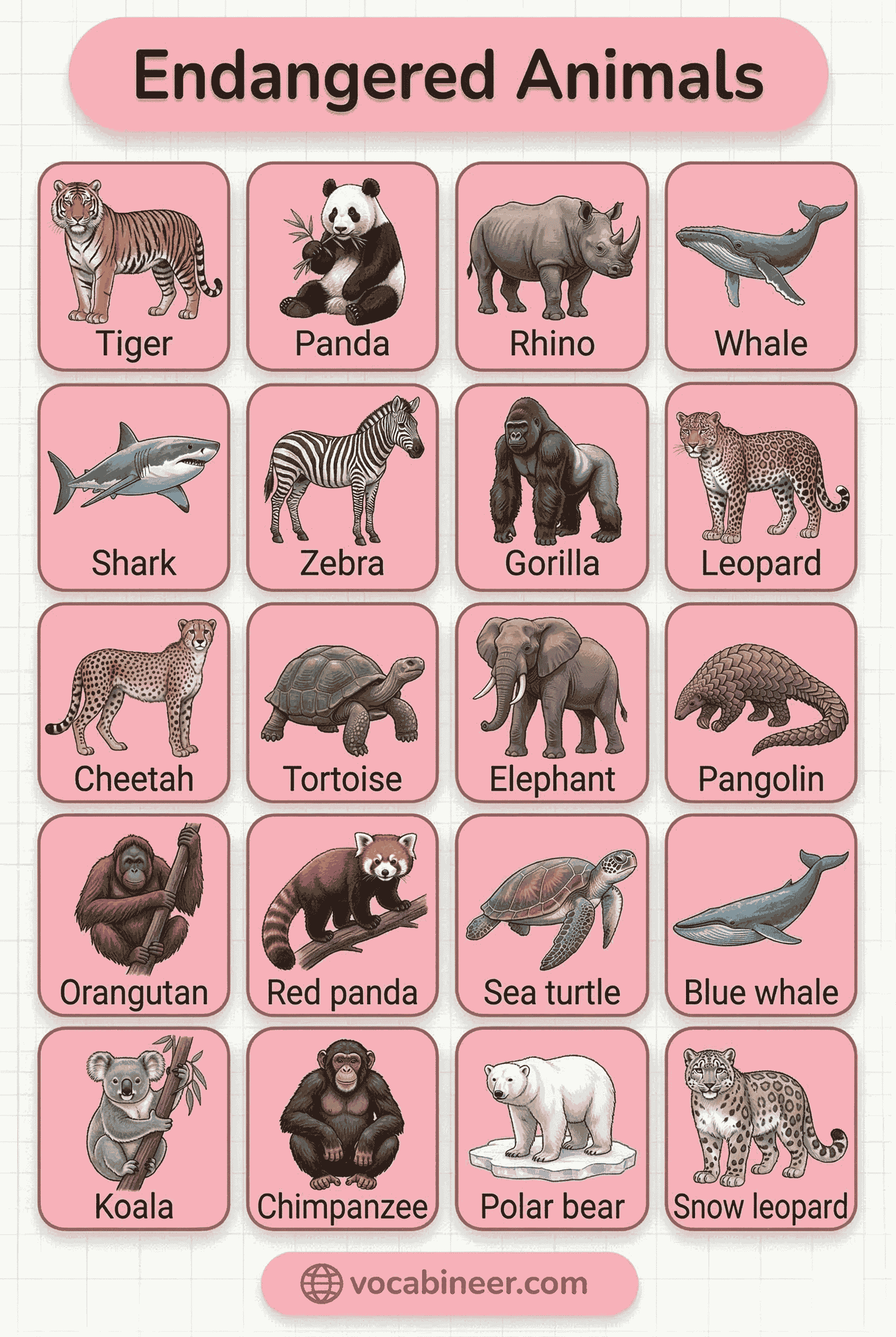
Endangered Animals Names List
Endangered animals are found in many habitats around the world. Some live in forests, grasslands, mountains, rivers, wetlands, oceans, and islands. This makes the topic broad, but the main idea stays simple: these animals are at serious risk and need protection.
- Tiger
- Asian Elephant
- Red Panda
- Giant Panda
- Blue Whale
- Chimpanzee
- Orangutan
- Black Rhinoceros
- Snow Leopard
- Lion-Tailed Macaque
- Egyptian Vulture
- Galápagos Penguin
- Whale Shark
- Indus River Dolphin
- Sea Otter
- Humphead Wrasse
- Hawksbill Turtle
- Tiger Chameleon
- Golden Poison Frog
- Majorcan Midwife Toad
- Javan Rhino
- Indian Elephant
- Vaquita
- Leatherback Turtle
- Gorilla
- Bonobo
- Dhole
- African Wild Dog
- Pangolin
- Saola
Endangered Mammals Names
Many endangered animals are mammals. These animals live in forests, mountains, grasslands, rivers, and other natural places. Because their numbers are falling, they need strong protection.
- Tiger: A famous wild cat that is endangered because of habitat loss and hunting.
- Asian Elephant: A large land animal whose population is under threat in many regions.
- Red Panda: A small forest animal known for its soft fur and tree-dwelling life.
- Giant Panda: A well-known animal that depends on forest habitats for survival.
- Chimpanzee: A highly intelligent primate that faces serious threats in the wild.
- Orangutan: A tree-living ape whose forest habitat is shrinking.
- Black Rhinoceros: A large wild animal threatened by illegal hunting.
- Snow Leopard: A mountain cat that faces danger from habitat loss and conflict.
- Lion-Tailed Macaque: A rare monkey found in forest regions.
- Bonobo: A great ape that is endangered because of habitat damage and human activity.
Endangered Birds Names
Some endangered animals are birds. These birds may be large or small, but they all face danger because of habitat loss, pollution, hunting, or other threats.
- Egyptian Vulture: A rare bird that is endangered in many places.
- Galápagos Penguin: A penguin species with a very limited natural range.
- Philippine Eagle: A large bird of prey facing serious habitat threats.
- California Condor: A famous endangered bird known for its large wingspan.
- Kakapo: A rare flightless bird with a very small population.
- Whooping Crane: A tall bird that has long needed protection.
- Bengal Florican: A grassland bird that is endangered because of habitat loss.
- Forest Owlet: A rare owl species found in limited areas.
Other Endangered Animals Names
Endangered animals also include reptiles, amphibians, and sea animals. These groups are very important because many of them are strongly affected by habitat damage, pollution, and environmental change.
Endangered Reptiles and Amphibians Names
- Hawksbill Turtle: This sea turtle is endangered because of hunting and habitat loss.
- Leatherback Turtle: One of the largest turtles, it faces danger in oceans and nesting areas.
- Tiger Chameleon: With its limited range, this reptile faces serious survival threats.
- Golden Poison Frog: This bright frog species is threatened by habitat loss.
- Majorcan Midwife Toad: Found in a small natural range, this rare amphibian needs protection.
- Chinese Giant Salamander: As one of the largest amphibians, it has suffered major population decline.
Common Endangered Sea Animals
- Blue Whale: The largest animal in the world still remains under protection concern.
- Whale Shark: In many places, this huge fish has seen its numbers fall.
- Indus River Dolphin: This rare dolphin survives in only limited river areas.
- Sea Otter: In its habitat, this marine animal has faced major threats.
- Humphead Wrasse: Across many waters, this large reef fish is endangered.
- Vaquita: With an extremely small population, this rare marine mammal is in critical danger
Endangered Animals in India
India is home to many endangered animals. Some live in forests, some in mountains, some in rivers, and others in grasslands. These animals are important in wildlife learning because many of them are famous and need protection.
- Tiger: One of the most well-known endangered animals in India.
- Asian Elephant: A large endangered animal found in forest regions.
- Lion-Tailed Macaque: A rare monkey found in the forests of South India.
- Red Panda: A soft-furred animal found in mountain regions.
- Snow Leopard: A mountain animal seen in high cold areas.
- Indian Elephant: A large animal that faces habitat pressure in many places.
- Gharial: A river reptile with a very small and threatened population.
- Great Indian Bustard: A large bird that is critically endangered in India.
Endangered Animals for Kids
Kids can learn endangered animals more easily by starting with common and familiar names. These animals are often seen in school lessons, picture books, wildlife videos, and classroom charts.
- Tiger
- Asian Elephant
- Giant Panda
- Red Panda
- Blue Whale
- Snow Leopard
- Black Rhinoceros
- Orangutan
- Whale Shark
- Sea Otter
- Galápagos Penguin
- Hawksbill Turtle
- Gharial
- Chimpanzee
- Philippine Eagle
These names are easy to remember because the animals are well known and often shown in educational content. They also help children understand that some animals need protection to survive.
Difference Between Endangered, Vulnerable, and Critically Endangered Animals
These words describe different levels of danger for animals. Vulnerable animals face a high risk, endangered animals face a more serious risk, and critically endangered animals face an extremely high risk of extinction.
| Status | Simple Meaning | Risk Level | Examples |
|---|---|---|---|
| Vulnerable | At risk and needs protection | High | Polar Bear, Giant Panda, Snow Leopard |
| Endangered | In serious danger of extinction | More serious | Tiger, Blue Whale, Chimpanzee |
| Critically Endangered | In extremely serious danger | Highest | Vaquita, Javan Rhino, Great Indian Bustard |
Common Causes of Endangered Animals
Animals become endangered for several reasons. The most common causes include habitat loss, hunting, pollution, climate change, and human activity. When forests are cut, rivers are damaged, or animals are hunted, their populations fall.
Some endangered animals are also affected by illegal trade, overfishing, road building, and environmental change. Because of these problems, many species cannot live safely in their natural habitats.
Conclusion
Endangered animals are animals that face a high risk of extinction in the wild. They include mammals, birds, reptiles, amphibians, and sea animals. Because their numbers are falling, they need protection and safer habitats.
This endangered animals names list helps learners recognize important animals in English with clear grouped examples. From tigers and elephants to whales and turtles, these animals are easier to understand when they are organized by type and conservation status.
FAQs
Endangered animals are animals that face a high risk of extinction in the wild. They need protection to survive and increase in number.
Five common endangered animals are tiger, Asian elephant, blue whale, red panda, and chimpanzee. These animals need protection because their populations are falling.
Animals become endangered because of habitat loss, hunting, pollution, climate change, and other human activities that reduce their chances of survival.
Yes, a tiger is an endangered animal. It is one of the most well-known animals that needs protection in the wild.
Endangered animals face a high risk of extinction, while critically endangered animals face an even more serious and immediate risk.
Read More