

Fruits Names in English include common items like apple, banana, and orange, along with unique varieties such as dragon fruit and rambutan. Fruits differ in color, shape, taste, and texture. Some are soft and juicy, while others are firm and crisp. Each fruit belongs to a specific group such as citrus fruits, berries, melons, or stone fruits.
This post presents 100+ Fruits Names with pictures in an organized format. You will learn how fruits are grouped and how to recognize them correctly in structured lists and examples.
In This Page
List of 100 Common Fruits Names
Fruits come in many types, and each has its own flavor, color, and texture. While some are sweet and soft, others are firm or slightly tart. Therefore, below is a complete list of 100 Fruits Names in English to help you learn and recognize a wide variety of fruits accurately.
- Apple
- Banana
- Orange
- Mango
- Grapes
- Strawberry
- Watermelon
- Pineapple
- Lemon
- Cherry
- Blueberry
- Blackberry
- Raspberry
- Peach
- Plum
- Pear
- Kiwi
- Papaya
- Pomegranate
- Apricot
- Fig
- Coconut
- Guava
- Lychee
- Dragon Fruit
- Passion Fruit
- Durian
- Rambutan
- Mangosteen
- Starfruit
- Jackfruit
- Cantaloupe
- Honeydew Melon
- Cranberry
- Tangerine
- Nectarine
- Mulberry
- Olive
- Date
- Persimmon
- Gooseberry
- Kiwano
- Soursop
- Breadfruit
- Longan
- Pomelo
- Elderberry
- Boysenberry
- Currant
- Clementine
- Jujube
- Medlar
- Quince
- Sapodilla
- Salak
- Tamarind
- Ugli Fruit
- Yuzu
- Cloudberry
- Huckleberry
- Barbados Cherry
- Bilberry
- Black Sapote
- Buddha’s Hand
- Cactus Fruit
- Calamansi
- Chayote
- Cherimoya
- Custard Apple
- Feijoa
- Grapefruit
- Jabuticaba
- Java Apple
- Loquat
- Malay Apple
- Mangaba
- Maracuja
- Miracle Fruit
- Nance
- Pepino
- Persimmon
- Physalis
- Pitaya
- Plantain
- Pulasan
- Rambutan
- Rose Apple
- Santol
- Sapote
- Satsuma
- Sour Cherry
- Sugar Apple
- Surinam Cherry
- Sweet Lemon
- Sweet Orange
- Tamarillo
- White Currant
- White Sapote
- Wineberry
- Ziziphus
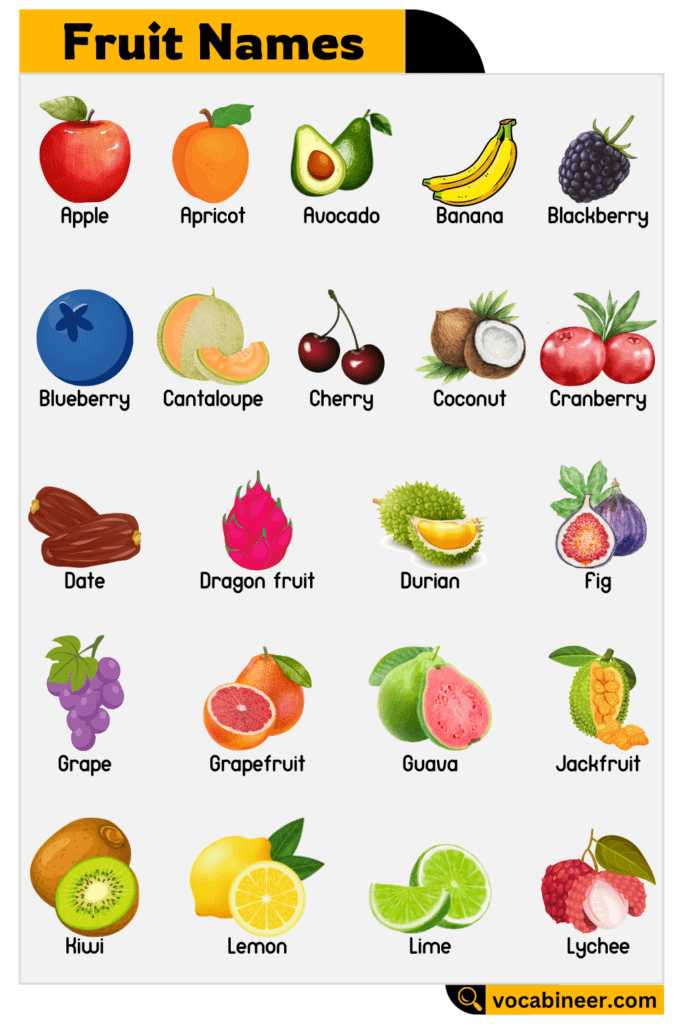
List of Fruits Names A to Z
Arranging Fruits Names alphabetically improves recognition and recall. In fact, many classroom charts and food lists follow this clear structure. Therefore, below are grouped fruit names from A to Z with short descriptions to strengthen understanding and identification.
Fruits Names from A to F
- Apple: Round fruit with crisp flesh and a sweet or slightly sour taste.
- Apricot: Small orange fruit with soft skin and a single hard seed.
- Avocado: Creamy green fruit with a large pit and mild flavor.
- Ackee: Tropical fruit with soft yellow flesh and black seeds.
- Amla: Small green fruit known for its sharp and sour taste.
- Banana: Long curved fruit with soft sweet pulp inside.
- Bilberry: Dark blue berry that looks similar to blueberry.
- Blackberry: Small dark fruit made of many tiny segments.
- Blueberry: Round blue fruit with small seeds inside.
- Breadfruit: Large tropical fruit with starchy pale flesh.
- Cherry: Small red fruit with a smooth skin and single pit.
- Coconut: Hard-shelled fruit with white flesh and coconut water.
- Cranberry: Small red berry with a tart taste.
- Cantaloupe: Melon with netted skin and orange flesh.
- Clementine: Small citrus fruit that is easy to peel.
- Custard apple: Green fruit with soft creamy pulp.
- Date: Sweet brown fruit often dried before eating.
- Dragon fruit: Bright pink fruit with white or red speckled flesh.
- Durian: Large spiky fruit with strong smell and creamy texture.
- Elderberry: Small dark berry used in syrups and jams.
- Fig: Soft fruit with tiny seeds and sweet interior.
- Feijoa: Oval green fruit with fragrant jelly-like pulp.
Fruits Names from G to L
- Grapes: Small round fruits that grow in clusters.
- Guava: Tropical fruit with pale or pink flesh.
- Gooseberry: Small round fruit with thin skin and sour taste.
- Grapefruit: Large citrus fruit with slightly bitter flavor.
- Honeydew: Smooth melon with light green flesh.
- Huckleberry: Small berry similar to blueberry.
- Jackfruit: Very large fruit with yellow sweet pods inside.
- Jujube: Small fruit that turns brown when ripe.
- Kiwi: Brown fuzzy fruit with green seeded interior.
- Kumquat: Small citrus fruit eaten with its peel.
- Lemon: Yellow citrus fruit with strong sour juice.
- Lime: Small green citrus fruit with sharp flavor.
- Lychee: Small red fruit with juicy white flesh.
- Longan: Round fruit with translucent flesh and black seed.
- Loquat: Small orange fruit with mild sweet taste.
Fruits Names from M to R
- Mango: Sweet tropical fruit with soft golden flesh.
- Mangosteen: Purple fruit with white segmented interior.
- Mandarin: Small orange citrus fruit with loose peel.
- Mulberry: Dark elongated berry with sweet taste.
- Muskmelon: Melon with fragrant orange flesh.
- Nectarine: Smooth-skinned fruit similar to peach.
- Olive: Small fruit used for oil and salads.
- Orange: Round citrus fruit rich in juice.
- Papaya: Soft tropical fruit with black seeds inside.
- Passion fruit: Round fruit with aromatic pulp and seeds.
- Peach: Soft fuzzy fruit with a central pit.
- Pear: Bell-shaped fruit with juicy flesh.
- Persimmon: Orange fruit with smooth shiny skin.
- Pineapple: Spiky fruit with fibrous yellow interior.
- Plum: Smooth fruit with firm flesh and single pit.
- Pomegranate: Round fruit filled with red juicy seeds.
- Pomelo: Large citrus fruit with thick rind.
- Quince: Firm yellow fruit often cooked before eating.
- Rambutan: Hairy red fruit with sweet white pulp.
- Raspberry: Soft red berry made of tiny segments.
Fruits Names from S to Z
- Salak: Brown scaly fruit known as snake fruit.
- Sapodilla: Brown fruit with grainy sweet flesh.
- Soursop: Green spiky fruit with soft white interior.
- Star fruit: Yellow fruit that forms a star when sliced.
- Strawberry: Red berry with seeds on the outside.
- Tangerine: Small citrus fruit similar to mandarin.
- Tamarind: Brown pod fruit with sticky sour pulp.
- Ugli fruit: Citrus fruit with rough wrinkled skin.
- Watermelon: Large melon with red juicy flesh.
- Wood apple: Hard-shelled fruit with brown pulp inside.
- Yuzu: Asian citrus fruit with fragrant zest.
Tropical Fruits
Tropical fruits grow in warm climates near the equator. Therefore, these Fruits Names are common in regions such as South Asia, Southeast Asia, Africa, and South America. In addition, many tropical fruits have bright colors and strong flavors.
- Mango: Sweet yellow or orange fruit with soft flesh and one large seed.
- Pineapple: Spiky outer skin with juicy yellow interior.
- Papaya: Oval fruit with orange flesh and many black seeds.
- Banana: Long curved fruit with soft sweet pulp.
- Coconut: Hard shell fruit with white flesh and coconut water inside.
- Guava: Round or oval fruit with pale or pink interior.
- Jackfruit: Very large fruit with many yellow edible pods.
- Lychee: Small red fruit with juicy white pulp.
- Rambutan: Hairy red fruit with sweet white flesh.
- Durian: Large spiky fruit with creamy interior and strong smell.
- Mangosteen: Purple fruit with soft white segments inside.
- Star fruit: Yellow fruit shaped like a star when cut.
- Breadfruit: Green fruit with starchy pale interior.
- Longan: Small brown fruit with translucent flesh.
- Tamarind: Brown pod fruit with sticky sour pulp.
- Soursop: Green fruit with soft white flesh and black seeds.
- Salak: Brown scaly fruit also called snake fruit.
- Ackee: Tropical fruit with yellow flesh and dark seeds.
- Feijoa: Green fruit with aromatic soft pulp.
- Cherimoya: Green fruit with creamy white interior.
Citrus Fruits
Citrus fruits belong to the Citrus plant family. As a result, these Fruits Names are known for their tangy taste and thick outer peel. In addition, they are often rich in juice and commonly used in drinks and salads.
- Orange: Round fruit with bright orange peel and juicy pulp.
- Lemon: Yellow fruit with strong sour flavor.
- Lime: Small green citrus fruit with sharp taste.
- Grapefruit: Large citrus fruit with slightly bitter flesh.
- Mandarin: Small sweet citrus fruit with loose peel.
- Tangerine: Orange-colored citrus fruit similar to mandarin.
- Clementine: Easy-to-peel sweet citrus fruit.
- Pomelo: Very large citrus fruit with thick rind.
- Kumquat: Small citrus fruit eaten with its peel.
- Yuzu: Asian citrus fruit used for zest and juice.
- Bergamot: Fragrant citrus fruit used for flavoring.
- Citron: Large citrus fruit with thick rind and little pulp.
- Ugli fruit: Rough-skinned citrus fruit with sweet interior.
- Sweet lime: Mild citrus fruit with less sour taste.
Stone Fruits
Stone fruits contain a single hard seed inside the flesh, and that seed is called a pit. Therefore, these Fruits Names are often linked to temperate climates and are commonly harvested during summer months.
- Peach: Soft fruit with fuzzy skin and sweet yellow flesh.
- Plum: Smooth fruit with firm flesh and one central pit.
- Cherry: Small round fruit with shiny skin and single seed.
- Apricot: Small orange fruit with soft pulp and pit inside.
- Nectarine: Smooth-skinned fruit similar to peach.
- Mango: Tropical fruit with thick flesh and one large seed.
- Olive: Small fruit used for oil and savory dishes.
- Date: Sweet brown fruit with elongated pit.
- Damson: Small dark purple variety of plum.
- Greengage: Green plum known for sweet taste.
- Loquat: Small orange fruit with large seeds.
Berries
Berries are generally small, soft fruits with seeds inside. In common use, many tiny fruits are grouped as berries even if they differ botanically. These Fruits Names are widely used in desserts and juices.
- Strawberry: Red fruit with seeds on the outer surface.
- Blueberry: Small blue fruit with tiny internal seeds.
- Blackberry: Dark fruit made of many small segments.
- Raspberry: Soft red fruit formed by clustered drupelets.
- Cranberry: Small red berry with sharp flavor.
- Gooseberry: Round fruit with thin skin and sour taste.
- Mulberry: Elongated dark berry with sweet flavor.
- Boysenberry: Large dark berry related to blackberry.
- Elderberry: Small dark berry often used in syrups.
- Huckleberry: Small berry similar to blueberry.
- Bilberry: Dark berry related to blueberry.
- Cloudberry: Golden berry found in cold regions.
Melons
Melons are large fruits with thick rinds and soft, juicy flesh. In most cases, they grow on ground vines and contain many seeds in the center. Therefore, these Fruits Names are commonly associated with warm seasons.
- Watermelon: Large green fruit with red or yellow juicy flesh.
- Cantaloupe: Net-skinned melon with orange interior.
- Honeydew: Smooth pale melon with light green flesh.
- Muskmelon: Fragrant melon with soft orange pulp.
- Canary melon: Bright yellow melon with pale sweet flesh.
- Galia melon: Round melon with green interior and netted skin.
- Santa Claus melon: Oval melon with thick rind and pale interior.
- Winter melon: Large fruit with white flesh and mild flavor.
Fruits That Grow on Trees
Many fruits develop on branches of trees, and they grow above the ground. As a result, these Fruits Names are commonly cultivated in orchards and home gardens. In most cases, tree fruits hang from stems and ripen while attached to the branches.
- Apple: Grows on medium-sized trees in temperate regions.
- Mango: Develops on tall tropical trees.
- Orange: Citrus fruit that grows on small evergreen trees.
- Guava: Grows on small tropical trees with thin bark.
- Pear: Forms on upright orchard trees.
- Peach: Ripens on deciduous trees during warm months.
- Plum: Develops on stone fruit trees.
- Apricot: Grows on small fruit-bearing trees.
- Pomegranate: Forms on small trees or large shrubs.
- Fig: Develops on spreading trees with broad leaves.
- Cherry: Grows on flowering fruit trees.
- Lemon: Citrus fruit from evergreen trees.
- Olive: Small fruit from hardy Mediterranean trees.
- Persimmon: Orange fruit growing on deciduous trees.
- Loquat: Small orange fruit from evergreen trees.
Fruits That Grow on Vines
Some fruits spread along the ground, while others climb with support. As a result, vine fruits have long stems that trail across soil or wrap around nearby structures. Therefore, these Fruits Names belong to creeping or climbing plants.
- Watermelon: Large fruit growing on ground vines.
- Cantaloupe: Melon that spreads along soil.
- Honeydew: Vine fruit with smooth rind.
- Pumpkin: Large vine fruit with thick outer shell.
- Grapes: Small fruits that grow on climbing vines.
- Passion fruit: Round fruit growing on climbing vines.
- Kiwi: Fuzzy fruit that grows on strong vines.
- Cucumber: Vine fruit with green elongated shape.
- Bitter melon: Long green fruit from climbing vines.
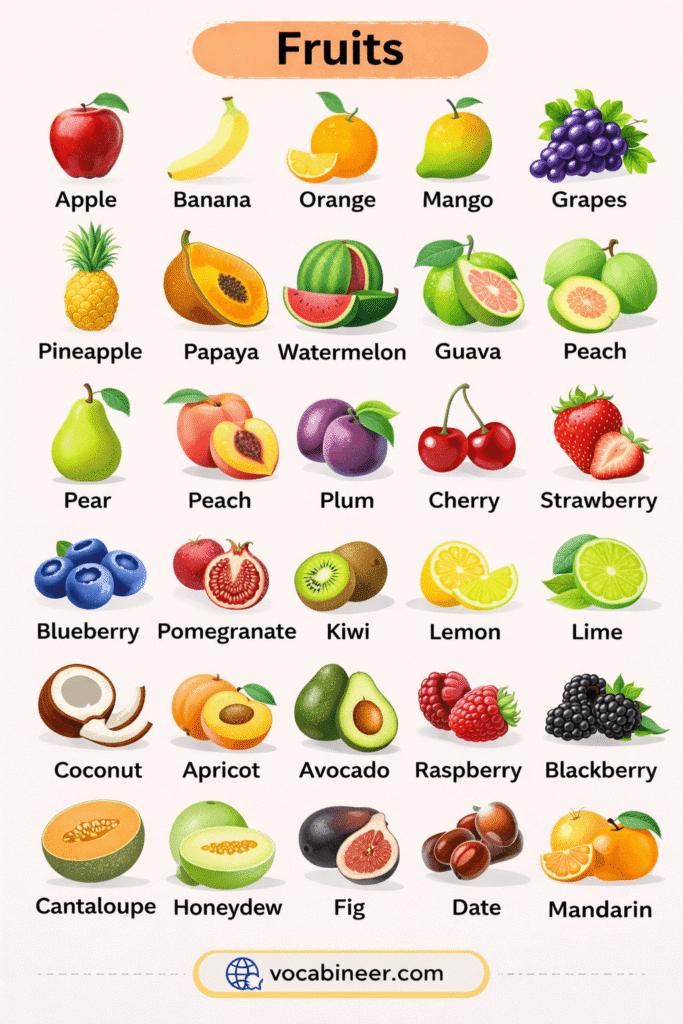
List of Fruits by Color Category
Fruits come in many colors, and each color often reflects different flavors and nutrients. For this reason, grouping fruits by color helps you recognize them quickly and choose variety for meals and snacks. Therefore, below is a list of fruits sorted by their most common colors.
Red Fruits
Red fruits are often bright and juicy, and they are commonly rich in vitamins and antioxidants. As a result, they are frequently linked with heart health. In addition, these fruits add vibrant color and sweet or tart flavors to meals. Common red fruits include:
- Strawberry
- Cherry
- Watermelon
- Raspberry
- Red Apple
- Pomegranate
Yellow Fruits
Yellow fruits are known for their bright color and often sweet or tangy taste. In addition, they commonly provide essential nutrients such as vitamin C. Therefore, they are refreshing additions to many meals. Popular yellow fruits are:
- Banana
- Lemon
- Pineapple
- Mango
- Papaya
- Yellow Peach
Green Fruits
Green fruits vary from tart to sweet, and they are often rich in fiber and key nutrients. In addition, their fresh color may indicate antioxidant presence. Therefore, some common green fruits are:
- Kiwi
- Green Apple
- Avocado
- Gooseberry
- Honeydew Melon
- Lime
Blue and Purple Fruits
Blue and purple fruits are often rich in antioxidants called anthocyanins, which may support heart and brain health. In addition, these fruits add deep colors and distinct flavors to meals. Therefore, examples include:
- Blueberry
- Blackcurrant
- Purple Grape
- Plum
- Elderberry
- Fig
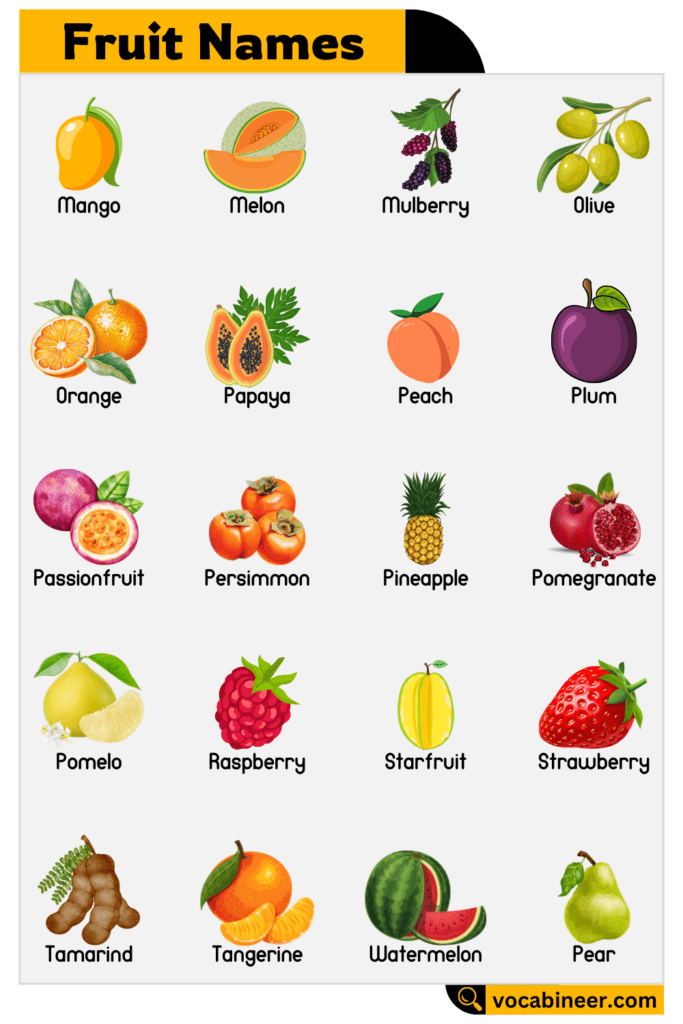
Seasonal Fruits Names by Time of Year
Seasonal fruits grow and ripen at specific times of the year. As a result, eating fruits in season often means enjoying fresher flavors and better nutritional value. Therefore, knowing seasonal Fruits Names helps you choose the right fruits throughout the year.
Spring Fruits
Spring brings fresh, sweet fruits perfect for snacks and desserts. These fruits signal warmer days ahead. Common spring fruits include:
- Strawberry
- Apricot
- Cherry
- Rhubarb
- Loquat
- Mulberry
Summer Fruits
Summer fruits are juicy and refreshing, great for keeping cool. They’re packed with vitamins and natural sugars. Popular summer fruits are:
- Watermelon
- Mango
- Peach
- Blueberry
- Raspberry
- Blackberries
- Plum
Autumn Fruits
Autumn fruits grow in cooler weather and are often hearty and flavorful. Many are used in baking and cooking. Common autumn fruits include:
- Apple
- Pear
- Pomegranate
- Fig
- Persimmon
- Cranberry
Winter Fruits
Winter fruits are mostly citrus and hardy types that provide vitamin C and help boost immunity during cold months. Typical winter fruits are:
- Orange
- Grapefruit
- Kiwi
- Clementine
- Persimmon
- Dates
Rare Fruits Names
Some fruits are not commonly seen in every country. These Fruits Names may sound new, but they are grown in specific regions around the world. Learning them expands your understanding of global fruit varieties.
- Durian: Large spiky fruit with creamy flesh and strong smell.
- Rambutan: Hairy red fruit with sweet white pulp.
- Mangosteen: Purple fruit with soft white segments inside.
- Salak: Brown scaly fruit known as snake fruit.
- Ackee: Yellow tropical fruit with black glossy seeds.
- Longan: Small brown fruit with translucent flesh.
- Buddha’s hand: Finger-shaped citrus fruit with thick rind.
- Miracle fruit: Small red fruit known for altering taste.
- Feijoa: Green oval fruit with aromatic pulp.
- Cherimoya: Soft green fruit with creamy white interior.
- Langsat: Small yellow fruit with segmented flesh.
- Marang: Large tropical fruit with soft white interior.
- Horned melon: Spiky orange fruit with jelly-like center.
- Jabuticaba: Dark purple fruit that grows on tree trunks.
- Sapote: Sweet fruit with soft orange or brown flesh.
Fruits Names Used in Simple Sentences
Using Fruits Names in short sentences strengthens understanding. Simple subject and object patterns make it easier to connect the fruit name with real usage. Below are structured sentence examples using different fruit names.
- I ate an apple after lunch.
- She bought a ripe mango.
- He peeled a banana quickly.
- They cut the watermelon into slices.
- We planted a small lemon tree.
- She washed fresh grapes.
- He squeezed an orange for juice.
- They shared a sweet pineapple.
- I picked a red strawberry.
- She tasted a sour lime.
- He opened a large jackfruit.
- We enjoyed cold cantaloupe.
- She added blueberries to cereal.
- They served sliced papaya.
- He carried a basket of peaches.
- I bought a fresh pear.
- She cut open a pomegranate.
- He tried a piece of durian.
- They harvested ripe cherries.
- We stored dried dates.
FAQs About Fruits Names in English
The most common Fruits Names in English include apple, banana, mango, orange, grapes, pineapple, watermelon, pear, peach, and strawberry. These names appear frequently in school books, food lists, and grocery stores.
There are hundreds of Fruits Names in English. Common school lists include 30 to 100 names, but global fruit varieties exceed 2,000 types when rare and regional fruits are included.
Citrus fruits belong to the Citrus plant family and usually taste tangy, like orange and lemon. Tropical fruits grow in warm climates and include mango, papaya, and pineapple. Not all tropical fruits are citrus fruits.
Fruits like apple, mango, orange, pear, and peach grow on trees. Fruits such as watermelon, grapes, kiwi, and pumpkin grow on vines that spread or climb.
Many fruits are healthy, but berries, citrus fruits, and apples are especially rich in vitamins and antioxidants.
Berries are generally small, soft fruits with seeds inside, such as strawberry and blueberry. Stone fruits contain one hard pit in the center, like peach, plum, and cherry. They belong to different fruit groups.
Conclusion
Learning Fruits Names helps you recognize and classify fruits correctly. Throughout this article, you covered common fruits, tropical varieties, citrus fruits, berries, stone fruits, melons, seasonal fruits, tree fruits, vine fruits, and rare fruits. As a result, this structured approach strengthens understanding and improves organized recall.
Read More